.webp)
Key takeaways:
- “Spastic colon” is a symptom, not a diagnosis, and is most commonly linked to irritable bowel syndrome (IBS).
- Colon spasms can cause pain, urgency, diarrhea, or alternating bowel habits, particularly in diarrhea-predominant or mixed IBS.
- Spastic colon symptoms can be managed through multiple approaches, including identifying trigger foods (such as via a low FODMAP diet), calming the gut–brain connection with mind–body therapies, and targeted medications.
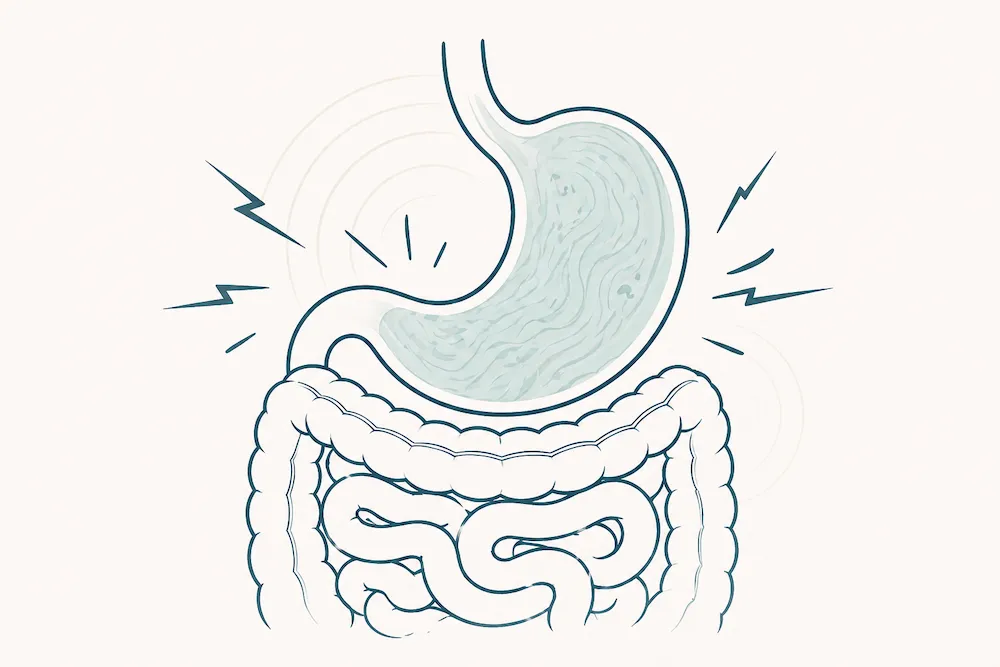
The colon is the part of the large intestine responsible for storing and excreting feces. A ‘spastic colon’ describes an increase in muscle contractions of the large intestine that creates a spasm sensation, frequent bowel movements, cramping and diarrhea.
Causes of colon spasms
A spastic colon is not a condition itself, rather it is a symptom of something else happening in your body. Irritable bowel syndrome (IBS) is the most common health condition causing colon spasms. However, other conditions may also cause these contractions, including:
Ulcerative colitis
Crohn’s disease
Trapped gas
Bowel obstruction
Bacteria infection of the gut (gastroenteritis).
If you are experiencing cramping, diarrhea and frequent bowel movements, be sure to talk to your doctor about your experiences and for a formal diagnosis.
What does a spastic colon feel like?
The experience of a spasming colon may differ from one person to another. Generally, the following symptoms are experienced:
Pain: This is usually experienced in the abdomen, and pain may vary with the intensity of the spams
Sudden urge to defecate: The contractions of colon muscles may induce a need to suddenly use a restroom
Loose stools: Colon spasms may prevent stools from forming correctly, causing loose and watery stools (diarrhea)
Alternating bowel movements: Patterns of diarrhea and constipation may be caused by a spasming colon.
IBS and the spastic colon link
Sometimes the term spastic colon is used interchangeably with IBS, but if you have IBS, that doesn't necessarily mean you will experience a spastic colon.
There are three main types of IBS⸺ Diarrhea, Constipation and Mixed. If you have IBS-D (IBS with diarrhea), it is quite possible that you will experience a spastic colon as a symptom. Where as IBS-C (IBS with constipation) you may actually experience less muscle contractions.
Symptoms of IBS
IBS is characterized by a range of gastrointestinal symptoms, including:
Abdominal pain, which may worsen after consuming a meal
Change in bowel habits e.g. constipation or diarrhea
Bloating and gas
Fatigue
Mucous in stools
Diagnosis of IBS
To understand whether your spastic colon symptoms are in fact due to IBS, there are some simple criteria you need to meet (and your doctor is the best person to formally confirm this, as well as rule out other underlying conditions.
IBS is diagnosed using the Rome IV criteria, which you can read more about here. In a nutshell you may have IBS if you are experiencing two or more of the following g over a period of at least three months:
Improvement with defecation
Change of frequency of stools
Change in appearance of stools.
If you experience any of the following symptoms, you should see a doctor immediately. These symptoms suggest underlying damage to the intestines and a more serious illness:
Bloody stools
Vomiting
Severe stomach or abdominal pain
Inability to pass a stool
Weight loss
Black, dark-coloured stools
Fever.
A quick online quiz can give you an idea if your symptoms are similar to IBS, but, as mentioned earlier, if you believe you have experienced the above, it is best to consult a doctor to confirm diagnosis.
Diagnostic testing
To rule out other gastrointestinal conditions producing similar symptoms to IBS, your GP may refer you to the following tests:
Stool sample: To check for signs of infection and inflammatory bowel disease.
Blood test: To check for problems such as coeliac disease.
Colonoscopy: To examine the inner lining of the colon for signs of inflammation. This can be used to diagnose inflammatory bowel diseases.
X-ray or CT scan: A scan of the abdomen and pelvis can rule out physical causes of abdominal pain, such as twisted bowel.
Breath tests: To test for lactose intolerance, which may cause abdominal pain, gas, and diarrhea. Bacterial overgrowth can also be assessed with a breath test.
Treatment of spastic colon
The treatment of spastic colon will ultimately depend on the cause, but diet, medication and mind-body interventions can all play a role in managing this symptom.
1) Remove trigger foods
Spastic colon/IBS is often worsened by ‘trigger foods’ that may differ from person to person. However, the low FODMAP (fermentable oligosaccharides, disaccharides, monosaccharides, and polyols) diet eliminates short-chain carbohydrates that generally worsen IBS symptoms. These FODMAPs are not absorbed well by the small intestine, and eliminating them has been demonstrated to improve IBS symptoms in approximately 70% of patients. Common foods eliminated on the low FODMAP diet include:
Lactose: milk, ice-cream, cheese, yogurt, and other dairy products
Fructose: fruits such as apples, pears, and mangoes and products containing high fructose corn syrup
Galacto-oligosaccharides: lentils, chickpeas, soy products, and broccoli
Fructans: vegetables such asgarlic, onion and broccoli, and grains such as wheat and rye
Polyols: fruits such as peaches, watermelon, and blackberries, and artificial sweeteners such as mannitol, maltitol, and sorbitol.
Typically, the low FODMAP diet involves two phases: the elimination phase, in which FODMAPs are fully removed from the diet, and the reintroduction phase in which foods are reintroduced, one by one and symptoms monitored. The goal of dietary therapy for IBS is to remove ‘trigger’ foods whilst maintaining adequate nutrition. It is therefore recommended that a nutritionist be consulted to ensure adequate nutrition whilst on the low FODMAP diet.
2) Mind-body interventions
The cause of IBS is not fully understood. However, there appears to be a susceptibility for the bowel to overreact to certain triggers such as stress and emotional trauma. For this reason, psychological therapies have been tested and found highly effective in treating patients with IBS. These include:
Gut-directed hypnotherapy: involves relaxation and suggestions to help IBS patients feel more positively about the sensations in the body. Working on the gut-brain connection, this therapy reduces pain signals and desensitizes the gut to digestive processes.
Cognitive-behavioral therapy (CBT): is a form of psychotherapy in which patients are taught to challenge negative thoughts associated with IBS, and adopt a more positive outlook. By reducing the stress response and negative mood, symptoms of IBS have been shown to improve.
Mindfulness meditation: is a form of Buddhist training in which patients are taught to accept the sensations in their bodies and appraise them without judgment.By bringing the patient’s awareness to the present moment, this form of therapy helps to reduce negative thoughts associated with IBS that may worsen symptoms
3) Medication for spastic colon
Several medications are commonly prescribed for spastic colon/IBS. These include:
Fiber supplements: such as psyllium (Metamucil) to improve symptoms of constipation in constipation-predominant IBS.
Laxatives: such as polyethylene glycol and lactulose can improve motility in IBS with constipation.
Anti-diarrheal medications: such as loperamide (Imodium) can improve symptoms of diarrhea-predominant IBS.
Pain medications: such asPregabalin (Lyrica) can reduce abdominal pain in IBS.
Antidepressants: such as tricyclic antidepressants, imipramine and desipramine, and SSRI medications, fluoxetine and paroxetine may reduce abdominal pain in IBS. These medicines work by lessening the pain signals from the intestines to the brain.
IBS-specific medications: such as alosetron work by relaxing the colon to slow the movement of digested material in IBS with diarrhea. Other drugs such as linaclotide work by relaxing the colon and increasing fluid secretion in the small intestines, to improve motility in IBS with constipation.
Probiotics: by improving the constituency of microbes in the gut, probiotics containing live bacterial species such as Bifidobacterium may improve IBS symptoms with limited side effects. However, this research is preliminary.
Antispasmodic medications: such as dicyclomine (Bentyl) may relieve stomach cramps and abdominal pain in IBS by relaxing the smooth muscles of the gut.
The Wrap Up
Spasming of the colon is common and usually associated with IBS but can also occur with other health conditions. If you are experiencing abdominal discomfort, cramping or diarrhea for an extended period it is important to discuss your symptoms with your doctor. If you are experiencing a spastic colon due to IBS you can manage this symptom through dietary changes such as the low FODMAP diet, through mind-body interventions such as hypnotherapy, or through medication.
References
1. Gauss, H., 1930. The spastic colon. Annals of Internal Medicine, 3(11), pp.1128-1139. Link
2. Read, N.W., Krejs, G.J., Read, M.G., Santa Ana, C.A., Morawski, S.G. and Fordtran, J.S., 1980. Chronic diarrhea of unknown origin. Gastroenterology, 78(2), pp.264-271. Link
3. Chey, W.D., Kurlander, J. and Eswaran, S., 2015. Irritable bowel syndrome: a clinical review. Jama, 313(9), pp.949-958. Link
4. Lüttecke, K., 1978. A trial of trimebutine in spastic colon. Journal of International Medical Research, 6(2), pp.86-88. Link
5. Steinhart, M.J., Wong, P.Y. and Zarr, M.L., 1982. Therapeutic usefulness of amitriptyline in spastic colon syndrome. The International Journal of Psychiatry in Medicine, 11(1), pp.45-57. Link
6. Schmulson, M., Vargas, J.A., López-Colombo, A., Remes-Troche, J.M. and López-Alvarenga, J.C., 2010. Prevalence and clinical characteristics of the IBS subtypes according to the Rome III criteria in patients from a clinical, multicentric trial. A report from the Mexican IBS Working Group. Revista de gastroenterologia de Mexico, 75(4), pp.427-438. Link
7. Canavan, C., West, J. and Card, T., 2014. The epidemiology of irritable bowel syndrome. Clinical epidemiology, 6, p.71. Link
8. Ikechi, R., Fischer, B.D., DeSipio, J. and Phadtare, S., 2017, June. Irritable bowel syndrome: clinical manifestations, dietary influences, and management. In Healthcare (Vol. 5, No. 2, p. 21). Multidisciplinary Digital Publishing Institute. Link
9. Johannesson, E., Simrén, M., Strid, H., Bajor, A. and Sadik, R., 2011. Physical activity improves symptoms in irritable bowel syndrome: a randomized controlled trial. American Journal of Gastroenterology, 106(5), pp.915-922. Link
10. Lacy, B.E. and Patel, N.K., 2017. Rome criteria and a diagnostic approach to irritable bowel syndrome. Journal of clinical medicine, 6(11), p.99. Link
11. Vork, L., Weerts, Z.Z.R.M., Mujagic, Z., Kruimel, J.W., Hesselink, M.A.M., Muris, J.W.M., Keszthelyi, D., Jonkers, D.M.A.E. and Masclee, A.A.M., 2018. Rome III vs Rome IV criteria for irritable bowel syndrome: A comparison of clinical characteristics in a large cohort study. Neurogastroenterology & Motility, 30(2), p.e13189. Link
12. Kibune-Nagasako, C., García-Montes, C., Silva-Lorena, S.L. and Aparecida-Mesquita, M., 2016. Irritable bowel syndrome subtypes: Clinical and psychological features, body mass index and comorbidities. Revista Española de Enfermedades Digestivas, 108(2), pp.59-64. Link
13. Cremonini, F. and Talley, N.J., 2005. Irritable bowel syndrome: epidemiology, natural history, health care seeking and emerging risk factors. Gastroenterology Clinics, 34(2), pp.189-204. Link
14. Lovell, R.M. and Ford, A.C., 2012. Global prevalence of and risk factors for irritable bowel syndrome: a meta-analysis. Clinical gastroenterology and hepatology, 10(7), pp.712-721. Link
15. Dinan, T.G., Cryan, J., Shanahan, F., Keeling, P.N. and Quigley, E.M., 2010. IBS: an epigenetic perspective. Nature reviews Gastroenterology & hepatology, 7(8), pp.465-471. Link
16. Svendsen, R.P., Støvring, H., Hansen, B.L., Kragstrup, J., Søndergaard, J. and Jarbøl, D.E., 2010. Prevalence of cancer alarm symptoms: a population-based cross-sectional study. Scandinavian journal of primary health care, 28(3), pp.132-137. Link
17. Hendrickson, B.A., Gokhale, R. and Cho, J.H., 2002. Clinical aspects and pathophysiology of inflammatory bowel disease. Clinical microbiology reviews, 15(1), pp.79-94. Link
18. Smith, J.L. and Bayles, D., 2007. Postinfectious irritable bowel syndrome: a long-term consequence of bacterial gastroenteritis. Journal of food protection, 70(7), pp.1762-1769. Link
19. Xavier, R.J. and Podolsky, D.K., 2007. Unravelling the pathogenesis of inflammatory bowel disease. Nature, 448(7152), pp.427-434. Link
20. Ripamonti, C.I., Easson, A.M. and Gerdes, H., 2008. Management of malignant bowel obstruction. European journal of cancer, 44(8), pp.1105-1115. Link
21. Furman, D.L. and Cash, B.D., 2011. The role of diagnostic testing in irritable bowel syndrome. Gastroenterology clinics of North America, 40(1), pp.105-119. Link
22. Cremonini, F. and Talley, N.J., 2004. Diagnostic and therapeutic strategies in the irritable bowel syndrome. Minerva medica, 95(5), pp.427-441. Link
23. Halmos, E.P., Power, V.A., Shepherd, S.J., Gibson, P.R. and Muir, J.G., 2014. A diet low in FODMAPs reduces symptoms of irritable bowel syndrome. Gastroenterology, 146(1), pp.67-75. Link
24. Altobelli, E., Del Negro, V., Angeletti, P.M. and Latella, G., 2017. Low-FODMAP diet improves irritable bowel syndrome symptoms: a meta-analysis. Nutrients, 9(9), p.940. Link
25. Peters, S.L., Yao, C.K., Philpott, H., Yelland, G.W., Muir, J.G. and Gibson, P.R., 2016. Randomised clinical trial: the efficacy of gut‐directed hypnotherapy is similar to that of the low FODMAP diet for the treatment of irritable bowel syndrome. Alimentary pharmacology & therapeutics, 44(5), pp.447-459. Link
26. Altayar, O., Sharma, V., Prokop, L.J., Sood, A. and Murad, M.H., 2015. Psychological therapies in patients with irritable bowel syndrome: a systematic review and meta-analysis of randomized controlled trials. Gastroenterology research and practice, 2015. Link
27. Lindfors, P., Unge, P., Arvidsson, P., Nyhlin, H., Björnsson, E., Abrahamsson, H. and Simrén, M., 2012. Effects of gut-directed hypnotherapy on IBS in different clinical settings—results from two randomized, controlled trials. American Journal of Gastroenterology, 107(2), pp.276-285. Link
28. Toner, B.B., 2005. Cognitive-behavioral treatment of irritable bowel syndrome. CNS spectrums, 10(11), pp.883-890. Link
29. Garland, E.L., Gaylord, S.A., Palsson, O., Faurot, K., Mann, J.D. and Whitehead, W.E., 2012. Therapeutic mechanisms of a mindfulness-based treatment for IBS: effects on visceral sensitivity, catastrophizing, and affective processing of pain sensations. Journal of behavioral medicine, 35(6), pp.591-602. Link
30. Quartero, A.O., Meiniche‐Schmidt, V., Muris, J., Rubin, G. and de Wit, N., 2005. Bulking agents, antispasmodic and antidepressant medication for the treatment of irritable bowel syndrome. Cochrane Database of Systematic Reviews, (2). Link
31. Trinkley, K.E. and Nahata, M.C., 2014. Medication management of irritable bowel syndrome. Digestion, 89(4), pp.253-267. Link
32. McFarland, L.V. and Dublin, S., 2008. Meta-analysis of probiotics for the treatment of irritable bowel syndrome. World journal of gastroenterology: WJG, 14(17), p.2650. Link