






A randomised controlled trial involving 244 adults with irritable bowel syndrome (IBS) examined the efficacy of a digitally delivered gut-directed hypnotherapy program, compared with an active psychoeducation control.
Read full publication
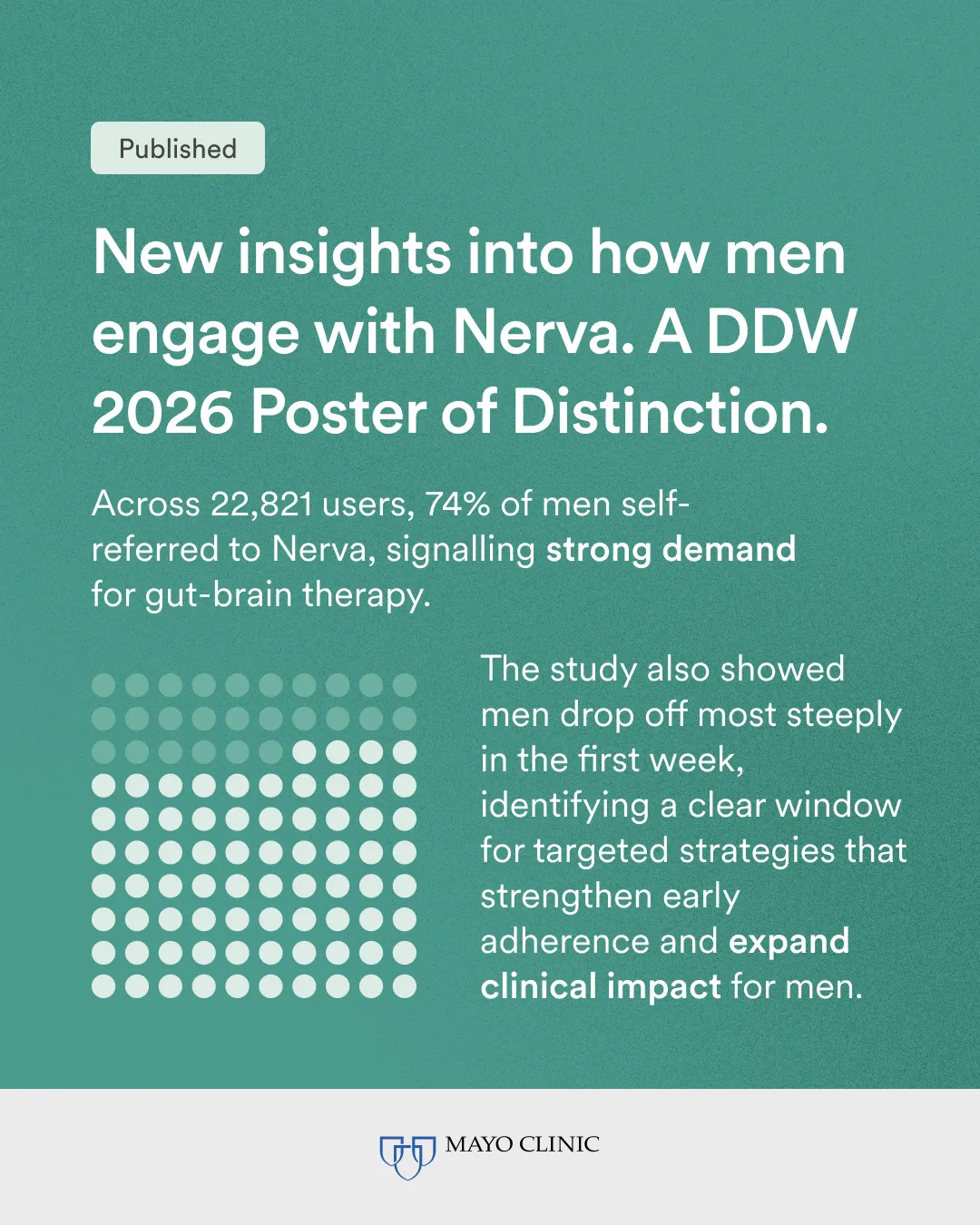
Across 22,821 participants (5,438 men / 17,383 women), men were less likely to be clinician-referred and slightly less likely to initiate the program. Women showed higher retention at every checkpoint — Day 7 (81.9% vs 78.5%), Day 14 (75.9% vs 71.8%), Day 30 (65.9% vs 59.3%) — with men demonstrating a steeper early decline beginning in the first week. But 74% of men self-referred, indicating substantial interest in BGBT. Because therapeutic benefits typically emerge later in the course, early attrition among men may be limiting their opportunity for meaningful clinical improvement. And it points to the need for targeted strategies to strengthen early adherence for men.

Analysis of 33,061 Nerva users. Diaphragmatic breathing (DB) combined with hypnotherapy showed a consistent dose-response in users with moderate and severe baseline IBS-VAS — but not mild. Users completing 4+ DB sessions saw the greatest IBS-VAS reductions. Importantly, DB provided a stable additive benefit across all hypnotherapy dose bands, suggesting it contributes independent value regardless of hypnotherapy engagement level. The greatest improvements came in users completing 4+ DB sessions and 41–45 hypnotherapy sessions over the 6-week program. These findings support the structured use of the diaphragmatic breathing — and it's the first published evidence that our DB content is driving measurable incremental improvement.

Mount Sinai researchers found that IBS users with concurrent upper GI symptoms saw comparable or greater IBS improvement than IBS-only users, despite more severe baseline symptoms. Their UGI symptoms also improved, suggesting gut-brain therapy can address both conditions.

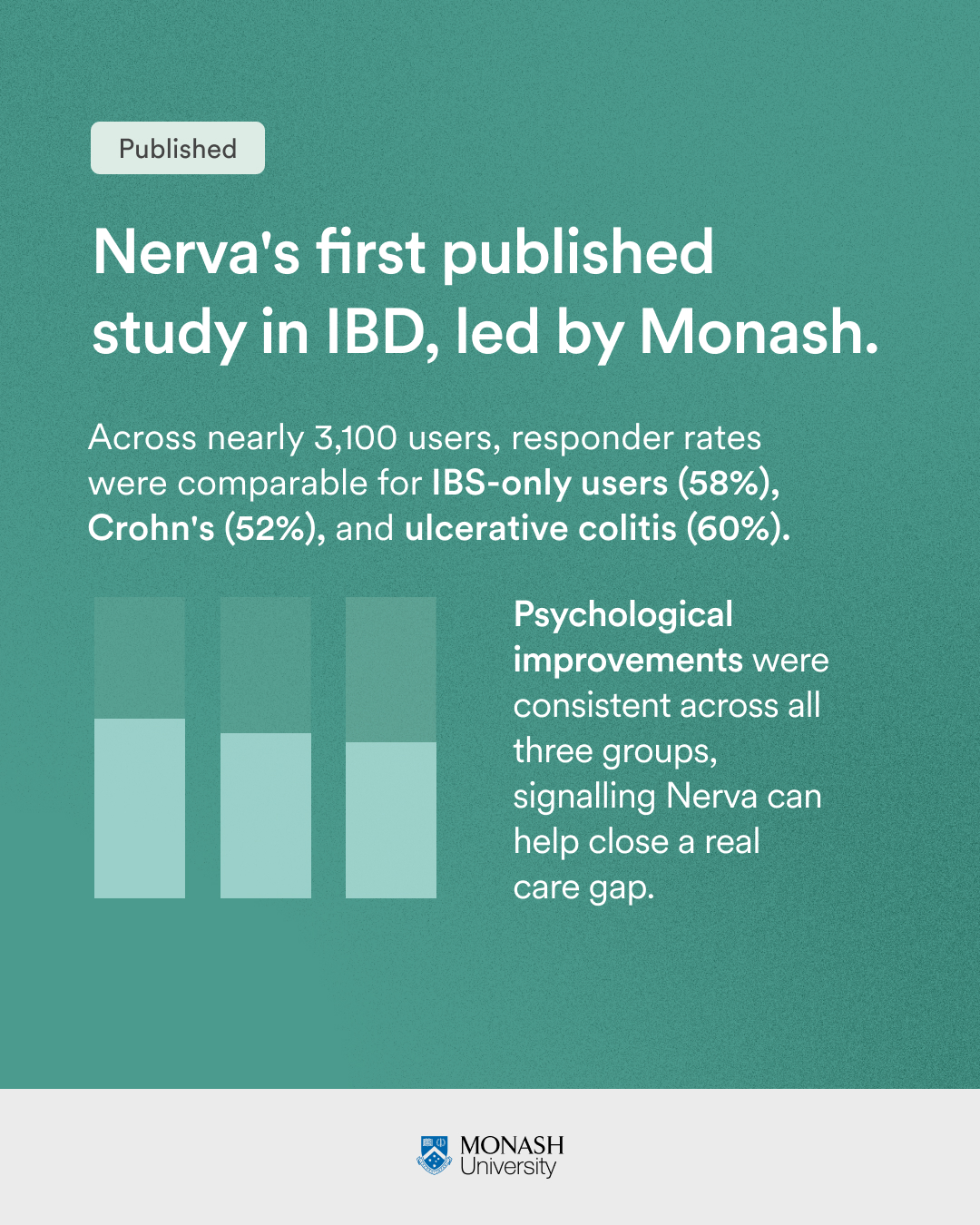
Our first-ever published evidence in IBD. Responder rates and psychological improvement were consistent across users with no co-morbid GI condition, Crohn's, and UC — meaning Nerva works for IBS-like symptoms even in IBD populations, where treatment gaps are real. Precursor to the clinical trial we're running, and it unlocks the IBD conversation with HCPs and payers.

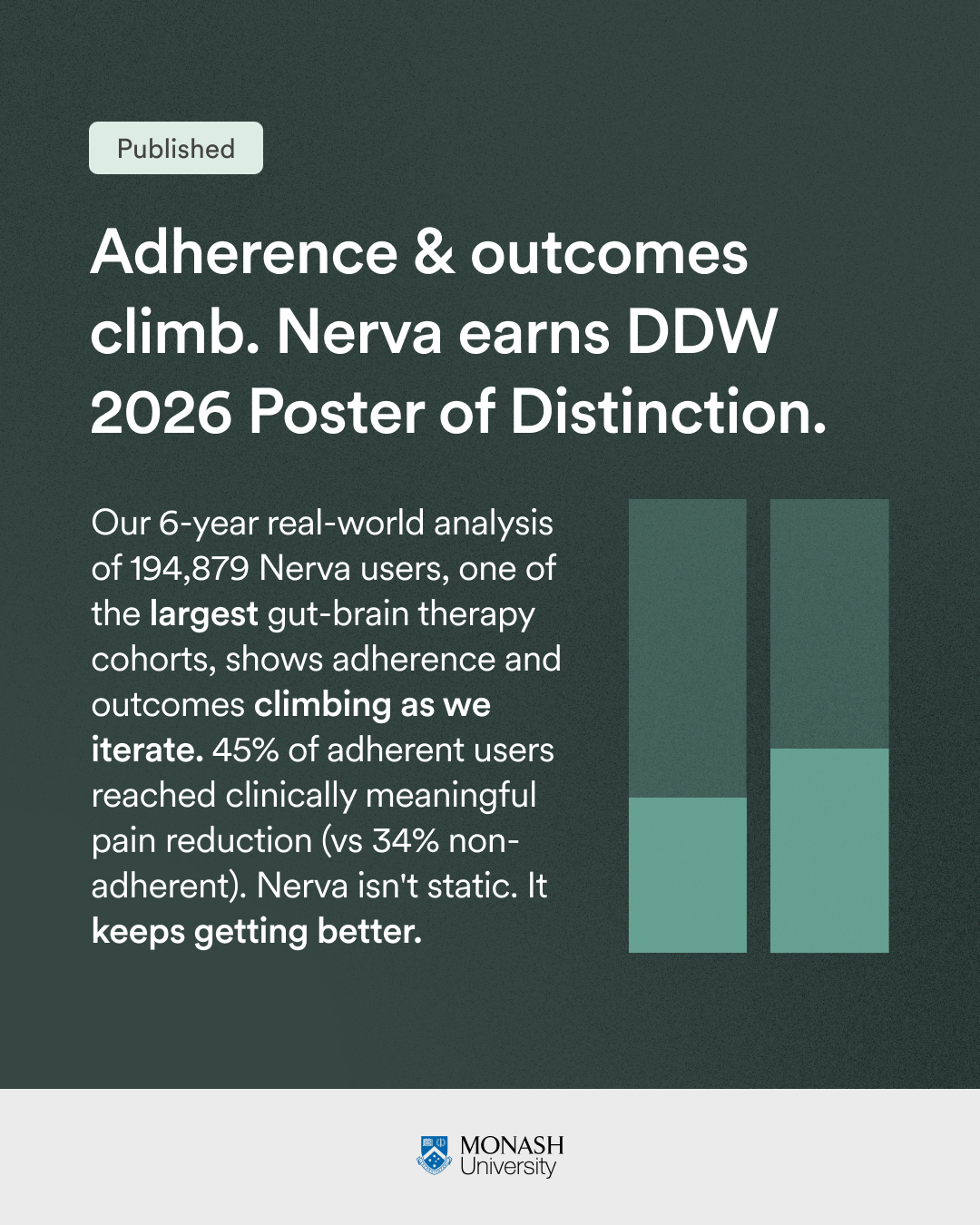
Our 6-year real-world analysis of 194,879 Nerva users, one of the largest gut-brain therapy cohorts, shows adherence and outcomes climbing as we iterate. 45% of adherent users reached clinically meaningful pain reduction (vs 34% non-adherent). Nerva isn't static. It keeps getting better.

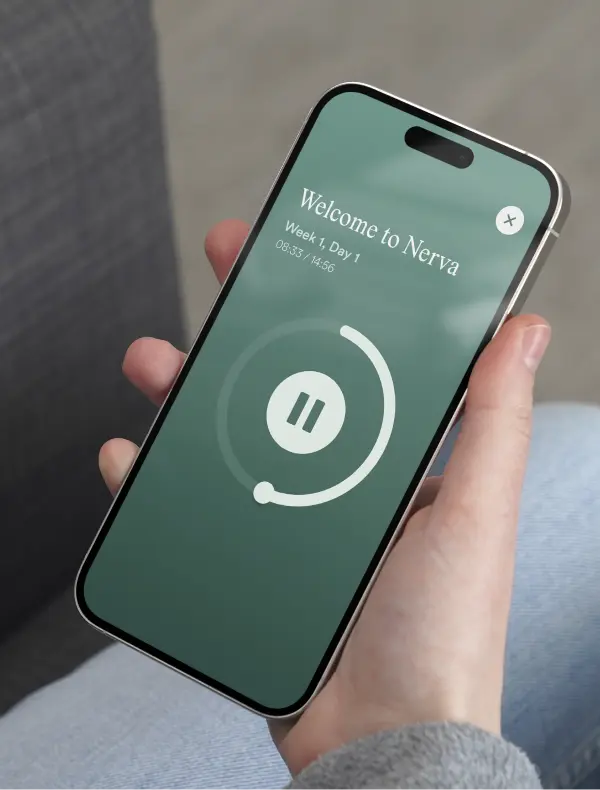
App-delivered gut-directed hypnotherapy improves overall and individual gastrointestinal symptoms. Users who complete the program report greater improvement in psychological outcomes. Healthcare practitioner referral is a positive predictor of program completion, but it does not alter rates of efficacy.

Mobile app-delivered gut-directed hypnotherapy significantly improved overall and specific symptoms of IBS similar to rates seen in face-to-face trials. IBS patients who respond poorly to medications may respond better. Mobile app-delivered gut-directed hypnotherapy may provide a cost-effective and accessible alternative to otherwise inaccessible therapy.

In a retrospective audit of 204 adolescents aged 13–18 with IBS, the Nerva app significantly reduced abdominal pain and other GI symptoms, while also improving anxiety and depression scores — particularly in those with moderate to severe psychological symptoms at baseline. These findings support the use of Nerva in pediatric populations and suggest the need for further research.

In a retrospective audit, the Nerva app's gut-directed hypnotherapy program significantly reduced abdominal pain and gastrointestinal symptoms in 64% of IBS patients who completed the program without apparent adverse effects.

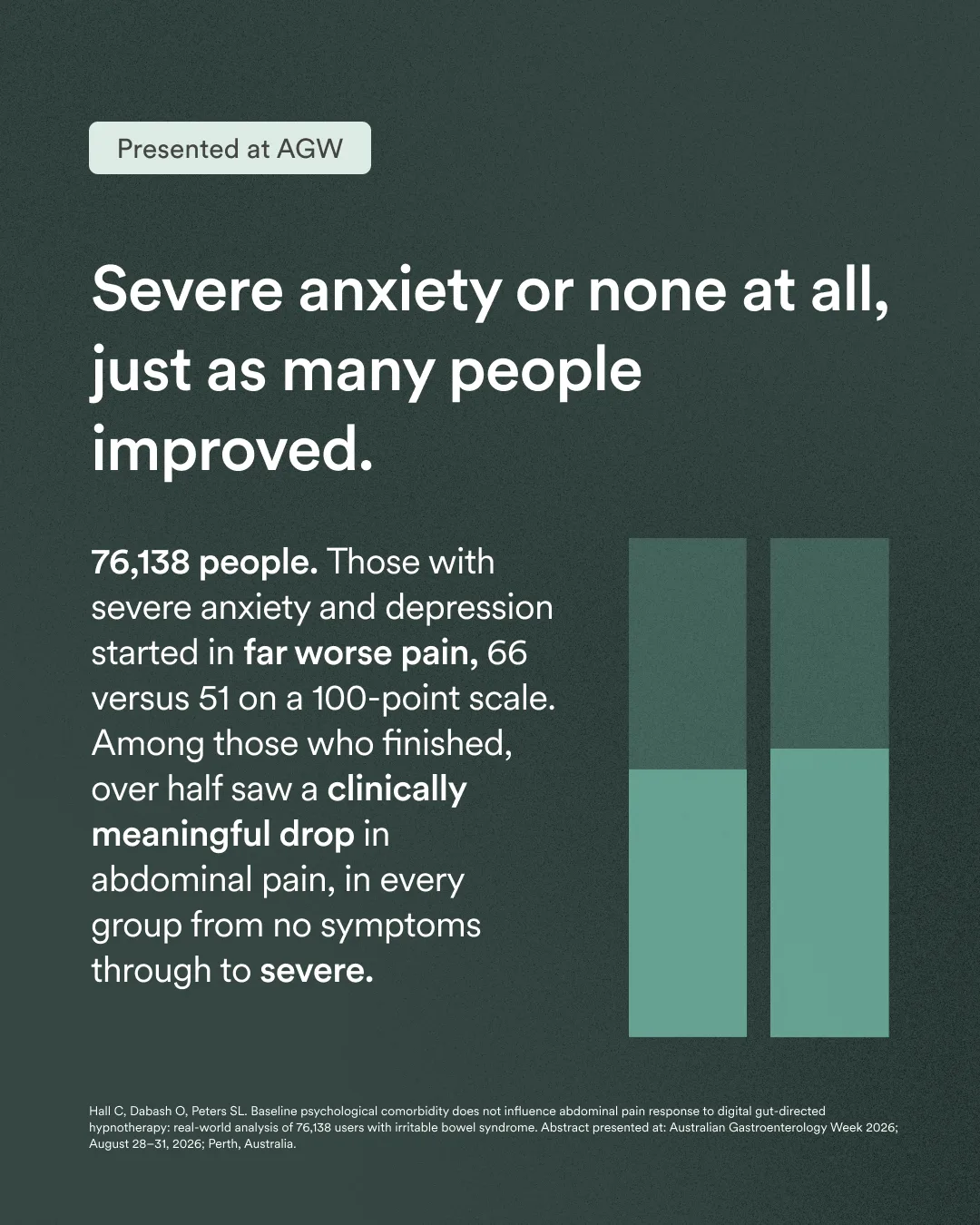
In a study of nearly 18,000 Nerva users, the app's gut-directed hypnotherapy program improved both gastrointestinal symptoms and psychological outcomes, shifting the average anxiety and depression score from the moderate range at baseline to mild at program completion — with users experiencing the most severe psychological symptoms seeing the greatest improvements.

Durable effects of gut-directed hypnotherapy are similar to those of the low FODMAP diet for relief of gastrointestinal symptoms. Hypnotherapy has superior efficacy to diet on psychological indices.

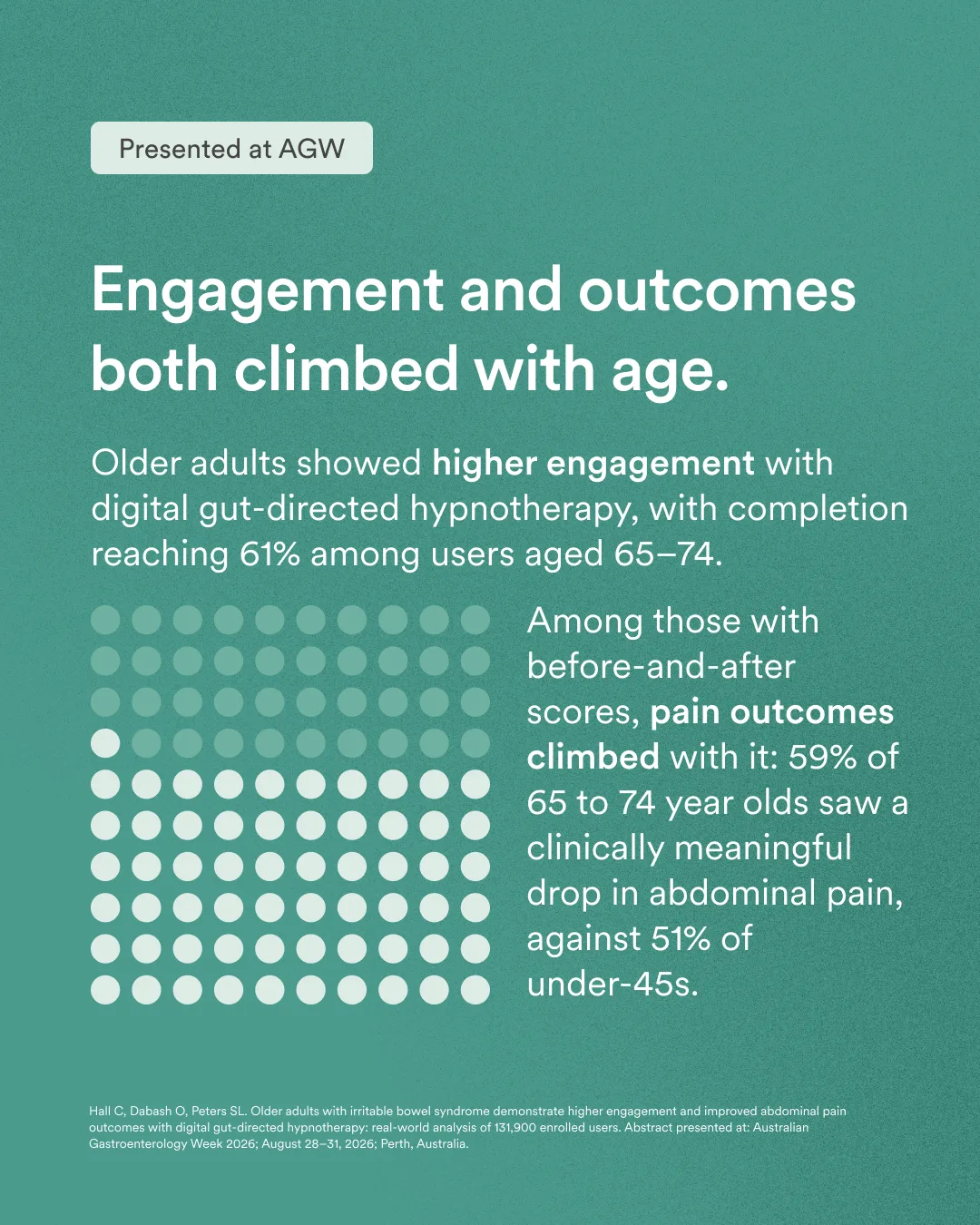
In a retrospective analysis of nearly 15,000 Nerva app users, adherence was comparable to or exceeded that of similar real-world digital health interventions, with older users (50+) significantly more likely to complete the full six-week program.

In a study of over 17,000 Nerva users, completing the app's gut-directed hypnotherapy program was associated with an approximate halving of IBS management costs — from $1,259 to $502 over six months — alongside significant long-term improvements in work absenteeism, presenteeism, and overall productivity.

Clinical trial evaluating whether app-based gut-directed hypnotherapy can reduce functional gut symptoms in IBD patients in remission who still experience IBS-like symptoms.
Exploring Nerva's effectiveness in managing upper-GI symptoms.
Understanding the acceptability and outcomes for children and adolescents with IBS.
Understanding patterns of usage and outcomes for older adults using Nerva.