












19 Aug
Learn more
Learn more

A gut-brain programme to complement your care

Nerva is a personalised gut-brain programme designed to support a calmer gut-brain connection. A daily routine your patients can use at home alongside your existing care.

Built on peer-reviewed research at Monash University
A structured 6-week programme, plus a long-term practice library
Works alongside your existing care
Share with patientsRequest clinician access
Used by patients of 15,000+ clinicians worldwide

Built on research

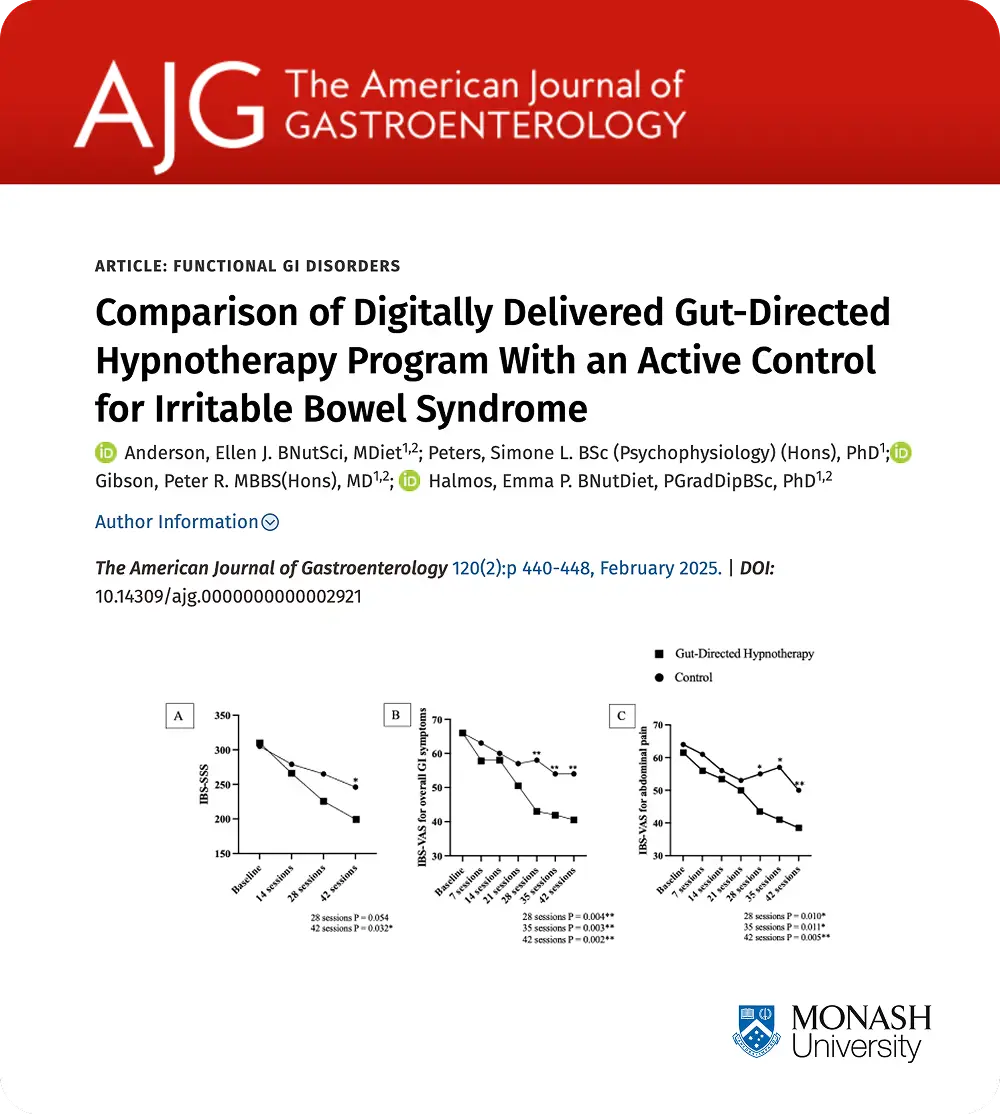
The mind-body approach Nerva is built on has been studied at Monash University, with findings published in peer-reviewed gastroenterology research. Among participants in published studies:

Many participants reported feeling more comfortable in their digestion.
A consistent pattern across people with different gut experiences.
Many also reported improvements in quality of life and everyday wellbeing.
Learn more about Nerva
Gut-brain approaches are increasingly part of conversations about gut wellbeing

How Nerva works

Nerva is a daily mind-body programme your patients can use at home. It combines guided audio relaxation, cognitive-behavioural techniques, and diaphragmatic breathing into a structured 6-week routine focused on the gut-brain connection.

Guided audio relaxation
Short daily audio sessions that guide users through relaxation and visualisation, supporting a calmer everyday gut experience.
Cognitive-behavioural techniques
Practical skills that help users notice and reframe unhelpful thought patterns around food, stress, and digestion.
Diaphragmatic breathing
Slow, deep breathing exercises that support the body's natural calming response.
Request clinician access
Thank you for your submission.
Please check your email for confirmation
Oops! Something went wrong while submitting the form.
Experiences from clinicians using Nerva alongside their care, and from the people using it at home
“The program is a life saver! Long time IBS sufferer who has done the low FODMAP thing and tried so so many supplements and probiotics, with mixed success. I was skeptical that 6 weeks was going to make a difference, but oh my goodness, I was feeling so much better at week 4 and am still feeling great.”

– Alyssa
“Literally life changing! I have struggled with IBS for over 15 years. I have tried multiple restrictive diets, had countless doctors appointments, and eventually just completely gave up trying to fix it. Within two weeks of daily hypnosis sessions I was seeing noticeable improvement.”


– Derek
“Nerva changed my life. I struggled with severe digestive symptoms for a long time. I was unable to digest, I lost weight dangerously, and everything I ate hurt me. This was a dark season with very little hope. An ER doctor recommended Nerva to help issues between my brain and gut (vagus nerve), and after trying it, my life is changed.”


– Rebekah
“I was very skeptical when my Gastro suggested it, but I was desperate and willing to give it a fair shot. Diet changes hadn't been working consistently, and I'd been dealing with uncomfortable digestion for years.... 5 weeks into the programme, I feel the best I have in months.”

– Vincent
“Nerva makes gut directed hypnotherapy accessible. 3 weeks in and I’m noticing an improvement in symptoms even though my gut issues aren’t only due to IBS. The app makes it so easy to keep up with and the hypnotherapy audios are so calming and lovely. As a dietitian, I recommend this app to my clients too!”


– Lindsay
“I’m 65 years old and have struggled with IBS and anxiety my whole life. I am a dietitian and have tried every dietary modification I could find with modest results. Nerva gave me the missing piece I’ve been looking for – teaching my brain how to effectively communicate with my gut.”


– dkp
“The program is a life saver! Long time IBS sufferer who has done the low FODMAP thing and tried so so many supplements and probiotics, with mixed success. I was skeptical that 6 weeks was going to make a difference, but oh my goodness, I was feeling so much better at week 4 and am still feeling great.”

– Alyssa
“Literally life changing! I have struggled with IBS for over 15 years. I have tried multiple restrictive diets, had countless doctors appointments, and eventually just completely gave up trying to fix it. Within two weeks of daily hypnosis sessions I was seeing noticeable improvement.”


– Derek
“Nerva changed my life. I struggled with severe digestive symptoms for a long time. I was unable to digest, I lost weight dangerously, and everything I ate hurt me. This was a dark season with very little hope. An ER doctor recommended Nerva to help issues between my brain and gut (vagus nerve), and after trying it, my life is changed.”


– Rebekah
“I was very skeptical when my Gastro suggested it, but I was desperate and willing to give it a fair shot. Diet changes hadn't been working consistently, and I'd been dealing with uncomfortable digestion for years.... 5 weeks into the programme, I feel the best I have in months.”

– Vincent
“Nerva makes gut directed hypnotherapy accessible. 3 weeks in and I’m noticing an improvement in symptoms even though my gut issues aren’t only due to IBS. The app makes it so easy to keep up with and the hypnotherapy audios are so calming and lovely. As a dietitian, I recommend this app to my clients too!”


– Lindsay
“I’m 65 years old and have struggled with IBS and anxiety my whole life. I am a dietitian and have tried every dietary modification I could find with modest results. Nerva gave me the missing piece I’ve been looking for – teaching my brain how to effectively communicate with my gut.”


– dkp

Who Nerva is for

Nerva has been studied across a broad range of people and gut experiences. It may be particularly useful for individuals who:

Are 14 years or older
Experience ongoing gut discomfort or another gut-brain experience
Are open to a gut-brain approach as part of their daily routine
Are looking to add research-backed mind-body practices to their care
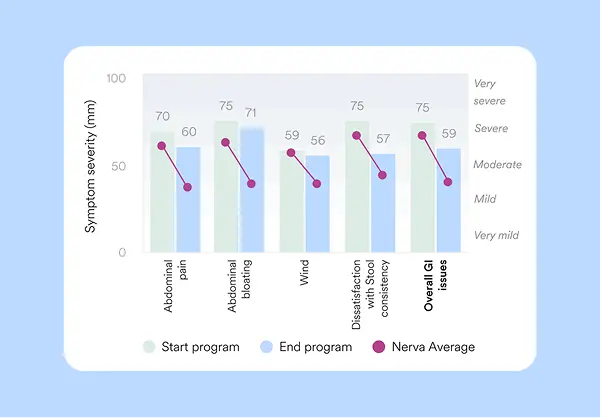
Chart showing the clinical validation of Nerva

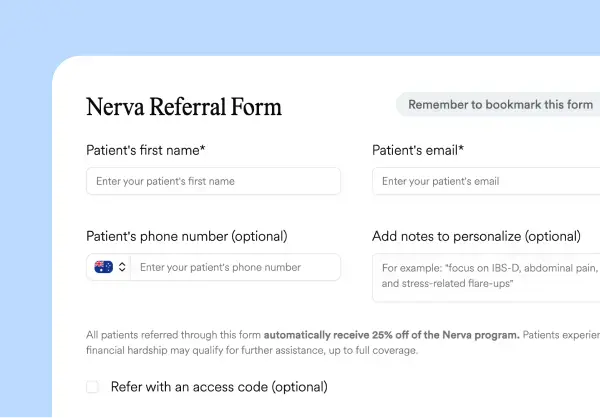
Nerva supports accessibility by reducing financial barriers. All patients shared through Nerva's secure referral form automatically receive a 25% adjustment, reducing the annual subscription cost to $149.25 USD. If cost remains a concern, patients may be eligible for additional support through Nerva's Patient Assistance Program.

Nerva's scientific advisory board

Dr. Michael Yapko
Clinical psychologist recognized for therapeutic applications of hypnosis.
Dr. Gary Elkins
Professor, Psychology and Neuroscience at Baylor University.
Dr. Irving Kirsch
Professor, Psychology and Neuroscience at Baylor University.

How to share Nerva with patients

1
Refer a patient

Share Nerva with patients in seconds via our secure webform. Patients introduced through this form receive 25% off Nerva.
2
We onboard

Our team contacts your patient within 24 hours to guide them through intake and offer support as they get started with Nerva.
3
You receive updates

Patient progress reports, including IBS-SSS and PHQ-4 symptom tracking, are shared with you via our secure reporting system.
1
2
3
Share Nerva
Share Nerva with your patients in seconds via our secure webform. Patients you share Nerva with receive 25% off.
We get them started
Our team contacts your patient within 24 hours to walk them through getting started and offer support as they begin Nerva.
We keep you in the loop
Your patients can choose to share their progress with you directly through the app.
Share with patients

Resources to support your conversations

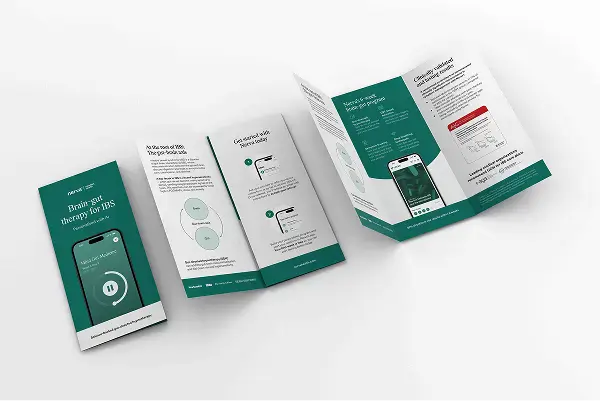
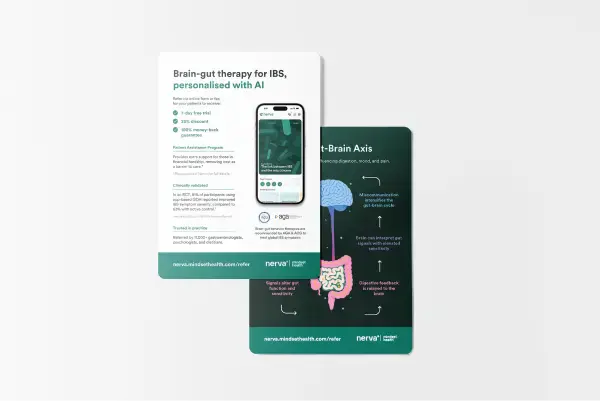
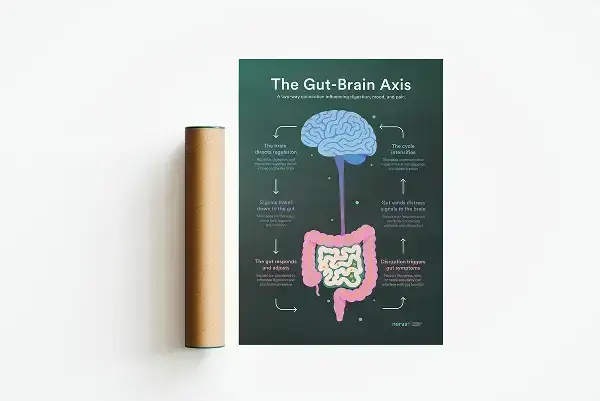
Use these complimentary printed resources, developed by our team, in your next gut-brain wellbeing conversation.

Request physical resourcesSee all downloadable resources

Nerva's Advisory Board

Dr. Simone Peters
Psychophysiologist and Adjunct Research Fellow, Department of Gastroenterology, School of Translational Medicine, Monash University and Alfred Health

Dr. Brooks D. Cash, MD, FACG
Chief of Gastroenterology, Hepatology, and Nutrition at The University of Texas Health Science Center at Houston

Dr. Lin Chang, MD, FACG
Vice Chief,  Division of Digestive Diseases at UCLA; Program Director GI Fellowship, and Co-Director, Center for Neurobiology of Stress and Resilience

Dr. William D. Chey, MD, FACG
Professor of Gastroenterology and Nutrition Sciences at Michigan Medicine; Chief of Gastroenterology & Hepatology, and president elect (2026) of the American College of Gastroenterology

Dr. Megan Riehl, PsyD, AGAF
Clinical Associate Professor in Clinical Psychology, Health Psychologist and Clinical Director of the GI Behavioral Health Program at Michigan Medicine
Dr. Kyle Staller, MD, MPH
Director, GI Motility Laboratory at Mass General Assistant Professor of Medicine at Harvard Medical School

Dr. Leila Neshatian
GI Program Director, Neuro-Gastroenterology Fellowship, Stanford; Director, Neurogastroenterology and Motility and GI Director, Pelvic Health Center

Prof. Peter Gibson
Professor of Gastroenterology at Monash University, widely known for co-developing the low-FODMAP diet and leading luminal GI research in Australia
Nancee Jaffe MS, RDN
Founder, UCLA Division of Digestive Diseases GI Nutrition Program
Dr. Justin Brandler
Neurogastroenterologist at Virginia Mason Franciscan Health

Amy Stewart, NP
Lead APP at Capital Digestive Care specializing in IBD & IBS
Prof. Spenser Dorn, MD, MPH, MHA
Professor of Medicine & Vice Chair, Care Innovation at UNC, expert in how artificial intelligence is redesigning speciality care

Assoc. Prof. Emma Halmos
Associate Professor of gastroenterology research and senior research dietitian at Monash University, Alfred Health
Dr. Mark Salvatore, MD, MS
Founder and Clinical Director, Pediatric Mind-Body Medicine Program at Mass General Brigham for Children. Assistant Professor of Pediatrics, Harvard Medical School. Associate in Pediatrics, Division of Pediatric Gastroenterology & Nutrition

Prof. Brennan Spiegel, MD, MSHS
Director of Health Services Research for Cedars-Sinai, Director of the Cedars-Sinai Master's Degree Program in Health Delivery Science, and the George and Dorothy Gourrich Chair in Digital Health Ethics

Dr. Simone Peters
Psychophysiologist and Adjunct Research Fellow, Department of Gastroenterology, School of Translational Medicine, Monash University and Alfred Health
Dr. Brooks D. Cash, MD, FACG
Chief of Gastroenterology, Hepatology, and Nutrition at The University of Texas Health Science Center at Houston
Dr. Lin Chang, MD, FACG
Vice Chief,  Division of Digestive Diseases at UCLA; Program Director GI Fellowship, and Co-Director, Center for Neurobiology of Stress and Resilience
Dr. William D. Chey, MD, FACG
Professor of Gastroenterology and Nutrition Sciences at Michigan Medicine; Chief of Gastroenterology & Hepatology, and president elect (2026) of the American College of Gastroenterology
Dr. Megan Riehl, PsyD, AGAF
Clinical Associate Professor in Clinical Psychology, Health Psychologist and Clinical Director of the GI Behavioral Health Program at Michigan Medicine
Dr. Kyle Staller, MD, MPH
Director, GI Motility Laboratory at Mass General Assistant Professor of Medicine at Harvard Medical School
Dr. Leila Neshatian
GI Program Director, Neuro-Gastroenterology Fellowship, Stanford; Director, Neurogastroenterology and Motility and GI Director, Pelvic Health Center
Prof. Peter Gibson
Professor of Gastroenterology at Monash University, widely known for co-developing the low-FODMAP diet and leading luminal GI research in Australia
Nancee Jaffe MS, RDN
Founder, UCLA Division of Digestive Diseases GI Nutrition Program
Dr. Justin Brandler
Neurogastroenterologist at Virginia Mason Franciscan Health
Amy Stewart, NP
Lead APP at Capital Digestive Care specializing in IBD & IBS
Prof. Spenser Dorn, MD, MPH, MHA
Professor of Medicine & Vice Chair, Care Innovation at UNC, expert in how artificial intelligence is redesigning speciality care
Dr. Mark Salvatore, MD, MS
Founder and Clinical Director, Pediatric Mind-Body Medicine Program at Mass General Brigham for Children. Assistant Professor of Pediatrics, Harvard Medical School. Associate in Pediatrics, Division of Pediatric Gastroenterology & Nutrition
Prof. Brennan Spiegel, MD, MSHS
Director of Health Services Research for Cedars-Sinai, Director of the Cedars-Sinai Master's Degree Program in Health Delivery Science, and the George and Dorothy Gourrich Chair in Digital Health Ethics

Get in touch with a Nerva specialist

Send an enquiry or book a brief call with our team to discuss Nerva, how to share it with patients, or to organise a lunch and learn for your clinic.

Emily Mahadeo
Doctor of Clinical Nutrition (DCN) &
Registered Dietitian Nutritionist (RDN)
Share your details to connect with our team
*By submitting this form, you agree to be contacted by Nerva’s clinical specialists regarding your request. Read our Privacy Policy.
Thank you for your submission. Please check your email for confirmation.
Oops! Something went wrong while submitting the form.

Common questions

What is the cost? Is it covered by insurance?

Nerva is offered as an annual subscription, £149 in the UK or €199 in the EU. Patients referred through the clinician form automatically receive 25% off, bringing the cost down to £111.75 or €149.25 per year. While Nerva isn't currently covered by the NHS or health insurance, the annual subscription includes 12 months of access. People experiencing financial hardship may be eligible for full or partial coverage through Nerva’s Patient Assistance Program.

Patients begin with a 7-day free trial to explore the programme risk-free. For added peace of mind, we also offer a 42-day money-back guarantee.

What research supports Nerva?

Nerva is built on Monash University's gut-brain wellbeing research and is supported by multiple peer-reviewed studies. In one study, 81% of participants reported significant improvement in their everyday gut wellbeing.

Explore more research.

How do I explain Nerva's approach?

Describe it as a daily gut-brain programme that supports communication between the brain and digestive system. It uses guided relaxation and visualisation to help calm the body's response to gut signals, like quieting an overactive alarm system. It's a research-backed practice that can support overall gut wellbeing by working with the gut-brain connection.

To learn more about how Nerva works, see our How it works section.

How do I share Nerva with people and see how they're going?

You can share Nerva with patients in seconds through our secure online form. From there, our team handles onboarding, follow-up, and support.

Clinicians receive wellbeing updates (using IBS-SSS and PHQ-4 measures) through our secure reporting system.

How does this fit into my workflow?

Nerva is designed to fit easily alongside your existing care. Sharing Nerva with a patient takes less than 30 seconds. Once shared, our team handles getting them set up, onboarding, and follow-up, so it doesn't add to your admin.

How is user data protected?

Nerva meets SOC 2 compliance standards and the relevant UK and EU data protection requirements. All user data is encrypted in transit and at rest, and never shared without consent. Clinicians can share Nerva with confidence, knowing it meets the highest data privacy and security standards.

What kind of programme is Nerva?

Nerva is a self-guided wellbeing programme. It is not a medical device. It is designed to help people with everyday gut discomfort build a daily routine alongside their existing care, supporting overall wellbeing without making any specific medical recommendations.

References

1) Anderson, Ellen J. BNutSci, MDiet1,2; Peters, Simone L. BSc (Psychophysiology) (Hons), PhD1; Gibson, Peter R. MBBS(Hons), MD1,2; Halmos, Emma P. BNutDiet, PGradDipBSc, PhD1,2. Comparison of Digitally Delivered Gut-Directed Hypnotherapy Program With an Active Control for Irritable Bowel Syndrome. The American Journal of Gastroenterology 120(2):p 440-448, February 2025. | DOI: 10.14309/ajg.0000000000002921  2) Peters, S. L., Yao, C. K., Philpott, H., Yelland, G. W., Muir, J. G., & Gibson, P. R. (2016). Randomised clinical trial: the efficacy of gut-directed hypnotherapy is similar to that of the low FODMAP diet for the treatment of irritable bowel syndrome. Alimentary pharmacology & therapeutics, 44(5), 447–459. https://doi.org/10.1111/apt.13706

Preferences saved