Key takeaways:
- Anxiety and gut symptoms run in both directions: people with anxiety disorders develop cramping, bloating, and abdominal pain more often, and gut symptoms raise mental health risks.
- IBS is the most common functional gastrointestinal disorder, affecting 1 in 7 people worldwide, and over 50% of people with IBS also experience mental health conditions.
- The gut-brain axis and enteric nervous system help explain how stress may alter neurotransmitters and nerve sensitivity, leading to pain, cramping, or constipation.
- Psychological therapies, especially gut-directed hypnotherapy, have been shown to be as effective as, if not more effective than, diets and medications for relieving IBS symptoms.
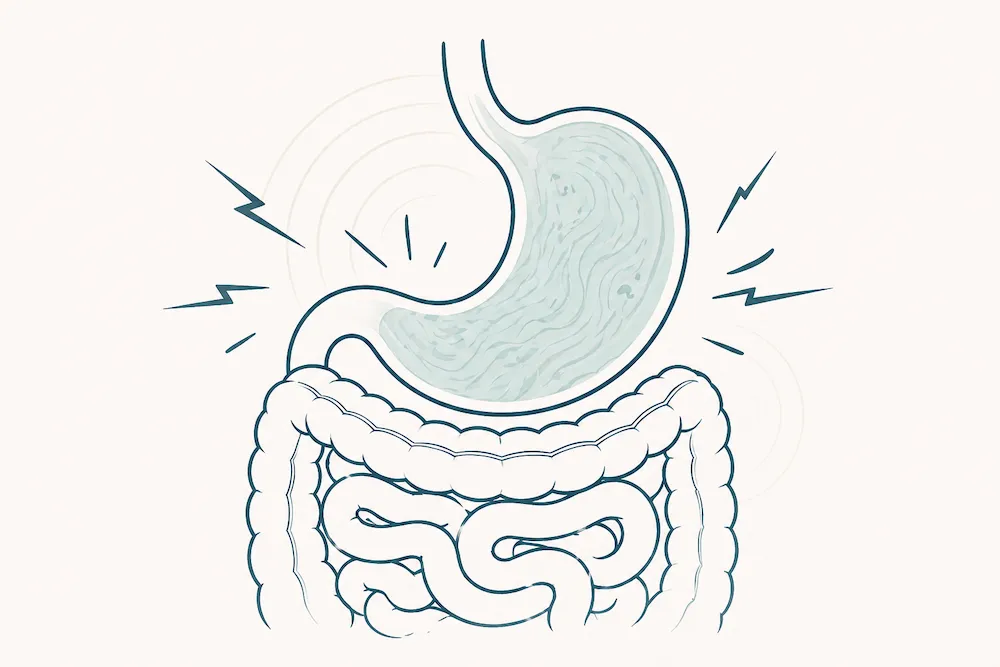
People with anxiety disorders develop gut symptoms such as cramping, bloating, and abdominal pain more frequently than healthy individuals. And, people with gut symptoms are much more likely to suffer mental health problems.
This two-way link between anxiety and abdominal pain is shown in ‘functional gastrointestinal disorders’. The most common functional disorder is irritable bowel syndrome (IBS), affecting 1 in 7 people worldwide. (1)
Functional Gastrointestinal Disorders
Functional gastrointestinal disorders such as irritable bowel syndrome (IBS) differ from conditions such as inflammatory bowel disease (IBD) or coeliac disease that have a physical basis. In these ‘functional’ disorders, the digestive tract is healthy, yet symptoms are still experienced.
Multiple factors – environmental, psychological, and social – contribute to the development of functional gastrointestinal disorders. Stress, in particular, may be an initial trigger for symptoms. However, gut bacteria imbalances and psychological conditions such as depression may also contribute. (2, 3)
Irritable bowel syndrome
Irritable bowel syndrome (IBS) is the most common functional gastrointestinal disorder. It is defined by persistent abdominal pain and one or more additional symptoms, such as a change in stool frequency.
The most common symptoms of IBS are:
Abdominal pain
Bloating
Cramping
Gas
Constipation or diarrhea (4)
IBS and mental health
IBS is more common in individuals who suffer mental health issues. It has been shown that over 50% of people with IBS also experience mental health conditions, such as:
Panic disorder
Post-traumatic stress disorder
Depression (5)
Although the cause of IBS is not known, the enteric nervous system and gut-brain connection are thought to be involved. These help to explain how psychological ill-health may be linked with gastrointestinal symptoms.
The enteric nervous system
The enteric nervous system refers to the neurons controlling the digestive system. This ‘second brain’ is connected to the central nervous system – the brain and spinal cord. This system relies on neurotransmitters to communicate with the central nervous system and may affect mood. (6)
After sensing food, the nerves of the enteric nervous system communicate with muscle cells to initiate contraction, moving food along the intestines.
In response to stress and in disorders such as IBS, the enteric nervous system may function abnormally. For instance, levels of neurotransmitters such as serotonin may be altered, or nerves may become hypersensitive. This may lead to gut symptoms such as abdominal pain, cramping, or constipation.
The gut-brain axis
The ‘gut-brain axis’ refers to the two-way communication between the brain and gut. It helps explain how stress can contribute to gastrointestinal symptoms, and is made up of several components:
The enteric nervous system
The Vagus nerve
Levels of gut bacteria in the intestines
The gut-brain axis is being investigated in the new field of ‘neurogasterenterology’. Modern research has allowed researchers to measure pain perception in the gut, and the effect of gut bacteria on mental wellbeing. Stress and mental illness are being uncovered as a source of GI dysfunction. (7)
Stress causes IBS?
‘Stress’ is the term for the normal response to survival, and chronic levels of stress may disrupt the gut-brain axis. This may lead to gastrointestinal symptoms, including abdominal pain.
GI symptoms may arise due to the following effects of the stress response:
These mechanisms slow the passage of food through the intestines, leading to pain and other symptoms of IBS. Researchers have confirmed that stressful experiences, tested with complex pattern recognition tasks, make IBS patients more sensitive to non-painful stimuli. (10)
However, the exact mechanism for how stress causes IBS is not known. One theory suggests that people who are predisposed to IBS – by genetics or early life trauma – develop the condition after a long period of stress, which acts as the trigger. (11)
IBS causes stress?
It works the other way, too: IBS symptoms may cause stress. Normal GI activities, such as needing to go to the bathroom, may be misinterpreted by the brain of a person with IBS as a catastrophic event, triggering the ‘fight or flight’ response.
Or, they may suffer anxiety about the social situations in which symptoms occur. This misinterpretation of normal digestive processes as dangerous leads to stress.
Hence, a vicious cycle may emerge between IBS symptoms such as abdominal pain and stress. (12)
The biopsychosocial model
More broadly, the ‘biopsychosocial model’ (1980) explains how stress and anxiety may link to abdominal pain. As suggested by the name, the model proposes that biological, psychological, and social factors may all contribute to disease. Looking at IBS this way helps to explain how stress – a social and psychological factor – may have a biological effect on the gut. It also explains how therapies targeting the mind, such as hypnotherapy and CBT, make sense as treatments for gut symptoms.(13)
Confirming the model, scientists in China recently found a link between stress and IBS. They showed that a protein called NGF appeared in higher rates following early life trauma, and led to symptoms of IBS. Hence, the biopsychosocial model appears valid in IBS. (14)
How to calm a nervous stomach
Given the importance of the psychological process in IBS, it is unsurprising that psychological therapies are an effective treatment option. Several psychotherapies are effective in reducing gastrointestinal distress:
Gut-directed hypnosis (GDH). This hypnosis involves the patient visualizing their gut as a set of slimy tubes and other gut-related imagery. This helps to restore the gut-brain communication to reduce symptoms of IBS. Smartphone-based versions such as Nerva have recently become available, and offer convenient access to hypnotherapy. (15)
Cognitive-behavioral therapy (CBT). This skill-based therapy teaches control over negative thought patterns and modifies patterns of behavior. Relaxation techniques help to control the stress response, and cognitive restructuring allows the patient to avoid catastrophizing. These techniques help to reduce the symptoms of IBS. (16)
Mindfulness-based therapies. This practice involves attending to the present moment and cultivating non-judgemental attitudes. Mindfulness therapies reduce levels of stress and sensitivity to pain, a key symptom of IBS. The effects have been shown to last over three months (17), although these therapies can be less effective than GDH and CBT.
These treatment options are likely to target both symptoms of anxiety, and functional symptoms such as abdominal pain. Psychological therapies, especially gut-directed hypnotherapy, have been shown as effective, if not more effective, than diets and medications for relieving IBS symptoms.
Other treatments for IBS
The following treatments are also available for IBS. However, the effectiveness can be lower than for psychotherapies:
Low FODMAP diet. This diet eliminates common ‘trigger compounds’ of IBS such as fructose and lactose and has been shown effective in treating IBS. (18)
Antidepressant medication. Low dose treatments of selective serotonin reuptake inhibitors (SSRIs) and tricycle antidepressants (TCAs) have been shown to relieve symptoms of IBS. (19, 20)
Peppermint oil. It's been shown that peppermint oil is a natural anti-spasmodic which means it can relax the smooth muscles in the gut, improving some of the symptoms of IBS.
When should I see the doctor?
If gastrointestinal symptoms and pain persist for more than a few days, you should consult a doctor. You may be instructed to undertake certain tests or see a specialist if there are signs of a more life threatening medical condition. If you experience abdominal pain and the following symptoms, you should consult a doctor as soon as possible:
Vomiting blood
The abdomen is larger than usual and hard
Rectal bleeding
You stop having bowel movements
These symptoms may suggest the pain is linked with a biological disease and is not a symptom of IBS or another functional gastrointestinal disorder.
Alternative causes of abdominal pain
As well as from functional gastrointestinal disorders, there are many other sources of abdominal pain. This pain may arise from inflammation, distension, and stretching or impaired blood supply. These include:
Heartburn (indigestion after eating)
Gallbladder inflammation
Ulcerative colitis
Crohn’s disease
Kidney stones
Gluten intolerance (coeliac disease)
Menstrual cramps
Gastroenteritis (inflammation)
Irritable bowel syndrome
Ischemic colitis
Vasculitis
Pregnancy (21)
Diagnosis of abdominal pain
If you experience abdominal pain and other GI symptoms, your physician will likely ask you a series of questions, addressing the pattern and persistence of the pain. A range of diagnostic tests may also be used to assess for certain medical conditions, including:
Physical examination
Ultrasound
Colonoscopy
Endoscopy
Magnetic resonance imaging (MRI)
Computerized tomography (CT) (22)
Treatments for abdominal pain
A range of treatment options are available for abdominal pain of biological origin, depending on the cause. These include:
Antibiotics for gastroenteritis
Antacid for gastroesophageal reflux disease (GERD).
Surgery, for bowel obstruction
Corticosteroids for ulcerative colitis or Crohn’s disease
Loperamide for diarrhea-induced cramping
Pain Hypnosis
Preventing abdominal pain
Some forms of abdominal pain require medication or surgery. However, certain behaviors may minimize the risk of many types of abdominal pain:
Exercising correctly and making fitness-based lifestyle changes
Eating a healthy diet, rich in vitamins and minerals
Staying hydrated
Taking herbal remedies such as ginger and peppermint
Limiting alcohol consumption
A Word from Mindset Health
If you suffer anxiety and abdominal pain, and diagnostic testing finds no physical cause, you may have IBS. The gut-brain connection suggests how physical symptoms of IBS such as stomach aches may be linked to anxiety symptoms and stress levels. Seeking help from a mental health professional and receiving psychotherapies such as gut-directed hypnosis will offer the chance for your gut and mind to be healed as one.
References
Bommelaer G, Poynard T, Le Pen C, Gaudin AF, Maurel F, Priol G, Amouretti M, Frexinos J,Ruszniewski P, El Hasnaoui A. Prevalence of irritable bowel syndrome (IBS) and variability of diagnostic criteria. Gastroenterologie clinique et biologique. 2004 Jun 1;28(6-7):554-61. Link
Masand PS, Kaplan DS, Gupta S, Bhandary AN, Nasra GS, Kline MD, Margo KL. Major depression and irritable bowel syndrome: is there a relationship? The Journal of clinical psychiatry. 1995 Aug. Link
De Palma G, Collins SM, Bercik P, Verdu EF. The microbiota–gut–brain axis in gastrointestinal disorders: stressed bugs, stressed brain or both?. The Journal of physiology. 2014 Jul15;592(14):2989-97. Link
Drossman, D.A., 2006. Rome III: the new criteria. Chinesejournal of digestive diseases, 7(4), pp.181-185. Link
Garakani, A., Win, T., Virk, S., Gupta, S., Kaplan, D. and Masand, P.S., 2003. Comorbidity of irritable bowel syndrome in psychiatric patients: a review. American journal of therapeutics, 10(1),pp.61-67. Link
Foster, J.A. and Neufeld, K.A.M., 2013. Gut–brain axis: how the microbiome influences anxiety and depression. Trends in neurosciences, 36(5), pp.305-312. Link
Cryan, J.F. and O’mahony, S.M., 2011. The microbiome‐gut‐brain axis: from bowel to behavior. Neurogastroenterology & Motility, 23(3), pp.187-192. Link
Aggarwal, A., Cutts, T.F., Abell, T.L., Cardoso, S.,Familoni, B., Bremer, J. and Karas, J., 1994. Predominant symptoms in irritable bowel syndrome correlate with specific autonomic nervous system abnormalities. Gastroenterology, 106(4), pp.945-950. Link
Mönnikes, H., Tebbe, J.J., Hildebrandt, M., Arck, P.,Osmanoglou, E., Rose, M., Klapp, B., Wiedenmann, B. and Heymann-Mönnikes, I.,2001. Role of stress in functional gastrointestinal disorders. Digestive Diseases, 19(3), pp.201-211. Link
Posserud, I., Agerforz, P., Ekman, R., Björnsson, E.S.,Abrahamsson, H. and Simrén, M., 2004. Altered visceral perceptual and neuroendocrine response in patients with irritable bowel syndrome during mental stress. Gut, 53(8), pp.1102-1108. Link
Chang L. The role of stress on physiologic responses and clinical symptoms in irritable bowel syndrome. Gastroenterology. 2011 Mar1;140(3):761-5. Link
Moloney, R.D., O’Mahony, S.M., Dinan, T.G. and Cryan,J.F., 2015. Stress-induced visceral pain: toward animal models of irritable-bowel syndrome and associated comorbidities. Frontiers in Psychiatry, 6,p.15. Link
George E, Engel L. The clinical application of the biopsychosocial model. American journal of Psychiatry. 1980 May5;137(5):535-44. Link
Wong, H.L.X., Qin, H.Y., Tsang, S.W., Zuo, X., Che, S.,Chow, C.F.W., Li, X., Xiao, H.T., Zhao, L., Huang, T. and Lin, C.Y., 2019.Early life stress disrupts intestinal homeostasis via NGF-TrkA signaling. Nature communications, 10(1), p.1745. Link
Peters SL, Yao CK, Philpott H, Yelland GW, MuirJG, Gibson PR. Randomised clinical trial: the efficacy of gut‐directed hypnotherapy is similar to that of the low FODMAP diet for the treatment of irritable bowel syndrome. Alimentary pharmacology & therapeutics. 2016 Sep;44(5):447-59. Link
Kinsinger, S.W., 2017. Cognitive-behavioral therapy for patients with irritable bowel syndrome:current insights. Psychology research and behavior management, 10,p.231. Link
Gaylord, S.A., Palsson, O.S., Garland, E.L., Faurot,K.R., Coble, R.S., Mann, J.D., Frey, W., Leniek, K. and Whitehead, W.E., 2011.Mindfulness training reduces the severity of irritable bowel syndrome in women: results of a randomized controlled trial. The American journal of gastroenterology, 106(9), p.1678. Link
Halmos EP, Power VA, Shepherd SJ, Gibson PR, Muir JG. A diet low in FODMAPs reduces symptoms of irritable bowel syndrome.Gastroenterology. 2014 Jan 1;146(1):67-75. Link
Tack J,Broekaert D, Fischler B, Van Oudenhove L, Gevers AM, Janssens J. A controlled crossover study of the selective serotonin reuptake inhibitor citalopram in irritable bowel syndrome. Gut. 2006 Aug 1;55(8):1095-103. Link
Rahimi, R., Nikfar, S., Rezaie, A. and Abdollahi, M.,2009. Efficacy of tricyclic antidepressants in irritable bowel syndrome: ameta-analysis. World journal of gastroenterology: WJG, 15(13),p.1548. Link
Nhsinform.scot. (2019). Stomachache and abdominal pain. [online] Available at:Link [Accessed23 Dec. 2019].
Miller SK, Alpert PT. Assessment and differential diagnosis of abdominal pain. The Nurse Practitioner. 2006 Jul 1;31(7):38-47. Link
Betterhealth.vic.gov.au. (2019). Abdominal pain in adults. [online] Available at: Link [Accessed23 Dec. 2019].
Knoop, K., Stack, L., Storrow, A. and Thurman, R. (2016). TheAtlas of Emergency Medicine. New York, N.Y.: McGraw-Hill Education LLC. Link