.webp)
Key takeaways:
- Hypnosis is a state of focused attention with reduced peripheral awareness and an enhanced capacity to respond to suggestion, often described as relaxed focus.
- Everyday experiences like daydreaming, zoning out during a movie, or not remembering much of a highway drive are akin to hypnosis.
- Stanford research shows observable brain changes during hypnosis, including reduced activity in areas tied to cognition and movement and increased activity in the region governing the brain-body connection.
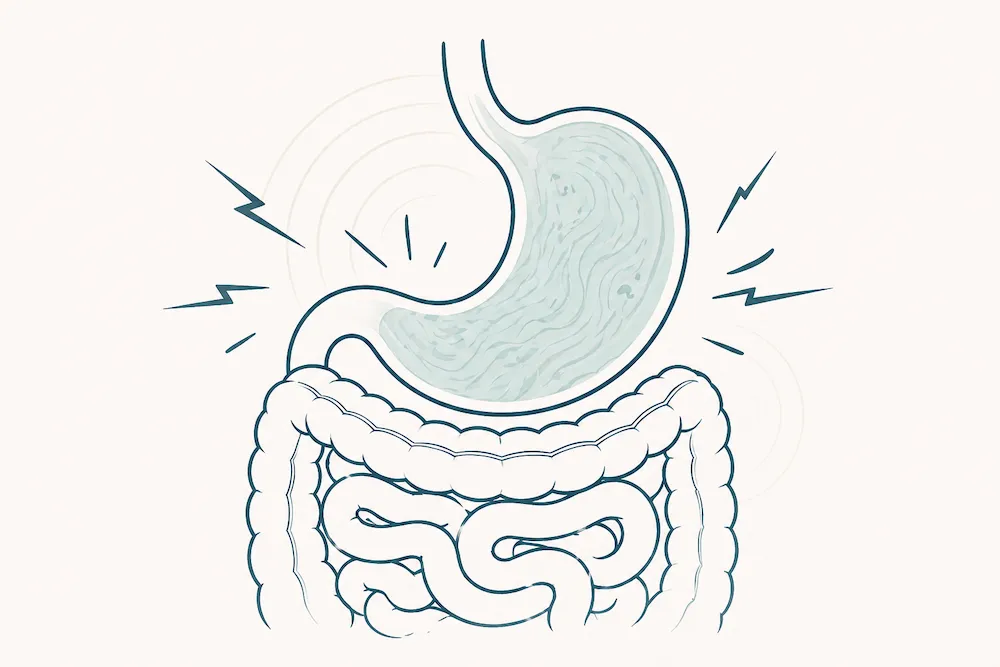
- The improved mind-body connection during hypnosis is particularly useful when applied as therapy, such as managing the brain-gut connection for people with IBS.
Summary of integrating digital hypnotherapy
The American Psychological Association defines hypnosis as
“a state of consciousness involving focused attention and reduced peripheral awareness characterized by an enhanced capacity for response to suggestion.”
Another way of describing it is as a state of relaxed focus.
The body is relaxed, but the mind is in a state of focused attention and more open to suggestions.
.webp)
If you have ever daydreamed or zoned out while watching a movie, or can’t remember much of a drive along the highway, then you’ve experienced something akin to hypnosis.
If you have ever daydreamed or zoned out while watching a movie, or can’t remember much of a drive along the highway, then you’ve experienced something akin to hypnosis.
How does hypnosis work?
Scientists have been debating hypnosis for more than 200 years, and have yet to fully explain this phenomenon. Modern technology such as functional magnetic resonance imaging (fMRI) allows us to detect the moment a person’s brain enters hypnosis, but we can’t explain why it happens.
However, recent research from Stanford University has shown that observable changes happen to your brain during hypnosis:
#1 You relax
A decrease in activity in the part of the brain involved in cognition and movement (dorsal anterior cingulate)⸺so you may feel more relaxed and not worry about outside concerns while hypnotized.
#2 Improved mind-body connection
An increase in activity in the region of the brain that is responsible for the brain-body connection. This is particularly useful when hypnosis is applied as a therapy to manage health conditions, such as managing the brain-gut connection for people with IBS.
#3 You are more open to suggestions
Greater activity in two parts of the brain is involved in processing your actions. This may be how suggestions to change your behavior, such as avoiding sugary foods, or not smoking, are more readily accepted.