Key takeaways:
- IBS can be diagnosed non-invasively using the Rome IV Criteria, based on abdominal pain at least one day a week for three months plus changes in bowel habits.
- Doctors may also classify a sub-type, IBS-C, IBS-D, IBS-M, or IBS-U, based on stool consistency, which helps guide which management options suit you best.
- Symptoms like weight loss, rectal bleeding, fever, or persistent vomiting are not part of IBS and may suggest another condition, so a formal diagnosis from a doctor matters.
- After diagnosis, management options include the low FODMAP diet, medications, and gut-directed hypnotherapy, which has been shown to reduce gut symptoms by up to 72%.
If this is you, an IBS diagnosis may be easier, and less invasive than you expect.
How doctors diagnose IBS
IBS is diagnosed according to the Rome IV Criteria, and a diagnosis can be as easy as talking through how your symptoms fit the Rome Criteria with your healthcare practitioner.
The Rome criteria was created as part of an international effort to make it easier to diagnose and classify functional gastrointestinal disorders such as irritable bowel syndrome.
Rome IV Criteria
Firstly, you must have experienced abdominal pain for at least one day, every week in the past three months.
Secondly, you must have also experienced at least two of the following during this time:
Bowel movements that relieve stomach pain
A change in the frequency of your bowel movements
Stools appear different⸺either lumpy and hard or watery and loose.
If you meet this criteria, and your doctor has ruled out other possible causes, you will likely be diagnosed with IBS.
If you’re not quite ready to talk to your doctor, but suspect you have IBS, you can take a quick online IBS symptom test, but a formal diagnosis can only be done by a healthcare professional.
Diagnosing an IBS Sub-type
Once you have received this diagnosis your doctor may also be able to classify which of the four IBS sub-types you are experiencing. This will help you understand your symptoms and which management options are best for you.
IBS-C diagnosis
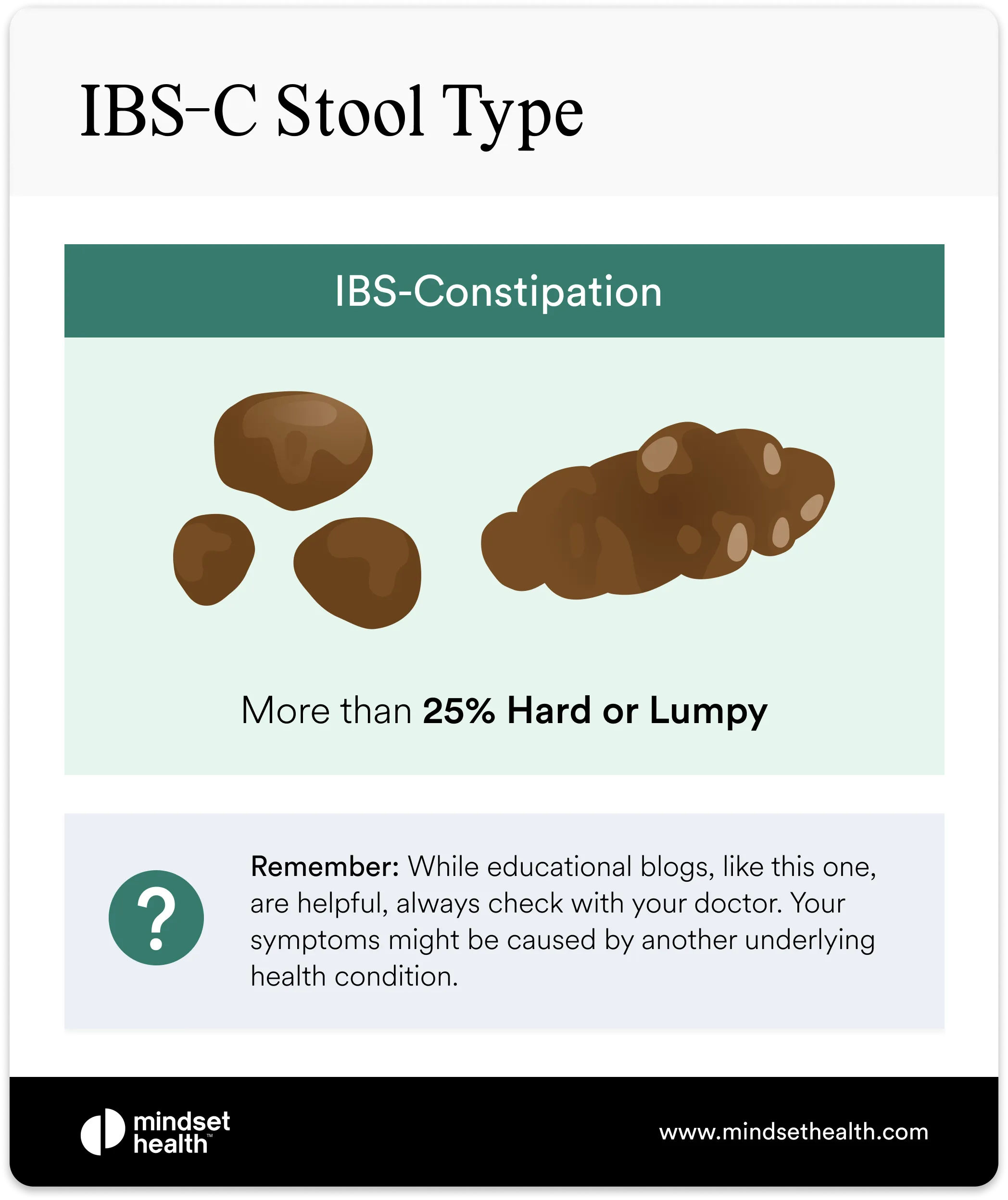
The ‘C’ in IBS-C stands for ‘constipation’. An IBS-C diagnosis requires at least 25% of your stools to be hard and lumpy, and fewer than 25% are loose in consistency.
You may be diagnosed with IBS-C if your symptoms include:
Infrequent bowel movements
Lumpy or hard stools
Straining when passing a bowel movement
A feeling of blockage in the anus or rectum.
IBS-D diagnosis
The ‘D’ in IBS-D stands for ‘diarrhea.’ If you have IBS-D, you may experience the urge to go to the toilet more frequently.
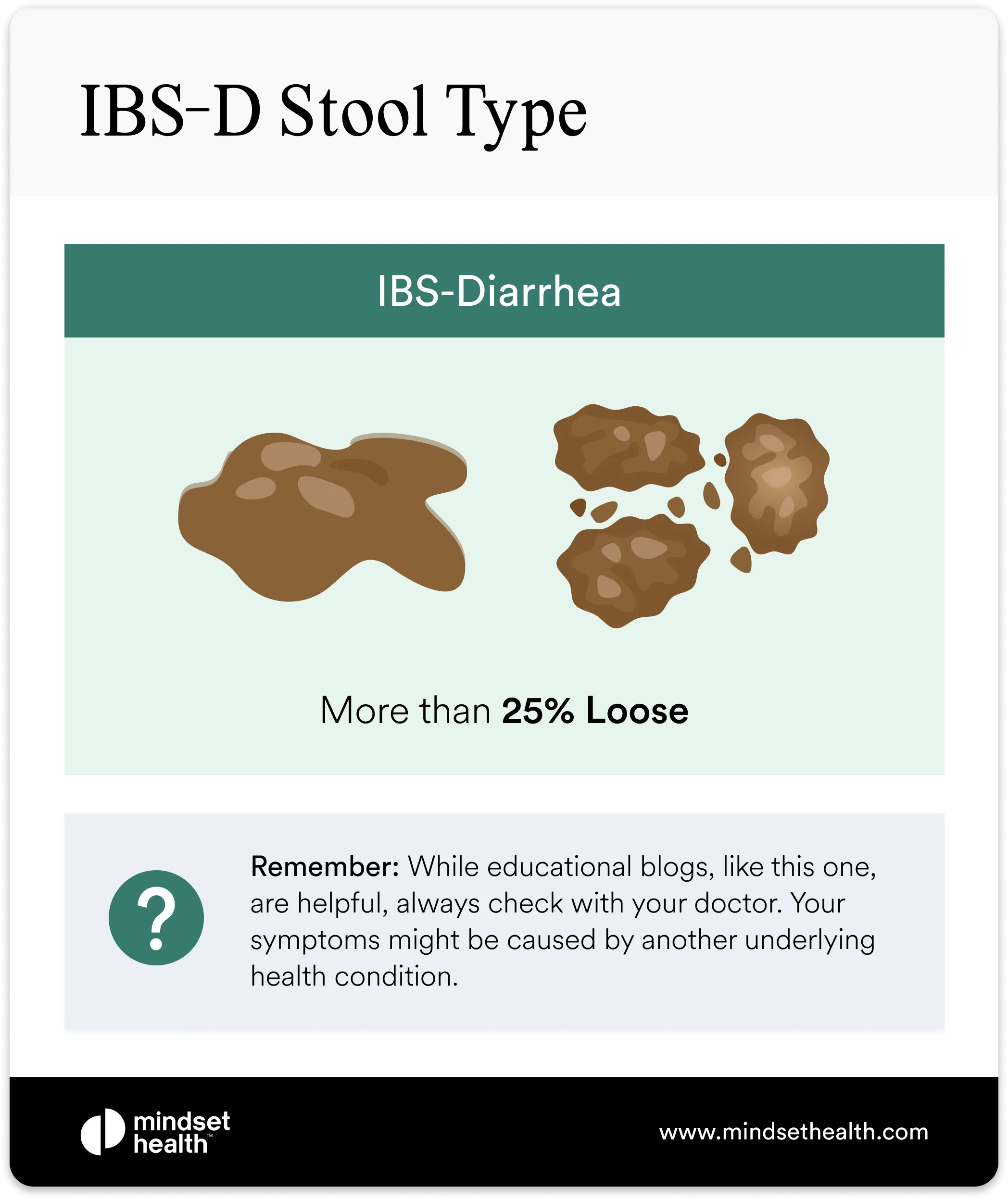
An IBS- D diagnosis requires more than 25% of stools to be loose and less than 25% of them to be hard and lumpy.
You may be diagnosed with IBS-D if you regularly experience the following symptoms:
Frequent bowel movements
Loose stools
Feelings of urgency to go to the toilet.
IBS-M diagnosis
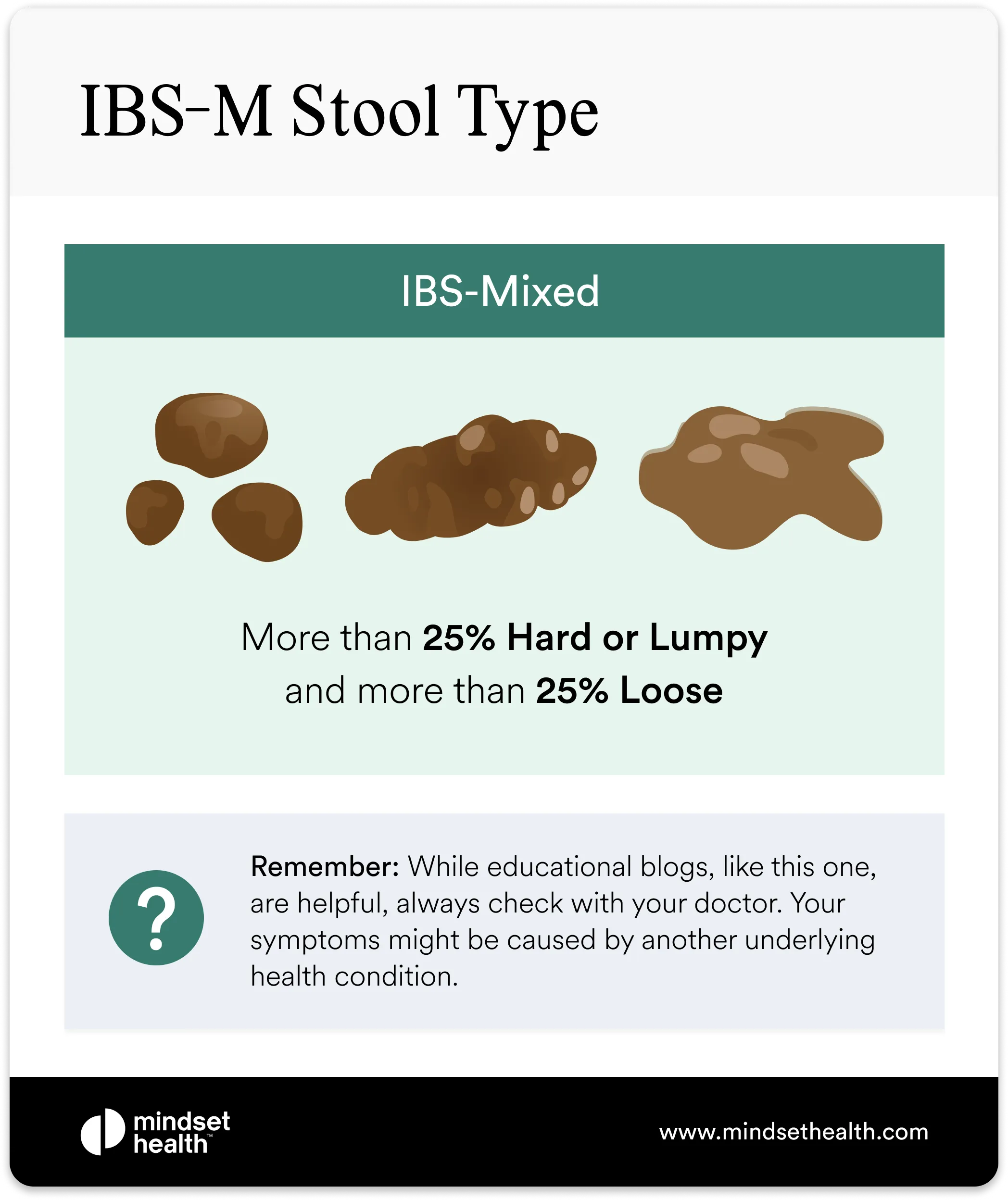
The ‘M’ in IBS-M refers to IBS with ‘mixed’ symptoms. The Rome Criteria for IBS-M state that stools must be hard, lumpy, and loose in consistency at least 25% of the time.
This means that during some IBS flare-ups, you experience diarrhea, while in others, you experience constipation.
IBS-U diagnosis
While rare, some people may meet the diagnostic criteria for IBS but aren’t able to be classified in any of the above groups. This sub-type’s ‘U’ refers to an ‘unclassified’ IBS diagnosis.
Non-IBS symptoms
One of the most important reasons to seek a formal IBS diagnosis from your doctor is that these symptoms may also be present in other health conditions such as inflammatory bowel diseases. Conditions that have similar symptoms to IBS include:
Celiac Disease
Lactose intolerance
Crohn’s Disease
Ulcerative Colitis.
Gastrointestinal symptoms that are not part of IBS and may suggest another condition include:
Weight loss
Rectal bleeding
Fever
Nausea
Vomiting
Persistent diarrhea that awakens you from your sleep.
You’ve been diagnosed with IBS. Now what?
The great news about getting an IBS diagnosis is that you now know why you are experiencing these gastrointestinal symptoms and can begin managing them and improving your quality of life.
Low FODMAP diet
More than half of people with IBS report worsening symptoms after eating certain foods. The low FODMAP diet eliminates food that is not easily digested by the gut and can trigger a flare-up. These include food such as wheat, dairy, onion, and beans.
IBS medication
Many medications are available to manage IBS symptoms, both over-the-counter and prescription. This includes laxatives, fiber supplements (such as psyllium husks), and anti-diarrhea medicines.
Stress has been shown to play a significant role in triggering IBS flare-ups, so anti-depressants may also be prescribed.
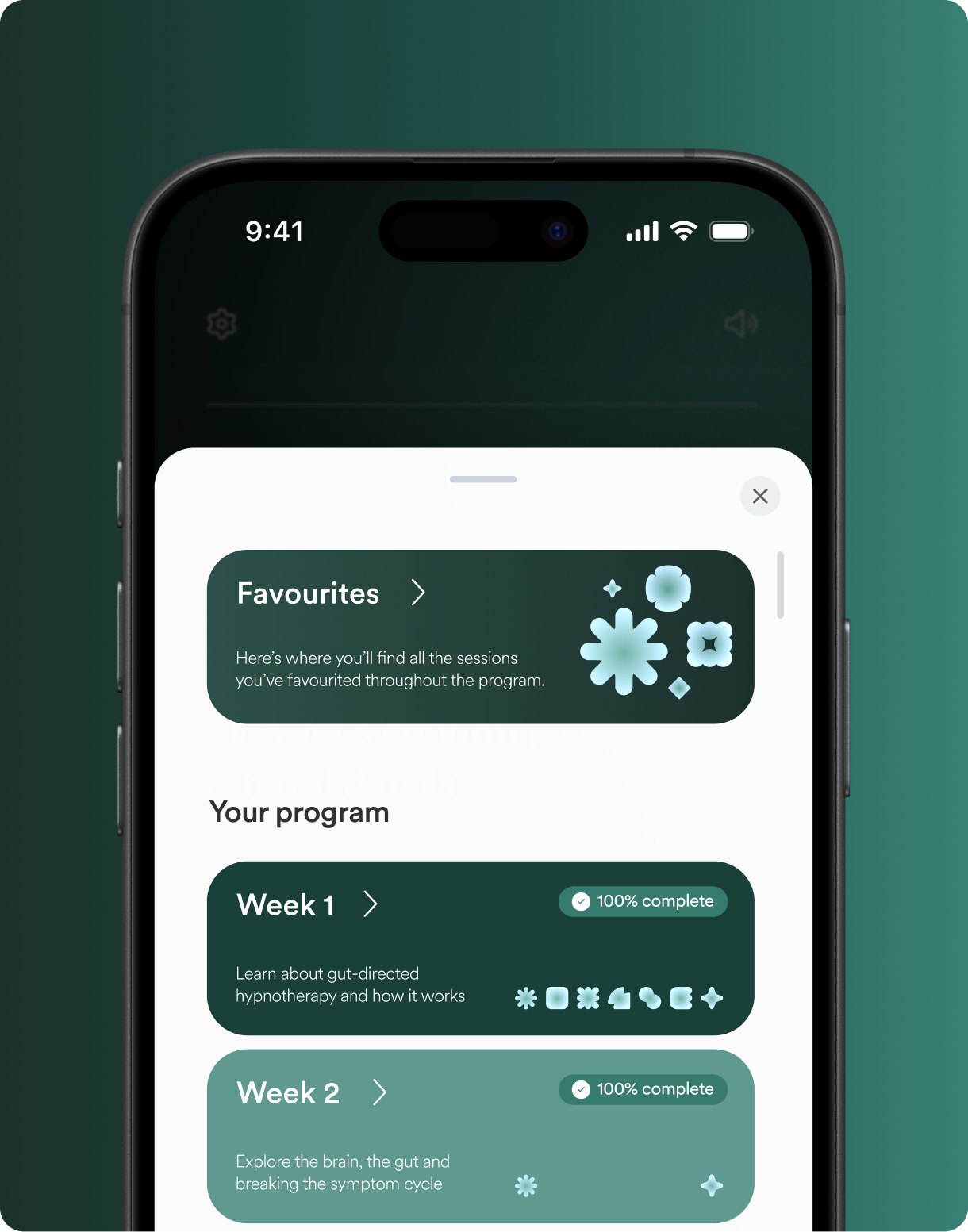
Gut-directed hypnotherapy
Gut-directed hypnotherapy has been shown to reduce gut symptoms, such as abdominal pain, bloating, and nausea by up to 72%, without the need for additional medications or changing diet.
It’s thought that people with IBS experience miscommunication between their gut and their brain. Messages that flow between them may be misinterpreted as pain, or that the intestinal processes need to slow (constipation) or speed up (diarrhea), when they are, in fact, normal.
Hypnotherapy for IBS looks to recalibrate the gut-brain connection, as well as provide your body with stress relief.
The Wrap Up
IBS can be diagnosed non-invasively by a healthcare practitioner using the Rome IV Criteria. They may also be able to diagnose the IBS sub-type: IBS-C, IBS-D, IBS-M or IBS-U. Other more serious health conditions share similar symptoms to IBS so it is important to speak to your doctor if you are experiencing abdominal pain, constipation, diarrhea, vomiting, rectal bleeding, and weight loss. Once IBS has been diagnosed, there are various management tools available, including diets, medication, and mind-body interventions such as gut-directed hypnotherapy.
References
Bennett EJ, Tennant CC, Piesse C, Badcock CA, Kellow JE. Level of chronic life stress predicts clinical outcome in irritable bowel syndrome. Gut. 1998 Aug;43(2):256-61. doi: 10.1136/gut.43.2.256. PMID: 10189854; PMCID: PMC1727204.
Canavan C, West J, Card T. The epidemiology of irritable bowel syndrome. Clin Epidemiol. 2014;6:71-80. Published 2014 Feb 4. doi:10.2147/CLEP.S40245
Capili B, Anastasi JK, Chang M. Addressing the Role of Food in Irritable Bowel Syndrome Symptom Management. J Nurse Pract. 2016;12(5):324-329. doi:10.1016/j.nurpra.2015.12.007
Drossman, D., Morris, C., Hu, Y., Toner, B., Diamant, N., Leserman, J., Shetzline, M., Dalton, C. and Bangdiwala, S., 2005. A prospective assessment of bowel habit in irritable bowel syndrome in women: Defining an alternator. Gastroenterology, 128(3), pp.580-589. https://doi.org/10.1053/j.gastro.2004.12.006
Lacy BE, Patel NK. Rome Criteria and a Diagnostic Approach to Irritable Bowel Syndrome. J Clin Med. 2017;6(11):99. Published 2017 Oct 26. doi:10.3390/jcm6110099
Peters SL, Yao CK, Philpott H, Yelland GW, Muir JG, Gibson PR. Randomised clinical trial: the efficacy of gut-directed hypnotherapy is similar to that of the low FODMAP diet for the treatment of irritable bowel syndrome. Aliment Pharmacol Ther. 2016 Sep;44(5):447-59. doi: 10.1111/apt.13706. Epub 2016 Jul 11. PMID: 27397586.
Pimentel M. Evidence-based management of irritable bowel syndrome with diarrhea. Am J Manag Care. 2018 Jan;24(3 Suppl):S35-S46. PMID: 29372991.
Rome Foundation. 2021. Rome Translation Project - Rome Foundation. [online] Available at: <https://theromefoundation.org/products/rome-translation-project/> [Accessed 9 December 2021].
Su AM, Shih W, Presson AP, Chang L. Characterization of symptoms in irritable bowel syndrome with mixed bowel habit pattern. Neurogastroenterol Motil. 2014;26(1):36-45. doi:10.1111/nmo.12220
Tan G, Hammond DC, Joseph G. Hypnosis and irritable bowel syndrome: a review of efficacy and mechanism of action. Am J Clin Hypn. 2005;47(3):161-178. doi:10.1080/00029157.2005.10401481