Key takeaways:
- CBD is a compound from the cannabis plant that, unlike THC, does not produce a 'high' and is being investigated as a possible IBS treatment.
- CBD may help IBS in three ways: reducing abdominal pain and inflammation, supporting stress management, and easing the anxiety linked with symptoms.
- Due to limited research, there is not yet enough evidence to promote the use of CBD for IBS, though the research is continually unfolding.
- CBD products are marketed as supplements not regulated by the FDA, and legality varies by location, so talk to your doctor and check local laws first.
Your CBD dictionary
There are a lot of words used in this space that sound the same, or are used interchangeably. So before we get started, let’s all get on the same page:
Cannabis: Cannabis sativa is the plant CBD is sourced from.
Marijuana: Another name for cannabis, more commonly used when talking about recreational use.
Hemp: A strain of cannabis that is often used in medicine, clothing or building materials. It usually has lower levels of THC, which means it won’t produce a ‘high’.
Medicinal cannabis/marijuana: Cannabis that is grown for the purpose of medicinal use. It usually has lower levels of THC. May also be called hemp.
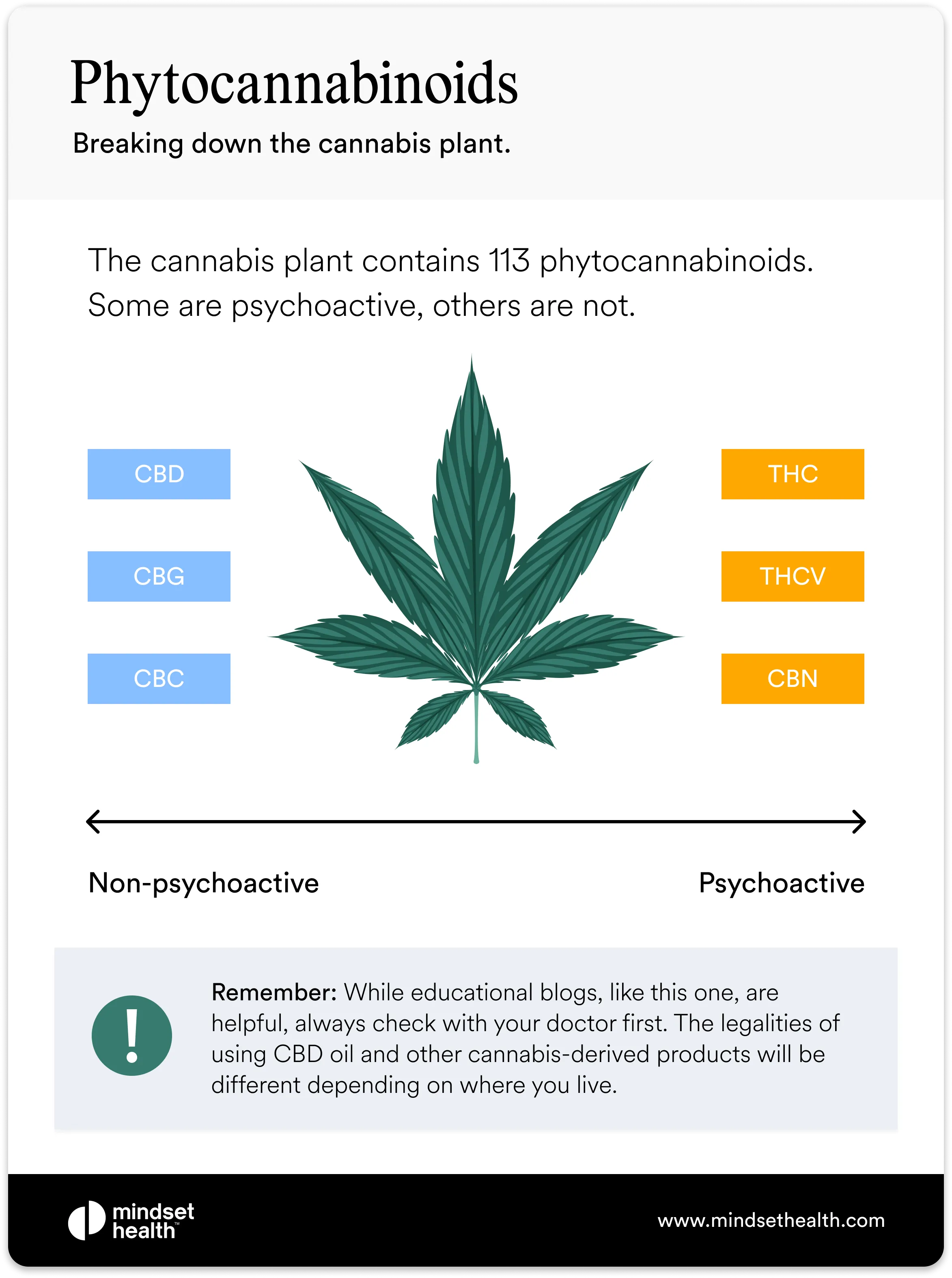
Phytocannabinoids: Compounds found in the cannabis plant.
CBD: Cannabidiol is one of 113 phytocannabinoids found in cannabis plants. Has potential medicinal applications and does not produce a ‘high’.
THC: Tetrahydrocannabinol is another of the phytocannabinoids found in cannabis plants. Produces a ‘high’.
What is CBD?
CBD, also known as cannabidiol, comes from marijuana, but it shouldn’t be confused as the same thing.
The marijuana plant (or cannabis) is made up of hundreds of different compounds. Over 100 of these are phytocannabinoids. CBD is one of them.
In recent years, there has been an increase in research into CBD for medical purposes as it has been shown to have anti-epileptic, anti-inflammatory, and anti-psychotic properties.
Tetrahydrocannabinol (THC) is another compound found in marijuana. This is the compound that gives the ‘high’ sensation when it’s consumed.
Unlike THC, CBD will not make you ‘high’.
How is CBD consumed?
CBD is most commonly taken in oil form, with a carrier oil like coconut or hemp seed oil. You can take it straight, by holding some drops under your tongue, or you can mix it in with food and drink. You can also take CBD as a gummy, spray, capsule, or topical rub or balm.
Can CBD help my IBS?
Cannabis has been used to help manage a number of gastrointestinal (GI) conditions such as abdominal pain, anorexia, inflammatory diarrhea, and diabetic gastroparesis. However, the psychotropic effects of THC limit its use in practice.
For this reason, CBD is more clinically useful since it provides similar benefits without the ‘high’.
CBD has shown promising results for a variety of medical conditions including chronic pain, insomnia, epilepsy, multiple sclerosis, neurodegenerative conditions such as Parkinson’s disease, and side effects of chemotherapy. It is currently being investigated as a possible treatment for IBS.
It is thought that CBD may help ‘re-calibrate’ the communication between the gut and the brain. However, more research is needed to clarify the role of CBD for IBS.
How might CBD help with IBS?
There are three ways in which CBD could help to relieve symptoms of IBS.
Firstly, it may help with abdominal pain which is experienced by two-thirds of IBS patients.
CBD is well known for its pain-reducing properties, and it has been shown to reduce inflammation. The CBD receptors in the gut are linked with nerve cells that control pain in the internal organs.
Secondly, stress and digestive troubles are inherently linked. For some people, stress is a major trigger for their IBS symptoms. CBD has shown benefits in stress management so it may help decrease the frequency of the triggers.
Finally, there is growing evidence that supports the use of cannabinoids in the treatment of anxiety disorders. A 2011 study found that CBD reduced anxiety levels for Social Anxiety Disorder (SAD) in the acutely stressful situation of public speaking.
The link between IBS and anxiety has been shown and is known to go in both directions: IBS can increase your feelings of anxiety and anxiety may increase your IBS symptoms. CBD could act as a circuit breaker.
It is worth pointing out that due to limited research, there’s not enough evidence to promote the use of CBD for IBS. However, the research is continually unfolding and it is possible that the medical status of CBD for IBS may change in the near future.
CBD Safety
CBD products such as hemp oil are derived from industrial hemp plants and contain very low amounts of THC. However, CBD products are currently marketed as supplements, which are not regulated for safety and purity by the Food and Drug Administration (FDA) in the United States. So, as with all supplements, it’s a good idea to be mindful of where you source your CBD and make sure you talk to your doctor first.
Potential side effects of CBD include nausea, fatigue and irritability.
Is CBD legal?
CBD can live in a grey area of legalities, depending on where you live. In the US, laws are different in each state. In the UK, it depends on how much THC the oil contains (which, in theory, should be very little).
In Australia, CBD is a prescription medication when prepared appropriately. It cannot be purchased over-the-counter (OTC) or online. Doctors must apply to the Therapeutic Goods Administration (TGA) for an approval to prescribe products containing CBD.
No matter where you live, be aware that the laws are constantly changing, especially as the research unfolds. If you have concerns, make sure to speak to your doctor and look up the legislation in your location.
The Wrap Up
CBD is being researched as a treatment or management tool for a variety of health conditions such as chronic pain, seizures, and gastrointestinal complaints. CBD is sourced from the cannabis plant but does not produce a ‘high’. Recent research suggests that CBD may hold promise in addressing IBS symptoms. However, more conclusive research is needed to show how beneficial CBD is for IBS symptoms. If you are considering taking CBD for IBS then talk to your doctor first and be aware of your local legislation.
References
Atakan Z. Cannabis, a complex plant: different compounds and different effects on individuals. Ther Adv Psychopharmacol. 2012;2(6):241-254. doi:10.1177/2045125312457586
Atalay S, Jarocka-Karpowicz I, Skrzydlewska E. Antioxidative and Anti-Inflammatory Properties of Cannabidiol. Antioxidants (Basel). 2019 Dec 25;9(1):21. doi: 10.3390/antiox9010021. PMID: 31881765; PMCID: PMC7023045.
Choung, R.S. and Locke 3rd, G.R., 2011. Epidemiology of IBS. Gastroenterology Clinics of North America, 40(1), pp.1-10. https://europepmc.org/article/med/21333897
Elsaid S, Kloiber S, Le Foll B. Effects of cannabidiol (CBD) in neuropsychiatric disorders: A review of pre-clinical and clinical findings. Prog Mol Biol Transl Sci. 2019;167:25-75. doi: 10.1016/bs.pmbts.2019.06.005. Epub 2019 Aug 28. PMID: 31601406.
Perisetti, A., Rimu, A.H., Khan, S.A., Bansal, P. and Goyal, H., 2020. Role of cannabis in inflammatory bowel diseases. Annals of gastroenterology, 33(2), p.134. https://www.ncbi.nlm.nih.gov/pmc/articles/PMC7049239/
Lacy, B.E. and Patel, N.K., 2017. Rome criteria and a diagnostic approach to irritable bowel syndrome. Journal of clinical medicine, 6(11), p.99. https://www.mdpi.com/2077-0383/6/11/99
Pellissier, S. and Bonaz, B., 2017. The place of stress and emotions in the irritable bowel syndrome. Vitamins and hormones, 103, pp.327-354. https://www.sciencedirect.com/science/article/pii/S0083672916300474
Ballou, S., McMahon, C., Lee, H.N., Katon, J., Shin, A., Rangan, V., Singh, P., Nee, J., Camilleri, M., Lembo, A. and Iturrino, J., 2019. Effects of irritable bowel syndrome on daily activities vary among subtypes based on results from the IBS in America Survey. Clinical Gastroenterology and Hepatology, 17(12), pp.2471-2478. https://www.sciencedirect.com/science/article/abs/pii/S1542356519308912
Staudacher, H.M. and Whelan, K., 2017. The low FODMAP diet: recent advances in understanding its mechanisms and efficacy in IBS. Gut, 66(8), pp.1517-1527. https://gut.bmj.com/content/66/8/1517.abstract
Flik, C.E., Laan, W., Zuithoff, N.P., van Rood, Y.R., Smout, A.J., Weusten, B.L., Whorwell, P.J. and de Wit, N.J., 2019. Efficacy of individual and group hypnotherapy in irritable bowel syndrome (IMAGINE): a multicentre randomised controlled trial. The lancet Gastroenterology & hepatology, 4(1), pp.20-31. https://www.sciencedirect.com/science/article/abs/pii/S2468125318303108
Everitt, H.A., Landau, S., O'Reilly, G., Sibelli, A., Hughes, S., Windgassen, S., Holland, R., Little, P., McCrone, P., Bishop, F.L. and Goldsmith, K., 2019. Cognitive behavioural therapy for irritable bowel syndrome: 24-month follow-up of participants in the ACTIB randomised trial. The Lancet Gastroenterology & Hepatology, 4(11), pp.863-872. https://www.sciencedirect.com/science/article/pii/S2468125319302432
Shah, S.L., Janisch, N.H., Crowell, M. and Lacy, B.E., 2021. Patients with irritable bowel syndrome are willing to take substantial medication risks for symptom relief. Clinical Gastroenterology and Hepatology, 19(1), pp.80-86. https://www.sciencedirect.com/science/article/abs/pii/S1542356520304845
Chang, F.Y. and Lu, C.L., 2007. Irritable bowel syndrome in the 21st century: Perspectives from Asia or South‐east Asia. Journal of gastroenterology and hepatology, 22(1), pp.4-12. https://onlinelibrary.wiley.com/doi/full/10.1111/j.1440-1746.2006.04672.x
Myers, B. and Greenwood-VanMeerveld, B., 2009. Role of anxiety in the pathophysiology of irritable bowel syndrome: importance of the amygdala. Frontiers in Neuroscience, 3, p.2. https://www.frontiersin.org/articles/10.3389/neuro.21.002.2009/full
Crippa, J.A.S., Derenusson, G.N., Ferrari, T.B., Wichert-Ana, L., Duran, F.L., Martin-Santos, R., Simões, M.V., Bhattacharyya, S., Fusar-Poli, P., Atakan, Z. and Filho, A.S., 2011. Neural basis of anxiolytic effects of cannabidiol (CBD) in generalized social anxiety disorder: a preliminary report. Journal of psychopharmacology, 25(1), pp.121-130. https://journals.sagepub.com/doi/abs/10.1177/0269881110379283
McPartland, J.M., 2018. Cannabis systematics at the levels of family, genus, and species. Cannabis and cannabinoid research, 3(1), pp.203-212. https://www.liebertpub.com/doi/full/10.1089/can.2018.0039
Groce, E., 2018. The health effects of cannabis and cannabinoids: the current state of evidence and recommendations for research. https://books.google.co.uk/books?hl=en&lr=&id=FTW9DgAAQBAJ&oi=fnd&pg=PR1&dq=cannabis+research&ots=-jaU50cfpY&sig=baP51QeDpUAR42ZdrGfxwzFWafo&redir_esc=y#v=onepage&q=cannabis%20research&f=false
Cristino, L., Bisogno, T. and Di Marzo, V., 2020. Cannabinoids and the expanded endocannabinoid system in neurological disorders. Nature Reviews Neurology, 16(1), pp.9-29. https://www.nature.com/articles/s41582-019-0284-z
Russo, E.B., 2008. Clinical endocannabinoid deficiency (CECD): can this concept explain therapeutic benefits of cannabis in migraine, fibromyalgia, irritable bowel syndrome and other treatment-resistant conditions?. Neuro endocrinology letters, 29(2), pp.192-200. https://europepmc.org/article/med/18404144
White, C.M., 2019. A review of human studies assessing cannabidiol's (CBD) therapeutic actions and potential. The Journal of Clinical Pharmacology, 59(7), pp.923-934. https://accp1.onlinelibrary.wiley.com/doi/abs/10.1002/jcph.1387
van Hell, H.H., Bossong, M.G., Jager, G., Kristo, G., van Osch, M.J., Zelaya, F., Kahn, R.S. and Ramsey, N.F., 2011. Evidence for involvement of the insula in the psychotropic effects of THC in humans: a double-blind, randomized pharmacological MRI study. International Journal of Neuropsychopharmacology, 14(10), pp.1377-1388. https://academic.oup.com/ijnp/article/14/10/1377/753434?login=true
Goyal, H., Singla, U., Gupta, U. and May, E., 2017. Role of cannabis in digestive disorders. European journal of gastroenterology & hepatology, 29(2), pp.135-143. https://www.ingentaconnect.com/content/wk/ejghe/2017/00000029/00000002/art00003
Millar, S.A., Stone, N.L., Bellman, Z.D., Yates, A.S., England, T.J. and O'Sullivan, S.E., 2019. A systematic review of cannabidiol dosing in clinical populations. British journal of clinical pharmacology, 85(9), pp.1888-1900. https://bpspubs.onlinelibrary.wiley.com/doi/full/10.1111/bcp.14038
Maroon, J. and Bost, J., 2018. Review of the neurological benefits of phytocannabinoids. Surgical neurology international, 9. https://surgicalneurologyint.com/surgicalint-articles/review-of-the-neurological-benefits-of-phytocannabinoids/
White, C.M., 2019. A review of human studies assessing cannabidiol's (CBD) therapeutic actions and potential. The Journal of Clinical Pharmacology, 59(7), pp.923-934. https://accp1.onlinelibrary.wiley.com/doi/abs/10.1002/jcph.1387
Parker, C.H., Naliboff, B.D., Shih, W., Presson, A.P., Videlock, E.J., Mayer, E.A. and Chang, L., 2019. Negative events during adulthood are associated with symptom severity and altered stress response in patients with irritable bowel syndrome. Clinical Gastroenterology and Hepatology, 17(11), pp.2245-2252. https://pubmed.ncbi.nlm.nih.gov/30616026/
Bonaccorso, S., Ricciardi, A., Zangani, C., Chiappini, S. and Schifano, F., 2019. Cannabidiol (CBD) use in psychiatric disorders: a systematic review. Neurotoxicology, 74, pp.282-298. https://www.sciencedirect.com/science/article/abs/pii/S0161813X19300774
Bergamaschi, M.M., Queiroz, R.H.C., Chagas, M.H.N., De Oliveira, D.C.G., De Martinis, B.S., Kapczinski, F., Quevedo, J., Roesler, R., Schröder, N., Nardi, A.E. and Martín-Santos, R., 2011. Cannabidiol reduces the anxiety induced by simulated public speaking in treatment-naive social phobia patients. Neuropsychopharmacology, 36(6), pp.1219-1226. https://www.ncbi.nlm.nih.gov/pmc/articles/PMC3079847/
Hartono, J.L., Mahadeva, S. and GOH, K.L., 2012. Anxiety and depression in various functional gastrointestinal disorders: do differences exist?. Journal of digestive diseases, 13(5), pp.252-257. https://onlinelibrary.wiley.com/doi/full/10.1111/j.1751-2980.2012.00581.x
Wong, B.S., Camilleri, M., Busciglio, I., Carlson, P., Szarka, L.A., Burton, D. and Zinsmeister, A.R., 2011. Pharmacogenetic trial of a cannabinoid agonist shows reduced fasting colonic motility in patients with nonconstipated irritable bowel syndrome. Gastroenterology, 141(5), pp.1638-1647. https://pubmed.ncbi.nlm.nih.gov/21803011/
Klooker, T.K., Leliefeld, K.E.M., Van Den Wijngaard, R.M. and Boeckxstaens, G.E.E., 2011. The cannabinoid receptor agonist delta‐9‐tetrahydrocannabinol does not affect visceral sensitivity to rectal distension in healthy volunteers and IBS patients. Neurogastroenterology & Motility, 23(1), pp.30-e2. https://onlinelibrary.wiley.com/doi/abs/10.1111/j.1365-2982.2010.01587.x
Pamplona, F.A., da Silva, L.R. and Coan, A.C., 2018. Potential clinical benefits of CBD-rich cannabis extracts over purified CBD in treatment-resistant epilepsy: observational data meta-analysis. Frontiers in neurology, 9, p.759. https://www.frontiersin.org/articles/10.3389/fneur.2018.00759/full