
Key takeaways:
- Cognitive distortions such as catastrophising are linked to greater GI symptoms, distress, and disability.¹
- New guidance outlines 3 brief CBT-based steps clinicians can use in visits: educate, label, and reframe.¹
- An estimated 46% of US adults live more than 25 miles from a listed in-person GI psychology specialist.²
- CBT and gut-directed hypnotherapy have the largest evidence base among psychological therapies for IBS.³
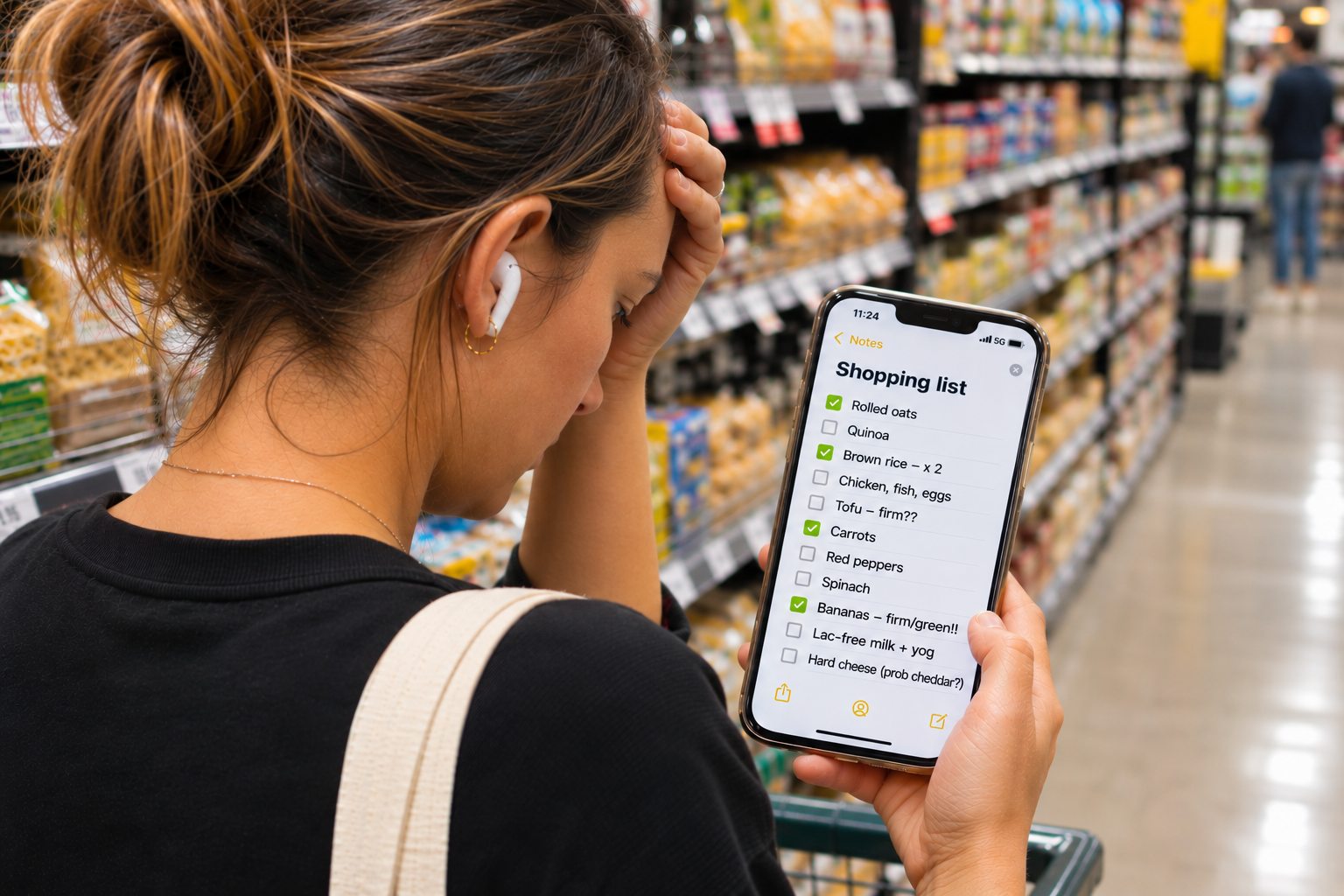
Brief CBT for IBS lets clinicians address catastrophising in a routine visit, new guidance shows, while an estimated 46% of US adults live over 25 miles from in-person GI psychology care.¹ ² When a referral means a long wait, your next visit may be the best chance to interrupt that thinking.
You’ll hear it in almost every clinic: “I’ll never get better,” or “this pain is going to ruin my whole day.” New guidance in the Journal of Paediatric Gastroenterology and Nutrition makes the case that you don’t need to hand that thinking off to a referral and hope for the best.¹
Instead, it sets out a short framework drawn from cognitive behavioural therapy (CBT) that fits inside a normal visit. It was written for paediatric gastroenterologists, but the skills aren’t specific to one specialty or age group: GI advanced practice providers (APPs), dietitians, primary care clinicians, and nurses hear the same thoughts, and gut-focused CBT uses the same skills with adults.
The authors are also clear it isn’t a call for clinicians to deliver ongoing CBT themselves.¹
What cognitive distortions look like in IBS and gut-brain disorders
Cognitive distortions are automatic, biased thoughts that reinforce negative thinking, and in gut-brain disorders they tend to centre on what a symptom means and what will happen next.¹ Catastrophising, or jumping to the worst possible outcome, is the most familiar.
They matter clinically because fear of future GI symptoms, known as GI-specific visceral anxiety, is linked to symptom exacerbation, lower quality of life, and more anxiety and depression.¹ Helplessness about pain has been linked to greater GI symptoms, distress, and disability too.¹
“Gut symptoms are not just relayed from the periphery or from the organ. They’re shaped and filtered by the brain.”
– Dr. Dany Lamothe, Medical Psychiatrist, Stanford University School of Medicine⁴
These are the 3 distortions the guidance highlights, with the kind of response it suggests:¹
| Cognitive distortion | What you might hear | A response to try |
|---|---|---|
| Catastrophizing | “I’ll never get better.” | “I see a lot of patients with this, and many improve a great deal. What makes you sure you won’t?” |
| Fortune telling | “This new medication won’t work either.” | “Can you remember a time you felt better? What was different then?” |
| Overgeneralization | “I can’t live a normal life.” | “What’s the evidence for that, and what’s the evidence against it?” |
Targeting these thoughts is the core of gut-focused CBT, which has one of the strongest evidence bases among psychological therapies for IBS in a network meta-analysis of 41 trials.³
The good news is that the first steps don’t require a therapist.
3 brief CBT steps to address catastrophising in a clinic visit
Clinicians can address catastrophising in 3 steps during routine care: explain what a cognitive distortion is, help the patient label it, then question or reframe it.¹ The guidance frames them for gastroenterologists, but they fit just as well in a dietitian consult or a primary care visit, and you can spread them across appointments.
Step 1: Explain catastrophising with brief psychoeducation
Brief psychoeducation means naming the thought trap when you hear it, and explaining why it matters. When a patient says their new medication won’t help and surgery is inevitable, you might reflect that their mind is jumping to the worst outcome, which is common when people feel unwell, and that these thought errors can make symptoms feel worse.¹
It helps to be clear that naming a thought doesn’t mean the symptoms aren’t real. Our guide to explaining IBS as a real disorder of gut-brain interaction covers that framing.
Step 2: Help patients recognise and label cognitive distortions
Labelling turns a passing thought into something the patient can spot on their own. When a patient says their symptoms are never going away, pause and ask what kind of thought that might be, and how it could affect their pain.¹
Model it first, then hand it over. Over time, patients and families can start catching these thoughts in real time, between visits.¹
Step 3: Question the evidence or reframe the thought
Once a thought is labelled, patients can either test it or rewrite it.¹ To test it, ask: “What evidence do you have that this is true, and what evidence says it isn’t?” A simpler version is “Is this thought helpful?”
To reframe, help the patient soften the thought rather than replace it with forced positivity. “My pain is going to ruin my day” becomes “I’m worried my pain will ruin my day, but I have skills to manage it.”¹
Applying this in practice
Pick one step per visit rather than trying all 3 at once. Listen for “never,” “always,” and “ruin” in how patients describe their symptoms, and use that moment to name the pattern.
For dietitians, catastrophising often shows up around food: “If I eat onion, my whole week is ruined.” The same question-the-evidence step works there, and it can help when fear, rather than symptoms, is driving restriction.
If the thinking doesn’t shift, or it’s clearly driving how the patient functions, that’s your cue to refer.
Patient resources:
When to refer to a GI psychologist for catastrophising or GI-specific anxiety
GI psychology referral is the right next step when brief in-visit work isn’t enough, and the guidance names three groups who need it.¹ These micro-interventions are meant to start the work, not replace specialist care.
Who to refer to GI psychology
Patients with high levels of distress or functional impairment
Patients with chronic GI symptoms
Patients with psychological comorbidities, such as anxiety or depression¹
When a GI psychologist isn’t available
The Rome Foundation’s GastroPsych directory is the place to start, and the guidance suggests a general behavioural health clinician if no GI psychologist is available.¹
That’s a common problem. Adults with bowel DGBIs were no more likely to have been offered CBT than people without GI disease in a 2026 survey, even though those with other GI diseases had 4.3 times the odds.⁵ And an analysis we undertook at Nerva estimated that that 16 states have no listed in-person GI psychology specialist at all.²
Using brief CBT techniques with children, teens, and their parents
Brief CBT techniques work well with children and teens when you bring parents in as coaches. The guidance suggests modelling the skills in clinic so caregivers can support their child to use them at home, at school, and in the community.¹
Guidelines back the approach. The joint European and North American Societies for Paediatric Gastroenterology, Hepatology and Nutrition (ESPGHAN and NASPGHAN) 2025 guideline for IBS and functional abdominal pain in children aged 4 to 18 includes gut-brain psychotherapies such as CBT and gut-directed hypnotherapy.⁶ Our article on paediatric IBS guidelines and gut-directed hypnotherapy covers what changed.
How you frame it for families matters as much as the technique:
“I always make it really clear early on: this is not all in your head, and it’s not all anxiety. What’s happening in your head, your thoughts and experiences, does influence what’s happening in your gut. But you can often feel a weight lift off the child and their parents’ shoulders when you say that.”
– Dr. Charmaine Chai, Paediatric Gastroenterologist (Neurogastroenterology & Motility), Women’s and Children’s Hospital, Adelaide
Watch: Managing paediatric patients with gut-brain disorders, with Harvard GI Dr. Mark Salvatore
Watch Harvard paediatric gastroenterologist Dr. Mark Salvatore, Founding Clinical Director of the Pediatric Mind-Body Medicine Program at Mass General Brigham for Children, talk through the gut-brain axis and how he manages paediatric patients with gut-brain disorders.
Where gut-brain therapy fits when a GI psychologist isn’t available
Gut-brain therapy gives patients a structured way to keep working on the gut-brain connection between visits, especially when specialist care is out of reach. The American College of Gastroenterology (ACG) guideline suggests gut-directed psychotherapy for global IBS symptoms.⁷ A Rome Foundation working team also recommends brain-gut behaviour therapies across disorders of gut-brain interaction.⁸
Nerva is a digital gut-brain therapy programme patients access via a phone app. It combines gut-directed hypnotherapy with CBT-informed education and breathing exercises, so it reinforces the same skills you start in clinic, in 15–20 minutes a day.
In a randomised controlled trial of 244 adults with IBS, 81% of Nerva participants achieved a clinically meaningful improvement on the IBS Symptom Severity Scale, compared with 63% on an active control.⁹
You can refer patients through the clinician form or simply recommend Nerva.
Frequently asked questions
How does CBT treat IBS?
CBT treats IBS by changing the thoughts and behaviours, such as catastrophising, symptom-checking, and avoidance, that amplify gut symptoms.¹ It’s one of 5 main brain-gut behaviour therapies identified by a Rome Foundation working team, usually delivered over a short course of sessions.⁸
Is catastrophising a mental illness?
Catastrophising is a thinking pattern, not a mental illness or diagnosis in itself: it’s a type of cognitive distortion that tends to increase distress.¹ It often travels with anxiety and depression, which is why persistent, impairing catastrophising is a reason to refer to GI psychology.¹
Is there an app for CBT for IBS?
Self-guided and minimal-contact CBT for IBS has trial support, and in a network meta-analysis it was about as efficacious as face-to-face CBT.³ Digital gut-brain therapy programmes such as Nerva combine CBT-informed education with gut-directed hypnotherapy.
How do you refer a patient to a digital gut-brain therapy programme?
A referral to Nerva can be made through the clinician form or by recommending the programme in a consult. Referrals don’t expire, so patients can start when they feel ready.
About this guidance: the commentary was written by Christina Low Kapalu, Maggie Stoeckel, Ciera Korte, and Hannibal Person, of Oregon Health & Science University, Yale University, and the University of Washington. Mindset Health, which makes Nerva, produced the GI Psychology Access Map.
References
Low Kapalu C, Stoeckel M, Korte C, Person H. Why wait for referral: gastroenterologist use of micro interventions to address patient cognitive distortions. J Pediatr Gastroenterol Nutr. 2026;82(3):647-650. doi:10.1002/jpn3.70340
Mindset Health. GI Psychology Access Map. November 2026. Accessed November 18, 2026. https://www.nervahealth.com/gi-psychology-access
Black CJ, Thakur ER, Houghton LA, Quigley EMM, Moayyedi P, Ford AC. Efficacy of psychological therapies for irritable bowel syndrome: systematic review and network meta-analysis. Gut. 2020;69(8):1441-1451. doi:10.1136/gutjnl-2020-321191
Lamothe D. Beyond stress: how emotions shape persistent gastrointestinal symptoms. Nerva clinician webinar. Mindset Health; September 24, 2026.
Izquierdo Veraza D, Waseem MR, Venezia J, et al. Perceived utility of cognitive behavioral therapy in people with bowel disorders of gut-brain interaction. Neurogastroenterol Motil. 2026;38(3):e70283. doi:10.1111/nmo.70283
Groen J, Gordon M, Chogle A, et al. ESPGHAN/NASPGHAN guidelines for treatment of irritable bowel syndrome and functional abdominal pain-not otherwise specified in children aged 4-18 years. J Pediatr Gastroenterol Nutr. 2025;81(2):442-471. doi:10.1002/jpn3.70070
Lacy BE, Pimentel M, Brenner DM, et al. ACG clinical guideline: management of irritable bowel syndrome. Am J Gastroenterol. 2021;116(1):17-44. doi:10.14309/ajg.0000000000001036
Keefer L, Ballou SK, Drossman DA, et al. A Rome Working Team report on brain-gut behavior therapies for disorders of gut-brain interaction. Gastroenterology. 2022;162(1):300-315. doi:10.1053/j.gastro.2021.09.015
Anderson EJ, Peters SL, Gibson PR, Halmos EP. Comparison of digitally delivered gut-directed hypnotherapy program with an active control for irritable bowel syndrome. Am J Gastroenterol. 2025;120(2):440-448. doi:10.14309/ajg.0000000000002921