.webp&w=3840&q=75)

Key takeaways:
- Gut-brain therapy is a clinically recommended approach that targets the nervous system pathways driving digestive symptoms.
- It works by calming visceral hypersensitivity – the heightened gut nerve signalling that amplifies pain, bloating, and bowel changes.
- Response rates of 70-80% in clinical trials, with benefits lasting up to 7 years after treatment ends.¹
- Gut-brain therapy is now available through self-guided digital programs, making it more accessible than traditional in-person care.
Gut-brain therapy is a clinically proven approach that helps calm the gut by retraining how it communicates with the brain. It's used to manage IBS and other gut-brain disorders, like dyspepsia and functional heartburn, and it's now recommended by gastroenterologists worldwide as a first-line option alongside diet and medication.¹
If you’ve been searching for what gut-brain therapy actually is and whether it could be the missing piece in your care, you’re not alone. For decades, gut-brain disorders were managed almost entirely with diet and medication. But a growing body of research has shown that the digestive symptoms patients experience are often driven by altered signalling between the gut and the brain, not by the gut alone.²
That insight has changed how healthcare practitioners think about treatment – and gut-brain therapy is now part of every major clinical guideline for these conditions.
This guide explains what gut-brain therapy is, how it works, and who it helps.
How gut-brain therapy works
Gut-brain therapy works by retraining the nervous system pathways that connect the digestive tract to the brain, calming the heightened signalling that drives ongoing gut symptoms.
It doesn’t directly target your gut tissue, rather the way the brain interprets and responds to signals from the gut.
The gut and brain are in constant communication through the gut-brain axis, a network of nerves, hormones, and immune signals that coordinates digestion. In gut-brain disorders, this signalling becomes dysregulated.
After a trigger such as gastroenteritis, antibiotics, hormonal change, or prolonged stress, the nerves in the gut can become more reactive – a process known as visceral hypersensitivity.³
Even after the original trigger has resolved, normal digestive activity can be experienced as painful, urgent, or distressing because the system remains on high alert.
Gut-brain therapy interrupts this loop. Through structured techniques like hypnotherapy, cognitive behavioural therapy, and breathing exercises, it lowers the volume on amplified gut signals so the digestive system feels less reactive over time.¹
The goal is not to mask symptoms but to restore more balanced communication between the gut and the brain – which is why benefits tend to last well beyond the program itself.
For a simple overview, watch Dr. Simone Peters from Monash University explain what gut-brain therapy is in 1 short minute.
What is gut-directed hypnotherapy?
Gut-directed hypnotherapy (GDH) is a specialised form of clinical hypnotherapy that uses guided relaxation and targeted suggestions to calm the overactive gut-brain signalling that drives digestive symptoms. Unlike general hypnotherapy, every session is specifically designed to retrain how your gut and brain communicate – not to address habits, anxiety, or unrelated concerns.
How a gut-directed hypnotherapy session works
Each session follows a structured pattern. You're guided into a deeply relaxed, focused mental state – similar to the absorbed feeling of being lost in a book or a film. In this state, the brain becomes more receptive to therapeutic suggestions.⁵ A trained practitioner (or in digital programs, a recorded clinician) then delivers gut-specific imagery and suggestions designed to calm visceral hypersensitivity, normalise digestive sensations, and reduce the brain's amplification of gut signals.
You stay in control the entire time. Gut-directed hypnotherapy isn't the stage hypnosis you've seen in entertainment – you can't be made to do anything against your will, and you remain aware of your surroundings throughout.
What the evidence shows about GDH
Gut-directed hypnotherapy has one of the strongest evidence bases of any IBS intervention, with response rates of 70 to 80% in clinical trials.¹ A landmark Monash University study found that a 6-week gut-directed hypnotherapy protocol was as effective as the low FODMAP diet at reducing IBS symptoms – without requiring any change to what people ate.⁵ Benefits typically last well after the program ends, with research showing improvements maintained for up to seven years.¹
It's specifically recommended by NICE for IBS that hasn't responded to first-line treatments, and it's included in the American College of Gastroenterology's IBS guidelines as part of comprehensive care.⁴
How long does GDH take to work?
A typical protocol runs for 6 to 12 sessions over several weeks, with sessions ranging from 15 to 60 minutes. Importantly, longer sessions aren't always better – clinical trials using 15-minute daily sessions have shown comparable benefit to longer formats.⁵ The active ingredient is the structured, repeated exposure to gut-directed suggestions, which is what makes app-based delivery just as effective as in-person therapy for most people.
How does CBT help gut-brain disorders?
GI-specific cognitive behavioural therapy (CBT) is a short-term, skills-based therapy that helps you identify and change the thoughts, behaviours, and stress responses that amplify gut symptoms. Unlike general talk therapy, it's highly structured and focused on practical tools – diaphragmatic breathing, cognitive reframing, gradual exposure to avoided foods or situations, and stress regulation.¹
How CBT for IBS and other gut disorders is different from regular talk therapy
GI-specific CBT isn't open-ended talk therapy and isn't about exploring your past. It's a focused, skills-based program – usually 6 to 12 weeks – that targets the specific thought patterns and behaviours that feed into gut symptoms.¹ A typical program teaches you how to recognise symptom-focused thinking, calm your nervous system in real time, and gradually rebuild confidence around food, social situations, and travel.
What the evidence shows about CBT
CBT is one of the most studied psychological treatments for IBS and is recommended by leading gastroenterology bodies, including the UK's National Institute for Health and Care Excellence (NICE) and the American College of Gastroenterology.¹⁻⁴ Clinical trials show CBT can significantly reduce IBS symptoms, with benefits typically maintained long after therapy ends. It's particularly effective for people whose symptoms are closely tied to anxiety, food fear, or anticipatory worry about flare-ups.
Is CBT saying my symptoms are in my head?
CBT for gut-brain disorders is not about telling you your symptoms are imagined. Your symptoms are real, measurable, and driven by genuine changes in how your gut and brain communicate.² CBT works because symptom-focused thinking, food-related anxiety, and chronic stress feed directly into the gut-brain signalling loop that drives flare-ups – and that loop can be interrupted with the right skills.
What other gut-brain therapies are there?
Beyond gut-directed hypnotherapy and CBT, three other approaches have evidence for managing gut-brain disorders: mindfulness-based interventions, relaxation training, and psychodynamic interpersonal therapy.¹ These are typically used as add-ons to hypnotherapy or CBT rather than standalone treatments.
Mindfulness-based interventions
Mindfulness-based therapy teaches you to observe gut sensations without reacting to them, which over time reduces the brain's tendency to amplify normal digestive signals into pain or distress.¹ It's particularly helpful for people whose symptoms flare with anxiety or who get stuck in cycles of symptom-checking.
Relaxation training for IBS, dyspepsia, functional diarrhoea and other gut-brain disorders
Relaxation training includes techniques like progressive muscle relaxation and diaphragmatic breathing that calm the nervous system and reduce the stress signalling that amplifies gut symptoms.¹ Diaphragmatic breathing in particular is one of the most accessible gut-brain tools – it can be used in real time during a flare-up and is included in most digital gut-brain therapy programs. It can help all gut-brain disorders like IBS and functional dyspepsia, but also other gut conditions that tend to have overlapping symptoms like IBD, SIBO, and GERD.
Will psychodynamic interpersonal therapy help my IBS?
Psychodynamic interpersonal therapy explores how relationships, past experiences, and emotional patterns influence gut symptoms.¹ It's most often used for people whose symptoms are closely tied to unresolved trauma, chronic interpersonal stress, or significant emotional distress that hasn't responded to other approaches.
“
“Brain-gut behavioural therapies have great efficacy. They work really well in placebo-controlled trials. The effectiveness is strong long-term, up to seven years, and they’re very safe. Should these therapies be offered earlier? The data suggests yes.”
Dr. Jordan Shapiro
Gastroenterologist, The Gentle GI
How to access gut-brain therapy? Your therapy options
Traditionally, gut-brain therapy meant weekly in-person sessions with a GI psychologist or trained hypnotherapist – often 6 to 12 sessions over several months, usually paid out of pocket, and dependent on having a specialist nearby.¹ For most people with gut-brain disorders, that's been the main barrier to accessing it.
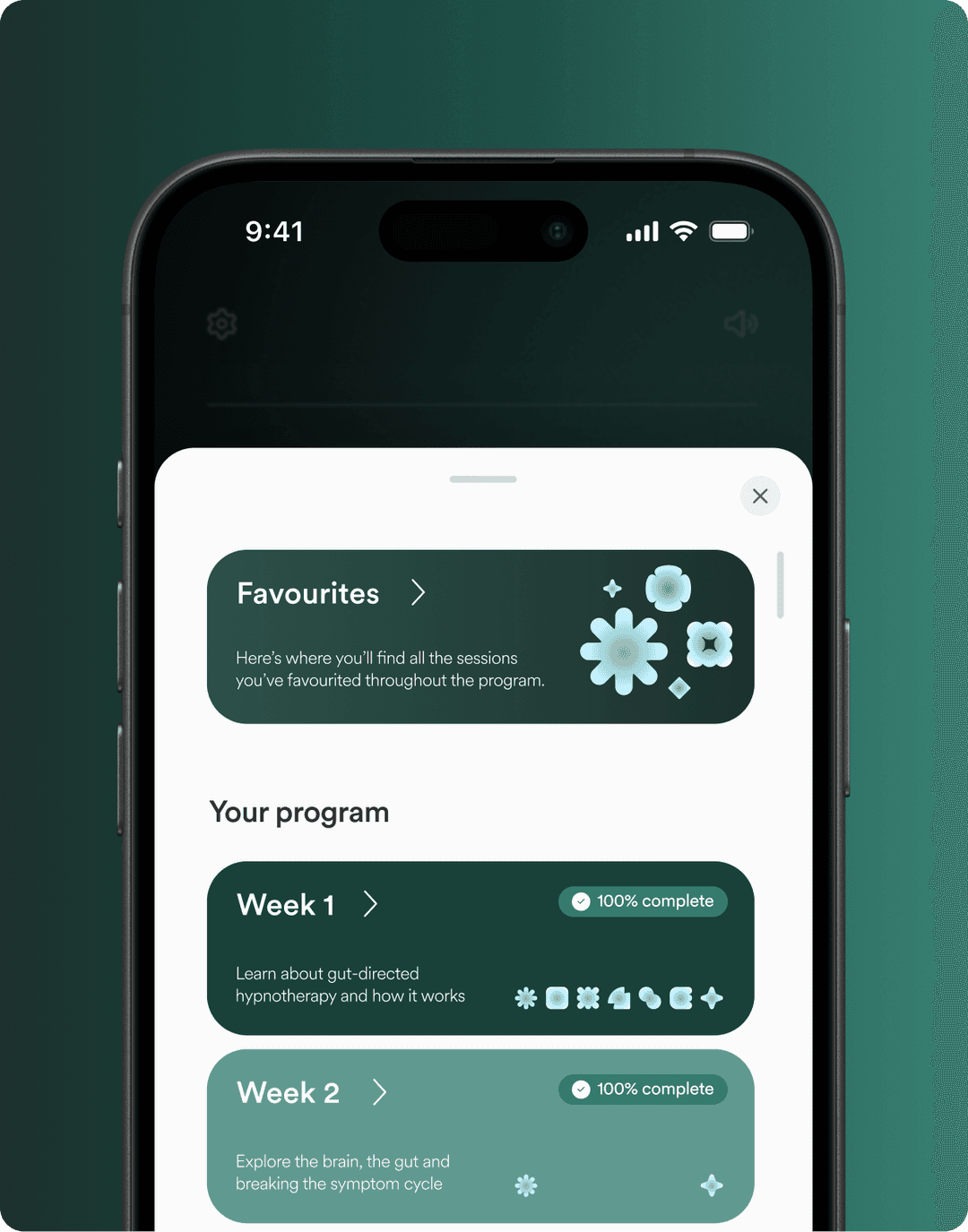
That's started to change. Self-guided digital programs now deliver structured gut-directed hypnotherapy and CBT-based education through your phone, with daily 15- to 20-minute sessions you complete at home.
Clinical trials have shown that digitally delivered gut-directed hypnotherapy can produce outcomes comparable to in-person therapy, which has made gut-brain therapy meaningfully more accessible than it was even five years ago.⁵
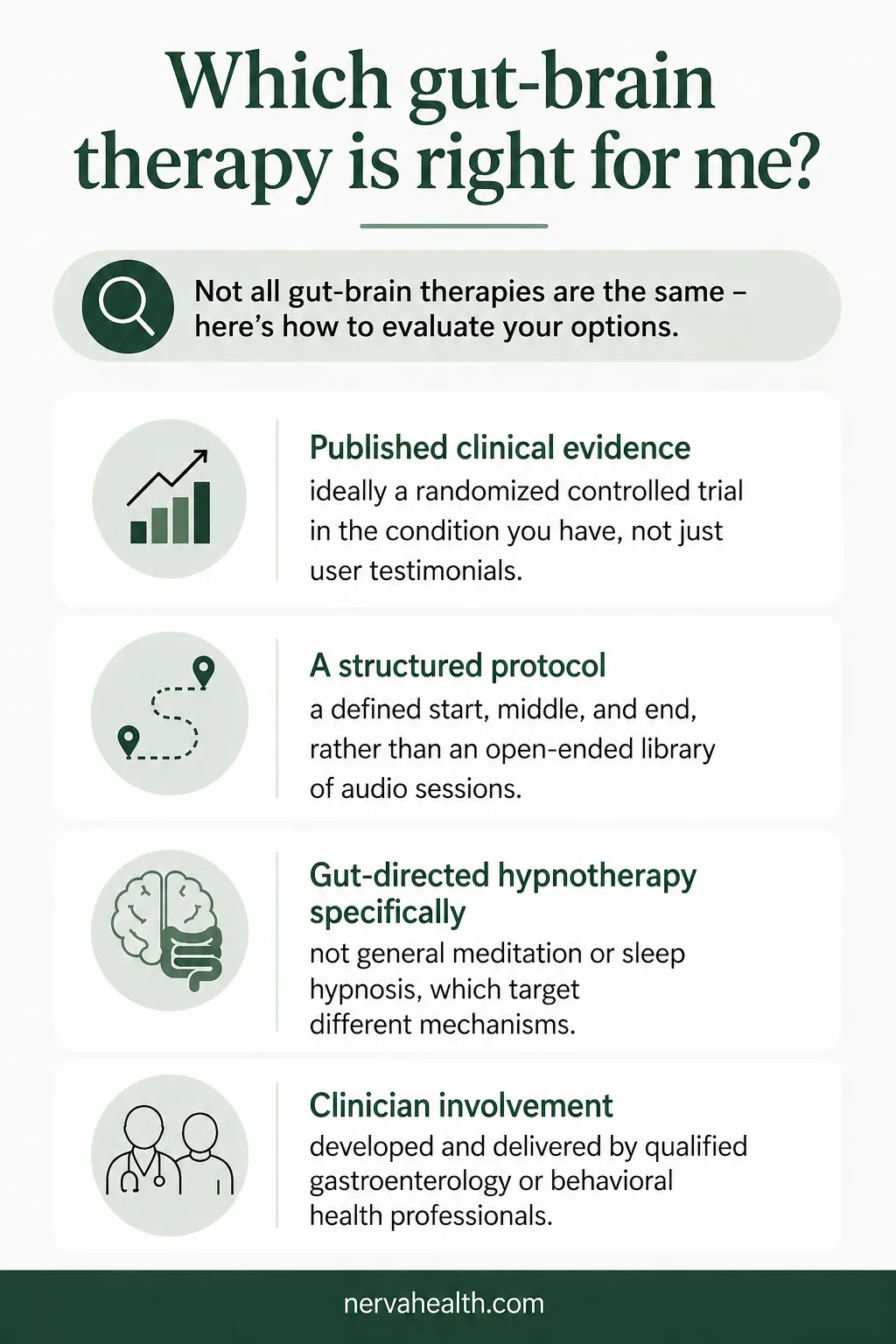
What to look for in a digital gut-brain therapy program
Not all gut-brain apps are the same. Here are some considerations to keep in mind when deciding which gut-brain therapy program to trust.
Where Nerva fits
Nerva is one example of a digital gut-brain therapy program that meets these criteria. It was developed in collaboration with Dr. Simone Peters at Monash University and delivers a 6-week structured protocol of gut-directed hypnotherapy, CBT-based education, and diaphragmatic breathing.
It's the only digital gut-brain therapy program with a published randomised controlled trial in adults with IBS, with 81% of participants achieving a clinically significant improvement on the IBS Symptom Severity Scale.⁵ ⁷
Whatever option you explore, the principle is the same: gut-brain therapy works alongside diet and medication, not instead of them – and the goal is to address the gut-brain layer of symptom generation that other treatments can't reach.⁸
Watch Nerva's Research Lead explain Nerva's digital gut-brain therapy program to help you decide if it's right for you.
If you want to learn more about digital gut-brain therapy, complete Nerva's free assessment to see if it's the right fit for you.
Frequently asked questions
Is gut-brain therapy the same as hypnotherapy?
Gut-brain therapy is the broader category of brain-gut behavioural therapies, which includes gut-directed hypnotherapy, cognitive behavioural therapy, mindfulness, and relaxation training.¹ Gut-directed hypnotherapy is one specific type of gut-brain therapy, and the form with the strongest evidence base for IBS.
How is gut-brain therapy different from gut health treatments?
Gut-brain therapy targets the nervous system signalling between the gut and the brain, while gut health treatments like probiotics, prebiotics, and dietary changes target the microbiome and digestive function directly. Both can be useful, but they address different mechanisms – which is why they're often used together rather than as alternatives.²
Does gut-brain therapy mean my symptoms are in my head?
Gut-brain therapy does not mean your symptoms are imagined. Disorders of gut-brain interaction involve real, measurable changes in how the gut nerves and brain process digestive signals – which is why targeting that signalling pathway produces real, physical symptom relief.²
Can I do gut-brain therapy at home?
Gut-brain therapy can be delivered effectively at home through structured digital programs, which provide guided hypnotherapy audio, CBT-based education, and breathing exercises. Clinical trials have shown that digitally delivered gut-directed hypnotherapy produces outcomes comparable to in-person therapy.⁵
Does gut-brain therapy interact with IBS medications?
Gut-brain therapy doesn't interact pharmacologically with IBS medications and can be used alongside antispasmodics, neuromodulators, laxatives, or any other prescribed treatment. Major guidelines specifically recommend combining gut-brain therapy with medical and dietary management for the strongest symptom outcomes.⁸
Who should not use gut-brain therapy?
Gut-brain therapy is appropriate for most people with gut-brain disorders, with the exception of those experiencing severe psychiatric instability or active psychosis, who should consult their treating clinician first. Anyone with red-flag symptoms such as unintentional weight loss, blood in stool, or fever should see a doctor for evaluation before assuming symptoms are functional.
References
Keefer L, Ballou SK, Drossman DA, Ringstrom G, Elsenbruch S, Ljótsson B. A Rome Working Team Report on Brain-Gut Behavior Therapies for Disorders of Gut-Brain Interaction. Gastroenterology. 2022;162(1):300-315.
Drossman DA, Hasler WL. Rome IV—Functional GI Disorders: Disorders of Gut-Brain Interaction. Gastroenterology. 2016;150(6):1257-1261.
Farmer AD, Aziz Q. Visceral pain hypersensitivity in functional gastrointestinal disorders. Br Med Bull. 2009;91:123-136.
National Institute for Health and Care Excellence. Irritable bowel syndrome in adults: diagnosis and management (CG61). NICE; 2017.
Peters SL, Yao CK, Philpott H, Yelland GW, Muir JG, Gibson PR. Randomised clinical trial: the efficacy of gut-directed hypnotherapy is similar to that of the low FODMAP diet for the treatment of irritable bowel syndrome. Aliment Pharmacol Ther. 2016;44(5):447-459.
Rutten JMTM, Vlieger AM, Frankenhuis C, et al. Home-Based Hypnotherapy Self-exercises vs Individual Hypnotherapy With a Therapist for Treatment of Pediatric Irritable Bowel Syndrome, Functional Abdominal Pain, or Functional Abdominal Pain Syndrome: A Randomized Clinical Trial. JAMA Pediatr. 2017;171(5):470-477.
Anderson EJ, Peters SL, Gibson PR, Halmos EP. Comparison of Digitally Delivered Gut-Directed Hypnotherapy Program With an Active Control for Irritable Bowel Syndrome. Am J Gastroenterol. 2025;120(2):371-380.
Lacy BE, Pimentel M, Brenner DM, et al. ACG Clinical Guideline: Management of Irritable Bowel Syndrome. Am J Gastroenterol. 2021;116(1):17-44.