Mechanism of Action
Nerva uses gut-directed hypnotherapy, CBT and diaphragmatic-breathing techniques to help you practise a calmer response to gut sensations.
Gut-directed hypnotherapy (GDH)
Gut-focused visualization skills to help modulate central pain pathways and alter cortical processing of visceral signals.
Cognitive behavioral therapy (CBT)
Employs cognitive and behavioral strategies to reduce symptom-focused fear and hypervigilance, enhancing adaptive coping and cognitive reappraisal.
Diaphragmatic breathing
Engages the vagus nerve and the parasympathetic ‘rest-and-digest’ system — breathing practice associated in DGBI research with calmer gut motility and reduced visceral sensitivity.
How Gut-Brain Therapy works


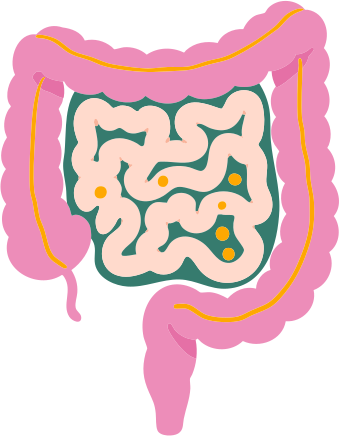
Pain processing

In studies of GDH, hyperactivity in central pain and emotion networks was reduced, enabling the brain to respond more appropriately to visceral input.1
Hypervigilance

These techniques are designed to shift attention away from visceral sensations, decreasing over-monitoring and excessive threat signaling.5
Visceral hypersensitivity
GBT has been shown to decrease sensitivity to gut stimuli (e.g., gas, distension, motility), often exacerbated by FODMAPs, with reductions in pain and urgency.2
Supports a calmer gut response

In DGBI research, these techniques are associated with reduced bloating, diarrhea and constipation.3
Supports a calmer stress response

GDH lowers cortisol levels and attenuates sympathetic activation, supporting parasympathetic ‘rest-and-digest’ function.4
Brain-to-gut signaling

By enhancing vagal tone, GBT promotes more balanced efferent signaling from the brain to the gut.6
Reframes gut sensations

Cognitive suggestions mitigate catastrophizing and maladaptive interpretations, allowing typical visceral sensations to be appraised as non-threatening.7
Components of a hypnotherapy visualization

Hypnotic induction
The deep relaxation phase shifts the body into a calm, focused state, making the brain more receptive to imagery input and reducing stress hormone levels.
Guided visualization
Gut-focused imagery (e.g., a calm river or warm light in the gut) helps people learn to reinterpret visceral sensations as safe. With repetition, this establishes automatic, reflex-like pathways that diminish reactivity without conscious effort.
Gut suggestions
Symptom-specific cues are delivered while the brain is most receptive. Over time, these reshape subconscious responses to visceral input, promoting calm as the brain’s default state.

Hypnotic induction
The deep relaxation phase shifts the body into a calm, focused state, making the brain more receptive to imagery input and reducing stress hormone levels.

Guided visualization
Gut-focused imagery (e.g., a calm river or warm light in the gut) helps people learn to reinterpret visceral sensations as safe. With repetition, this establishes automatic, reflex-like pathways that diminish reactivity without conscious effort.
Gut suggestions
Symptom-specific cues are delivered while the brain is most receptive. Over time, these reshape subconscious responses to visceral input, promoting calm as the brain’s default state.
The balloon distension study: hypnotherapy increases gut pain tolerance
In this landmark mechanistic study, IBS patients underwent rectal balloon inflation before and after gut-directed hypnotherapy (GDH) to measure changes in visceral sensitivity.
After hypnotherapy, patients tolerated significantly greater balloon inflation volumes before reporting discomfort or pain.
This suggests GDH reduces central sensitivity to gut signals, not just perceived symptom severity.

Get in touch with a clinical specialist
Send an inquiry or book a brief call with our clinical team to discuss Nerva, referral options, EMR integration, or to organize a lunch and learn for your clinic.

Emily Mahadeo
Doctor of Clinical Nutrition (DCN) & Registered Dietitian Nutritionist (RDN)
Your questions,
answered.
What is the cost of the program?
The standard public Nerva offer is an annual subscription: $199 USD, A$249 AUD, €199 EUR or £149 GBP for 12 months of access. Patients referred by their healthcare practitioner receive a 25% discount. App stores may show other product names or offers, but the standard offer for new customers is annual.
Patients begin with a 7-day free trial to explore the program risk-free. For added peace of mind, we also offer a 42-day money-back guarantee.
Who is suitable for Nerva?
Nerva is designed for patients with medically diagnosed IBS, including those with constipation (IBS-C), diarrhea (IBS-D), or mixed (IBS-M) subtypes. Many people who use it are managing gut-related stress, looking for a non-pharmacological, non-dietary option, or haven't found relief with approaches they've tried.
Who should not use Nerva: it is not recommended for individuals with severe psychiatric disorders, unresolved psychological trauma, or cognitive impairments.
For an in-depth guide, see our decision tool.
What is gut-directed hypnotherapy?
Gut-directed hypnotherapy (GDH) is a psychological therapy that helps regulate the gut-brain connection. It guides individuals into a state of focused attention, where individuals become more receptive to therapeutic suggestions. This heightened state of awareness helps regulate the gut-brain connection, easing IBS symptoms by shifting the body out of a stress response and into a state of calm.
During hypnosis, we can observe physiological changes in brain activity related to absorption, executive control, and awareness.
With self-hypnosis, patients can access these benefits anytime, anywhere – without the need for an in-person hypnotherapist – while remaining in complete control.
Can I access patient results?
Yes, patients can choose to add your details, allowing you to receive progress updates and reports with the self-reported IBS-SSS and PHQ-4 check-ins they share. These insights are securely delivered through our HIPAA-compliant and Australian Privacy Principles-compliant reporting system.
Does Nerva work for other DGBIs?
Nerva is specifically designed for diagnosed IBS, managing the gut-brain connection through brain-gut therapy techniques. While research supports the effectiveness of BGT for IBS, some patients with other disorders of gut-brain interaction (DGBIs), such as functional dyspepsia, may still benefit. However, as Nerva is not tailored for these conditions, we recommend patients consult their healthcare provider to determine the best approach for their needs.
Can I test the app as a practitioner?
Yes, we offer free clinician access, allowing you to explore the full Nerva program firsthand. This gives you insight into the structure, content, and experience your patients will have.
How long is the program?
Nerva follows a clinically-based 6-week program designed to improve IBS symptom management through brain-gut therapy techniques.
To support long-term symptom management, patients receive a 12-month subscription – which includes ongoing access to our flare-up toolkit for maintenance and support whenever they need it.
Do you have a smart phrase template I can add to my EMR?
Here is a smart phrase template that's worked well for other practices when adding Nerva to discharge instructions:
I’m referring you to Nerva, an evidence-based brain-gut program designed to help you manage IBS symptoms. In a randomized controlled trial, 81% of participants reported significant improvement in symptom management over the 6-week program. Visit: www.nervahealth.com
- Löwen, M. B. O., Mayer, E. A., Sjöberg, M., Tillisch, K., Naliboff, B., Lundberg, P., … Simrén, M. (2013). Effect of hypnotherapy and educational intervention on brain response to visceral stimulus in the irritable bowel syndrome. Alimentary Pharmacology & Therapeutics, 37(12), 1184–1197. https://doi.org/10.1111/apt.12319
- Houghton, L. A., Calvert, E. L., Jackson, N. A., Cooper, P., & Whorwell, P. J. (2002). Visceral sensation and emotion: A study using hypnosis. Gut, 51(5), 701–707. https://doi.org/10.1136/gut.51.5.701
- Lindfors, P., Törnblom, H., Sadik, R., Björnsson, E. S., Abrahamsson, H., & Simrén, M. (2012). Effects on gastrointestinal transit and antroduodenojejunal manometry after gut-directed hypnotherapy in irritable bowel syndrome. Scandinavian Journal of Gastroenterology, 47(12), 1480–1487. https://doi.org/10.3109/00365521.2012.719727
- Tan, G., Hammond, D. C., & Joseph, G. (2005). Hypnosis and irritable bowel syndrome: A review of efficacy and mechanism of action. American Journal of Clinical Hypnosis, 47(3), 161–178. https://doi.org/10.1080/00029157.2005.10404187
- Labus, J. S., Bolus, R., Chang, L., Wiklund, I., Naesdal, J., Mayer, E. A., & Naliboff, B. D. (2004). The Visceral Sensitivity Index: Development and validation of a gastrointestinal symptom–specific anxiety scale. Alimentary Pharmacology & Therapeutics, 20(1), 89–97. https://doi.org/10.1111/j.1365-2036.2004.02007.x
- Moser, G., Truschel, M., et al. (2022). Heart-rate variability in patients with irritable bowel syndrome before and after gut-directed hypnotherapy (ClinicalTrials.gov Identifier NCT05283655). Unpublished clinical-trial report.
- Lackner, J. M., Jaccard, J., Krasner, S. S., Katz, L. A., et al. (2007). How does cognitive behavior therapy for irritable bowel syndrome work? A mediational analysis of a randomized clinical trial. Gastroenterology, 133(2), 433–444. https://doi.org/10.1053/j.gastro.2007.05.014