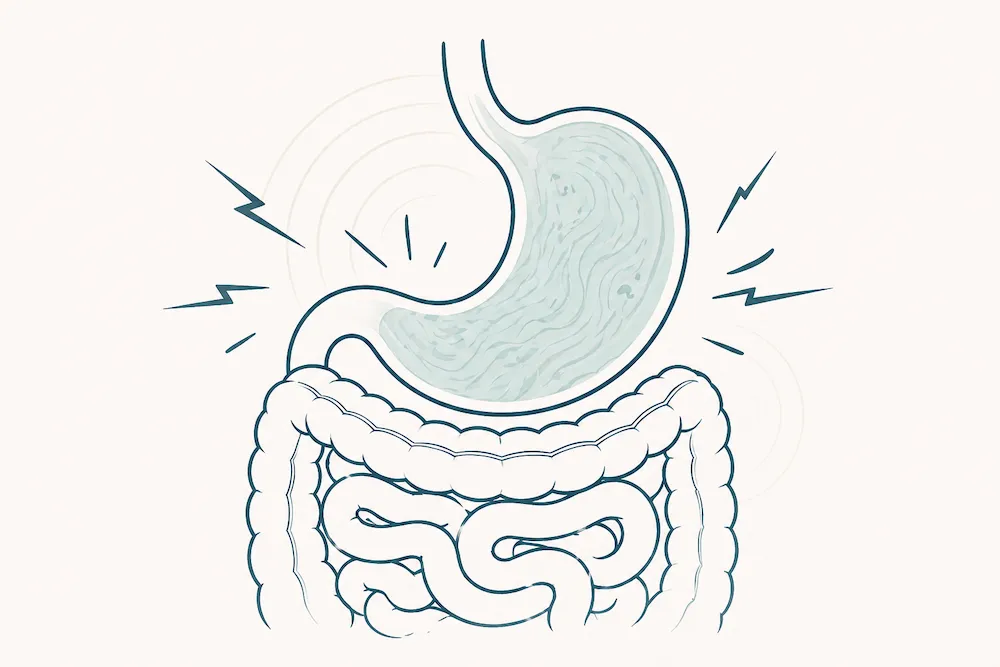
Signals to the gut
Slowed gut movement
Visceral sensitivity
Immune changes
Signals to the brain
Many of the same factors that contribute to gut-brain disorders – including post-infectious nerve changes, chronic stress, and altered intestinal movement – also increase the risk of developing SIBO.
For many people, SIBO is part of a bigger picture. The same gut-brain disruptions that affect movement and sensitivity can also create conditions where bacterial overgrowth is more likely to develop.
This helps explain why bloating or pain can continue even after bacterial levels improve. In these situations, the overgrowth may be reduced, but increased gut sensitivity or ongoing nerve signaling changes are still driving symptoms.
Looking at SIBO through a gut-brain lens shifts the focus from bacteria alone to how the digestive system is functioning as a whole. For many people, lasting improvement means addressing both the bacterial overgrowth and the nervous system patterns that influence gut movement and sensitivity.
Is SIBO the same as IBS?
SIBO and IBS share many symptoms, but they are not the same condition.
SIBO is defined by bacterial overgrowth in the small intestine. IBS is classified as a disorder of gut-brain interaction (DGBI) and is diagnosed based on symptom patterns.
Some people with IBS have abnormal breath tests consistent with SIBO. Others do not.
Treating bacterial overgrowth does not always resolve IBS symptoms, particularly when altered gut sensitivity or gut-brain signaling remains active.
The overlap between SIBO and IBS helps explain why digestive symptoms can persist even after antibiotic treatment.
Can SIBO cause long-term complications?
In more severe or prolonged cases, SIBO can interfere with nutrient absorption.
Low vitamin B12, iron deficiency, fatigue, and unintended weight loss may occur if overgrowth significantly disrupts digestion. These complications are not typical in mild cases but should be evaluated if symptoms are persistent or worsening.
When should you see a doctor about SIBO symptoms?
Medical evaluation is important if you experience unexplained weight loss, blood in the stool, persistent vomiting, fever, severe abdominal pain, or symptoms that wake you from sleep.
These features are not typical of uncomplicated SIBO and require prompt assessment to rule out other conditions.
Frequently asked questions
Does SIBO go away on its own?
Mild cases may improve if digestive movement normalizes, but most persistent cases require targeted treatment. Without addressing underlying factors, symptoms often continue or recur.
Does stress make SIBO worse?
Chronic stress can slow digestive movement and increase symptom sensitivity. While stress alone does not directly create bacterial overgrowth, it can contribute to recurrence and ongoing discomfort.
Are probiotics helpful for SIBO?
Research on probiotics for SIBO shows mixed results.5 Some strains may help certain people, while others can worsen bloating during active overgrowth. Because responses vary, probiotic use should be individualized and discussed with a healthcare provider.
How long does recovery from SIBO take?
Some people notice improvement within weeks of treatment. Others require additional time to address underlying movement issues or gut-brain factors before symptoms stabilize.
References
Skrzydło-Radomańska B, Cukrowska B. How to recognize and treat small intestinal bacterial overgrowth? J Clin Med. 2022;11(20):6017. doi:10.3390/jcm11206017
Shah ED, Basseri RJ, Chong K, Pimentel M. Abnormal breath testing in IBS: a meta-analysis. American Journal of Gastroenterology. 2010;105(3):703–714.
Rezaie A, Buresi M, Lembo A, et al. Hydrogen and methane-based breath testing in gastrointestinal disorders: The North American Consensus. Am J Gastroenterol. 2017;112(5):775–784.
Gatta L, Scarpignato C. Systematic review with meta-analysis: rifaximin is effective and safe for the treatment of small intestinal bacterial overgrowth. Aliment Pharmacol Ther. 2017;45(5):604–616.
Pimentel M, Saad RJ, Rao SSC, et al. ACG clinical guideline: small intestinal bacterial overgrowth. Am J Gastroenterol. 2020;115(2):165-178. doi:10.14309/ajg.0000000000000501
.webp&w=3840&q=75)


.jpeg)