SIBO (small intestinal bacterial overgrowth) and IBS (irritable bowel syndrome) are two different conditions that can cause almost identical symptoms – but they have different origins, different treatments, and confusing one for the other is one of the most common reasons people stay stuck in treatment cycles that don't bring lasting relief.
SIBO is a bacterial problem. IBS is a nervous system problem. And until you understand which one – or which combination – is driving your symptoms, it's very hard to find an approach that actually works.
What is the difference between SIBO and IBS?
SIBO and IBS are different conditions that can cause similar symptoms, but they have different origins and need different approaches.
SIBO happens when bacteria build up in the small intestine, where they ferment food too early in digestion. This produces excess gas, bloating, and discomfort.
IBS is something different entirely. It's a disorder of gut-brain interaction, meaning the nervous system plays a major role in how your gut processes and responds to sensation. With IBS, the gut becomes hypersensitive. Normal digestion can feel painful. Signals between the gut and brain get amplified.
That's why IBS symptoms can be so difficult to pin down – and why normal test results don't mean there's nothing wrong.
What are the symptoms of SIBO?
SIBO symptoms include:
- bloating
- visible abdominal swelling
- excess gas
- abdominal discomfort
- diarrhea or constipation
- discomfort the increases after eating
These overlap heavily with IBS because both conditions affect the same part of the digestive system – which is exactly why one is so frequently mistaken for the other, and why getting the diagnosis right matters.
Can SIBO cause IBS symptoms?
Yes. SIBO can trigger or worsen IBS-like symptoms, but treating SIBO alone often isn't enough.
Think of it this way: SIBO increases gas and bloating in the small intestine, while IBS makes the gut hypersensitive to that bloating. The gut-brain axis then determines whether that bloating becomes pain, urgency, or distress.
This is one reason why symptoms often continue even after antibiotics. Reducing bacteria doesn't automatically reset the nervous system's sensitivity. The gut may still be "on high alert" long after the bacteria have gone.
How are SIBO and IBS connected?
One of the clearest links between SIBO and IBS is gut motility – how well the intestines move food and bacteria forward. The small intestine normally produces regular waves of movement that sweep bacteria along. When this slows down, bacteria have more opportunity to build up in the wrong place.
Research confirms the overlap is significant – one systematic review of 50 studies found that around 38% of people with IBS showed evidence of bacterial overgrowth, making them nearly five times more likely to have SIBO than healthy controls.¹ But estimates vary widely depending on how SIBO is tested and defined, and experts caution against assuming overgrowth is the root cause for everyone.
For many people, IBS symptoms continue even when SIBO is treated – because the gut-brain sensitivity driving those symptoms is still there.
How is SIBO diagnosed?
Most people are diagnosed using hydrogen or methane breath tests – but these have significant limitations.
A 2020 review in The Lancet Gastroenterology & Hepatology described the connection between SIBO and IBS as "shrouded with controversy and uncertainty," citing poor test sensitivity and specificity as a key reason assumptions about SIBO are so frequently incorrect.²
Breath tests measure gases produced by bacteria after drinking a sugar solution. Lactulose tests in particular may reflect how fast food moves through the gut rather than true bacterial overgrowth, false positives and false negatives are common, and testing methods and cutoffs vary widely between clinics. A positive result doesn't automatically mean SIBO is driving your symptoms.
The most accurate test involves sampling fluid directly from the small intestine during an endoscopy – but this is invasive and rarely used outside research settings.
What is the best treatment for SIBO?
Treatment depends on what's driving the overgrowth in the first place.
Rifaximin is the most commonly used antibiotic and has evidence of benefit, particularly for people with diarrhea-predominant symptoms.³ But symptoms often return if the underlying causes – like slow gut motility – aren't also addressed.
A low FODMAP diet can help by reducing fermentable carbohydrates that feed bacterial overgrowth. It's most useful as a symptom management tool rather than a long-term solution. Because slow motility is a major contributor to bacterial buildup, preventing relapse often means supporting how well the gut moves, not just eliminating bacteria. Repeated antibiotic cycles alone frequently fall short for this reason.
Brain-gut therapy, tailored to you
Fix the miscommunication between your back and brain
Overcome life's challenges
Take control of hot flashes and night sweats
Quit smoking in 3 weeks
Why do IBS symptoms persist even after SIBO treatment?
Because IBS is fundamentally a gut-brain interaction disorder – and antibiotics don't treat that.
Many people with IBS find themselves in a cycle that's hard to break. Symptoms continue despite treatment. Fear of eating or triggering a flare-up grows. Constant attention to gut sensations keeps the nervous system on edge. Stress and anxiety feed back into gut symptoms, making everything feel more intense.
This isn't a willpower problem or "just anxiety." It's how the gut-brain axis works. When the nervous system stays sensitized, the gut stays reactive – regardless of what's happening bacterially.
This video explains exactly what a gut-brain disorder is and why the nervous system plays such a central role in persistent digestive symptoms.
What actually helps when SIBO and IBS overlap?
This is where gut-brain therapy becomes important – and the evidence behind it is stronger than most people realize.
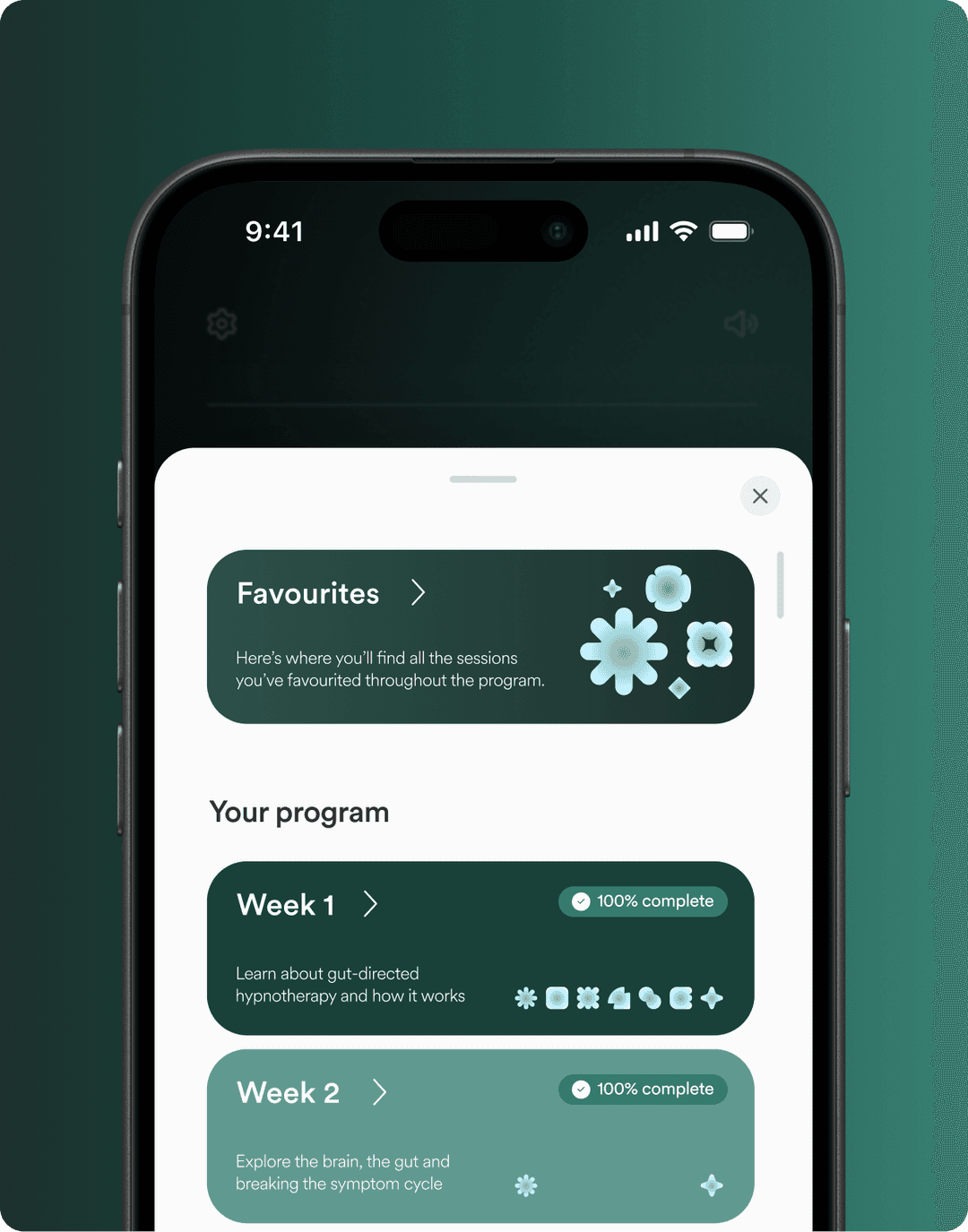
Research shows that gut-directed hypnotherapy improves IBS symptoms just as effectively as the low FODMAP diet, with results that hold up six months later.⁴
The British Society of Gastroenterology also recommends gut-brain therapies as part of evidence-based IBS care.⁵
For people dealing with both SIBO and IBS, medical treatment can help reduce bacterial overgrowth, but gut-brain therapy addresses what antibiotics can't – the nervous system hypersensitivity that keeps symptoms alive. Together they target both the physical and neurological drivers of symptoms in a way that neither approach achieves alone.
Chasing bacterial eradication without addressing the gut-brain axis is often exactly why people stay stuck.
When should I see a doctor about these symptoms?
Speak with a gastroenterologist if you notice unexplained weight loss, blood in your stool, persistent vomiting, anaemia, symptoms that wake you from sleep, or symptoms that are rapidly worsening.
These aren't typical features of IBS or SIBO and need proper medical evaluation.
You don't have to stay stuck
If you've been through rounds of testing, tried antibiotics, changed your diet, and still don't feel better – that isn't a sign that nothing will work. It's usually a sign that part of the picture hasn't been addressed yet.
SIBO and IBS are both real, and for many people they're genuinely intertwined. But the research is increasingly clear that lasting improvement comes from treating the whole system – not just the bacteria.
When the gut-brain axis stays sensitized, symptoms persist regardless of what's happening microbiologically. Addressing that sensitivity isn't a last resort; it's often the missing piece.
Understanding why your gut responds the way it does is the first step toward changing it. And that's something that's very much possible.
Frequently asked questions
Why do my SIBO symptoms keep coming back after antibiotics?
Antibiotics treat the overgrowth but not what caused it. If gut motility is slow or the gut-brain axis is dysregulated, bacteria rebuild once the course ends. Recurrence is a signal that something upstream – motility, stress, or nervous system sensitivity – still needs attention.
Can stress actually cause SIBO?
Not directly, but chronic stress slows gut motility and disrupts the movements that prevent bacterial buildup. Over time this creates conditions where overgrowth is easier to establish and harder to clear – which is why the gut-brain axis shapes not just how symptoms feel, but how the gut functions.
Is the low FODMAP diet a treatment for SIBO or just symptom management?
Mostly symptom management. It reduces fermentable carbohydrates that bacteria feed on, easing bloating – but it doesn't fix the motility or gut-brain issues driving recurrence. Useful short-term, but staying on it long term can reduce gut microbiome diversity.
Can SIBO cause anxiety or affect my mood?
It can contribute. The gut-brain axis runs both ways, and disruptions in gut function can influence neurotransmitter production and the stress response. Anxiety, low mood, and brain fog alongside digestive symptoms are common – usually a mix of overgrowth effects, chronic illness strain, and nervous system sensitization.