.webp)

Key takeaways:
- You're not imagining it, and you're not alone – nearly 1 in 3 US adults over 65 live with IBS or similar gut symptoms.¹
- If you've been told it's "just your age," that's not the full picture. The cause is real, and there's something that can help.
- Nerva is a 6-week program that works on the connection between your gut and brain – 15 to 20 minutes a day at home, with a real person to support you.
- People over 65 stay with the program more consistently than younger users, and see similar results. It's now available at no cost if you're a US adult aged 65 or older.
Nerva is now available at no cost to all US adults aged 65 or older. It's a 6-week gut-brain therapy program built for people living with IBS and other gut-brain disorders – including functional dyspepsia, functional constipation, rumination syndrome, and functional reflux – and it's been clinically researched and recommended by leading gastroenterology bodies.
If you're in your late 60s, 70s, or 80s and still living with bloating, abdominal pain, unpredictable bowel habits, or meals you've quietly stopped eating, you've likely had years of "your tests are normal" or "it's just part of getting older."
Neither of those is the full story.
Older adults with gut-brain disorders are common in clinics, but until recently haven't had many options that target what's actually driving the symptoms.
Read on to learn what's actually happening in the gut-brain connection at this stage of life, why it can be harder to get answers, and how Nerva is built to help.
What's actually happening in your gut after a lifetime of symptoms
By the time you're in your late 60s, 70s, or 80s, your gut has been through a lot. Courses of antibiotics. Bouts of food poisoning. Surgeries. Hormonal transitions like menopause. Years of stress, caregiving, loss, recovery. Each one of those leaves a mark on the conversation between your gut and brain – what's called the gut-brain axis.²
After enough of these triggers, that conversation can get stuck on high alert. The nerves running between your gut and brain stay more sensitive than they need to be, and the system that's meant to calm digestion down doesn't always settle the way it used to. Sleep gets lighter with age, which makes it harder for the system to reset overnight.³ The result is that signals which would normally pass unnoticed – the gentle stretch of digestion, normal gas, a mildly off meal – get amplified into pain, urgency, bloating, or that sudden need to know where the bathroom is.
This is called visceral hypersensitivity, and it's one of the most well-studied mechanisms in IBS.⁴ The picture is a bit more nuanced in older adults – the nerves themselves may be slightly less sensitive than in younger people,⁵ but the pattern of being on alert has had decades to settle in, and other parts of the gut-brain axis play a bigger role.
Watch this short video to understand more about how your gut and brain communicate.
The good news is that the brain doesn't lose the ability to learn new patterns. The gut-brain wiring that's driving your symptoms can still be retrained at 65, at 75, at 85.
"If you're 65 or older and living with gut symptoms, you may have spent years without a clear answer. There's a real mechanism behind what you're experiencing, and an approach that targets it – and we want to make sure cost isn't the reason you don't get to try it." – Alex Naoumidis, Co-Founder and Co-CEO, Nerva
What Nerva is, and how to get started at no cost
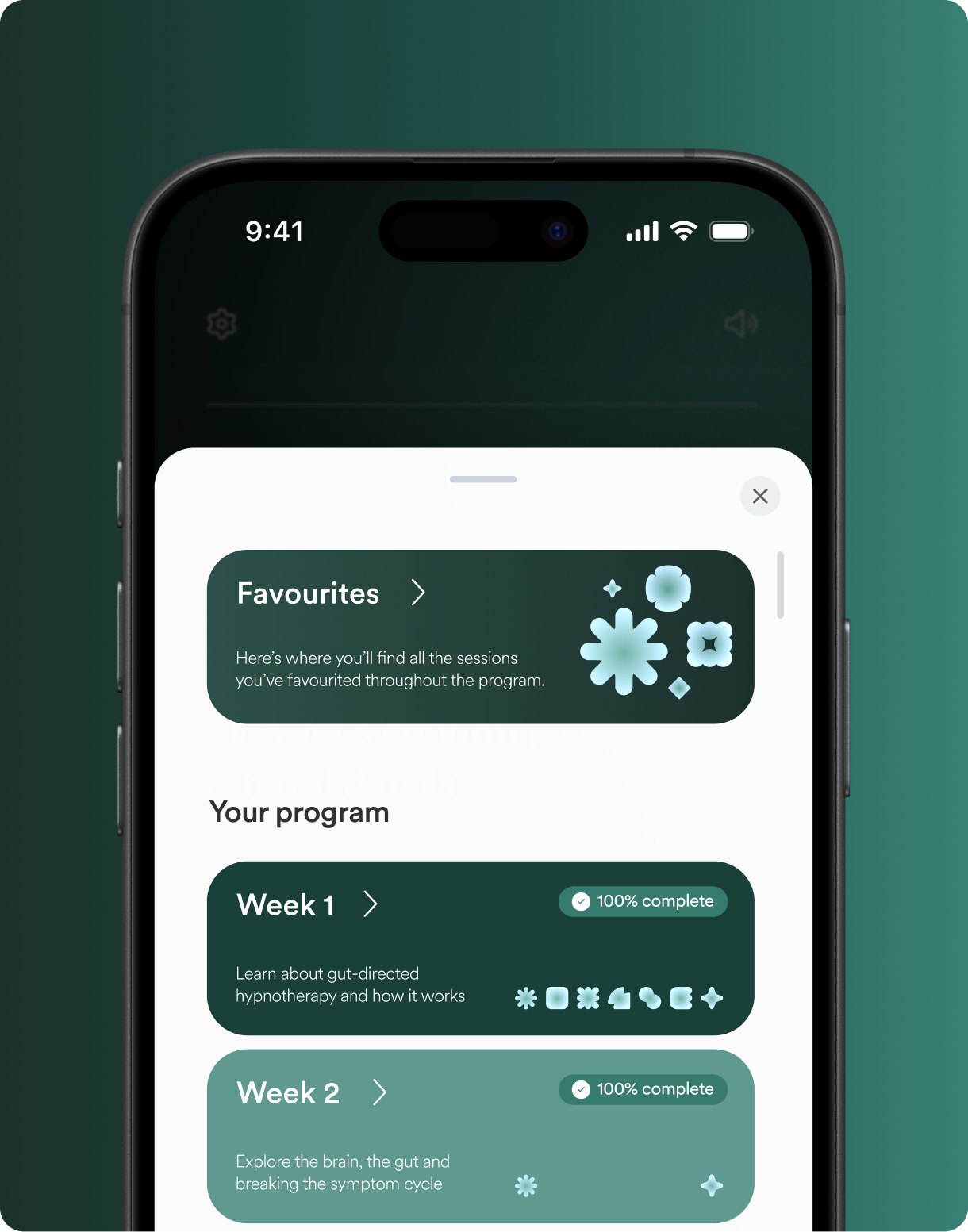
Nerva is a gut-brain therapy program. Each day for six weeks, you'll listen to a short gut-directed hypnotherapy session – about 15 to 20 minutes – that helps retrain how your gut and brain talk to each other.
You can do it at home, on your phone, in your own time. A real person from the specialist support team is there throughout if you need help getting set up or have questions along the way.
In a published clinical trial, 81% of people saw clinically significant improvement in their IBS symptoms by the end of the program, with results that lasted.⁶ More than 300,000 people have used Nerva to manage their gut symptoms.
And in Nerva's own data, adults over 65 stay with the program more consistently than younger users and see similar results – a quiet but important signal that this age group is ready to show up for an approach that actually fits.
To access Nerva at no cost, speak with your doctor or specialist about referring you to Nerva. They can refer you within a couple of minutes at nervahealth.com
If you'd like more information first, email Nerva's specialist team at nerva@mindsethealth.com for real human support to help you find relief from your symptoms.
Frequently asked questions
Who can access Nerva at no cost?
Any US resident aged 65 or older who is referred to Nerva by a healthcare provider. Eligibility is confirmed during sign-up in a short screening that takes under 5 minutes.
Why is Nerva being offered to me at no cost?
Adults aged 65 and older are underrepresented in gut-brain disorder research, so there's been less age-specific evidence to draw from. Removing cost as a barrier means more older adults can access an approach designed to target what's actually driving their symptoms – and helps build the evidence base for this age group.
Is there a catch to Nerva at no cost?
No. The program is the same Nerva that clinicians recommend. There's no obligation to continue, nothing additional you'll be billed for, and no other payment required. If you decide it isn't right for you, you can stop at any time.
How long will I have access?
At least 12 months at no cost. Access continues at no cost unless we let you know about any change in advance.
Can I use Nerva alongside my current medications?
Yes. Nerva is designed to work alongside your existing care, not replace it. There are no known drug interactions. Always speak with your doctor before changing any medication.
Do I need to be tech-savvy to use Nerva?
No. The program is delivered through a simple app, and the specialist team can walk you through getting set up if you need a hand. Many people start their sign-up on a computer, then move to their phone for the daily sessions.
References
Sperber AD, Freud T, Palsson OS, Bangdiwala SI, Simrén M. The aging gastrointestinal tract: epidemiology and clinical significance of disorders of gut-brain interaction in the older general population. Aliment Pharmacol Ther. 2024;60(4):446-456. doi:10.1111/apt.18103
Drossman DA, Hasler WL. Rome IV—functional GI disorders: disorders of gut-brain interaction. Gastroenterology. 2016;150(6):1257-1261. doi:10.1053/j.gastro.2016.03.035
Mander BA, Winer JR, Walker MP. Sleep and human aging. Neuron. 2017;94(1):19-36. doi:10.1016/j.neuron.2017.02.004
Farmer AD, Aziz Q. Visceral pain hypersensitivity in functional gastrointestinal disorders. Br Med Bull. 2009;91:123-136. doi:10.1093/bmb/ldp026
Algera JP, Blomsten A, Khadija M, et al. Distinct age-related characteristics in patients with irritable bowel syndrome: patient reported outcomes and measures of gut physiology. npj Gut Liver. 2024;1(1):10. doi:10.1038/s44355-024-00010-y
Anderson EJ, Peters SL, Gibson PR, Halmos EP. Comparison of digitally delivered gut-directed hypnotherapy program with an active control for irritable bowel syndrome. Am J Gastroenterol. 2025;120(2):440-448. doi:10.14309/ajg.0000000000002921
.jpeg)