Patients' blog
>
CBT vs hypnotherapy for IBS: Which is right for you?
Scientifically Verified

CBT vs hypnotherapy for IBS: Which is right for you?

Published
April 30, 2026
Written by
Christina Sexton
Medically reviewed by
Dr James Kenny
Jump to:
Key takeaways:
  • CBT and gut-directed hypnotherapy are the two most-studied psychological treatments for IBS – and both work for around 7 in 10 people who try them.¹
  • They work differently: CBT changes how you think about and respond to symptoms; gut-directed hypnotherapy calms an over-reactive gut directly.
  • Symptom improvements from both treatments tend to last – clinical trials show benefits maintained 12 months after the program ends.²
  • Most people who could benefit from gut-brain therapy never get to a specialist – digital programs like Nerva now deliver the full hypnotherapy protocol in 15 minutes a day at home.³

CBT for IBS works by changing the thoughts and behaviors that make symptoms worse, while gut-directed hypnotherapy calms the oversensitive gut-brain signaling driving symptoms in the first place – both are first-line psychological treatments for IBS, with response rates of around 70 to 80 percent in clinical trials.¹

If you've ended up here, you've probably already heard the basics: IBS isn't in your head, but it isn't only in your gut either. The nerves connecting your gut and your brain are wired in both directions, and when that signaling becomes oversensitive, normal digestion can feel amplified, painful, or unpredictable.² Both CBT and gut-directed hypnotherapy work on this gut-brain connection – just from different angles. They're recommended as first-line treatments alongside diet and medication by major bodies including the National Institute for Health and Care Excellence (NICE) in the UK and the American College of Gastroenterology (ACG).³ ⁴

This guide breaks down how each one works, what the evidence actually shows, and who tends to do well on which – so by the end, you'll have a clear sense of which approach fits your symptoms, your lifestyle, and what's actually available to you.

How does CBT work for IBS?

Cognitive behavioral therapy (CBT) for IBS is a structured talking therapy that helps you identify and change the thought patterns, behaviors, and stress responses that amplify your gut symptoms. 

It's not generic talk therapy or general anxiety treatment – IBS-specific CBT is built around the gut-brain connection, and the techniques are tailored to digestive symptoms.

A typical course runs 8 to 12 weekly sessions with a psychologist trained in gastrointestinal (GI) health, either face-to-face or by video. Sessions usually cover four kinds of work: education about how the gut and brain influence each other, tracking the link between thoughts, situations, and symptoms, learning to challenge unhelpful thinking patterns (like "I can't leave the house in case I have a flare"), and gradually reintroducing situations or foods you've started avoiding.⁵

The evidence base is strong. A large meta-analysis published in the American Journal of Gastroenterology found CBT produced clinically meaningful symptom improvement compared to control conditions, with benefits sustained at follow-up.¹ The American College of Gastroenterology gives CBT a strong recommendation in its 2021 IBS guideline, citing high-quality evidence,⁴ and NICE includes it as a first-line psychological treatment in the UK.³

What CBT is best at: helping when your IBS is tightly linked to anxiety, when you've started avoiding things (eating out, traveling, work events), or when worry about symptoms has become a symptom in itself. It doesn't directly target the physical sensitivity of the gut – it works by changing what you do and how you respond when symptoms show up, which over time tends to settle the whole system down.

How does gut-directed hypnotherapy work for IBS?

Gut-directed hypnotherapy is a structured psychological treatment that uses guided relaxation and targeted therapeutic suggestions to calm the oversensitive gut-brain signaling that drives IBS symptoms. It's not stage hypnosis – you stay aware the entire time, in control, and can stop whenever you want. The "gut-directed" part is what makes it different from general hypnotherapy: every session is built specifically around digestive function, not relaxation in the abstract.

Patients that are really good candidates for hypnosis really have that understanding of hypervigilance and that visceral hypersensitivity that they experience that worsens their symptoms. And they have that insight that stress can certainly worsen those symptoms.

The standard protocol – developed by Professor Peter Whorwell at the University of Manchester over 40 years of clinical research – runs 7 to 12 weekly sessions of around 30 to 45 minutes, with daily home practice between sessions using audio recordings.⁶ During sessions, you're guided into a focused, deeply relaxed state where the nervous system is more open to suggestion. The therapist (or in a digital program, the recorded voice) then uses imagery and metaphors that target gut function directly – picture a smoothly flowing river, warm hands soothing the abdomen, a dial turning down pain signals.

What's actually happening in your body is more interesting than the "hypnotherapy" label suggests. Studies have shown gut-directed hypnotherapy can normalize the heightened pain sensitivity in the gut (known as visceral hypersensitivity), regulate gut motility, and change how the brain processes pain signals on functional brain imaging.⁷ In other words, it's not just relaxation – it's measurably retraining the gut-brain axis.

The evidence is robust. A landmark Monash University trial found gut-directed hypnotherapy was as effective as the low FODMAP diet for IBS symptom relief, with around 72 percent of participants reporting clinically meaningful improvement and benefits maintained six months later.⁸ Meta-analyses report consistent response rates of 70 to 80 percent across studies, putting it on equal footing with the strongest IBS therapies available.¹ It's recommended as a first-line psychological treatment by NICE and the ACG.³ ⁴

Brain-gut therapy, tailored to you

Start quiz

Fix the miscommunication between your back and brain

Start quiz

Overcome life's challenges

Start quiz

Take control of hot flashes and night sweats

Start quiz

Quit smoking in 3 weeks

Start quiz

How CBT and gut-directed hypnotherapy differ: A head-to-head comparison

The honest answer to, "Which is better?" is neither – CBT and gut-directed hypnotherapy work through different mechanisms, on different aspects of IBS and other gut-brain disorders like dyspepsia and rumination syndrome. And they both produce comparable symptom outcomes overall.¹

CBT vs GDH

Cognitive behavioral therapy (CBT) Gut-directed hypnotherapy (GDH)
Primary mechanism Changes thoughts and behaviors that amplify symptoms Calms an oversensitive gut directly through targeted suggestion
What it targets first The mental and behavioral response to symptoms (anxiety, avoidance, catastrophic thinking) The physical gut signal itself (pain, bloating, bowel sensitivity)
Also improves Pain and bowel symptoms, indirectly, by reducing stress reactivity Anxiety, quality of life, and avoidance, by quieting the gut-brain loop driving them
Format Talking therapy with worksheets, journaling, and homework Guided audio sessions in a focused, deeply relaxed state
Standard course 6 to 12 weekly sessions 6 to 12 weeks weekly sessions plus daily home practice
Effort required High — active cognitive work between sessions Moderate — mostly listening to guided sessions consistently
Response rate ~70 to 80% ~70 to 80%
Durability Benefits maintained at 12-month follow-up Benefits maintained at 12-month follow-up and beyond
Guideline status First-line First-line

nervahealth.com

A practical way to think about the difference: CBT works on your response to symptoms (your thoughts, your behaviors, your nervous system's stress reaction), while gut-directed hypnotherapy works on the signal itself (the underlying gut sensitivity that's generating the symptoms in the first place). Both eventually quiet the same overactive gut-brain loop – they just enter it from opposite ends.

The research backs this up. A 2020 systematic review found CBT and gut-directed hypnotherapy produced statistically similar improvements in IBS symptom severity when compared head-to-head, with no clear winner overall – but with each having a slight edge for different patient profiles.⁹

Which is the right behavioral therapy for you?

Deciding between CBT and GDH is a choice that usually comes down to three things: which symptoms are dominant, whether you've tried one already, and what you can realistically access.

Can you do CBT and gut-directed hypnotherapy together?

GI psychologists routinely use techniques from both approaches with the same patient, sometimes in sequence (one first, the other layered in later) and sometimes blended into a single treatment plan.⁹ 

If you've completed one and still have meaningful symptoms, the other is the most evidence-based next step – not a sign that gut-brain therapy "didn't work" for you. 

The same applies for people with overlapping gut-brain conditions like functional dyspepsia or rumination syndrome, where similar approaches are recommended.¹²

Why access to gut-brain therapy is the biggest hurdle

A GI-trained psychologist is the gold standard for either treatment, but they're rare – there are only a few hundred in the United States, with similar shortages in the UK, Australia, and most other countries.¹¹ Waitlists of 6 to 12 months are common, and out-of-pocket costs can run into the thousands. 

This is the single biggest reason most people who could benefit from gut-brain therapy never receive it – which is where digital programs have changed the picture.

When to see a doctor before starting psychological treatment

Speak with your doctor before starting any psychological treatment for IBS or another gut-brain disorder if you have unexplained weight loss, blood in your stool, symptoms that started after age 50, a family history of bowel cancer or inflammatory bowel disease, or symptoms that wake you at night. These are alarm features that need medical assessment first.³ ⁴

Closing the access gap with digital solutions for IBS

Digital therapeutics – evidence-based programs delivered through a smartphone or web app – have become an important way to deliver guideline-recommended psychological treatments for IBS and other gut-brain disorders.¹³ 

Both CBT and gut-directed hypnotherapy can now be delivered in app-based formats, with trial evidence supporting clinically meaningful symptom improvement comparable to face-to-face care.¹⁰ ¹⁴

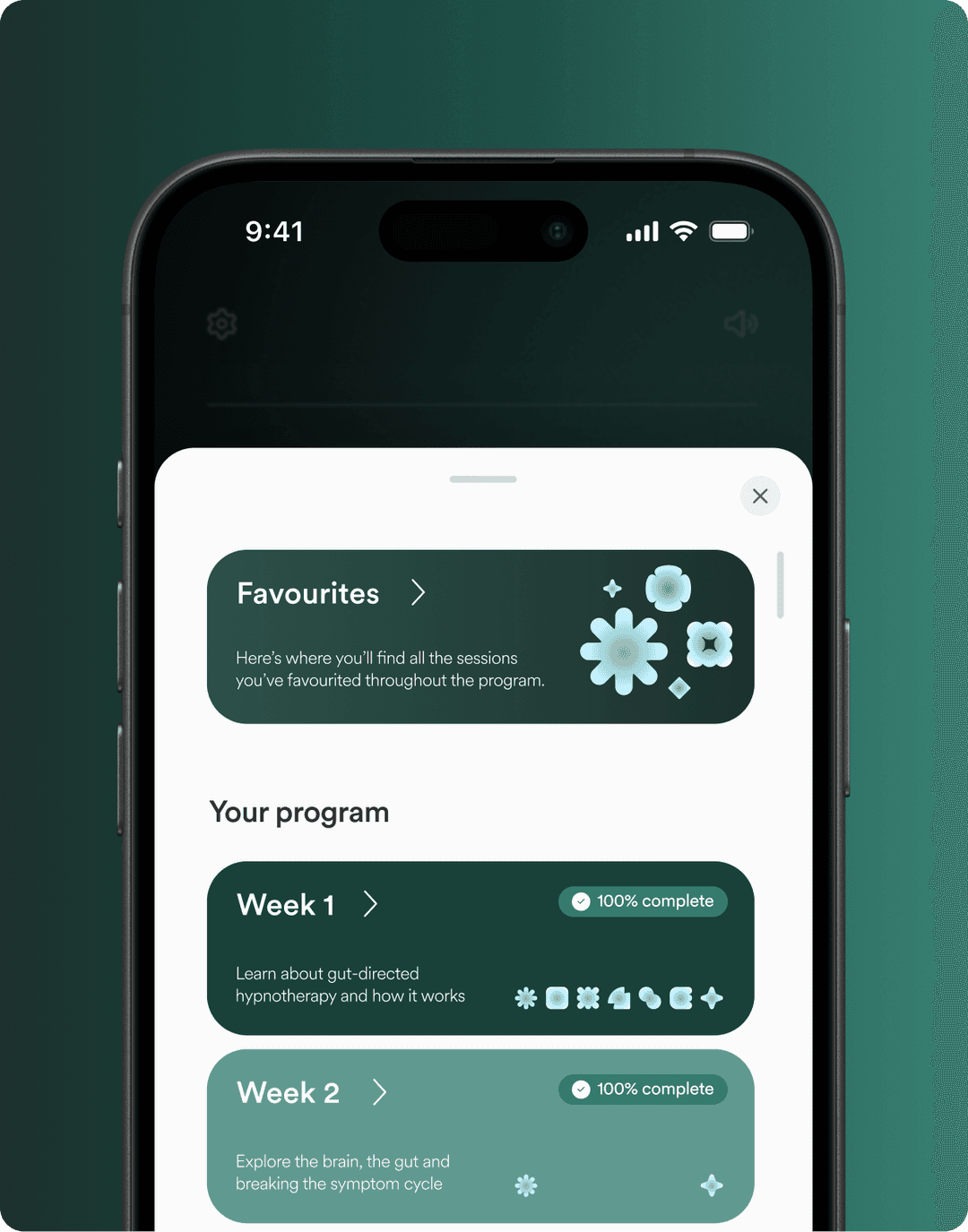
The Nerva program is one example: a 6-week digital gut-brain therapy program that combines both approaches – gut-directed hypnotherapy through 15 to 20 minute daily audio sessions, alongside CBT-based education, breathing techniques, and symptom tracking. In a 244-person randomized controlled trial published in the American Journal of Gastroenterology in 2025, 81 percent of participants achieved clinically significant symptom improvement.¹⁴ 

Programs like this don't replace your doctor, dietitian, or specialist – but for the first time, they put a guideline-recommended psychological treatment within reach of anyone with a smartphone.

Frequently asked questions

Is CBT or hypnotherapy better for IBS?

Neither has been shown to be clearly better than the other. Both produce similar response rates of around 70 to 80 percent in head-to-head trials, and major guidelines list them as equally valid first-line options.¹ ⁹

How long does gut-brain therapy take to work?

Most people notice symptom improvement within 4 to 6 weeks of consistent practice. Trials of both CBT and gut-directed hypnotherapy show benefits maintained at 12-month follow-up, suggesting the effects are durable rather than temporary.²

Does gut-directed hypnotherapy work without an in-person therapist?

Yes – validated digital hypnotherapy programs produce clinically significant symptom improvement comparable to therapist-led care.¹⁴ The therapeutic suggestions and protocol structure appear to drive most of the effect, not the in-person delivery.

Will I still need medication if I do gut-brain therapy?

Gut-brain therapy is designed to complement medical care, not replace it. Many people find their reliance on symptom-targeted medications reduces over time, but any changes should be discussed with your prescribing doctor.³ ⁴

Does gut-directed hypnotherapy work for conditions other than IBS?

Yes – there's growing evidence supporting gut-directed hypnotherapy for functional dyspepsia, functional constipation, rumination syndrome, and most other gut-brain disorders.¹² It also can support similar disorders with overlapping symptoms like IBD, SIBO, and GERD.

References

Your next read

Preferences saved