.webp)

Key takeaways:
- The gut-brain connection is the two-way communication system between your digestive tract and your brain.
- When the gut-brain connection is disrupted, normal digestive signals get amplified into pain, bloating, and bowel changes.
- IBS is a gut-brain disorder – symptoms arise from altered gut-brain signaling, not structural damage to the gut.
- Gut-brain therapy directly targets the disrupted signaling driving symptoms, not just the symptoms themselves.
What is the gut-brain connection?
The gut-brain connection is the two-way communication system between the brain and the digestive tract – coordinated through the vagus nerve and the enteric nervous system – that controls gut movement, amplifies or dampens pain signals, and determines how intensely everyday digestive sensations are experienced.
Most people assume the brain simply sends instructions down to the gut. But the communication runs both ways. Your gut sends signals back up to your brain continuously, influencing mood, stress responses, and how safe or threatened the body feels. This is why digestive symptoms and emotional states so often move together – why a stressful morning can send you straight to the bathroom, or why weeks of gut pain can leave you feeling anxious and depleted.
What is the enteric nervous system?
The enteric nervous system is a vast network of approximately 500 million neurons embedded in the walls of the digestive tract – more than in the entire spinal cord¹ – capable of regulating digestion entirely independently of the brain.
It is often called the "second brain" for this reason. But it does not work in isolation. It communicates constantly upward to the brain via the vagus nerve, and critically, around 90% of the fibers in that nerve carry signals from the gut to the brain – not the other way around.² Your gut is doing most of the talking.
The gut also produces over 90% of the body's serotonin,³ the neurotransmitter most associated with mood and wellbeing. When gut-brain communication is disrupted, the effects extend well beyond digestion – which is why conditions like IBS so often travel alongside anxiety, fatigue, and low mood.
How a disrupted gut-brain connection causes IBS symptoms
When the gut-brain connection is disrupted, the nervous system shifts into a heightened state – and ordinary digestive activity that most people never notice gets amplified into pain, bloating, and bowel changes that can affect every part of your day. This altered signaling between the gut and the brain is the underlying mechanism in IBS and other gut-brain disorders, and it has a clinical name: visceral hypersensitivity.
Visceral hypersensitivity is when the nerves lining the gut become sensitized and amplify normal digestive signals – gas, pressure, or the gut wall expanding after a meal – into significant pain and discomfort.
IBS is classified under the Rome IV criteria as a gut-brain disorder, meaning symptoms arise not from structural damage to the gut, but from this disrupted gut-brain signaling.⁴ This is why so many people with IBS receive completely normal scan results and yet feel severely symptomatic every single day. The gut looks fine. The problem is in how the gut and brain communicate.
Watch Nerva's Dr. Simone Peters from Monash University explain the gut-brain connection in this short overview about why a hypersensitive gut is leading to unwanted symptoms:
Why stress makes IBS worse
Stress worsens IBS symptoms because the nervous system and the gut are in constant two-way communication – when stress activates the nervous system, it directly affects the gut, slowing or accelerating motility, tightening the gut wall, and amplifying visceral signals that are already running on high alert.⁵ Symptoms that felt manageable can become overwhelming within hours of a stressful event, with no change in diet at all.
The relationship runs the other way too. Persistent gut symptoms generate their own anxiety and stress, which feeds back into the nervous system and keeps the cycle running. This is one of the reasons IBS can feel so relentless – and why treating stress alone, or diet alone, rarely resolves it completely.
What can disrupt the gut-brain connection?
For many people, chronic gut symptoms don't appear gradually – they trace back to a specific moment. It could be a bad bout of food poisoning, a long course of antibiotics, or a period of prolonged stress that seemed to change everything.
Understanding what disrupts the gut-brain connection in the first place is often the missing piece that finally makes sense of a potentially years-long pattern.
Can a gut infection cause lasting IBS symptoms?
A gut infection is one of the most well-documented triggers of lasting gut-brain disruption. In the aftermath of gastroenteritis – even after the infection itself has fully resolved – the gut nervous system can remain in a sensitized, hypervigilant state, a condition known as post-infectious IBS.⁶ Research confirms that neuronal sensitization in the gut can persist long after the original infection has cleared.⁷ So, the gut recovered, the nervous system didn't fully follow.
Can antibiotics affect the gut-brain connection?
Antibiotics can disrupt the gut-brain connection by altering the gut microbiome – the community of bacteria that plays a direct role in regulating gut-brain signaling. A significant course of antibiotics can change microbial composition in ways that affect how the enteric nervous system functions, contributing to the onset or worsening of gut-brain disorder symptoms.⁸ For many people, this is the event they can point to: digestion was never quite the same after that round of treatment.
How does prolonged stress disrupt gut-brain signaling?
Prolonged stress disrupts gut-brain signaling by keeping the nervous system in a state of sustained activation – which over time sensitizes the gut's neural pathways in the same way a physical trigger does.⁵ This is why IBS sometimes develops during or after intensely stressful life periods, even without any gut infection or dietary change as a cause.
Why are gut-brain disorders more common in women?
Gut-brain disorders are significantly more common in women because hormonal fluctuations – particularly around menstruation, pregnancy, perimenopause, and menopause – directly affect gut motility and visceral sensitivity.⁹ Many women notice their gut symptoms shift predictably across their cycle or change markedly at hormonal transition points, reflecting how closely the gut-brain axis and the endocrine system are connected.
IBS and other gut-brain disorders: what's the difference?
Gut-brain disorders are a group of conditions in which symptoms arise from disrupted communication between the gut and the brain, rather than from structural damage or disease visible on scans or tests.¹⁰
IBS is the most common – affecting an estimated 10–15% of people globally¹¹ – but it is one of more than 20 recognized gut-brain disorders classified under the Rome IV criteria by the Rome Foundation.
What they have in common is a shared mechanism: visceral hypersensitivity and altered gut-brain signaling. The conditions differ primarily in where in the digestive tract that disruption is most pronounced and which symptoms it produces.

Many people live with more than one gut-brain disorder simultaneously – functional dyspepsia and IBS frequently overlap, for example, because the underlying mechanism is shared across the digestive tract, not confined to one location. A treatment that targets the root cause of that mechanism, rather than individual symptoms, is effective across presentations.
Why diet alone doesn't fix the gut-brain connection
For many people with IBS, dietary change is the first thing tried and the first thing that falls short. Foods get cut, then more foods get cut, and yet the gut-brain connection driving the symptoms remains exactly as disrupted as it was before. That's not a failure of willpower or consistency. It's a fundamental limit of what dietary change can reach.
The low FODMAP diet, developed by researchers at Monash University, is the most evidence-backed dietary approach for IBS.¹² It reduces the volume of fermentable carbohydrates that gut bacteria ferment rapidly – lowering the gas load and reducing one layer of symptom triggers. For many people it provides real, meaningful relief. But it works upstream of the gut-brain connection, not on it. It reduces the input. It does not recalibrate how the gut-brain axis processes that input.
This is why visceral hypersensitivity – the sensitized state of the gut nervous system – is the piece that dietary management alone cannot resolve. When the gut-brain connection is dysregulated, the nervous system is amplifying normal digestive signals regardless of what triggered them. Removing dietary triggers reduces the volume of signals. It does not turn down the amplification.
It is also why the same meal can feel completely manageable one day and unbearable the next. The food didn't change. The state of the gut-brain connection did – shaped that day by sleep, stress, hormones, or nervous system activation that has nothing to do with what was on the plate.
A clinical study led by Dr. Simone Peters at Monash University found that a six-week gut-brain therapy protocol produced equivalent rates of symptom improvement to the low FODMAP diet – without requiring any dietary change.13
"Gut-directed hypnotherapy also shows similar rates of symptom improvement to the low FODMAP diet, which is currently considered the first-line therapy for IBS." – Ellen Anderson, Accredited Practicing Dietitian, Mind+Gut Clinic; PhD Candidate at Monash University
Dietary management and gut-brain therapy address different parts of the same problem. Diet reduces the triggers reaching a sensitized nervous system. Gut-brain therapy targets the sensitization itself – the disrupted communication at the root of why those triggers produce symptoms at all. For lasting improvement, both matter.
How gut-brain therapy works on the gut-brain connection
Gut-brain therapy is recommended as a first-line approach for gut-brain disorders by the American College of Gastroenterology, NICE, and the Rome Foundation – not because it manages symptoms from the outside, but because it works directly on the disrupted gut-brain connection driving them.¹⁴ ¹⁵ 16 Where diet reduces triggers and medication addresses symptom expression, gut-brain therapy works on the signaling itself – supporting the gut-brain axis to recalibrate so that ordinary digestive activity stops being processed as pain.
This is what makes gut-brain therapy categorically different from other approaches. It is not addressing what the gut is producing. It is working on how the gut-brain connection is interpreting it.
Gut-brain therapy can be introduced at any stage – alongside diet and medication, or as a standalone first-line approach. It is not a last resort for when everything else has failed. For many people, beginning with gut-brain therapy means working on the root of the disruption rather than its downstream effects.
Watch this short video for a better understanding of what gut-brain disorders are.
What does the evidence say about gut-brain therapy for IBS?
The clinical evidence for gut-brain therapy in IBS is substantial and growing. In a randomized controlled trial published in the American Journal of Gastroenterology in 2025, 81% of participants using the Nerva gut-brain therapy program achieved a clinically significant improvement on the IBS Symptom Severity Scale – compared to 63% in the active control group.17 71% also achieved a clinically significant reduction in abdominal pain.17
In a separate real-world cohort of over 85,000 Nerva users, 80% reported improved symptom management – with an average 48% improvement in bloating, abdominal pain, and gas among those who reported these as primary symptoms.18 Outcomes were consistent regardless of whether symptoms were primarily food-triggered, stress-triggered, or both – reflecting that gut-brain therapy works on the shared mechanism beneath different symptom presentations, not the triggers themselves.18
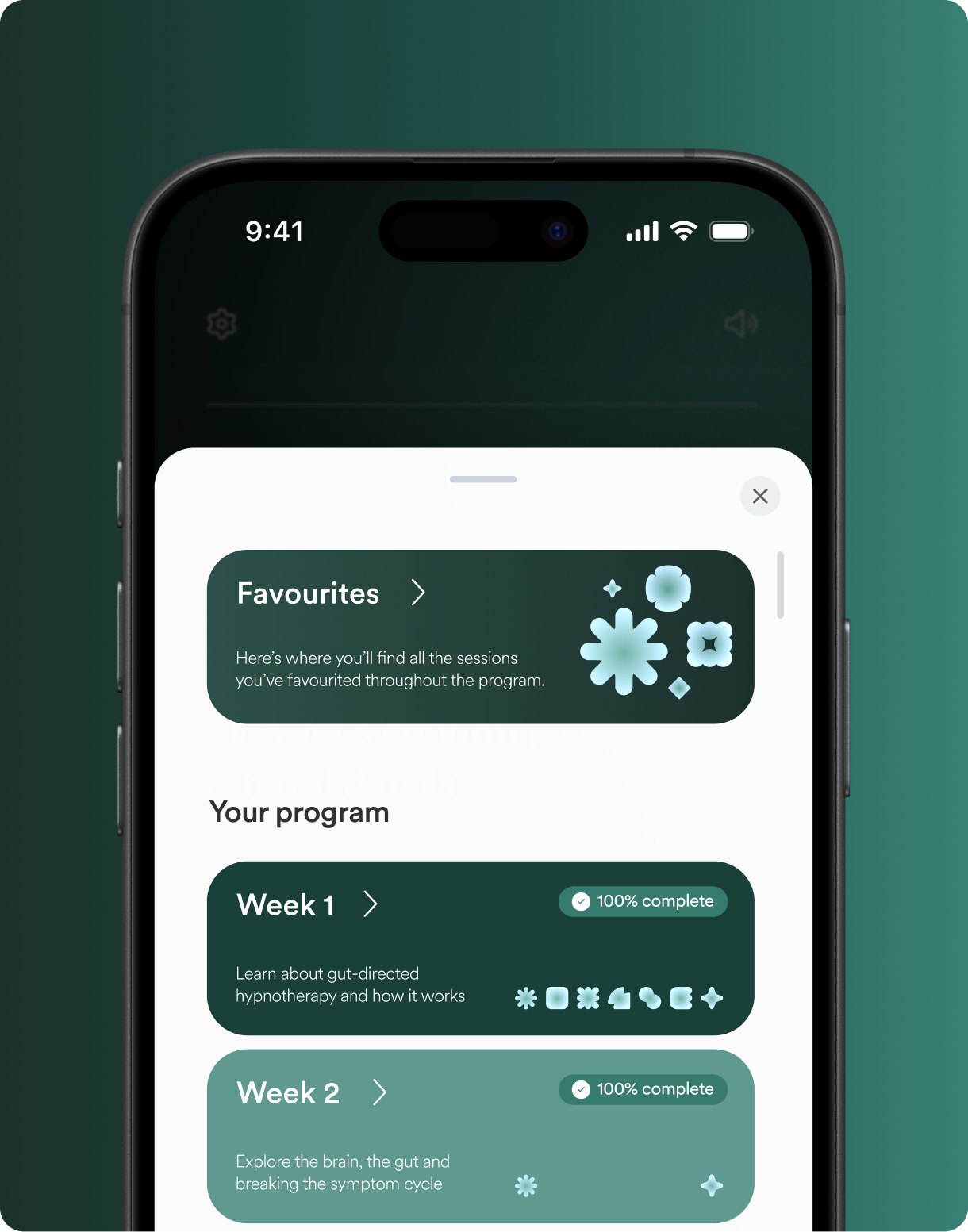
Nerva is a gut-brain therapy program that delivers a structured six-week protocol of gut-directed hypnotherapy, CBT-based education about the gut-brain connection, and breathing techniques designed to support nervous system regulation during flare-ups. Each daily session takes around 15–20 minutes. Because Nerva works on the underlying gut-brain signaling rather than symptom suppression, improvements build progressively across the six weeks and are maintained after the program ends.
Frequently asked questions
What exactly is the gut-brain connection?
The gut-brain connection is the two-way communication system between the digestive tract and the brain, coordinated through the vagus nerve and the enteric nervous system, that regulates gut movement, pain perception, and how intensely digestive sensations are felt. When this connection is disrupted, ordinary digestive activity gets amplified into the pain, bloating, and bowel changes that characterize conditions like IBS.
Why do my IBS symptoms change day to day for no obvious reason?
IBS symptoms fluctuate because the gut-brain connection – not just food – determines how digestive signals are processed on any given day. Sleep quality, stress levels, and hormonal shifts all alter the state of the gut-brain axis, which is why the same meal can feel completely manageable one day and unbearable the next.
Can the gut-brain connection improve with the right support?
The gut-brain connection can be recalibrated over time through gut-brain therapy, which works directly on the disrupted signaling between the gut and the brain rather than managing symptoms from the outside. For many people, improvements build progressively over several weeks and are maintained long after the program ends.
Why do I feel anxious when my gut symptoms are bad?
The gut-brain connection runs in both directions – when the gut is distressed, it sends signals via the vagus nerve that directly activate stress and anxiety responses in the brain. This bidirectional loop is one of the reasons IBS and anxiety so frequently occur together, and why calming the gut-brain axis can improve both.
Is gut-brain therapy just being told my symptoms are in my head?
Gut-brain therapy is rooted in the neuroscience of the gut-brain connection – your symptoms are real, physically driven by a nervous system that has become sensitized, and that is exactly what gut-brain therapy works on. The science behind it is strong enough that it is guideline-recommended as a first-line approach for gut-brain disorders worldwide.
References
Furness JB. The enteric nervous system and neurogastroenterology. Nat Rev Gastroenterol Hepatol. 2012;9(5):286–294.
Bonaz B, Bazin T, Pellissier S. The vagus nerve at the interface of the microbiota-gut-brain axis. Front Neurosci. 2018;12:49.
Yano JM, Yu K, Donaldson GP, et al. Indigenous bacteria from the gut microbiota regulate host serotonin biosynthesis. Cell. 2015;161(2):264–276.
Lacy BE, Mearin F, Chang L, et al. Bowel disorders. Gastroenterology. 2016;150(6):1393–1407.
Mayer EA. Gut feelings: the emerging biology of gut–brain communication. Nat Rev Neurosci. 2011;12(8):453–466.
Thabane M, Kottachchi DT, Marshall JK. Systematic review and meta-analysis: the incidence and prognosis of post-infectious irritable bowel syndrome. Aliment Pharmacol Ther. 2007;26(4):535–544.
Brint EK, MacSharry J, Fanning A, et al. Evidence for long-term sensitization of the bowel in patients with post-infectious IBS. Sci Rep. 2017;7(1):13096.
Tap J, Störsrud S, Le Nevé B, et al. Diet and gut microbiota in irritable bowel syndrome. Gut Microbiota Res. 2021. (Christina to verify)
Heitkemper MM, Jarrett ME. Overlapping conditions in women with irritable bowel syndrome. Urol Nurs. 2005;25(1):25–30.
Drossman DA. Functional gastrointestinal disorders: history, pathophysiology, clinical features, and Rome IV. Gastroenterology. 2016;150(6):1262–1279.
Ford AC, Sperber AD, Corsetti M, Camilleri M. Irritable bowel syndrome. Lancet. 2020;396(10263):1675–1688.
Gibson PR, Shepherd SJ. Evidence-based dietary management of functional gastrointestinal symptoms: the FODMAP approach. J Gastroenterol Hepatol. 2010;25(2):252–258.
Peters SL, Yao CK, Philpott H, Yelland GW, Muir JG, Gibson PR. Randomised clinical trial: the efficacy of gut-directed hypnotherapy is similar to that of the low FODMAP diet for the treatment of irritable bowel syndrome. Aliment Pharmacol Ther. 2016;44(5):447–459.
American College of Gastroenterology Task Force on Irritable Bowel Syndrome. An evidence-based position statement on the management of irritable bowel syndrome. Am J Gastroenterol. 2009;104(suppl 1):S1–S35.
National Institute for Health and Care Excellence. Irritable bowel syndrome in adults: diagnosis and management. NICE guideline CG61. Updated 2017.
Drossman DA, Hasler WL. Rome IV – functional GI disorders: disorders of gut-brain interaction. Gastroenterology. 2016;150(6):1257–1261.
Anderson E, Peters S, Halmos E, Gibson P. Comparison of digitally delivered gut-directed hypnotherapy program with an active control for irritable bowel syndrome. Am J Gastroenterol. 2025;120(2).
Mindset Health. Internal cohort data, ~85,000 Nerva users. Metabase. April 2026.