.webp&w=3840&q=75)

Key takeaways:
- Gut-brain disorders (like IBS and functional dyspepsia) affect more than 40% of people globally, making them the leading cause of chronic abdominal pain.¹
- Standard tests are often normal in chronic abdominal pain, even when the pain is real and disruptive.
- Stress, gut infections, antibiotics, and hormonal changes can all trigger the nervous system sensitivity that drives ongoing pain.
- Combining gut-brain therapy with diet and medication is the most effective way to address both the cause and the symptoms.
- 71% of participants in Nerva's clinical trial responded to the program with clinically meaningful changes in their abdominal pain.²
Chronic abdominal pain that won't go away is most often caused by a gut-brain disorder, where the nerves between the gut and brain have become oversensitive and amplify normal digestive signals into pain.¹
If you have been dealing with belly pain for months – maybe years – and your tests keep coming back normal, you are not imagining it. Real, persistent pain can exist without anything visibly wrong on a scan or scope. And you are far from alone – chronic abdominal pain affects 1 to 2% of adults, with women more commonly affected than men.³
For most people, the cause is not structural disease but a gut-brain disorder – the term clinicians use is disorder of gut-brain interaction, or DGBI. In plain language, your gut is healthy, but pain signalling between your gut and brain has become amplified. Gut-brain disorders affect more than 40% of people worldwide, making them one of the most common reasons for ongoing digestive symptoms.¹
This guide explains why chronic abdominal pain happens, why standard tests often come back normal, what conditions sit behind it, and what evidence-based options can actually help.
What causes chronic abdominal pain?
Chronic abdominal pain has many possible causes, but the largest by far is a group of conditions called gut-brain disorders – where the gut is structurally healthy but pain signalling between the gut and brain has become amplified.¹ A smaller proportion of chronic pain comes from visible disease, inflammation, or nerve problems in the abdominal wall.
Why gut-brain disorders cause belly pain
Gut-brain disorders are conditions where the nerves of the digestive tract have become hypersensitive, and the brain processes ordinary signals from the gut as pain.⁴ Tests look normal because the gut tissue is normal. The problem is in how the nerves are firing.
The gut-brain disorders most commonly behind chronic abdominal pain are:
Irritable bowel syndrome (IBS) – chronic abdominal pain with altered bowel habits (diarrhoea, constipation, or both). IBS affects around 10 to 15% of people worldwide and is the most common gut-brain disorder.⁵
Functional dyspepsia – chronic upper abdominal pain or discomfort, often after eating, without a clear structural cause.
Centrally mediated abdominal pain syndrome – constant or near-constant abdominal pain that is not linked to eating, bowel movements, or menstruation.³
In all of these conditions, the underlying mechanism is the same: the nerves in the gut have become more reactive, and the brain pays more attention to those signals than it should. This is called visceral hypersensitivity – and it is the single most common driver of chronic abdominal pain.⁴
Inflammatory and structural causes of abdominal pain
A smaller proportion of chronic abdominal pain is caused by visible inflammation or structural disease, including:
Inflammatory bowel disease (IBD) – Crohn's disease and ulcerative colitis cause chronic inflammation of the digestive tract.
Endometriosis – tissue similar to the uterine lining grows outside the uterus, often causing cyclical or persistent pelvic and abdominal pain.
Chronic pancreatitis – ongoing inflammation of the pancreas, often linked to alcohol use or genetic factors.
Gallstones or gallbladder disease – can cause recurrent pain in the upper right abdomen, often after fatty meals.
Peptic ulcers – sores in the stomach or small intestine lining that cause burning upper abdominal pain.
These causes typically show up on imaging, blood tests, or scopes – which is why they tend to be diagnosed earlier than gut-brain disorders.
What is abdominal wall pain?
A surprisingly common but often-missed cause is chronic abdominal wall pain (CAWP), where the pain comes from nerves in the abdominal muscles rather than the organs underneath. It may account for 10 to 30% of people who present with otherwise unexplained abdominal pain.⁶
What could be amplifying your belly pain
Stress, anxiety, depression, and a history of gut infection or trauma can all amplify chronic abdominal pain – especially when a gut-brain disorder is involved. These are not usually the underlying cause, but they can turn up the volume on an already sensitised nervous system, which is why pain often flares during stressful periods.³
Why your tests come back normal but the pain is real
Normal test results in chronic abdominal pain usually mean the cause is functional rather than structural – your gut is healthy, but the way your nerves are sensing and signalling has changed. Standard scans and bloodwork are designed to find damage and disease, not changes in nerve signalling, which is why they often miss what is actually driving the pain.⁴
“
Our GI tract has its own nervous system called the enteric nervous system. And there are really two types of nerves. There are motor nerves that go from our brain to our stomach and intestines and tell it to move, and then there are sensory nerves that go the other way, telling us we’re hungry, we’re full, we need to go to the bathroom. And for some people, for reasons we only partially understand, things don’t always move or seem right.
Dr. Jeffrey Nathanson
Gastroenterologist, Co-Owner of Comprehensive Gastrointestinal Health
If you have been told "everything looks fine" but you are still in pain, here is what is most likely happening:
Your gut tissue is healthy. Inflammation, ulcers, blockages, and structural damage all show up on imaging or scopes. None of those are present.
But your nerves have become more reactive. The sensory nerves in your gut, and the way your brain processes their signals, have shifted into a more sensitive state.
Normal digestion now feels painful. Things that should not register at all – gas moving through, food being digested, a regular bowel contraction – are being amplified into pain.
This is visceral hypersensitivity at work. It is real, measurable, and increasingly well understood. It just does not show up on the kinds of tests most people are referred for first.
It also helps explain why the pain can move around, change in character, or flare for no obvious reason. When the nervous system is the source, the pain does not have to follow the rules of structural disease.
The good news is that a sensitised nervous system can be retrained. This is the basis of the brain-gut behavioural therapies that major guidelines now recommend as first-line care for chronic abdominal pain in gut-brain disorders – which we will get to next.⁵
How the gut-brain connection causes ongoing belly pain
Your gut has its own nervous system – the enteric nervous system – with hundreds of millions of nerve cells that talk constantly to your brain through what is called the gut-brain axis.⁴ When this two-way communication is working well, you mostly do not notice your gut. When it becomes dysregulated, the sensory nerves start sending pain signals in response to things that should not register as painful at all.

Even after the original trigger has resolved, the nervous system can stay in a heightened state. The gut becomes more sensitive, the brain stays on alert, and the cycle of pain continues – sometimes for years.
This is why chronic abdominal pain so often outlasts the thing that started it. The infection cleared. The stressful period ended. The course of antibiotics finished. But the nervous system kept the pattern going.
The good news is that this pattern is exactly what targeted treatment can help interrupt.
How chronic abdominal pain is treated
What helps depends on what is causing your pain. If there is a structural problem like inflammatory bowel disease, gallstones, or endometriosis, treatment focuses on the underlying condition. But for the majority of people – those with a gut-brain disorder – the best approach targets the nervous system itself, because that is where the pain is actually coming from.⁵
The most effective plans usually combine three things, working together:
Medication, if your doctor recommends it, to help take the edge off specific symptoms.
Dietary changes – like the low-FODMAP diet, identifying personal trigger foods, or working with a dietitian to find what diet works for your tummy.
Brain-gut behavioural therapies like gut-directed hypnotherapy and cognitive behavioural therapy (CBT), which help calm the oversensitive nerves driving the pain.
These three pillars are recommended together by the major gastroenterology bodies – the ACG, AGA, and NICE – because they address different parts of the same problem.⁵
A useful way to think about it: imagine your gut health is a tree. Diet and medication work at the branches, helping you feel better day to day. Brain-gut therapy works closer to the roots, gradually retraining how your nervous system responds. You don't have to choose between them – the most lasting change usually comes from working on both at once.
"Brain-gut behavioural therapies have great efficacy. They work really well in placebo-controlled trials. The effectiveness is strong long-term, up to seven years, and they're very safe. Should these therapies be offered earlier? The data suggests yes." – Dr. Jordan Shapiro, Gastroenterologist, The Gentle GI
How Nerva can help with chronic abdominal pain
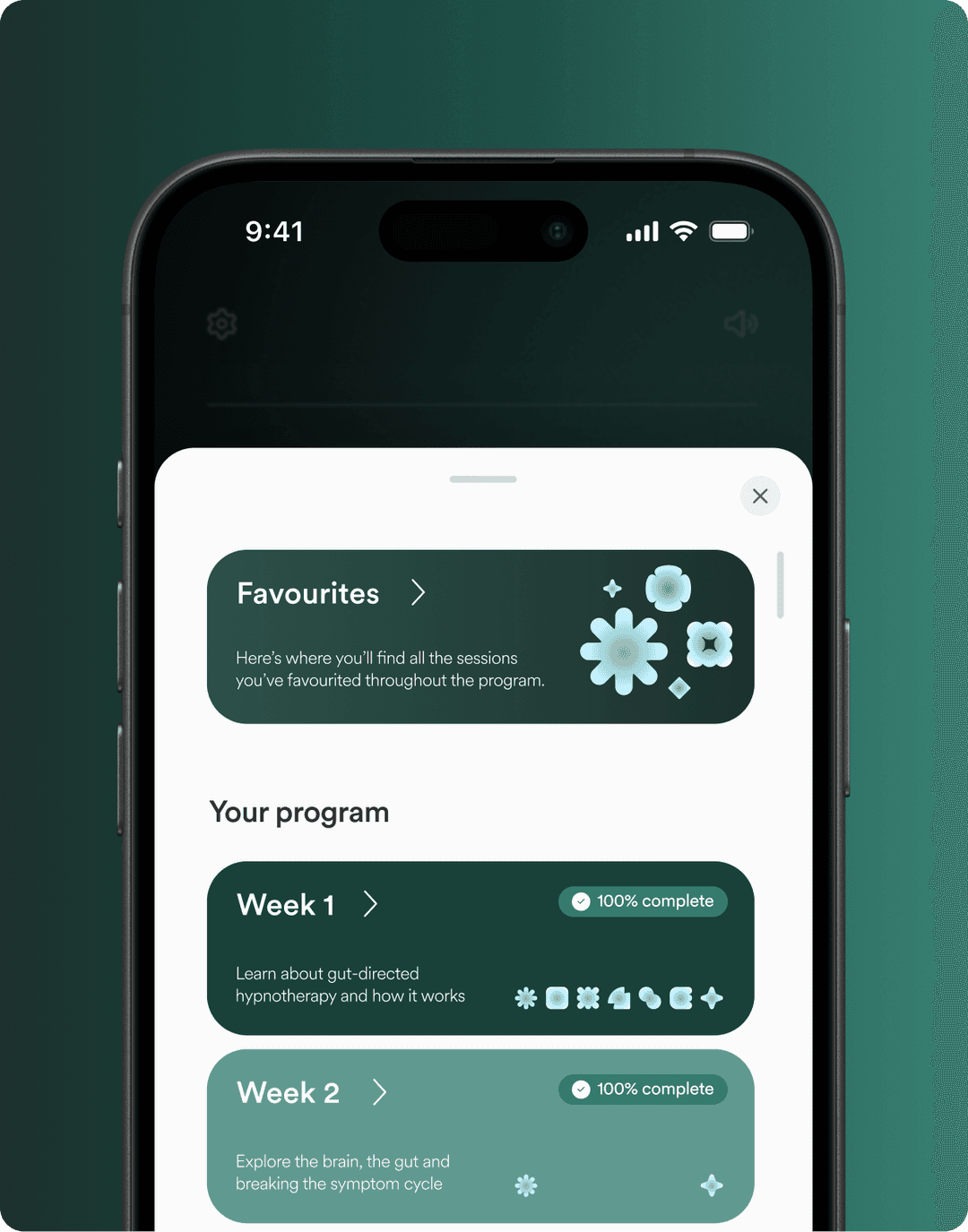
Nerva is a 6-week gut-brain therapy program designed to gently retrain how your nervous system responds to signals from your gut – the very thing driving the pain in most cases of chronic stomach pain.
Watch Dr. Simone Peters from Monash University explain what is gut-brain therapy to help you better understand how Nerva can support your pain.
Following Nerva's gut-brain therapy program takes just 15 to 20 minutes a day. It includes guided audio sessions of gut-directed hypnotherapy, easy-to-follow education based on cognitive behavioural therapy, and breathing exercises that help calm the nervous system. You can do it at home, in your own time, on your phone.
In Dr. Peters' research with Monash University, 71% of participants responded with clinically meaningful changes in their abdominal pain by the end of the program – compared to 35% in the active control group.² People also reported broader changes in their overall symptoms and how their pain affected their life.
Nerva is recommended in major clinical guidelines as a first-line option for gut-brain disorders, and it is designed to work alongside any diet or medical care your doctor has recommended – not replace it. Most people start to notice changes within 4 to 6 weeks, and the changes tend to keep building long after the program ends.⁵
If your tests have come back normal but your pain is still there, gut-brain therapy is targeting exactly what those tests cannot see. Speak with your doctor about whether Nerva could be a useful part of your care plan..
Frequently asked questions
When should I be worried about ongoing stomach pain?
Ongoing stomach pain is worth getting checked promptly if you also notice things like losing weight without trying, blood in your stool or vomit, fever, yellowing of the skin, throwing up that won't stop, pain that wakes you up at night, or pain that is getting worse fast.³ If any of these are happening, it is best to see your doctor as soon as you can to make sure nothing structural is being missed.
Can anxiety cause constant stomach pain?
Anxiety and stress really can cause ongoing stomach pain – they turn up the volume on the nerves in your gut, which is why your belly often feels worst when life feels hardest. Anxiety is rarely the only thing going on, but in people with gut-brain disorders it can be a major driver of how often pain shows up and how bad it feels.
How long can a stomach ache last?
A stomach ache that has been around for more than three months is officially considered chronic, and for people with gut-brain disorders it can stick around for years if the underlying nerve sensitivity is not addressed. The good news is that working on the gut-brain side of things has been shown to bring relief that lasts – with changes that hold up for as long as seven years in clinical follow-up.⁵
Can chronic tummy pain go away on its own?
Chronic tummy pain sometimes does settle on its own – usually when something specific (like a gut infection or a stressful patch of life) was triggering it and that thing has now passed. More often, though, the pain hangs around because your nervous system has stayed sensitive, and your doctor can help you figure out what kind of support might actually move the needle for you.
What is the best painkiller for chronic stomach pain?
There is no one best painkiller for chronic stomach pain – and over-the-counter options like ibuprofen and similar painkillers are not meant for long-term use because they can actually make gut symptoms worse over time. The best move is to talk to your doctor about what is going on, since gut-brain disorders often respond better to approaches that calm the nervous system itself rather than just numbing the pain.⁵
Does gut-directed hypnotherapy work for chronic stomach pain?
Gut-directed hypnotherapy is a well-studied therapy that has been shown to bring real relief for chronic stomach pain in gut-brain disorders – with about 7 to 8 out of every 10 people responding positively in clinical trials. In Nerva's clinical trial, 71% of participants responded to the program with clinically meaningful changes in their abdominal pain, compared to 35% in the active control group.²
References
Sperber AD, Bangdiwala SI, Drossman DA, et al. Worldwide prevalence and burden of functional gastrointestinal disorders, results of Rome Foundation Global Study. Gastroenterology. 2021;160(1):99-114.
Peters SL, Halmos EP, Tye-Din JA, et al. Comparison of digitally delivered gut-directed hypnotherapy program with an active control for irritable bowel syndrome. Am J Gastroenterol. 2025;120(2).
MSD Manual Professional Edition. Chronic Abdominal Pain and Recurrent Abdominal Pain. Reviewed May 2024. Available at: msdmanuals.com/professional/gastrointestinal-disorders.
Drossman DA. Functional gastrointestinal disorders: history, pathophysiology, clinical features, and Rome IV. Gastroenterology. 2016;150(6):1262-1279.
Lacy BE, Pimentel M, Brenner DM, et al. ACG Clinical Guideline: Management of Irritable Bowel Syndrome. Am J Gastroenterol. 2021;116(1):17-44.
Kamboj AK, Hoversten P, Oxentenko AS. Chronic abdominal wall pain: a common yet overlooked etiology of chronic abdominal pain. Mayo Clin Proc. 2019;94(1):139-144.