.webp&w=3840&q=75)

Key takeaways:
- Diaphragmatic breathing is the most evidence-backed natural remedy for GERD and can reduce symptoms over 4–8 weeks of daily practice.¹
- Lifestyle changes – weight loss, earlier meals, and elevating the head of the bed – have strong clinical evidence for reducing reflux.²
- Stress does not cause GERD, but it intensifies how reflux symptoms are perceived.³
- Apple cider vinegar has no credible evidence for GERD and may worsen symptoms.⁴
The most evidence-based natural remedies for GERD are diaphragmatic breathing, weight loss when appropriate, elevating the head of the bed, avoiding late meals, and stress management – all supported by clinical research and major gastroenterology guidelines.¹ ²
If you're looking for natural ways to manage gastroesophageal reflux disease (GERD), there's a growing body of research showing that certain non-drug approaches can meaningfully reduce symptoms – and in some cases, lower the need for medication.¹ This guide separates the evidence-backed options from the popular claims that don't hold up under scrutiny.
For a detailed overview of what GERD is, how it's diagnosed, and how it differs from occasional acid reflux, see our full guide to GERD.
The best natural remedy for GERD: How breathing exercises ease reflux
Deep breathing exercises are the best-studied natural remedy for GERD, and research shows they can ease heartburn and, for some people, reduce how often they reach for reflux medication.¹ ³
It might sound too simple to help something as uncomfortable as reflux – but there's a physical reason it works. Your diaphragm, the dome-shaped muscle that sits just above your stomach, plays a big role in keeping acid from rising into your oesophagus. When you breathe deeply from your belly instead of shallowly from your chest – a technique called diaphragmatic breathing – you're gently strengthening that muscle over time.¹ Think of it like daily training for a natural barrier you already have.
The evidence is solid. A 2023 review of the research, published in the journal Dysphagia, found that people who practised diaphragmatic breathing regularly saw real improvements in their reflux symptoms – and some were able to cut back on their medication.¹ An earlier analysis looking at seven separate studies came to the same conclusion.³
It's also officially recognised as a safe option. The US National Center for Complementary and Integrative Health (part of the NIH) lists diaphragmatic breathing as a low-cost, low-risk approach for mild GERD.⁵
Here's how you can breathe to manage reflux:

Lifestyle changes that actually reduce GERD symptoms
After breathing exercises, a handful of simple lifestyle changes have the strongest research behind them – and they're all recommended in the 2022 American College of Gastroenterology (ACG) guidelines, the most widely referenced standard of GERD care in the US.²
Does losing weight help GERD?
Losing weight is one of the most effective natural ways to reduce GERD symptoms, especially if you carry extra weight around your middle.² Extra abdominal weight puts physical pressure on the stomach, which pushes acid upward and weakens the valve that's meant to keep it down. Even modest weight loss can make a noticeable difference – you don't have to hit a goal weight to feel the relief of less pressure around your abdomen.
How to stop acid reflux at night: Raise the head of your bed
Raising the head of your bed by 6–8 inches is one of the most effective ways to reduce nighttime acid reflux.² Gravity does the work, keeping acid where it belongs while you sleep.
One important note: stacking extra pillows isn't the same thing. Bending at the waist can actually increase pressure on your stomach and make reflux worse. The better approach is to raise the whole bed at the headboard – using bed risers, a wedge under the mattress, or a purpose-built wedge pillow that supports you from shoulders to hips.
Why eating earlier helps reflux
Eating earlier in the evening reduces nighttime reflux by giving your stomach time to empty before you lie down.² When your stomach is full and you're horizontal, acid has an easier path upward. Aim to finish dinner at least 2–3 hours before bed. For people with regular nighttime symptoms, this single change can bring noticeable relief within days.
Can quitting smoking improve GERD?
Quitting smoking can meaningfully improve GERD symptoms because smoking weakens the muscle that keeps stomach acid down and is linked to more frequent reflux.² If you smoke, quitting is one of the most impactful changes you can make – not just for GERD but for your whole digestive system. Your GP or pharmacist can help you find a cessation plan that works for you.
Natural foods and drinks that may help with acid reflux
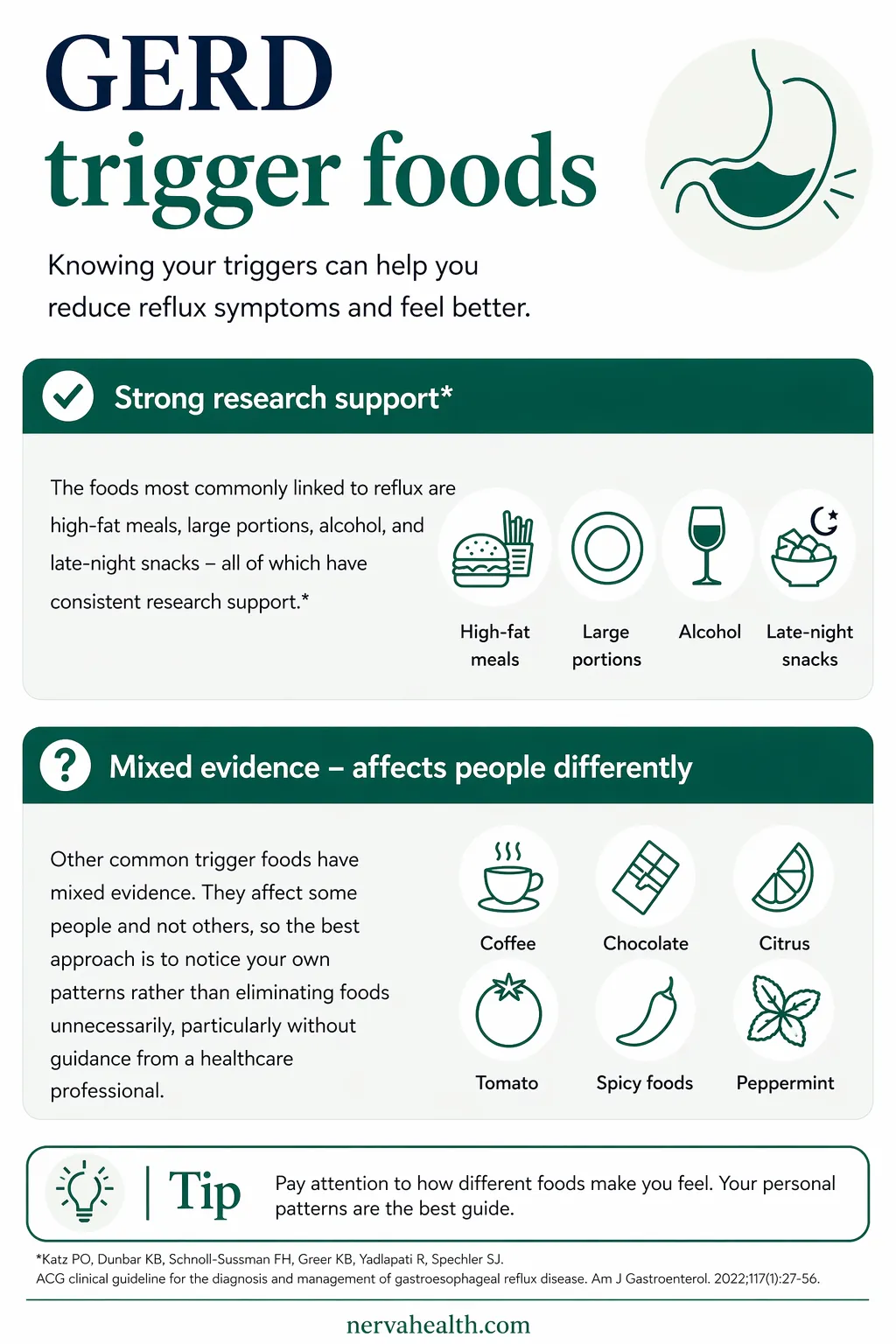
What you eat plays a real role in GERD, but the picture is more nuanced than the long Avoid these foods lists you'll often see online. Current guidelines recommend a personalised approach – paying attention to what actually worsens your own symptoms, rather than cutting out every food on a general trigger list.²
Do smaller meals help reflux?
Smaller, more frequent meals can reduce reflux by limiting how much your stomach is stretched at any one time.² A very full stomach puts upward pressure on the valve between your stomach and oesophagus, making it easier for acid to escape. Dividing the same amount of food across 4–5 smaller meals instead of 2–3 large ones often makes a noticeable difference.
Does drinking water help acid reflux?
Sipping water can help wash acid back down into the stomach and may briefly ease heartburn. Water doesn't treat the underlying reflux, but it's a low-risk way to get quick relief in the moment. Carbonated drinks, on the other hand, can make reflux worse by increasing stomach pressure – still water is the better choice.
Is ginger good for acid reflux?
Ginger is one of the few herbal remedies with any clinical research specifically on upper GI symptoms. A small randomised trial found a standardised ginger extract improved symptoms like fullness and upper-stomach discomfort, though larger, high-quality studies on ginger for GERD specifically are still lacking.⁷ For most people, ginger tea or small amounts of fresh ginger are safe and can be soothing – but it shouldn't replace medical treatment if your symptoms are persistent.
Does apple cider vinegar help acid reflux? Why this popular remedy doesn't work
Apple cider vinegar is one of the most widely recommended home remedies for GERD online – but the evidence does not back it up, and for some people it can actually make reflux worse.
Is there any research supporting apple cider vinegar for GERD?
There is no published medical research showing apple cider vinegar helps heartburn or GERD.⁶ Harvard Health has noted that despite how often it's recommended in blogs and wellness content, no studies have examined whether raw apple cider vinegar is effective or safe for reflux.⁶
Can apple cider vinegar make acid reflux worse?
Apple cider vinegar can make acid reflux worse because it is highly acidic – drinking it can irritate the oesophagus, trigger heartburn in some people, and erode tooth enamel over time.⁶ For people with moderate to severe GERD, the risk of aggravating symptoms generally outweighs any possible benefit.
Apple cider vinegar alternatives for GERD
If you're drawn to apple cider vinegar because it feels like a "natural" option, the good news is that the approaches with genuine evidence – breathing exercises, weight loss, raising the head of the bed, eating earlier, and managing stress – are just as natural and far more likely to help. They're also what major gastroenterology guidelines recommend as first-line lifestyle care.²
Stress and acid reflux: Why your symptoms feel worse when life gets hard
If your heartburn flares during stressful periods, you're not imagining it. Stress doesn't cause GERD in a structural sense – the physical mechanics of reflux are the same whether you're calm or overwhelmed – but it reliably changes how intensely you feel your symptoms.
Can stress cause acid reflux?
Stress does not cause acid reflux itself, but it can make existing reflux feel significantly worse.⁴ Studies show that when people with GERD are exposed to stress, they experience more intense heartburn from the same amount of acid exposure.⁴ In other words, stress lowers the threshold at which your body registers reflux as painful.
How does stress make heartburn worse?
Stress makes heartburn worse by increasing the sensitivity of your oesophagus to acid – a phenomenon researchers call oesophageal hypersensitivity.⁴ Your gut and brain are constantly in two-way communication, and when your nervous system is on high alert, it turns up the volume on digestive signals that would otherwise feel mild or unnoticeable.
A 2015 study of 225 patients found that people with GERD who also had higher anxiety levels experienced more severe chest pain, worse heartburn, and a lower quality of life – even when their actual reflux levels were similar to others.⁸
"Symptoms are very real and they are driven by what happens between the gut and the brain and the brain to the gut along what's called the brain-gut axis." – Dr. Megan Riehl, GI Psychologist, Clinical Director of the GI Behavioral Health Program at the University of Michigan
Natural ways to manage stress-related reflux
Approaches that calm the nervous system can meaningfully reduce how often – and how intensely – reflux symptoms show up.
The most evidence-backed options include:
Diaphragmatic breathing (covered earlier in this guide)
Regular physical activity, ideally earlier in the day rather than late evening
Gentle practices like yoga, meditation, or guided relaxation
Prioritising sleep – poor sleep itself worsens reflux symptoms
Cognitive behavioural therapy (CBT) and gut-directed hypnotherapy for more persistent stress-symptom patterns⁵
Therapies that calm the nervous system: A credible option for persistent reflux
For people whose GERD symptoms don't fully settle with medication and lifestyle changes, evidence-based behavioural therapies that target the nervous system are an increasingly recognised option. They don't replace medical treatment, but they can help with the part of reflux that PPIs can't reach: how sensitively your body registers symptoms.
Can therapy help with acid reflux?
Certain evidence-based therapies can help with acid reflux, particularly when symptoms persist despite medication or are clearly affected by stress.⁵ The main options with clinical research behind them are cognitive behavioural therapy (CBT) and gut-directed hypnotherapy – a structured, clinically studied therapy that specifically targets how the gut and brain communicate.
The US National Center for Complementary and Integrative Health notes that clinical studies suggest these therapies may help people whose GERD symptoms persist despite PPIs, particularly when anxiety is also part of the picture.⁵
Does gut-directed hypnotherapy help GERD?
Gut-directed hypnotherapy is being studied as an option for GERD, particularly for people whose symptoms continue despite medication or who have reflux hypersensitivity – a clinically recognised form of reflux where the oesophagus becomes overly sensitive to even small amounts of acid.⁹
It works by calming the gut-brain pathways that amplify digestive symptoms. The goal isn't to eliminate reflux itself, but to reduce how intensely your body registers it. Gut-directed hypnotherapy is recommended in major gastroenterology guidelines for gut-brain disorders and is delivered as a structured, evidence-based clinical protocol – not a relaxation technique.
Who are these therapies most helpful for?
Therapies that target the nervous system tend to help most when reflux symptoms feel out of proportion to what medication should be controlling, when stress clearly makes symptoms worse, or when anxiety and digestive symptoms feed into each other. They're designed to work alongside – not instead of – dietary changes, lifestyle measures, and any medication your doctor has prescribed.
When to see a doctor about GERD
Natural remedies can complement medical care, but they don't replace it. It's important to see a doctor if your reflux is persistent, severe, or comes with any symptoms that could point to something more serious.
When should I see a doctor about acid reflux?
See a doctor about acid reflux if you're experiencing heartburn more than twice a week, if symptoms aren't settling with over-the-counter antacids, or if reflux is disrupting your sleep or daily life.² Persistent acid exposure over time can irritate and damage the oesophagus, so ongoing symptoms shouldn't be managed with home remedies alone.²
What are the warning signs of serious GERD complications?
Warning signs that need prompt medical evaluation include difficulty swallowing, painful swallowing, unintentional weight loss, persistent vomiting, vomiting blood, or black or tarry stools.² ⁸ These are called alarm symptoms and may indicate complications that require further testing, such as an upper endoscopy.² The American Gastroenterological Association also lists chest pain with activity (such as climbing stairs) and unexplained anaemia as alarm symptoms worth urgent review.⁸
Is chest pain always a sign of GERD?
Chest pain is not always caused by GERD and should never be assumed to be reflux – especially if it's new, severe, or unexplained. Clinical guidelines recommend that a cardiac cause be ruled out before chest pain is attributed to reflux, even in people with a known history of heartburn.² ⁸
Watch: Guidelines on managing GERD explained by gastroenterologists
For a deeper look at the current clinical approach to GERD, gastroenterologists Dr. Tauseef Ali and Dr. Pooja Singhal break down the American College of Gastroenterology's updated GERD guidelines in this Gastro Girl podcast episode.
How Nerva gut-directed hypnotherapy can help with acid reflux symptoms
Nerva is not a treatment for GERD itself – GERD is an acid reflux condition, not a gut-brain disorder. What Nerva can help with is the symptom amplification and stress response that often make reflux feel worse, particularly for people with overlapping functional digestive symptoms or reflux hypersensitivity.
What is Nerva and how does it work?
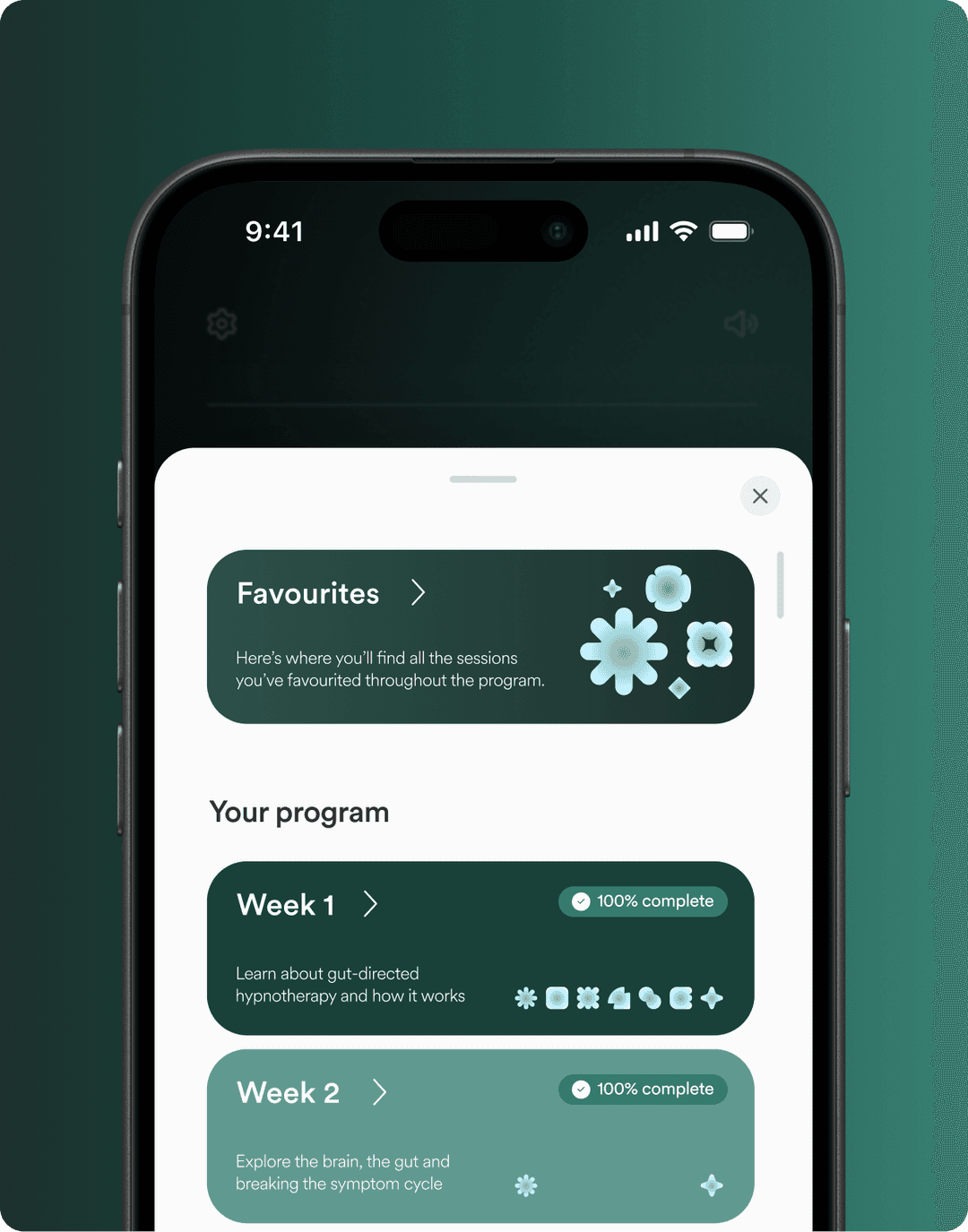
Nerva is a 6-week gut-brain therapy program that you complete in 15–20 minutes a day from your phone. It brings together four evidence-based tools designed to calm the nervous system pathways that amplify digestive symptoms:
Gut-directed hypnotherapy – short, guided audio sessions that help retrain how your gut and brain communicate
Cognitive-behavioural-based education – practical tools for understanding how stress and thought patterns affect digestion
Diaphragmatic breathing – the same technique covered earlier in this guide, built into the program
Symptom tracking – so you can see what's improving over time
Who might benefit from Nerva alongside GERD treatment?
Nerva may be worth considering if your reflux symptoms persist despite medication, if you notice stress clearly makes your heartburn worse, or if you have overlapping upper GI symptoms like bloating, fullness, or upper-stomach discomfort alongside reflux.
Research from Mount Sinai is currently evaluating gut-directed hypnotherapy for functional upper GI presentations, including reflux and functional heartburn.
Nerva is designed to work alongside your dietary changes, lifestyle adjustments, and any medication your doctor has prescribed. Always talk to your GP or gastroenterologist before starting a new approach for your reflux.
Frequently asked questions
What is the most effective natural remedy for GERD?
Diaphragmatic breathing has the strongest clinical evidence among natural remedies for GERD, with research showing it can reduce symptoms and, in some people, lower medication use.¹ ³ It works best when practised consistently for 4–8 weeks.
Can stress really make GERD worse?
Stress intensifies how GERD symptoms are perceived, even when the actual amount of acid reflux hasn't changed.⁴ People with GERD under stress experience more severe heartburn from the same level of acid exposure.⁴
Does apple cider vinegar help acid reflux?
Apple cider vinegar has no published medical research supporting its use for heartburn or GERD, and because it is highly acidic, it can worsen symptoms or damage tooth enamel.⁶ Harvard Health recommends sticking to evidence-based approaches instead.⁶
How long does it take for natural remedies to work for GERD?
Natural approaches typically take 2–8 weeks to show meaningful symptom improvement. Diaphragmatic breathing and weight loss benefits usually emerge over 4–8 weeks of consistent practice,¹ while changes like raising the head of the bed or finishing dinner earlier can show faster effects.²
Can GERD be cured with natural remedies alone?
GERD is generally managed rather than cured, and persistent or severe cases usually need medical treatment alongside lifestyle approaches.² Mild, intermittent reflux can sometimes be controlled through lifestyle changes alone.
Can drinking milk help acid reflux?
Milk can provide brief relief from heartburn by temporarily buffering stomach acid, but the fat and protein in whole milk can trigger more acid production later and actually make reflux worse. Low-fat or plant-based milks are a better short-term option if you find dairy helps in the moment.
References
Zdrhova L, Bitnar P, Balihar K, et al. Breathing exercises in gastroesophageal reflux disease: a systematic review. Dysphagia. 2023;38(2):609-621.
Katz PO, Dunbar KB, Schnoll-Sussman FH, Greer KB, Yadlapati R, Spechler SJ. ACG clinical guideline for the diagnosis and management of gastroesophageal reflux disease. Am J Gastroenterol. 2022;117(1):27-56.
Qiu K, Wang J, Chen B, Wang H, Ma C. The effect of breathing exercises on patients with GERD: a meta-analysis. Ann Palliat Med. 2020;9(2):405-413.
Fass R, Naliboff BD, Fass SS, et al. The effect of auditory stress on perception of intraesophageal acid in patients with gastroesophageal reflux disease. Gastroenterology. 2008;134(3):696-705.
National Center for Complementary and Integrative Health. Gastroesophageal reflux disease (GERD) and complementary health approaches: science and safety. National Institutes of Health. Accessed April 2026. https://www.nccih.nih.gov/health/gastroesophageal-reflux-disease-gerd-and-complementary-health-approaches
Campos M. Apple cider vinegar… for heartburn? Harvard Health Publishing. March 28, 2018. Accessed April 2026. https://www.health.harvard.edu/blog/apple-cider-vinegar-for-heartburn-2018032813530
Salehi B, Venditti A, Sharifi-Rad M, et al. Natural products in the management of gastroesophageal reflux disease: mechanisms, efficacy, and future directions. Nutrients. 2025;17(6):1069.
American Gastroenterological Association. Gastroesophageal reflux disease (GERD). AGA GI Patient Center. Accessed April 2026. https://patient.gastro.org/gastroesophageal-reflux-disease-gerd/