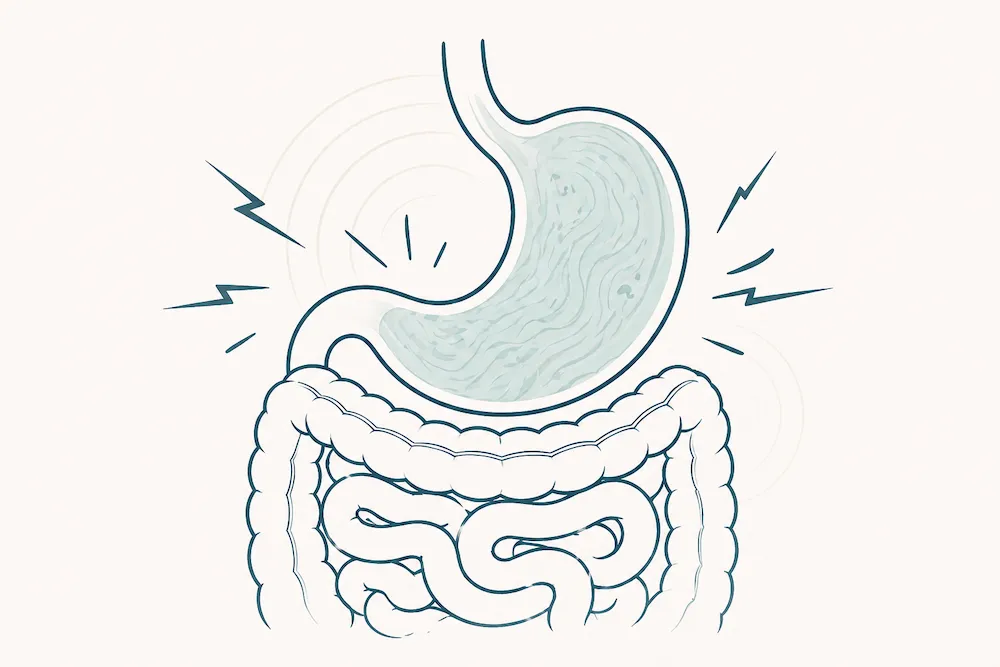
What are GERD symptoms?
Signs of chronic acid reflux
GERD is a chronic condition where stomach acid repeatedly flows back into the esophagus, causing persistent heartburn, chest discomfort, and irritation rather than occasional reflux.
If heartburn is happening more than twice a week, interrupting your sleep, or no longer settling with simple remedies, it may be a sign of GERD rather than temporary reflux.
GERD, or gastroesophageal reflux disease, is one of the most common digestive conditions worldwide. While occasional acid reflux is normal, GERD is diagnosed when reflux becomes frequent, persistent, or disruptive to daily life.
The most common symptom is heartburn — a burning sensation in the chest that often worsens after eating or when lying down.
GERD is not the only condition that can cause upper digestive symptoms. If your discomfort is centered higher in the abdomen, feels more like fullness or early satiety after meals, and is not clearly related to acid reflux, it may be helpful to learn more about functional dyspepsia.
In other cases, reflux may present differently. Some people experience throat or voice symptoms without obvious heartburn, sometimes described as silent reflux.
If you experience unexplained weight loss, persistent vomiting, difficulty swallowing, or severe chest pain, medical evaluation is important.
GERD happens when the natural barrier between the stomach and esophagus doesn’t close properly. This muscle, called the lower esophageal sphincter, is designed to keep stomach acid where it belongs. When it weakens or relaxes at the wrong time, acid can move upward into the esophagus, causing irritation.
GERD can show up in different ways. Some people have reflux symptoms without visible damage to the esophagus, while others develop inflammation over time. It’s common worldwide and is influenced by factors such as weight, diet, and lifestyle.¹
Contributing factors may include a hiatal hernia, increased abdominal pressure, delayed stomach emptying, certain foods, alcohol, or smoking.
Unlike IBS or functional dyspepsia, GERD isn’t classified as a disorder of gut-brain interaction.
It is an acid reflux condition that can cause inflammation of the esophagus. That said, overlap is common, and the nervous system still plays a role in how symptoms are experienced.
Stress does not directly cause acid reflux, but it can heighten symptom sensitivity. During stressful periods, heartburn and chest discomfort may feel more intense or more frequent, even if the underlying reflux hasn’t changed.
Over time, repeated acid exposure can irritate the lining of the esophagus, which is why ongoing or worsening symptoms should be assessed rather than ignored.
GERD is often diagnosed based on symptom patterns and response to treatment. If symptoms are persistent, severe, or associated with alarm features such as difficulty swallowing, weight loss, or persistent vomiting, a doctor may recommend further testing, such as an upper endoscopy.
In people whose symptoms continue despite appropriate treatment, additional evaluation may be needed. Ambulatory reflux monitoring – such as pH or pH-impedance testing – can help confirm whether ongoing symptoms are truly caused by acid reflux and guide next steps in management.²
A clear diagnosis helps distinguish GERD from other upper digestive conditions and ensures the right management plan is in place.
Treatment focuses on reducing acid exposure and protecting the esophagus. Depending on symptom severity, management may include:
These approaches are supported by major gastroenterology guidelines. If you would like a patient-friendly overview based on guidance from the American College of Gastroenterology, you can download ACG’s GERD resource here.
For most people, symptoms improve significantly with the right combination of practical changes and medical treatment.
Acid reflux describes the occasional movement of stomach acid into the esophagus. GERD is diagnosed when reflux becomes frequent, persistent, or causes complications.
Yes. GERD can cause throat irritation, chronic cough, hoarseness, dental enamel changes, and asthma-like symptoms in some people. Heartburn is common but not universal.
Mild reflux may improve with lifestyle adjustments. Chronic GERD often requires structured management to prevent ongoing irritation and long-term complications.
GERD-related chest discomfort often feels like burning and worsens after meals or when lying down. However, new, severe, or unexplained chest pain should always be assessed urgently to rule out cardiac causes.