.webp&w=3840&q=75)

Key takeaways:
- The most evidence-backed natural IBS treatments are gut-directed hypnotherapy, the low FODMAP diet, cognitive behavioural therapy, and regular physical activity.
- Gut-directed hypnotherapy has been shown to work as well as the low FODMAP diet for IBS symptom reduction, without requiring dietary change.
- Peppermint oil and soluble fibre (like psyllium) are the two natural supplements with strong clinical evidence for IBS, and both are recommended in gastroenterology guidelines.
- Natural treatments work best alongside medical care – clinical guidelines recommend an integrated approach combining diet, gut-brain therapy, and medication where needed.
The four natural IBS treatments with the strongest clinical evidence are gut-directed hypnotherapy, the low FODMAP diet, cognitive behavioural therapy (CBT), and regular physical activity.
If you've been diagnosed with irritable bowel syndrome, you're probably looking for any and every option that could help you feel better. Alongside the medications your doctor may recommend, there are several natural treatments with strong clinical evidence that can make a real difference to how you manage IBS day to day.
This guide covers the four non-drug treatments with the strongest research behind them, how they compare, and how to build them into a care plan that works with – not against – medical treatment. Always speak with your doctor before making changes to how you're managing IBS.
Can IBS be treated naturally?
IBS can be treated with natural approaches that are supported by strong clinical evidence and recommended by leading gastroenterology bodies as part of an effective IBS care plan.¹ These include the American College of Gastroenterology (ACG), the UK's National Institute for Health and Care Excellence (NICE), and the Rome Foundation – an international organisation of GI experts that sets the global standards for diagnosing and managing disorders like IBS.
IBS is a disorder of gut-brain interaction, meaning symptoms are driven by how the gut and brain communicate rather than by structural damage to the gut.² This is why a combined approach works best: medications can help manage specific symptoms like diarrhoea or cramps, while natural treatments like gut-brain therapy and dietary changes target the underlying gut-brain signalling that keeps symptoms coming back. The most effective IBS care plans usually include both, tailored to what you and your doctor decide is right for you.
Watch to learn more about what's happening inside your body when you have a gut-brain disorder like IBS.
Why natural IBS treatments work: Understanding the gut-brain connection
Natural IBS treatments like gut-brain therapy, dietary changes, exercise, and stress management all work because they target the gut-brain connection – the two-way communication system between your digestive system and your nervous system that drives IBS symptoms.²
In IBS, the nerves of the gut become oversensitive, amplifying normal digestive sensations into pain, bloating, or urgency.² Medications can temporarily blunt those signals, which is why they're an important part of an integrated care plan. Natural treatments work further upstream by reducing the oversensitivity itself. That's why the benefits of approaches like gut-directed hypnotherapy and CBT often last well beyond the treatment period – they don't just quiet symptoms, they help recalibrate the underlying signalling that produces them.
This is also why the most effective IBS care plans combine both: medications that manage specific symptoms in the short term, and natural treatments that address the gut-brain mechanism for longer-lasting results.
What are the best natural supplements for IBS?
Two natural supplements have strong clinical evidence for IBS: peppermint oil and soluble fibre, particularly psyllium. Both are recommended in the American College of Gastroenterology's IBS guidelines as part of an effective care plan.¹
How does peppermint oil help IBS?
Enteric-coated peppermint oil has been shown to reduce IBS symptoms, particularly abdominal pain and bloating.³ It works by relaxing the smooth muscle in the gut, which can ease cramping and spasms. Peppermint oil is recommended by the ACG as one of the few supplements with strong evidence behind it for IBS.¹
The enteric coating is important – it helps the oil reach the small intestine where it's most effective, rather than being broken down in the stomach. If you have reflux or GERD, peppermint oil can make symptoms worse, so it's worth discussing with your doctor before starting.
How does soluble fibre help IBS? Why psyllium is the top pick
Soluble fibre like psyllium can help reduce IBS symptoms, especially for people with IBS-C (constipation-predominant) or mixed IBS.⁴ Unlike insoluble fibre, which can worsen bloating and urgency, soluble fibre forms a gel in the gut that helps regulate bowel movements without aggravating symptoms.
Psyllium has the strongest evidence of any fibre supplement for IBS and is the specific form recommended in clinical guidelines. It's best to start with a small dose and increase gradually to avoid gas or bloating while your gut adjusts. The ACG specifically recommends soluble fibre over insoluble fibre for IBS.¹
The low FODMAP diet for IBS: How it works and who it helps
The low FODMAP diet is an elimination diet that temporarily removes fermentable carbohydrates that can trigger IBS symptoms, then systematically reintroduces them to identify personal triggers.⁵
Developed by researchers at Monash University, the low FODMAP diet has strong clinical evidence for reducing IBS symptoms in around 70% of people who complete it properly.⁵ It works best when done under the guidance of a dietitian – the restrictive phase isn't meant to be permanent.
The goal is to identify which foods are personal triggers for you, then rebuild a sustainable long-term diet. The diet is recommended in the American College of Gastroenterology's IBS guidelines as an effective dietary approach, often used alongside other treatments as part of a comprehensive care plan.¹
Does gut-directed hypnotherapy work for IBS? What the research shows
Gut-directed hypnotherapy is a form of gut-brain therapy that uses guided relaxation and targeted visualisations to calm the overactive communication between the gut and brain that drives IBS symptoms.⁶
It's one of the most-studied natural treatments for IBS, with decades of research showing it reduces pain, bloating, and bowel symptoms.⁶ In a study from Monash University, a 6-week gut-directed hypnotherapy protocol worked as well as the low FODMAP diet at reducing IBS symptoms.⁷
NICE specifically recommends gut-directed hypnotherapy for people whose IBS hasn't responded to first-line treatments, and it's included in the American College of Gastroenterology's IBS guidelines as part of a comprehensive care plan.¹
How does cognitive behavioural therapy (CBT) help IBS symptoms? A mental approach to physical symptoms
Cognitive behavioural therapy for IBS is a short-term, structured form of talk therapy that helps you change the thought patterns and behaviours that can worsen digestive symptoms.⁸
CBT for IBS isn't about dismissing symptoms as "in your head" – it's about recognising that stress, anxiety, and symptom-focused thinking feed into the gut-brain signalling loop that amplifies IBS.
A typical CBT program runs for 6 to 12 weeks, with weekly sessions that teach practical skills like stress management, cognitive reframing, and relaxation techniques. Research shows CBT can significantly reduce IBS symptoms, and benefits are typically maintained long after therapy ends.⁸
Like gut-directed hypnotherapy, CBT is recommended in clinical guidelines as part of an integrated IBS care plan alongside medical and dietary approaches.¹
Will exercise help IBS?
Regular physical activity improves IBS symptoms – particularly constipation, bloating, and overall quality of life – and is recommended in clinical guidelines as part of an effective IBS care plan.⁹
The most-cited study on exercise and IBS followed people for 12 weeks and found those who increased their physical activity had significantly greater symptom improvement than those who didn't.⁹ A follow-up study tracked the same participants five years later and showed the benefits had been maintained over the long term.
You don't need intense workouts to see results. Moderate activity like brisk walking, cycling, swimming, or yoga for IBS all count, and just 20 to 30 minutes a day, most days of the week, is enough to start making a difference. Exercise likely helps IBS by reducing stress, improving gut motility, and calming the gut-brain axis – the same underlying system that gut-brain therapy and CBT target.
Does diaphragmatic breathing help IBS?
Diaphragmatic breathing – also called belly breathing – is a simple, slow breathing technique that activates the parasympathetic nervous system, helping calm the gut-brain signalling that drives IBS symptoms.
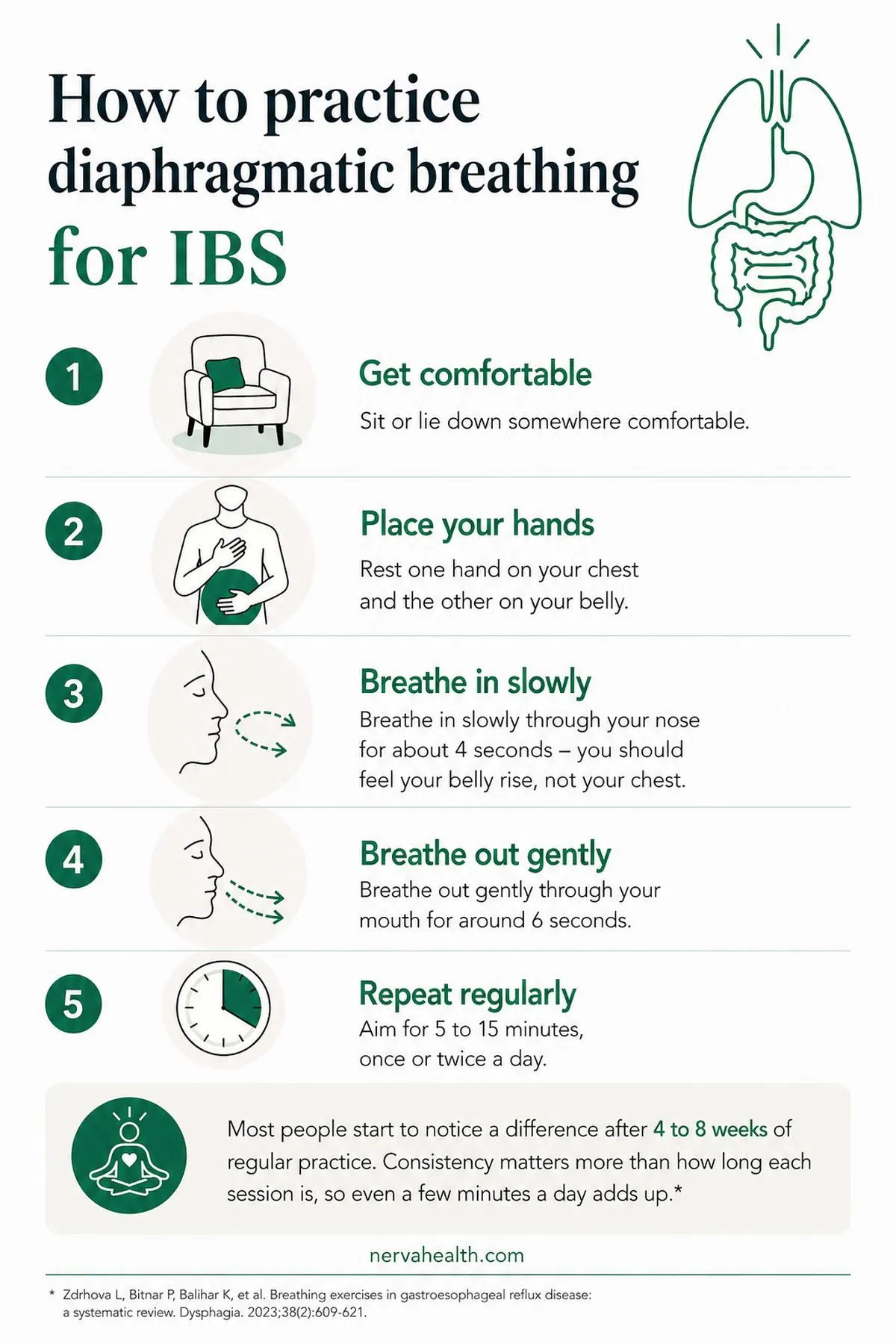
Clinical research has shown that diaphragmatic breathing can reduce IBS symptoms, particularly when combined with other gut-brain approaches like CBT or gut-directed hypnotherapy.¹¹ It's been shown to help with bloating, abdominal pain, and reflux, and is recommended by GI psychologists as a practical self-management tool you can use during flare-ups or daily to support overall gut-brain regulation.
Is Nerva a natural way to manage IBS?
There's no shortage of natural IBS remedies on the internet, but many aren't backed by rigorous clinical research – which makes it hard to know what actually works.
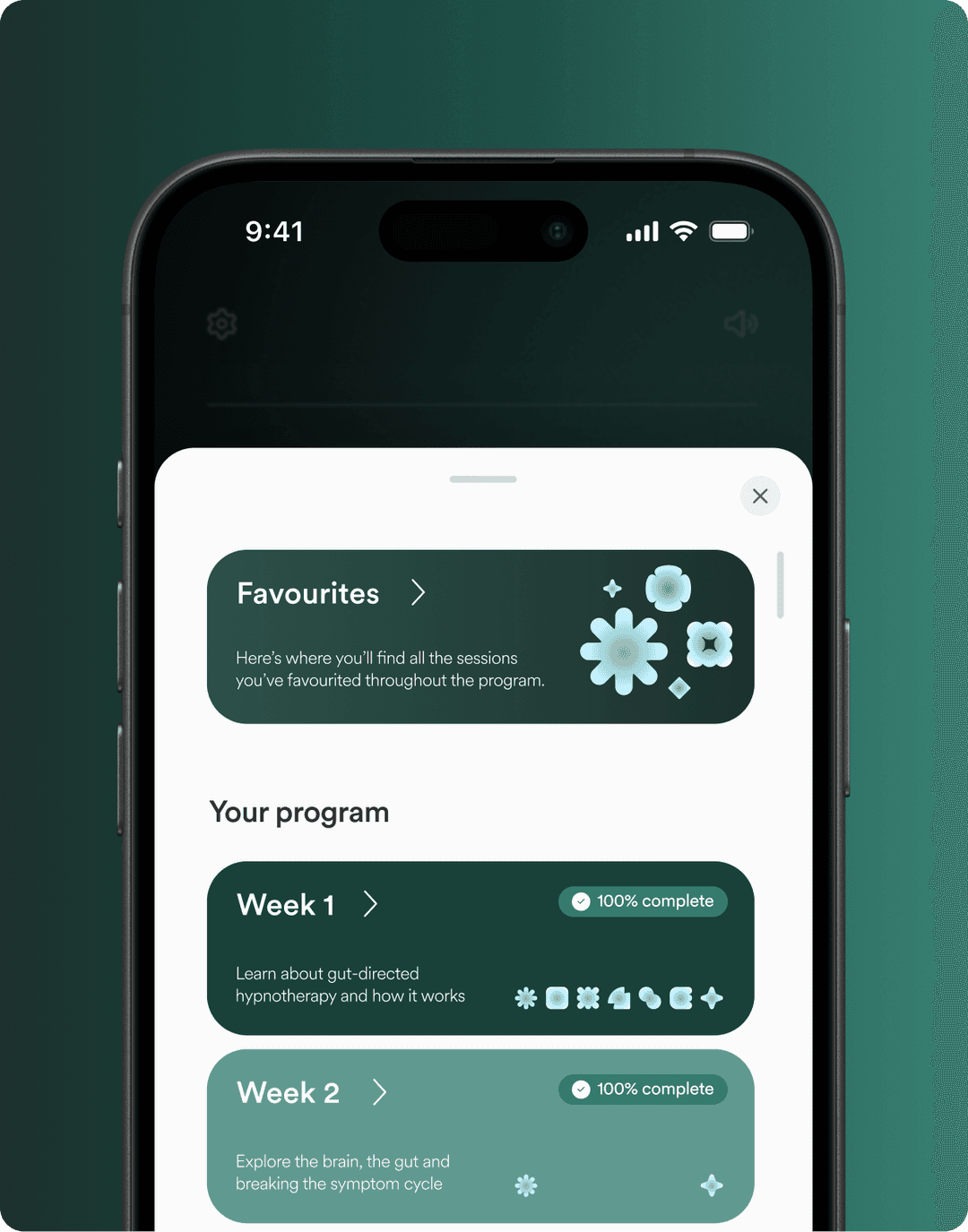
Nerva is a natural approach in the sense that it doesn't rely on medication or dietary restriction, and it's built on three of the evidence-based natural approaches covered in this guide: gut-directed hypnotherapy, cognitive behavioural techniques, and breathing exercises. However, each of these components has decades of clinical research behind it, and gut-directed hypnotherapy specifically is recommended in IBS guidelines from bodies including NICE and the American College of Gastroenterology.¹
Nerva was developed with researchers at Monash University, and its efficacy has been tested in a randomised controlled trial published in the American Journal of Gastroenterology in 2025.¹¹
Like the other natural approaches in this guide, Nerva works best as part of an integrated IBS care plan alongside any treatment your doctor has recommended.
See how the Nerva program is structured, what each daily session looks like, and what to expect over the 6 weeks.
When to see a doctor about IBS
IBS should always be diagnosed by a doctor, not self-diagnosed. Certain symptoms need medical assessment to rule out other conditions before assuming IBS:
Unintentional weight loss
Blood in your stool or black, tarry stools
Persistent or severe pain that wakes you at night
Iron-deficiency anaemia
A family history of bowel cancer, inflammatory bowel disease, or coeliac disease
New-onset symptoms after age 50
Even after diagnosis, your doctor is your most important partner in managing IBS. Medications are an important part of care for many people – they can provide real symptom relief, especially during flare-ups or when symptoms are severe – and should never be stopped or avoided without medical guidance. The natural approaches covered in this guide work best when used alongside the treatment plan your doctor has put together with you, not as a replacement for it.
If your current treatment isn't working as well as you'd like, it's worth returning to your doctor or a gastroenterologist to discuss adding natural approaches like gut-brain therapy, dietary changes, or supplements to your care plan.
Frequently asked questions
What is the most effective natural treatment for IBS?
Gut-directed hypnotherapy and the low FODMAP diet have the strongest head-to-head evidence for IBS, with research showing both can significantly reduce symptoms. The right choice depends on your preferences, whether your symptoms seem food-triggered, and what fits best alongside your current care plan.
Can I treat IBS without medication?
Many people manage IBS effectively with natural approaches like gut-brain therapy, dietary changes, and exercise, but medication is still an important part of care for many people. The best approach depends on your symptoms and should be decided with your doctor, who can help you build an integrated care plan that uses the treatments most likely to help you.
Is gut-directed hypnotherapy evidence-based?
Gut-directed hypnotherapy is evidence-based and recommended in clinical guidelines from bodies including NICE, the American College of Gastroenterology, and the Rome Foundation. Decades of clinical research have shown it can significantly reduce IBS symptoms, with benefits lasting up to 7 years after treatment.
How long do natural IBS treatments take to work?
Natural IBS treatments typically take 4 to 12 weeks to show meaningful results, depending on the approach and individual response. Gut-brain therapy and CBT programs usually run for 6 to 12 weeks, while dietary approaches may show changes within 2 to 4 weeks.
Does stress cause IBS?
Stress doesn't cause IBS, but it significantly worsens symptoms because the gut and brain are constantly communicating through the gut-brain axis. This is why stress management, gut-brain therapy, and CBT are so effective at reducing IBS symptoms.
What natural supplements are best for IBS?
Peppermint oil and soluble fibre (particularly psyllium) have the strongest clinical evidence of any natural supplements for IBS, and both are recommended in American College of Gastroenterology guidelines. They work best as part of a broader care plan that may also include dietary changes, gut-brain therapy, and any treatments your doctor has recommended.
References
Lacy BE, Pimentel M, Brenner DM, et al. ACG clinical guideline: management of irritable bowel syndrome. Am J Gastroenterol. 2021;116(1):17-44. doi:10.14309/ajg.0000000000001036
Drossman DA, Hasler WL. Rome IV-functional GI disorders: disorders of gut-brain interaction. Gastroenterology. 2016;150(6):1257-1261. doi:10.1053/j.gastro.2016.03.035
Alammar N, Wang L, Saberi B, et al. The impact of peppermint oil on the irritable bowel syndrome: a meta-analysis of the pooled clinical data. BMC Complement Altern Med. 2019;19(1):21. doi:10.1186/s12906-018-2409-0
Moayyedi P, Quigley EM, Lacy BE, et al. The effect of fiber supplementation on irritable bowel syndrome: a systematic review and meta-analysis. Am J Gastroenterol. 2014;109(9):1367-1374. doi:10.1038/ajg.2014.195
Halmos EP, Power VA, Shepherd SJ, Gibson PR, Muir JG. A diet low in FODMAPs reduces symptoms of irritable bowel syndrome. Gastroenterology. 2014;146(1):67-75. doi:10.1053/j.gastro.2013.09.046
Peters SL, Muir JG, Gibson PR. Review article: gut-directed hypnotherapy in the management of irritable bowel syndrome and inflammatory bowel disease. Aliment Pharmacol Ther. 2015;41(11):1104-1115. doi:10.1111/apt.13202
Peters SL, Yao CK, Philpott H, Yelland GW, Muir JG, Gibson PR. Randomised clinical trial: the efficacy of gut-directed hypnotherapy is similar to that of the low FODMAP diet for the treatment of irritable bowel syndrome. Aliment Pharmacol Ther. 2016;44(5):447-459. doi:10.1111/apt.13706
Everitt HA, Landau S, O'Reilly G, et al. Cognitive behavioural therapy for irritable bowel syndrome: 24-month follow-up of participants in the ACTIB randomised trial. Lancet Gastroenterol Hepatol. 2019;4(11):863-872. doi:10.1016/S2468-1253(19)30243-2
Johannesson E, Simrén M, Strid H, Bajor A, Sadik R. Physical activity improves symptoms in irritable bowel syndrome: a randomized controlled trial. Am J Gastroenterol. 2011;106(5):915-922. doi:10.1038/ajg.2010.480
Eherer AJ, Netolitzky F, Högenauer C, et al. Positive effect of abdominal breathing exercise on gastroesophageal reflux disease: a randomized, controlled study. Am J Gastroenterol. 2012;107(3):372-378. doi:10.1038/ajg.2011.420
Anderson E, Peters SL, Gibson PR, Halmos EP. Comparison of digitally delivered gut-directed hypnotherapy program with an active control for irritable bowel syndrome. Am J Gastroenterol. 2025;120(2):347-356. doi:10.14309/ajg.0000000000003128