Key takeaways:
- In a Monash University study, a low FODMAP diet reduced bloating, pain, and gas in people with IBS.¹
- Monash University researchers advise seeing a dietitian before starting a low FODMAP diet.²
- The low FODMAP diet is a short-term learning tool, not a forever diet.³
- In another Monash trial, therapist-led gut-directed hypnotherapy showed similar results to the low FODMAP diet for IBS.⁴
The low FODMAP diet is a short-term, dietitian-guided eating plan that helps people with IBS find which fermentable carbohydrates trigger their symptoms, so they can go back to eating as widely as possible.³ It was developed at Monash University in Australia, and the American College of Gastroenterology (ACG) recommends a limited trial of it for IBS.⁵
That word “limited” matters. If you’ve just been diagnosed with IBS, or you’re tired of guessing which meals will set off your symptoms, it makes sense that food is the first place you look. But the low FODMAP diet was never meant to be a forever diet, or a do-it-yourself one. It works best, and most safely, with a registered dietitian guiding you, because trying it alone often means cutting out far more than you need to.²
What are FODMAPs and why do they affect IBS?
FODMAPs are a group of carbohydrates the small intestine absorbs poorly, and in IBS they can trigger bloating, pain, and gas.³ The name stands for fermentable oligosaccharides, disaccharides, monosaccharides, and polyols. The low FODMAP diet temporarily reduces them to ease these symptoms.
When FODMAPs reach the large intestine, gut bacteria ferment them, which draws in water and produces gas.³ Most people never notice this. In IBS, a gut-brain disorder, the nerves in the gut can be extra sensitive, so that normal stretching feels uncomfortable or painful. In a Monash University study, people with IBS had significantly fewer symptoms on a low FODMAP diet than on a typical diet.¹
Low FODMAP diet chart: Vegetables, fruit, and other common foods
FODMAPs are found in many everyday foods. This chart shows a few common examples, not a complete list, and a dietitian will tailor it to you.
| Food group | Higher in FODMAPs | Lower in FODMAPs |
|---|---|---|
| Vegetables | Onion, garlic, cauliflower, mushrooms | Carrot, cucumber, zucchini, spinach |
| Fruit | Apples, pears, watermelon | Oranges, kiwi, strawberries |
| Dairy | Cow’s milk, regular yogurt, soft cheeses | Lactose-free milk, hard cheeses |
| Grains | Wheat-based bread and pasta | Oats, rice, sourdough spelt bread |
| Legumes | Beans and lentils | Firm tofu |
| Sweeteners | Honey, sorbitol, mannitol | Maple syrup, table sugar |
Serving sizes can change whether a food is high or low FODMAP, so check with your dietitian before changing what you eat.
Who should talk to a doctor before trying a low FODMAP diet?
Everyone should talk to a doctor before trying a low FODMAP diet, because symptoms like unexplained weight loss, rectal bleeding, or fever can point to conditions other than IBS that need checking first.²
It’s also worth pausing if you’ve already cut out a lot of foods, or if eating has started to feel stressful. Restricting more, even for a short time, can make that harder, so starting with a dietitian, or with a gut-brain approach that doesn’t remove foods, may be a better fit.
“What I've seen for a lot of people is that we started to get a lot of food fear around things. I will get people who come in who have been on a low FODMAP diet for years and they have a huge amount of anxiety around trigger foods.”
– Dr. Kim Bretz, Naturopathic Doctor, Faculty at University of Waterloo School of Pharmacy
Low FODMAP diet for beginners: What to expect with a dietitian
A dietitian guides you through the low FODMAP diet in three phases: a short reduction phase, a structured reintroduction, and a personalised long-term plan.⁶ Each phase is tailored to your symptoms, your routine, and the foods you love.²
Phase 1: Reducing FODMAPs for 2–6 weeks
In the first phase, your dietitian helps you swap higher FODMAP foods for lower FODMAP options for 2–6 weeks to see whether your symptoms settle.⁶ They’ll make sure you still get enough fibre, calcium, iron, and protein, which can drop when people cut out food groups on their own.² People with milder symptoms may only need a gentler, simplified version.²
Phase 2: Reintroducing FODMAPs to find your triggers
In the second phase, your dietitian reintroduces FODMAP groups one at a time over about 6–8 weeks, so you can see which ones actually trigger your symptoms.⁶ Most people with IBS don’t react to every group, so this phase is about adding foods back, not taking more away.³
Phase 3: Personalising your diet for the long term
In the final phase, your dietitian helps you build a varied, long-term diet that limits only your personal triggers, in the amounts that cause symptoms.⁶ Tolerance can change over time, so foods that once bothered you may be worth retesting later.⁶
This matters because the strict first phase was never meant to last. A long, restrictive diet can make eating stressful and reduce the variety your gut bacteria thrive on.³
“Because at the end of the day, food is celebratory. It’s cultural. It brings joy. We don’t want patients to feel like they have to stick with a really strict diet.”
– Morgan Binder, Physician Assistant and Registered Dietitian, Arizona Digestive Health
Low FODMAP diet vs gut-directed hypnotherapy for IBS
In a Monash University trial, gut-directed hypnotherapy showed similar results to the low FODMAP diet for IBS symptoms, without changing what people ate.⁴ The low FODMAP diet changes what goes into your gut, while gut-brain therapy works on how your gut and brain communicate. In IBS and other gut-brain disorders, the gut’s nerves can stay on high alert, so normal digestion feels louder than it should, even with a careful diet.
That’s why the ACG also recommends gut-directed psychotherapy, which includes gut-directed hypnotherapy, for overall IBS symptoms.⁵ In that trial, 72% of people improved with gut-directed hypnotherapy, compared with 71% on the low FODMAP diet.⁴
“Gut-directed hypnotherapy also shows similar rates of symptom improvement to the low FODMAP diet which is currently considered as the first-line therapy for IBS.”
– Ellen Anderson, Accredited Practising Dietitian, Mind+Gut Clinic; PhD Candidate at Monash University
How Nerva fits alongside the low FODMAP diet
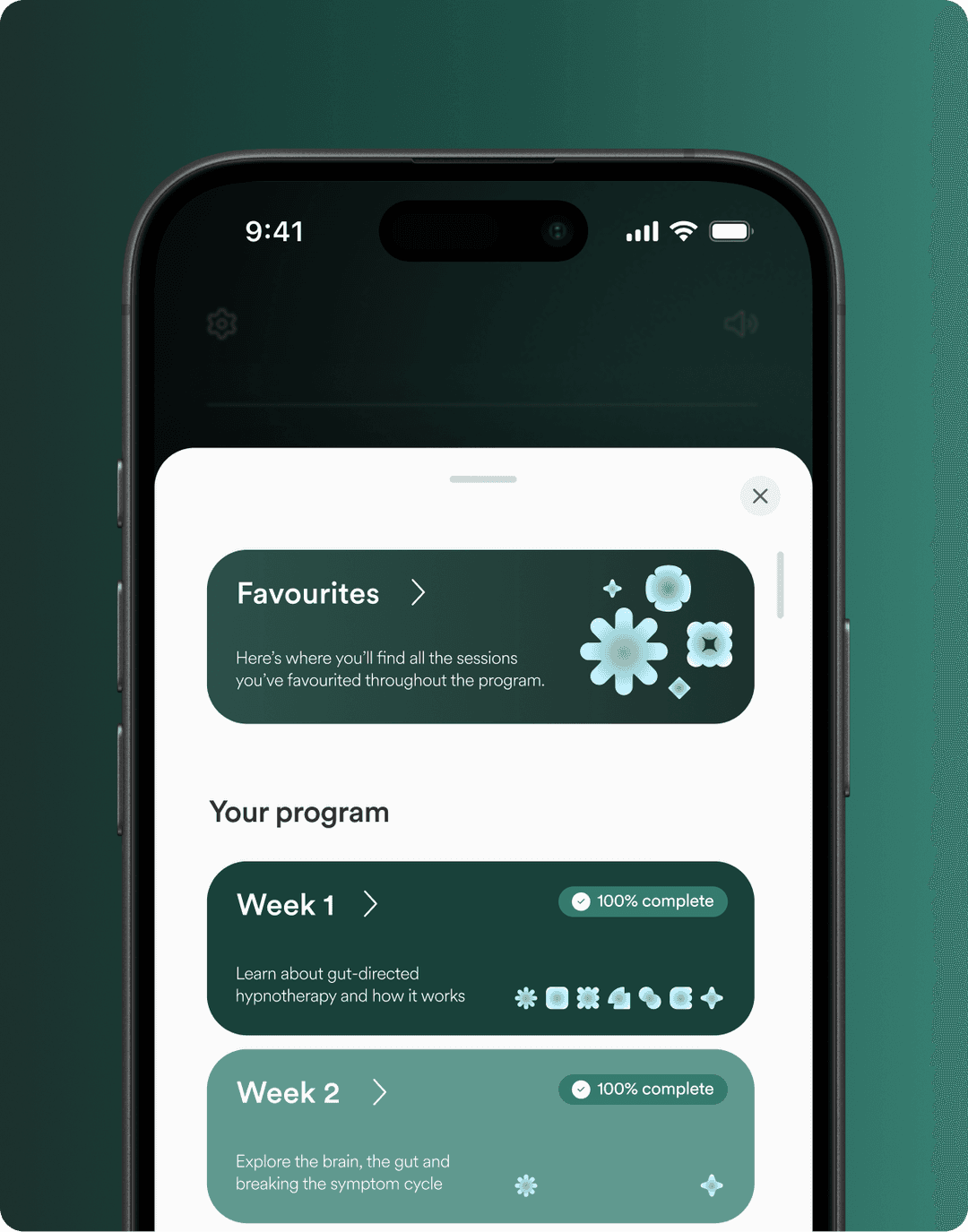
Nerva is a gut-brain therapy program developed with Monash University researcher Dr. Simone Peters. It’s built around a 6-week core program of 15–20 minutes a day, followed by ongoing maintenance sessions for flare-up support. It uses gut-directed hypnotherapy to calm an over-sensitive gut and works alongside diet and medication. In a randomised controlled trial, 81% of people using Nerva achieved a clinically significant improvement in their IBS symptoms, and 71% had a clinically significant reduction in abdominal pain.⁷
What this means for you
If food seems to be your main trigger, ask your doctor about a referral to a dietitian trained in the low FODMAP diet. If you’d rather not restrict foods, or are still struggling after reintroduction, gut-brain therapy is an evidence-based option that doesn’t involve cutting out foods.
Frequently asked questions
How do I find a low FODMAP dietitian?
Monash University keeps a directory of FODMAP-trained dietitians on its website, and your doctor or gastroenterologist can also refer you to one. Nerva’s clinician directory lists low FODMAP dietitians who offer telehealth appointments, which helps if there’s no specialist near you.
Is the Monash FODMAP app worth it?
The Monash University FODMAP app comes from the team that developed the diet and shows lab-tested serving sizes in a simple traffic-light system. It works best as a tool alongside a dietitian, not a replacement for one.
How long does it take to see results on a low FODMAP diet?
Many people with IBS notice less bloating and pain within the first few weeks of a low FODMAP diet.¹ If symptoms haven’t improved after the first phase, your dietitian can look at other triggers, like stress, caffeine, or alcohol.²
Is the low FODMAP diet good for SIBO?
The low FODMAP diet may ease bloating and gas in SIBO (small intestinal bacterial overgrowth), but it doesn’t treat the bacterial overgrowth itself. SIBO needs a proper diagnosis and medical treatment, so speak with your doctor before using diet to manage it.
Can you lose weight on a low FODMAP diet?
The low FODMAP diet isn’t designed for weight loss, and any weight change usually comes from eating less overall rather than from the plan itself. Losing weight without trying while on the diet is a reason to check in with your doctor or dietitian.
Can you combine the low FODMAP diet with hypnotherapy?
You can combine the low FODMAP diet with gut-directed hypnotherapy, but in the Monash trial, doing both together didn’t improve symptoms more than either approach alone.⁴ That means you can choose the option that suits you best, such as a gut-brain therapy program like Nerva if you’d rather not restrict food.
References
Halmos EP, Power VA, Shepherd SJ, Gibson PR, Muir JG. A diet low in FODMAPs reduces symptoms of irritable bowel syndrome. Gastroenterology. 2014;146(1):67-75. doi:10.1053/j.gastro.2013.09.046
Lee J. The importance of seeing a dietitian before starting the FODMAP diet. Monash FODMAP. Published October 15, 2021. Accessed November 5, 2026. https://monashfodmap.com/blog/importance-seeing-dietitian-starting-fodmap-diet/
Whelan K, Martin LD, Staudacher HM, Lomer MCE. The low FODMAP diet in the management of irritable bowel syndrome: an evidence-based review of FODMAP restriction, reintroduction and personalisation in clinical practice. J Hum Nutr Diet. 2018;31(2):239-255. doi:10.1111/jhn.12530
Peters SL, Yao CK, Philpott H, Yelland GW, Muir JG, Gibson PR. Randomised clinical trial: the efficacy of gut-directed hypnotherapy is similar to that of the low FODMAP diet for the treatment of irritable bowel syndrome. Aliment Pharmacol Ther. 2016;44(5):447-459. doi:10.1111/apt.13706
Lacy BE, Pimentel M, Brenner DM, et al. ACG clinical guideline: management of irritable bowel syndrome. Am J Gastroenterol. 2021;116(1):17-44. doi:10.14309/ajg.0000000000001036
Monash University FODMAP. The 3 steps of the FODMAP diet. Monash University. Accessed November 5, 2026. https://monashfodmap.com/blog/3-phases-low-fodmap-diet/
Anderson EJ, Peters SL, Gibson PR, Halmos EP. Comparison of digitally delivered gut-directed hypnotherapy program with an active control for irritable bowel syndrome. Am J Gastroenterol. 2025;120(2):440-448. doi:10.14309/ajg.0000000000002921