.webp)

Key takeaways:
- Gut-brain disorders are real, medically recognized conditions classified under the Rome IV criteria; normal test results mean no structural disease was found, not that symptoms are imagined.
- The issue is signaling rather than damage: disrupted gut-brain communication and visceral hypersensitivity can make normal digestion feel painful or urgent.
- Food and stress can amplify symptoms, but the underlying problem is heightened nerve sensitivity, and elimination diets alone don't retrain that signaling.
- Effective management often combines dietary adjustments, medications that reduce nerve signaling, and gut-brain therapies designed to lower hypersensitivity and improve regulation.
Gut-brain disorders are real, medically recognized conditions that cause ongoing digestive symptoms – even when tests show no structural damage.
Here are 10 essential facts that explain what they are, why symptoms can feel so confusing, and how understanding the gut-brain connection changes everything.
1. Gut-brain disorders are medically recognized
Gut-brain disorders are real, medically recognized conditions – not psychological labels. They are classified under the Rome IV criteria, a globally used diagnostic framework developed by gastroenterologists to define and identify functional gut conditions.1
2. Normal tests do not mean nothing is wrong
Blood work, scans, colonoscopy, and endoscopy can appear normal in people with significant symptoms. That means no structural disease was found – not that your symptoms are imagined or 'all in your head'.
3. The issue is signaling, not damage
Gut-brain disorders don't involve structural injury to the gut. Instead, the communication system between the gut and the brain becomes disrupted – changing how signals are sent, interpreted, and felt.
4. Visceral hypersensitivity drives pain
In many people, the nerves in the gut become more sensitive than they should be. This heightened sensitivity – called visceral hypersensitivity – makes normal digestion feel painful or urgent.
5. IBS is one type of gut-brain disorder
Irritable bowel syndrome is the most common, but dyspepsia, functional constipation, rumination syndrome, and reflux hypersensitivity are also part of this category.
6. Food can trigger symptoms
Certain foods increase gas, stretching, and movement in the gut – that's normal and happens in everyone. But in a gut-brain disorder, the gut's nerves are more reactive than they should be, so those same normal processes can feel painful or urgent. The food isn't the problem – the sensitivity is.
7. Stress can amplify symptoms
When you're stressed, the nervous system that connects your gut and brain goes on high alert. This amplifies gut signals – making pain, bloating, and urgency feel more intense than they otherwise would.
8. Symptom severity does not always match test results
In both gut-brain disorders and overlapping conditions like GERD or IBD, gut-brain sensitivity can influence how strongly symptoms are experienced.
9. Elimination diets are not always the full solution
Approaches like the low FODMAP diet can reduce symptom triggers, but they don't address the root cause.2 The underlying issue is gut-brain sensitivity – and dietary changes alone don't retrain that signaling or reduce nerve reactivity.
10. Gut-brain disorders respond to the right approach
Effective management often combines dietary adjustments, medications that reduce nerve signaling, and gut-brain therapies designed to lower hypersensitivity and improve regulation.3
"I think having more direct-to-consumer options for gut-brain therapy like Nerva is super helpful and modern." Dr. Emily Ward, gastroenterologist, GutsyRx
Gut-brain disorders are common and manageable. Understanding how gut-brain signaling works helps shift the focus from searching for hidden damage to calming a sensitive system.
For a full explanation, read the complete guide to gut-brain disorders.
Frequently asked questions
How common are gut-brain disorders?
Gut-brain disorders affect around 40% of people globally, making them one of the most common health conditions worldwide.4 IBS is the most prevalent type, affecting 10-15% of the population.
What is the difference between IBS and IBD?
IBS is a gut-brain disorder with no visible tissue damage, while IBD (Crohn's disease and ulcerative colitis) involves measurable inflammation in the digestive tract. Unlike IBD, IBS is diagnosed through symptom patterns rather than colonoscopy or blood tests.
Can a gut-brain disorder go away on its own?
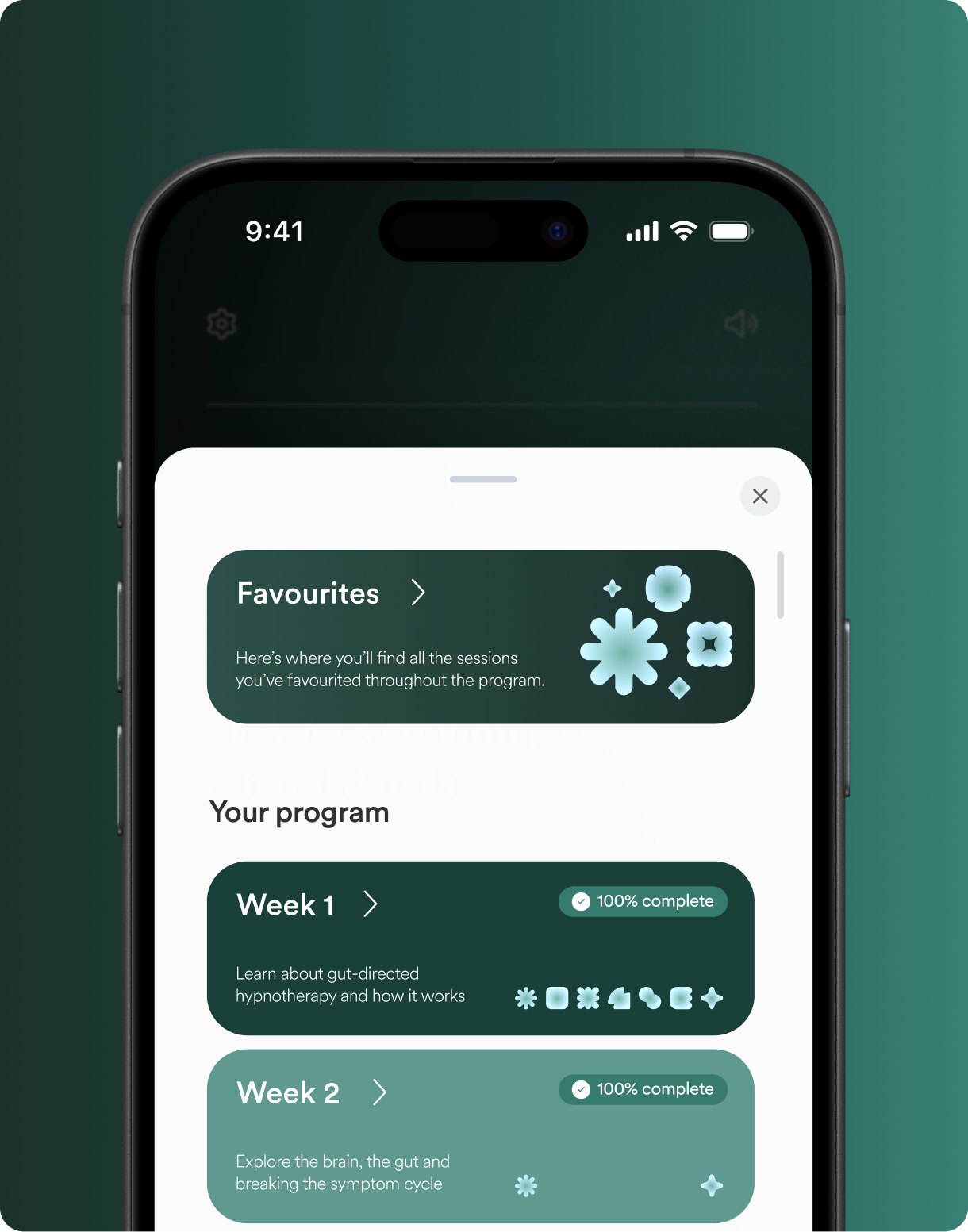
Gut-brain disorders like IBS are chronic conditions that fluctuate rather than resolve without treatment. Programs like Nerva target the underlying gut-brain dysregulation directly, with 81% of participants in clinical trials achieving significant symptom improvement.5
Are women more likely to develop a gut-brain disorder?
Gut-brain disorders are diagnosed more frequently in women, with IBS affecting women at roughly twice the rate of men.6 Hormonal factors and differences in how the nervous system processes pain are both thought to contribute.
How is a gut-brain disorder diagnosed if tests come back normal?
Gastroenterologists diagnose gut-brain disorders using the Rome IV criteria, which are based on symptom patterns rather than test results. For IBS, this means recurrent abdominal pain at least once a week for three months, associated with changes in bowel habit.
References
1. Rome Foundation. Rome IV diagnostic criteria. Rome Foundation. Accessed February 25, 2026. https://theromefoundation.org/rome-iv/rome-iv-criteria/
2. Gibson PR, Shepherd SJ. Evidence-based dietary management of functional gastrointestinal symptoms: the FODMAP approach. J Gastroenterol Hepatol. 2010;25(2):252-258.
3. Barrera Flores FJ, Guerrero Tamez JA, Winkelman T, Barrera Flores R, Madva EN. A multidisciplinary approach to the management of disorders of gut-brain interaction: psychopharmacology, psychotherapy, and diet. Front Gastroenterol (Lausanne). 2025;4:1637172. doi:10.3389/fgstr.2025.1637172
4. Sperber AD, et al. Worldwide Prevalence and Burden of Functional Gastrointestinal Disorders. Gastroenterology. 2021;160(1):99-114.
5. Anderson EJ, Peters SL, Gibson PR, Halmos EP. Comparison of digitally delivered gut-directed hypnotherapy program with an active control for irritable bowel syndrome. Am J Gastroenterol. 2025;120(2):440-448. doi:10.14309/ajg.0000000000002921
6. Heitkemper M, Jarrett M. Irritable bowel syndrome: does gender matter? J Psychosom Res. 2008;64(6):583-587.