A comfortable first week doesn't rule out symptoms after a later prescribed increase. Equally, a difficult start doesn't tell you how long symptoms will continue. Tell your prescriber about the pattern you're experiencing, including symptoms that begin after a settled period.
What to do if symptoms aren't settling
Contact your prescriber if symptoms recur, worsen, or interfere with meals, sleep or normal activities. A GLP-1 expert consensus recommends assessing other causes when digestive problems persist. The review can include your medicine, nutrition and other medications.
Keep a short record for the appointment:
Which symptoms occur and when they began, including any recent prescribed change.
Whether they're continuous or come in separate episodes.
What you're able to eat and drink, and whether you're urinating less.
How they affect your day, plus any other medicines, supplements or recent illness.
A few clear examples are enough. Ask what improvement to look for, when to check back, and how to contact the practice if symptoms worsen.
While arranging advice, eat slowly, choose smaller portions and stop at comfortable fullness. Avoid lying down after meals. The expert consensus recommends these measures to make digestive symptoms easier to manage.
With diarrhea or vomiting, replace lost fluids and electrolytes. NIDDK's diarrhea guidance includes oral rehydration solutions. Ask a pharmacist or clinician about a suitable product if you have diabetes, kidney disease or a fluid restriction.
Contact a doctor right away for diarrhea lasting more than two days, six or more loose stools a day, or high fever. Seek help sooner for dehydration or severe symptoms, regardless of the three-day study median.
For symptom-specific steps, see our diarrhea, constipation and sulfur-burp guides.
Where gut-brain support fits
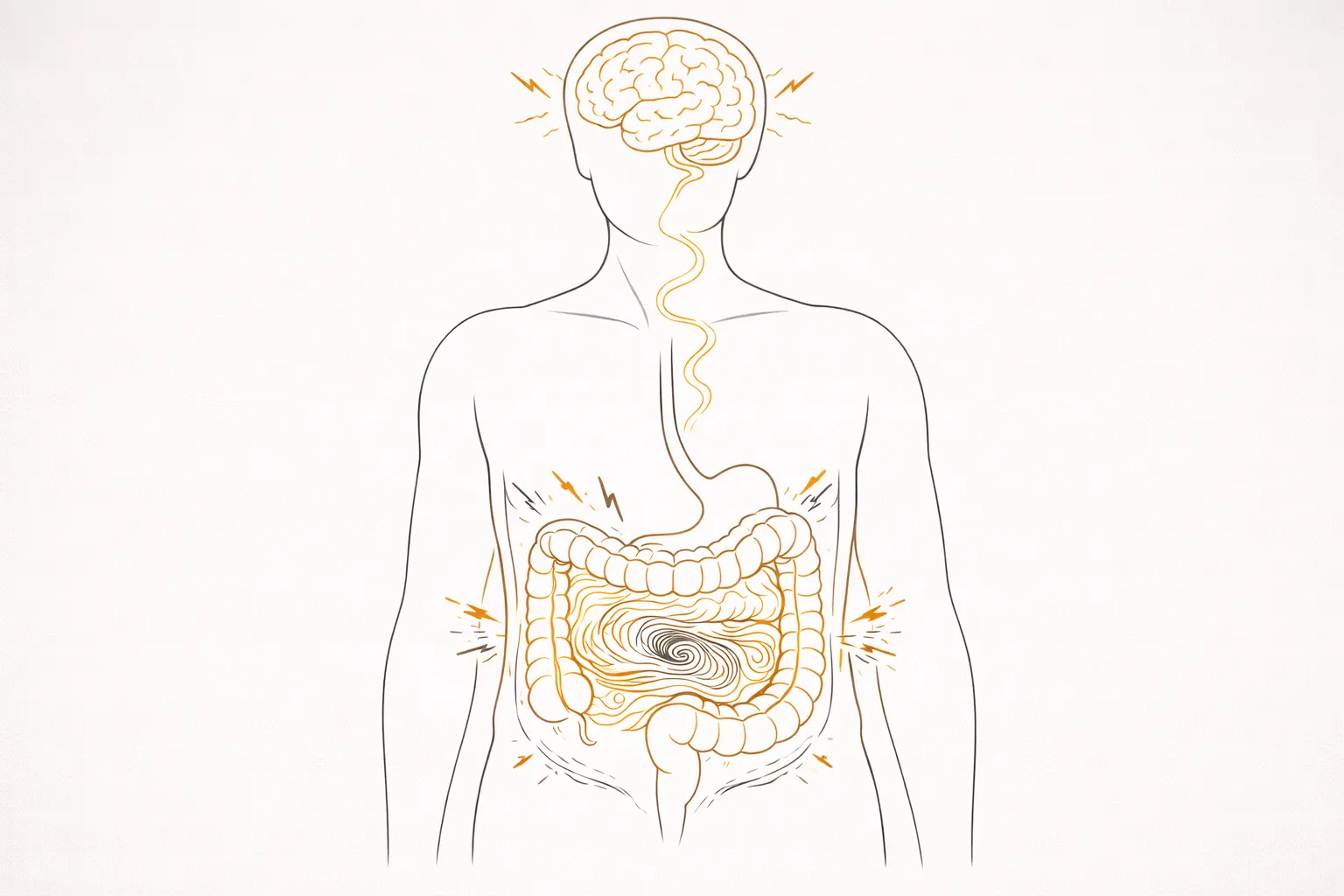
If you had recurring digestive symptoms before starting your medicine, include that history in the conversation. An existing gut-brain condition can need attention alongside a new medication-related problem.
Nerva gives you a daily gut-brain practice through guided hypnotherapy audio, breathing exercises and education. Its trial evidence is in IBS; it hasn't been shown to shorten GLP-1 side effects.
Read about gut-brain approaches or explore Nerva.
Symptoms that shouldn't wait
When to get medical help
Call 911 for chest pain, trouble breathing, fainting or collapse.
Get medical help right away for severe or lasting abdominal pain, especially if it spreads to your back; vomiting blood or black or bloody stools; repeated vomiting, inability to keep fluids down or very little urine; a swollen, painful belly with inability to pass stool or gas; or upper-right abdominal pain with fever or yellow skin or eyes.
Trouble swallowing needs prompt medical assessment. If you can't swallow at all, go to an emergency department.
Sources: medication warnings, NIDDK, CDC and Mayo Clinic.
Does feeling sick mean the medicine is working better?
No. In the pooled STEP analysis, semaglutide's weight-loss effect was largely independent of gastrointestinal side effects.
Ozempic, Wegovy and Rybelsus are trademarks of Novo Nordisk. Mounjaro, Zepbound and Foundayo are trademarks of Eli Lilly. Nerva is not affiliated with either company.
References
Novo Nordisk. Wegovy (semaglutide) US prescribing information. Revised June 2026. Sections 6.1 and 12. https://www.novo-pi.com/wegovy.pdf
Eli Lilly and Company. Zepbound (tirzepatide) US prescribing information. Revised August 2026. Section 6.1. https://pi.lilly.com/us/zepbound-uspi.pdf
Eli Lilly and Company. Mounjaro (tirzepatide) US prescribing information. Revised August 2026. Section 6.1. https://pi.lilly.com/us/mounjaro-uspi.pdf
Novo Nordisk. Ozempic (semaglutide) injection US prescribing information. Revised May 2026. Section 6.1. https://www.novo-pi.com/ozempic.pdf
Eli Lilly and Company. Foundayo (orforglipron) US prescribing information. Revised July 2026. Sections 6.1 and 12. https://pi.lilly.com/us/foundayo-uspi.pdf
Wharton S, Calanna S, Davies M, et al. Gastrointestinal tolerability of once-weekly semaglutide 2.4 mg in adults with overweight or obesity, and the relationship between gastrointestinal adverse events and weight loss. Diabetes Obes Metab. 2022;24(1):94-105. doi:10.1111/dom.14551. https://pmc.ncbi.nlm.nih.gov/articles/PMC9293236/
Novo Nordisk. Rybelsus (semaglutide) tablets and Ozempic (semaglutide) tablets US prescribing information. Revised January 2026. Section 6.1. https://www.novo-pi.com/rybelsus.pdf
Gorgojo-Martínez JJ, Mezquita-Raya P, Carretero-Gómez J, et al. Clinical recommendations to manage gastrointestinal adverse events in patients treated with GLP-1 receptor agonists: a multidisciplinary expert consensus. J Clin Med. 2023;12(1):145. Published online December 24, 2022. doi:10.3390/jcm12010145. https://pmc.ncbi.nlm.nih.gov/articles/PMC9821052/