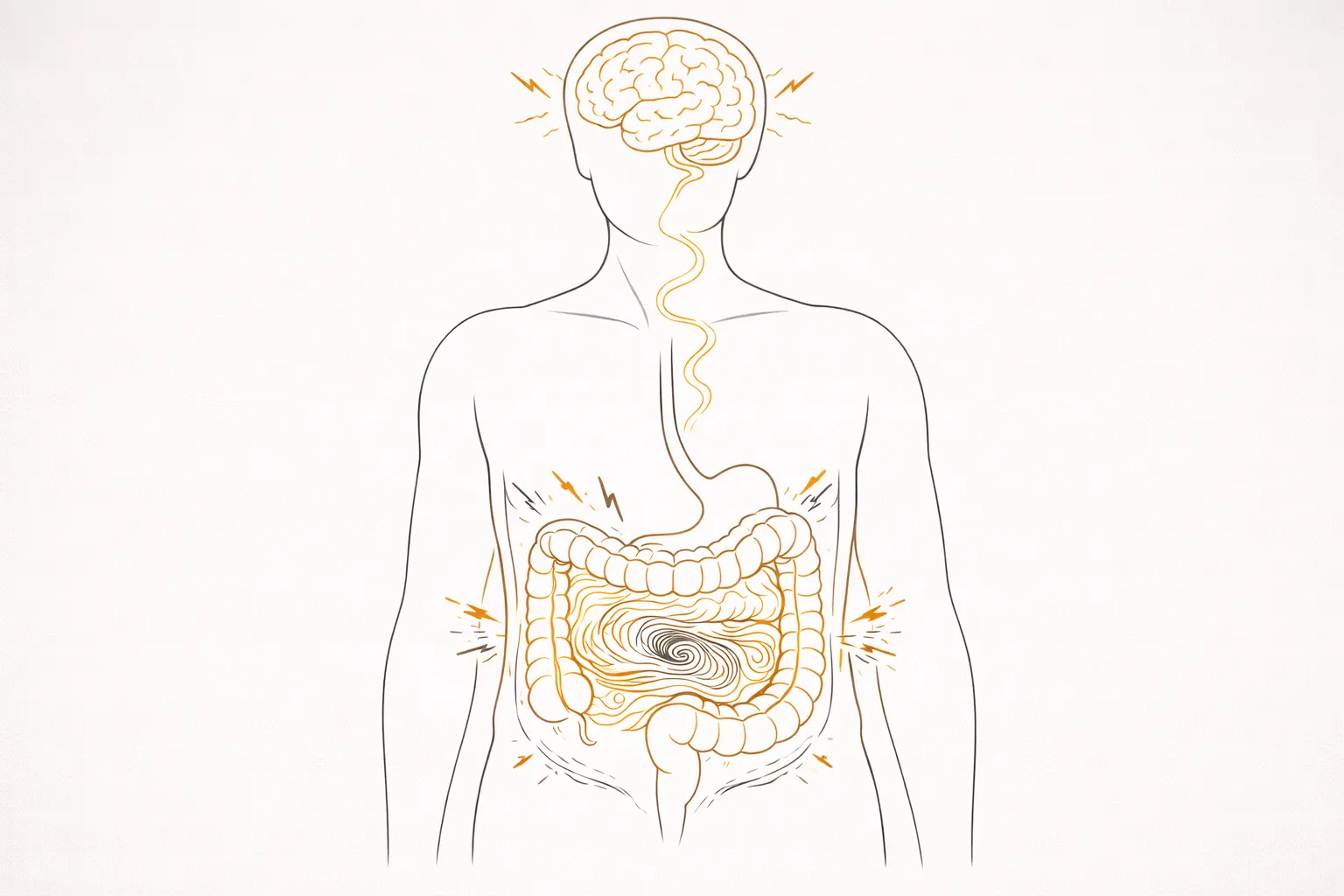
Constipation is a common side effect of GLP-1 medications, including semaglutide and tirzepatide. Changes in digestion, eating less, and drinking less can all contribute. For mild symptoms, start with fluid, gradual fiber changes, regular movement, and time to use the bathroom.
Hard stools and repeated unsuccessful bathroom trips can take over your day. Persistent constipation deserves a treatment plan, and severe pain, swelling, or vomiting needs medical assessment. Our guide to GLP-1 digestive side effects covers the wider picture.
Don't change your medication or dose without talking to your prescriber.
What counts as constipation on a GLP-1?
Constipation includes hard or lumpy stools, straining, painful bowel movements, and a feeling that you haven't emptied fully. You can be constipated even if you go every day.
NIDDK's constipation guidance also includes fewer than three bowel movements a week. A change from your usual pattern is useful information: how often you go, how hard the stool is, and how difficult it feels to pass.
How common is constipation with Ozempic, Wegovy and Zepbound?
Constipation appears in the US prescribing information for all six medications below. Wegovy and Ozempic contain semaglutide; Zepbound and Mounjaro contain tirzepatide. The table shows the percentage of participants who reported constipation during each study.
| Product and studied doses | Constipation with active drug | With placebo | US label revision |
|---|---|---|---|
| Wegovy injection, 2.4 mg; weight-management trials | 24% | 11% | Label 06/2026 |
| Zepbound, 5 / 10 / 15 mg; weight-management trials | 17% / 14% / 11% | 5% | Label 08/2026 |
| Ozempic injection, 0.5 / 1 mg; diabetes trials | 5% / 3.1% | 1.5% | Label 05/2026 |
| Mounjaro, 5 / 10 / 15 mg; diabetes trials | 6% / 6% / 7% | 1% | Label 08/2026 |
| Rybelsus, 7 / 14 mg tablets; diabetes trials | 6% / 5% | 2% | Label 01/2026 |
| Foundayo, equivalent 5.5 / 9 / 17.2 mg; weight-management trials | 20% / 27% / 24% | 9% | Label 07/2026 |
Source: US prescribing-information adverse-event tables, verified September 29, 2026; revision dates shown per row. Percentages follow the dose order listed. Foundayo trials used an investigational formulation; the label expresses equivalent marketed doses. These are separate trials, not a head-to-head comparison.
These figures count people who reported the symptom at some point during follow-up. They don't show how often each person was constipated or how much it affected daily life.
Why can GLP-1 medications cause constipation?
GLP-1 medicines affect digestion, including slowing stomach emptying. Constipation can also develop when a smaller appetite changes how much fiber and fluid you take in. The stomach and colon have different jobs, so delayed stomach emptying alone doesn't explain every bowel change.
NIDDK lists several contributors, including low fiber or fluid intake, changes in routine, other medicines, and difficulty coordinating the muscles used for a bowel movement. Several can overlap.
Look at what changed around the time symptoms began. Skipping breakfast might also mean losing a regular source of whole grains or fruit. Feeling full might make it harder to drink. Travel or a different work schedule can change your bathroom routine. Identifying these changes gives you something practical to address.
Include other prescription medicines, over-the-counter products, and supplements in your medication review. This helps your prescriber consider the full picture.
How long does GLP-1 constipation last?
Constipation can last longer than some other digestive side effects. In a 2022 pooled analysis of the STEP 1 to 3 trials, the median constipation episode lasted 47 days with semaglutide and 35 days with placebo.
The study involved adults with overweight or obesity taking semaglutide targeting 2.4 mg weekly. Those numbers describe individual episodes in that study, not how long you should wait for relief. Contact your prescriber if constipation persists or interferes with eating or daily life.
An episode can improve and then return. Record that pattern as well as the date symptoms first started. Our guide to how long GLP-1 side effects last explains the difference between one episode and recurring symptoms.
What can you do for constipation?
General bowel-care measures are a useful starting point for mild constipation. If you have significant pain, swelling, vomiting, or trouble passing gas, get assessed before adding fiber or constipation products.
Make fluids part of your routine
Keep water within reach at work and have a drink available with meals. If smaller meals have also meant fewer drinks, pay attention to both. Persistent fullness or nausea that makes drinking difficult belongs in your treatment discussion.
NIDDK advises matching fluid intake to your circumstances, including your health, activity, and climate. If you have a prescribed fluid limit, follow it and ask your care team how to manage constipation within it.
Add fiber gradually
NIDDK recommends increasing fiber a little at a time. Foods such as oats, fruit, vegetables, beans, and whole grains provide fiber. Start with foods you enjoy and tolerate, and make small changes you can maintain.
Consider your whole day's eating. If a smaller appetite has crowded out your usual fiber-containing foods, look for a place to bring one back. A dietitian can help when fullness or discomfort is making it difficult to eat enough or when you're excluding more foods over time.
Make time for movement and the bathroom
NIDDK's general constipation advice includes regular physical activity, responding to the urge to go, and a consistent bathroom routine. Choose movement that fits your abilities, such as a comfortable walk.
Allow yourself time and privacy to use the bathroom. If you routinely postpone going because of meetings, commuting, or shared facilities, think about where your schedule allows a more reliable opportunity. Repeated painful straining is a reason to seek additional help.
Get help choosing a constipation product
A pharmacist or prescriber can help select a fiber supplement, laxative, or another option based on your symptoms and medical history. Bring your medication list, including supplements and anything you've already tried.
Ask how to use the recommended product, what improvement to expect, and when to check back if it hasn't helped. Explain whether the main difficulty is hard stool, straining, or feeling unable to empty. That is more useful than asking for the product someone else takes with the same GLP-1.
Make a plan with your prescriber
A short symptom record can make the appointment more useful. Include:
Your medication name, formulation, prescribed dose, and dates of recent prescription changes.
When constipation began, your last comfortable bowel movement, and changes in stool consistency.
Whether you can pass gas, and any pain, swelling, or vomiting.
Changes in food, fluid, activity, or routine, plus bowel-care products you've tried.
Mention previous constipation, bowel conditions, or abdominal surgery. If constipation alternates with loose stools, describe both; our GLP-1 diarrhea guide covers that symptom.
Leave with a clear next step: which bowel-care measures to try, when to expect a review, and who to contact if symptoms worsen. If the first approach hasn't helped, that follow-up is the time to reassess it.
When to get medical help
Call 911 for chest pain, trouble breathing, fainting or collapse.
Get medical help right away for severe or lasting abdominal pain, especially if it spreads to your back; vomiting blood or black or bloody stools; repeated vomiting, inability to keep fluids down or very little urine; a swollen, painful belly with inability to pass stool or gas; or upper-right abdominal pain with fever or yellow skin or eyes.
Trouble swallowing needs prompt medical assessment. If you can't swallow at all, go to an emergency department.
Sources: medication warnings, NIDDK, CDC and Mayo Clinic.
Where gut-brain support fits
The gut and brain communicate in both directions, influencing digestive sensations and function. That connection is part of digestive care, particularly when symptoms are ongoing. The American College of Gastroenterology's IBS guideline suggests gut-directed psychotherapies for global IBS symptoms.
Nerva teaches skills for managing digestive sensations and the worry around them through gut-directed hypnotherapy, breathing and CBT-informed education. You listen to a guided audio session of around 15 minutes each day during the six-week core.
Nerva's trial studied adults with IBS. It hasn't been studied for GLP-1 constipation.
Explore Nerva alongside GLP-1 care, or read more about the gut-brain connection.
Ozempic, Wegovy and Rybelsus are trademarks of Novo Nordisk. Mounjaro, Zepbound and Foundayo are trademarks of Eli Lilly. Nerva is not affiliated with either company.
References
National Institute of Diabetes and Digestive and Kidney Diseases. Symptoms & Causes of Constipation. Reviewed May 2018. https://www.niddk.nih.gov/health-information/digestive-diseases/constipation/symptoms-causes
Novo Nordisk. Wegovy (semaglutide) US prescribing information. Revised June 2026. Adult injection Table 3. https://www.novo-pi.com/wegovy.pdf
Eli Lilly and Company. Zepbound (tirzepatide) US prescribing information. Revised August 2026. Section 6.1, Table 1. https://pi.lilly.com/us/zepbound-uspi.pdf
Novo Nordisk. Ozempic (semaglutide) injection US prescribing information. Revised May 2026. Section 6.1, Table 1. https://www.novo-pi.com/ozempic.pdf
Eli Lilly and Company. Mounjaro (tirzepatide) US prescribing information. Revised August 2026. Section 6.1, Table 1. https://pi.lilly.com/us/mounjaro-uspi.pdf
Novo Nordisk. Rybelsus and Ozempic tablets (semaglutide) US prescribing information. Revised January 2026. Table 2, Rybelsus trial formulation. https://www.novo-pi.com/rybelsus.pdf
Eli Lilly and Company. Foundayo (orforglipron) US prescribing information. Revised July 2026. Section 6.1, Table 1. https://pi.lilly.com/us/foundayo-uspi.pdf
Wharton S, Calanna S, Davies M, et al. Gastrointestinal tolerability of once-weekly semaglutide 2.4 mg in adults with overweight or obesity, and the relationship between gastrointestinal adverse events and weight loss. Diabetes Obes Metab. 2022;24:94-105. doi:10.1111/dom.14551. https://pmc.ncbi.nlm.nih.gov/articles/PMC9293236/
National Institute of Diabetes and Digestive and Kidney Diseases. Eating, Diet, & Nutrition for Constipation. Reviewed May 2018. https://www.niddk.nih.gov/health-information/digestive-diseases/constipation/eating-diet-nutrition
National Institute of Diabetes and Digestive and Kidney Diseases. Treatment for Constipation. Reviewed May 2018. https://www.niddk.nih.gov/health-information/digestive-diseases/constipation/treatment
National Institute of Diabetes and Digestive and Kidney Diseases. Diagnosis of Constipation. https://www.niddk.nih.gov/health-information/digestive-diseases/constipation/diagnosis
Lacy BE, Pimentel M, Brenner DM, et al. ACG Clinical Guideline: Management of Irritable Bowel Syndrome. Am J Gastroenterol. 2021;116(1):17-44. doi:10.14309/ajg.0000000000001036. https://pubmed.ncbi.nlm.nih.gov/33315591/
Centers for Disease Control and Prevention. About Heart Attack Symptoms, Risk, and Recovery. https://www.cdc.gov/heart-disease/about/heart-attack.html
Mindset Health. Nerva clinician overview. https://www.nervahealth.com/clinicians.
Mayo Clinic. Difficulty swallowing in adults: when to seek medical advice. https://www.mayoclinic.org/symptom-checker/difficulty-swallowing-in-adults-adult/related-factors/itt-20009075
Anderson EJ, Peters SL, Gibson PR, Halmos EP. Comparison of Digitally Delivered Gut-Directed Hypnotherapy Program With an Active Control for Irritable Bowel Syndrome. Am J Gastroenterol. 2025;120(2):440-448. doi:10.14309/ajg.0000000000002921. https://pubmed.ncbi.nlm.nih.gov/38940439/