GLP-1 medicines can cause nausea, vomiting, diarrhea, constipation, burping and abdominal discomfort. Many digestive side effects occur during dose increases and become less frequent over time. Smaller meals, attention to fluids and symptom-specific care can help you manage the day-to-day disruption.
This guide explains the digestive side effects reported in adult trials, practical steps for milder symptoms and warning signs that need medical care. Keep your own medication guide for the full set of risks and instructions.
Don't change your medication or dose without talking to your prescriber.
Symptoms that need medical care
When to get medical help
Call 911 for chest pain, trouble breathing, fainting or collapse.
Get medical help right away for severe or lasting abdominal pain, especially if it spreads to your back; vomiting blood or black or bloody stools; repeated vomiting, inability to keep fluids down or very little urine; a swollen, painful belly with inability to pass stool or gas; or upper-right abdominal pain with fever or yellow skin or eyes.
Trouble swallowing needs prompt medical assessment. If you can't swallow at all, go to an emergency department.
Sources: medication warnings, NIDDK, CDC and Mayo Clinic.
Why do GLP-1 medicines affect your gut?
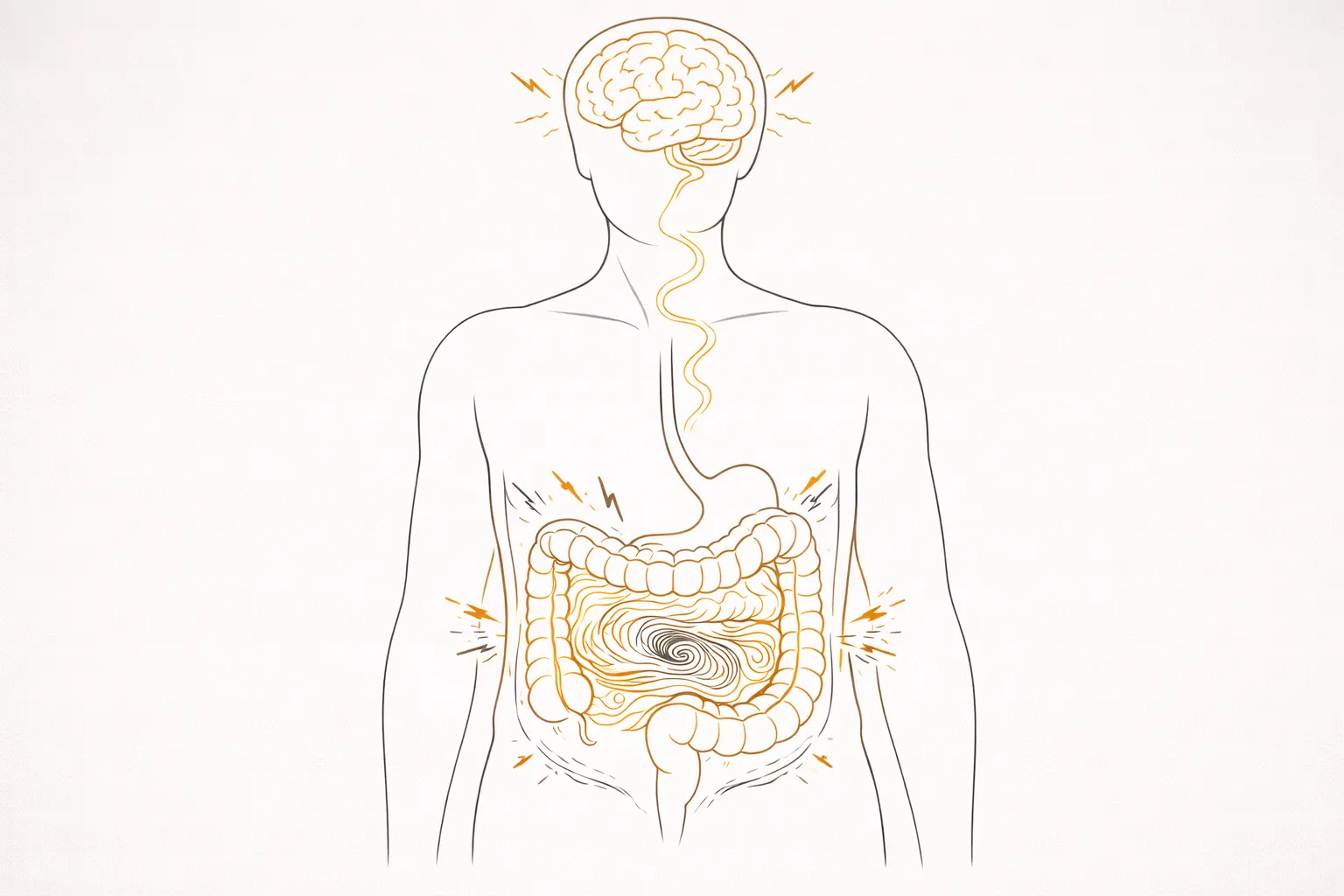
GLP-1 medicines act on a signaling system involved in appetite, digestion and blood sugar. Their effects include slower stomach emptying and changes in brain pathways that process food and nausea.
GLP-1 stands for glucagon-like peptide-1, a hormone your body makes. Semaglutide, found in Ozempic, Wegovy and Rybelsus, acts at GLP-1 receptors. Tirzepatide, in Mounjaro and Zepbound, acts at both GLP-1 and GIP receptors. Foundayo contains orforglipron, an oral GLP-1 receptor agonist. Each product has its own formulation and prescribing instructions.
Food moves from the stomach into the small intestine during digestion. Slower emptying can contribute to feeling full sooner or staying full longer. Nausea also involves the brain. Lisa Beutler's 2026 review describes GLP-1 signaling in brain circuits involved in eating and aversion; much of the detailed circuit research comes from animals. Gut-brain review.
Constipation and diarrhea can both occur with these medicines. Changes in eating, fluid intake and other medicines can contribute, as can an existing digestive condition. The pattern of symptoms helps your clinician work out which factors are relevant.
How common are digestive side effects?
Digestive side effects are common in GLP-1 trials. The tables show the percentage of participants who reported each symptom, with the product, studied dose and formulation identified.
Compare each medicine with its own placebo group. Separate trials can't reliably rank medicines because their populations and methods differ. A participant may report several symptoms, so adding percentages would count some people more than once. The tables count participants reporting symptoms; severity and duration are separate measures.
Weight-management trial rates
Percentages reporting an event. Every cell is from the US label linked in that row, section 6.1. Labels checked September 29, 2026. Doses identify study groups only.
| Product and studied dose | Nausea | Diarrhea | Vomiting | Constipation | Source and label revision |
|---|---|---|---|---|---|
| Wegovy injection 2.4 mg | 44% | 30% | 24% | 24% | Table 3; June 2026 |
| Placebo for that Wegovy table | 16% | 16% | 6% | 11% | Table 3; June 2026 |
| Zepbound 5 mg | 25% | 19% | 8% | 17% | Table 1; August 2026 |
| Zepbound 10 mg | 29% | 21% | 11% | 14% | Table 1; August 2026 |
| Zepbound 15 mg | 28% | 23% | 13% | 11% | Table 1; August 2026 |
| Placebo for those Zepbound groups | 8% | 8% | 2% | 5% | Table 1; August 2026 |
| Foundayo equivalent 5.5 mg | 26% | 21% | 13% | 20% | Table 1; July 2026 |
| Foundayo equivalent 9 mg | 34% | 23% | 21% | 27% | Table 1; July 2026 |
| Foundayo equivalent 17.2 mg | 35% | 25% | 24% | 24% | Table 1; July 2026 |
| Placebo for those Foundayo groups | 10% | 11% | 4% | 9% | Table 1; July 2026 |
Foundayo's studies used an investigational orforglipron formulation; the label expresses doses as equivalent marketed Foundayo doses. The Wegovy rows cover the 2.4 mg injection. Wegovy HD 7.2 mg and Wegovy tablets have separate data.
Wegovy's 25 mg tablet trial included 204 adults receiving the medicine who had obesity or overweight without type 2 diabetes. Gastrointestinal reactions led to permanent discontinuation in 3.4% receiving tablets versus 2% receiving placebo. The label describes common reaction types and frequencies as similar to Table 3 but supplies no separate table of symptom-specific pill percentages. Wegovy label, section 6.1.
Type 2 diabetes trial rates
Percentages reporting an event, from the linked US labels, section 6.1; checked September 29, 2026. These populations and doses differ from the weight-management trials above.
| Product and studied dose | Nausea | Diarrhea | Vomiting | Constipation | Source and label revision |
|---|---|---|---|---|---|
| Ozempic injection 0.5 mg | 15.8% | 8.5% | 5% | 5% | Table 1; May 2026 |
| Ozempic injection 1 mg | 20.3% | 8.8% | 9.2% | 3.1% | Table 1; May 2026 |
| Placebo for those Ozempic groups | 6.1% | 1.9% | 2.3% | 1.5% | Table 1; May 2026 |
| Mounjaro 5 mg | 12% | 12% | 5% | 6% | Table 1; August 2026 |
| Mounjaro 10 mg | 15% | 13% | 5% | 6% | Table 1; August 2026 |
| Mounjaro 15 mg | 18% | 17% | 9% | 7% | Table 1; August 2026 |
| Placebo for those Mounjaro groups | 4% | 9% | 2% | 1% | Table 1; August 2026 |
| Rybelsus trial tablets 7 mg | 11% | 9% | 6% | 6% | Table 2; January 2026 |
| Rybelsus trial tablets 14 mg | 20% | 10% | 8% | 5% | Table 2; January 2026 |
| Placebo for those Rybelsus groups | 6% | 4% | 3% | 2% | Table 2; January 2026 |
The Rybelsus source is now a combined Rybelsus/Ozempic tablets label. The figures here refer to its 7 mg and 14 mg semaglutide trial formulation. Ozempic 2 mg injection has separate data and isn't represented by the 1 mg row.
When do side effects happen, and how long do they last?
Nausea, vomiting and diarrhea often occur during dose escalation and become less frequent later, according to several product labels. The length of one episode is different from the period during which symptoms keep returning.
In Wharton and colleagues' pooled analysis of the STEP 1-3 trials, median episode durations were:
| Symptom | Median episode duration with semaglutide |
|---|---|
| Nausea | 8 days |
| Diarrhea | 3 days |
| Vomiting | 2 days |
| Constipation | 47 days |
The analysis studied a weekly semaglutide target dose of 2.4 mg in 2,117 participants versus 1,262 receiving placebo. These are episode durations in those trials, not forecasts for other medicines or an individual's whole course of symptoms. Wharton et al., 2022.
Get help based on the symptom's severity and impact. NIDDK advises adults to contact a doctor right away for diarrhea lasting more than two days, high fever or six or more loose stools in a day. Persistent vomiting, severe pain or dehydration needs assessment sooner. NIDDK diarrhea guidance.
Our GLP-1 side-effect timeline guide explains the timing evidence for each medicine.
Digestive symptoms, one by one
Nausea
Nausea is the unsettled feeling that you might vomit, even when you don't. The gut and brain both contribute. Smaller meals and avoiding very large or fatty meals are options discussed in the 2025 joint nutrition advisory. If nausea makes eating or drinking difficult, tell your prescriber. Feeling sick is a poor way to judge whether a medicine is working.
Vomiting
Vomiting can quickly make it difficult to replace lost fluids. The medicine labels warn about dehydration-related kidney problems when vomiting or diarrhea persists. Record how often you're vomiting and whether you can keep drinks down.
Diarrhea
Loose, watery stools are reported with semaglutide, tirzepatide and orforglipron. NIDDK also lists infections and food intolerances among possible causes. Replace lost fluids; a pharmacist or clinician can advise on oral rehydration products if needed.
Mention recent antibiotics and other medicines when describing the problem. If diarrhea follows several days of constipation, report that sequence because it can change the assessment. See GLP-1 diarrhea.
Constipation
Constipation includes hard stools, straining, difficulty passing stool or feeling that a bowel movement is incomplete. The number of days between bowel movements is only part of the picture.
General care includes gradual fiber changes, enough fluid, regular movement and allowing time for a bowel movement. Advice may need adjusting if you're also nauseated or unusually full. Read GLP-1 constipation.
Sulfur burps
Burping appears in labels as eructation. Wegovy's table reports it in 7% versus less than 1% on placebo. The trials didn't measure sulfur-smelling burps separately, so the figure covers burping of any kind.
A smell alone can't identify delayed stomach emptying, an infection or a food intolerance. Burping with persistent diarrhea, fever, vomiting or significant pain deserves assessment. Our sulfur-burp guide explains what is known and how to approach the symptom.
Heartburn and reflux
Heartburn often feels like burning behind the breastbone. Reflux can also bring a sour taste or stomach contents into the mouth. For nighttime reflux, NIDDK advises leaving time between eating and lying down and considering individual food triggers.
Check with a pharmacist or prescriber before adding an over-the-counter remedy.
Bloating and gas
Bloating is a feeling of fullness or swelling; a visibly enlarged abdomen is often called distension. Swallowed air, bacterial breakdown of some carbohydrates and digestive conditions can contribute. The amount of gas and the discomfort it causes aren't always closely related.
Describe whether bloating comes with constipation or diarrhea, and whether the abdomen is visibly swollen.
Abdominal pain
Where pain occurs, how severe it is and whether it persists all help a clinician assess it. The labels list abdominal pain among common adverse events and warn about serious conditions, including pancreatitis and gallbladder problems.
What can you do for milder symptoms?
Start with a change that fits the symptom. The 2025 advisory from four nutrition and obesity societies supports smaller, more frequent meals and attention to hydration during digestive symptoms. It also emphasizes getting enough nutrition while eating less. Joint nutrition advisory.
For fullness or nausea, try a smaller portion of a familiar meal and avoid forcing a large meal. If a food reliably makes symptoms worse, note the pattern and look for a tolerable alternative. Changing one thing at a time makes it easier to see whether it helps.
For loose stools, replace fluid losses. NIDDK notes that some people need individualized advice about rehydration solutions. If you have kidney or heart disease, or instructions to limit fluids, ask how to replace losses safely. NIDDK diarrhea care.
For hard stools or straining, add fiber gradually with enough liquid to help it work. Regular movement and time for a bowel movement can also help. Discuss significant fullness or bloating before increasing fiber further, especially if eating is already difficult. NIDDK constipation care.
For reflux, notice which meals bring on symptoms and avoid lying down soon after eating. Leaving time between meals and bed can be especially relevant to nighttime symptoms. NIDDK reflux nutrition guidance.
Keep track of how much variety remains in your diet. Cutting out more foods can make adequate nutrition harder, especially if you already manage IBS or food allergies. Tell your care team if your range of foods is shrinking or eating is becoming distressing. The nutrition advisory calls for individualized assessment, including a history of disordered eating.
A dietitian can help adapt meals to several digestive symptoms at once. A pharmacist or prescriber can check whether anti-nausea medicines, laxatives or anti-diarrheal products suit your health history and other medicines.
Who might need extra digestive support?
Existing digestive conditions and difficulty eating or drinking are good reasons to build a specific support plan with your care team. Describe which symptoms predated the medicine and what has changed since starting it.
The labels say these medicines are not recommended in severe gastroparesis. Gastroparesis requires clinical evaluation; feeling full early alone doesn't diagnose it. Your prescriber can consider a confirmed diagnosis when assessing the medicine's suitability. NIDDK gastroparesis guidance.
The gut-brain connection and Nerva
Your gut and brain continually exchange information about digestion. Medication effects and existing gut sensitivity can overlap with the way sensations are processed. Gut-directed hypnotherapy uses focused attention and guided imagery to work with this connection.
The American College of Gastroenterology's 2021 IBS guideline suggests gut-directed psychotherapies for global IBS symptoms. ACG guideline.
Nerva offers a structured gut-brain program with daily hypnotherapy audio, breathing exercises and practical education. You build skills for responding to digestive sensations and the thoughts surrounding them. See what the program includes.
In a randomized trial of 244 adults with IBS, 81% receiving Nerva versus 63% receiving active control improved by at least 50 points on the IBS Symptom Severity Scale at program completion. Nerva hasn't been tested as a treatment for GLP-1 side effects. Anderson et al., 2025.
Our gut-brain science page explains the research into symptom perception and digestive function.
What about long-term or serious side effects?
GLP-1 labels warn about pancreatitis, gallbladder disease, severe gastrointestinal reactions, dehydration-related kidney injury and aspiration during anesthesia or deep sedation. The common-symptom percentages above don't estimate the risk of these complications. Ask your prescriber which warnings are especially relevant to your medical history.
Sodhi and colleagues' 2023 JAMA study used insurance claims to compare semaglutide or liraglutide users with users of another weight-management medicine. It found associations with some serious GI diagnoses. The observational design couldn't establish causation, and small event counts produced wide uncertainty for several estimates. The researchers also couldn't confirm the purpose of every prescription. Original study.
Before a procedure
The labels warn about aspiration reported during general anesthesia or deep sedation. Tell the team handling your procedure the exact GLP-1 product you take, and follow their fasting and medication instructions.
Compounded products
The FDA has reported dosing errors and other concerns with unapproved GLP-1 products, including cases requiring hospital care. A compounded preparation's safety and dosing accuracy can't be inferred from a branded product's trial results.
Make sure your prescriber and pharmacist know the exact preparation you use. If you think a dosing error occurred, seek medical advice promptly. FDA safety information.
Preparing for a conversation with your prescriber
A brief symptom record can make an appointment more useful. Include when the problem began, whether it's improving and how it affects eating or drinking. Describe changes in bowel movements in ordinary language, including any sequence of constipation followed by diarrhea.
Bring the exact product name and formulation, plus a list of medicines and supplements. Useful questions include:
Could this symptom have another cause that needs checking?
What should I do if it returns or becomes more severe?
Would a dietitian or pharmacist help with the current problem?
How should we review tolerability before my next planned dose change?
Side effects are one reason people discontinue treatment. In Gasoyan and colleagues' 2025 chart review of 288 people who had already discontinued semaglutide or tirzepatide for obesity, 42 people, or 14.6%, had side effects recorded as the reason. Cost or insurance issues were recorded for 137 people, or 47.6%. These percentages describe discontinuers, not everyone who started a medicine. Study.
Discuss symptoms while your care team can help you assess the options. The decision about continuing treatment should account for how you feel, your health goals and your medical history.
Frequently asked questions
Will GLP-1 side effects go away?
Many become less frequent over time, particularly after dose escalation. Some persist or recur. Your own symptom pattern is more useful for planning care than a trial's average duration.
Are Wegovy pill side effects the same as the injection?
Both contain semaglutide and have overlapping digestive side effects. Their formulations and studies differ, so use the label section for the product you take. The injection percentages in this guide aren't measured pill-specific rates.
Does feeling sick mean the medicine is working?
No. Wharton and colleagues' pooled STEP analysis found that semaglutide's weight-loss effect was largely independent of gastrointestinal adverse events. Discomfort is an unreliable measure of benefit. Study.
Can I take a GLP-1 if I have IBS?
Your prescriber can assess this using your symptoms, other diagnoses and the reason for treatment. Tell them what your IBS usually feels like so they can assess any changes after starting the medicine.
For a closer look at Nerva's program and its evidence, visit Nerva and digestive symptoms on GLP-1s.
Ozempic, Wegovy and Rybelsus are trademarks of Novo Nordisk. Mounjaro, Zepbound and Foundayo are trademarks of Eli Lilly. Nerva is not affiliated with either company.
References
Label and institutional pages accessed September 29, 2026. References cover the article and shared safety box.
Novo Nordisk. Wegovy (semaglutide) injection and tablets: US prescribing information. Revised June 2026. Sections 5, 6.1 and 12. Full label.
Eli Lilly and Company. Zepbound (tirzepatide): US prescribing information. Revised August 2026. Sections 5 and 6.1. Full label.
Novo Nordisk. Ozempic (semaglutide) injection: US prescribing information. Revised May 2026. Sections 5 and 6.1. Full label.
Eli Lilly and Company. Mounjaro (tirzepatide): US prescribing information. Revised August 2026. Sections 5 and 6.1. Full label.
Novo Nordisk. Rybelsus and Ozempic (semaglutide) tablets: US prescribing information. Revised January 2026. Section 6.1, Table 2. Full label.
Eli Lilly and Company. Foundayo (orforglipron): US prescribing information. Revised July 2026. Sections 5 and 6.1. Full label.
National Institute of Diabetes and Digestive and Kidney Diseases. Symptoms & causes of constipation. Patient guidance.
National Institute of Diabetes and Digestive and Kidney Diseases. Symptoms & causes of diarrhea. Patient guidance.
Beutler LR. GLP-1 physiology and pharmacology along the gut-brain axis. J Clin Invest. 2026;136(2):e194744. doi:10.1172/JCI194744. Full text.
Wharton S, Calanna S, Davies M, et al. Gastrointestinal tolerability of once-weekly semaglutide 2.4 mg in adults with overweight or obesity, and the relationship between gastrointestinal adverse events and weight loss. Diabetes Obes Metab. 2022;24(1):94-105. doi:10.1111/dom.14551. Full text.
Mozaffarian D, Agarwal M, Aggarwal M, et al. Nutritional priorities to support GLP-1 therapy for obesity: a joint Advisory from the American College of Lifestyle Medicine, the American Society for Nutrition, the Obesity Medicine Association, and The Obesity Society. Am J Clin Nutr. 2025;122(1):344-367. doi:10.1016/j.ajcnut.2025.04.023. Journal record.
National Institute of Diabetes and Digestive and Kidney Diseases. Treatment for constipation. Patient guidance.
National Institute of Diabetes and Digestive and Kidney Diseases. Treatment of diarrhea. Patient guidance.
National Institute of Diabetes and Digestive and Kidney Diseases. Symptoms & causes of GER & GERD. Patient guidance.
National Institute of Diabetes and Digestive and Kidney Diseases. Eating, diet, & nutrition for GER & GERD. Patient guidance.
National Institute of Diabetes and Digestive and Kidney Diseases. Symptoms & causes of gas in the digestive tract. Patient guidance.
National Institute of Diabetes and Digestive and Kidney Diseases. Symptoms & causes of gastroparesis. Patient guidance.
Lacy BE, Pimentel M, Brenner DM, et al. ACG Clinical Guideline: Management of Irritable Bowel Syndrome. Am J Gastroenterol. 2021;116(1):17-44. doi:10.14309/ajg.0000000000001036. Guideline record.
Anderson EJ, Peters SL, Gibson PR, Halmos EP. Comparison of Digitally Delivered Gut-Directed Hypnotherapy Program With an Active Control for Irritable Bowel Syndrome. Am J Gastroenterol. 2025;120(2):440-448. doi:10.14309/ajg.0000000000002921. Trial record.
Sodhi M, Rezaeianzadeh R, Kezouh A, Etminan M. Risk of Gastrointestinal Adverse Events Associated With Glucagon-Like Peptide-1 Receptor Agonists for Weight Loss. JAMA. 2023;330(18):1795-1797. doi:10.1001/jama.2023.19574. Original study.
US Food and Drug Administration. FDA's concerns with unapproved GLP-1 drugs used for weight loss. Safety communication.
Gasoyan H, Butsch WS, Casacchia NJ, et al. Reasons for Discontinuation of Obesity Pharmacotherapy With Semaglutide or Tirzepatide in Clinical Practice. Obesity (Silver Spring). 2025;33(12):2296-2303. doi:10.1002/oby.70058. Original study.
Mindset Health. Nerva: gut-brain program for digestive health. Current product page.
Centers for Disease Control and Prevention. About Heart Attack Symptoms, Risk, and Recovery. https://www.cdc.gov/heart-disease/about/heart-attack.html
Mayo Clinic. Difficulty swallowing in adults: when to seek medical advice. https://www.mayoclinic.org/symptom-checker/difficulty-swallowing-in-adults-adult/related-factors/itt-20009075