

Key takeaways:
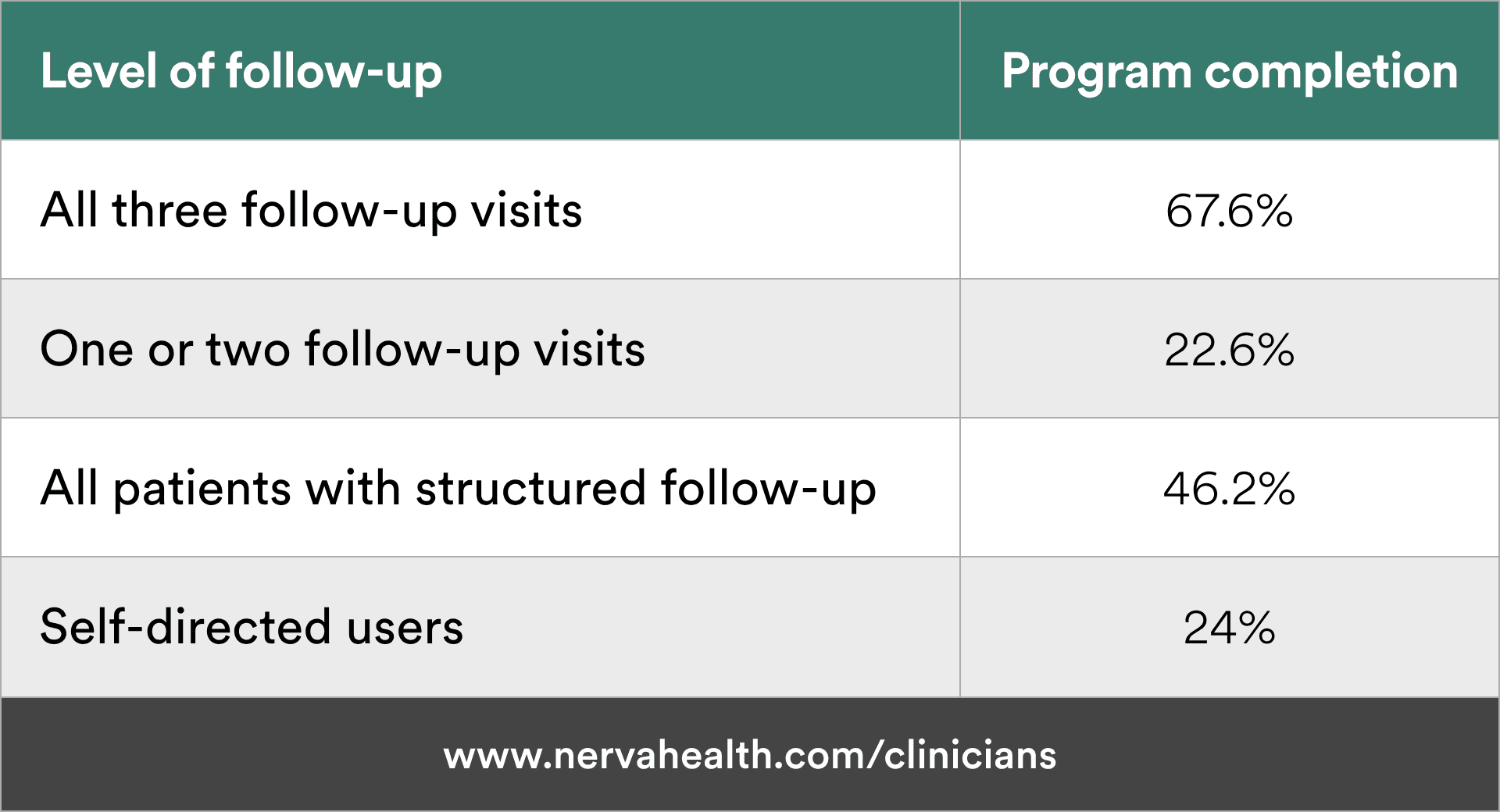
- New ACG 2026 research found 46.2% of complex IBS patients completed gut-directed hypnotherapy with NP or PA follow-up, versus 24% self-directed in a tertiary care clinic.¹
- Patients attending all three NP or PA follow-up visits completed at 67.6%, compared with 22.6% for one or two visits.¹
- NP or PA visit attendance, not IBS subtype, severity, or psychological comorbidity, predicted who completed gut-directed hypnotherapy.¹
- With NP follow-up, complex tertiary-care patients who completed gut-directed hypnotherapy reduced GI symptoms by 31.4%.¹
Structured clinician follow-up helps IBS patients complete gut-directed hypnotherapy, with completion reaching 67.6% among patients who attended all three follow-up visits, according to new research presented at ACG 2026.¹
Starting a guideline-backed therapy² is one thing, but staying with it over several weeks can be hard for many patients, even when they're motivated to try it. With gut-directed hypnotherapy, the benefit depends on adherence to the programme, and that's often hardest for complex patients juggling long-standing symptoms, anxiety, and a busy life.
So what helps patients get to the finish line?
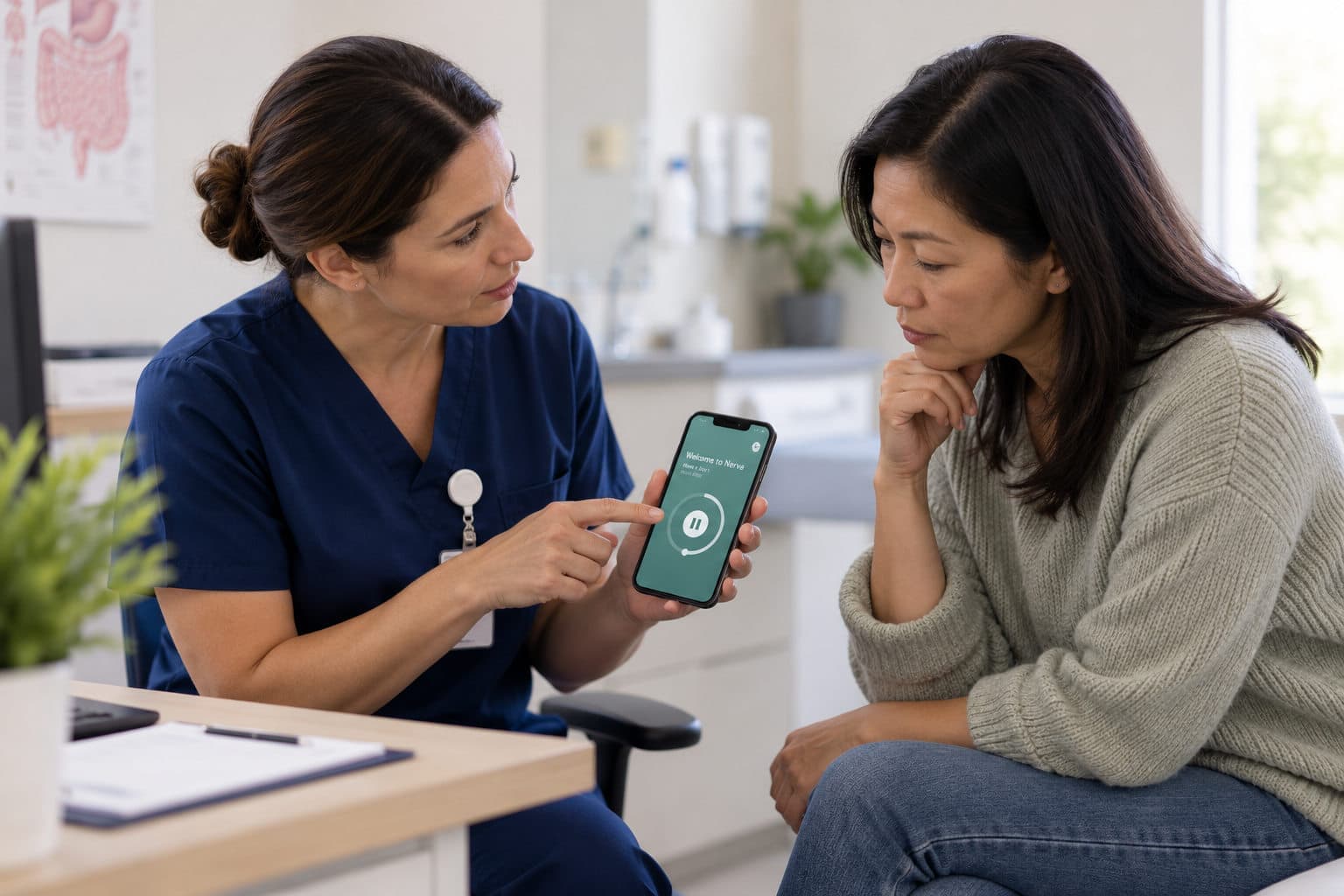
Our new research with Stanford University's neurogastroenterology team set out to answer one simple question: does regular clinician follow-up make a difference? Alongside the programme, patients had three brief follow-up visits with a nurse practitioner, each one a chance to see how they were going and help them stay on track.¹
The results are encouraging, and the model is simple enough for any GI, NP, PA, or dietitian to build into their own clinic.
Gut-directed hypnotherapy completion rates with and without clinician follow-up
Gut-directed hypnotherapy completion was nearly double with structured clinician follow-up in complex IBS patients: 46.2% compared with 24% in self-directed users, and it climbed with every visit attended.¹
This wasn't an easy group to keep engaged. The 80 consecutive patients came from Stanford's tertiary neurogastroenterology clinic: 61.3% had IBS-C, 78.8% had a psychological comorbidity, and 62.5% had lived with symptoms for more than five years.¹
Each patient had a nurse practitioner visit at the start of the 6-week programme, then at weeks 3 and 6.¹
Applying this in practice: How to structure follow-up for gut-directed hypnotherapy
When possible, plan at least one check-in when you refer, ideally around week 3, when patients are most likely to drift. In this study, the more visits patients attended, the more likely they were to finish, while factors like IBS subtype and severity made no difference.¹ So any follow-up you can fit in is time well spent, and it doesn't have to be a full visit. Even a quick phone call or patient portal message can help. At the time of referral, let patients know to expect check-ins from your team so they're ready for them.
If your clinic has the capacity, the full schedule of visits at the start, week 3, and week 6 was linked to the 67.6% completion rate.¹ Week 6 also gives you a natural point to review progress together and plan what comes next.
Does gut-directed hypnotherapy work for complex, long-standing IBS?
Gut-directed hypnotherapy is recognised in ACG guidance for IBS,² and this study suggests that a complex history doesn't have to stand in the way of finishing it.¹ What made the bigger difference was support along the way, and that support works best when it comes from the whole care team.
"The combined efforts of not only the gastroenterologist, the dietitian, and the GI therapist can allow a patient to really feel completely heard and seen, as well as giving them that sense of having a team that really is dedicated to their care and their well-being."
– Nancee Jaffe, Registered Dietitian, UCLA Vatche and Tamar Manoukian Division of Digestive Diseases
How to refer IBS patients to gut-directed hypnotherapy with follow-up built in
Gut-directed hypnotherapy referrals work best with follow-up built in. In this study, that meant nurse practitioner visits at the start, week 3, and week 6, and completion rose with every visit patients attended.¹ Even a single check-in partway through gives patients a reason to keep going.
Patients in this study used the gut-directed hypnotherapy programme in Nerva, an IBS self-management app developed with Monash University researchers. Sessions take 15–20 minutes a day.¹ In a randomised controlled trial of Nerva's app-delivered gut-directed hypnotherapy, 81% of participants had a clinically meaningful drop in symptom severity (at least 50 points on the IBS-SSS) at week 6, compared with 63% in the active control group.³
When you recommend Nerva in a consult, patients who finish the programme and don't find it helpful can request a refund. And if you refer them via the clinician form, you'll also pass on a 25% discount.
Frequently asked questions
What role do nurse practitioners play in IBS management?
Nurse-led support is recognised as an important part of IBS care, from patient education to helping patients manage symptoms and stay on track with treatment.⁴ That makes NPs and PAs well placed to help patients through behavioural therapies like gut-directed hypnotherapy.
Can gut-directed hypnotherapy be used alongside IBS medication and dietary interventions like the low FODMAP diet?
Gut-directed hypnotherapy can be used alongside IBS medication and dietary therapy as part of an integrated care plan.² It works on gut-brain signalling, so it complements rather than replaces other management approaches.
Is gut-directed hypnotherapy for IBS covered by insurance?
Coverage for gut-directed hypnotherapy programmes varies by plan. Some patients may be able to use HSA or FSA funds, subject to their plan's rules, and a Letter of Medical Necessity from the referring clinician can support that claim.
Is digital gut-directed hypnotherapy as effective as in-person therapy for IBS?
Digitally delivered gut-directed hypnotherapy has produced symptom response rates similar to those reported for face-to-face programmes,⁵ although these come from separate studies rather than a head-to-head comparison. It can also reduce reliance on waitlists and scheduled appointments.
References
Tambunan C, Sirimongkolkasem J, Lamothe D, Watson E, Fox R, Hall C, Neshatian L. S1260 Structured follow-up improves adherence to app-based gut-directed hypnotherapy in a medically complex tertiary care IBS population. Am J Gastroenterol. 2026;121(10S1). doi:10.14309/01.ajg.0001214292.26630.c6
Lacy BE, Pimentel M, Brenner DM, et al. ACG clinical guideline: management of irritable bowel syndrome. Am J Gastroenterol. 2021;116(1):17-44.
Anderson EJ, Peters SL, Gibson PR, Halmos EP. Comparison of digitally delivered gut-directed hypnotherapy program with an active control for irritable bowel syndrome. Am J Gastroenterol. 2025;120(2):440-448.
Ruggiero L, Andretta V, Soldaini C, et al. The role of the nurse in the management of irritable bowel syndrome: a narrative review. Transl Med UniSa. 2023;25(1):28-37.
Peters SL, Gibson PR, Halmos EP. Smartphone app-delivered gut-directed hypnotherapy improves symptoms of self-reported irritable bowel syndrome: a retrospective evaluation. Neurogastroenterol Motil. 2023;35(4):e14533.


