(1.21 minutes)
Here Dr. Peters breaks down the main management options for IBS and other gut-brain disorders: the low FODMAP diet, antispasmodics and neuromodulators, and gut-brain therapy via the Nerva program, which combines CBT-informed coaching, gut-directed hypnotherapy, and breathing techniques.
Frequently asked questions
Why does my brain make my gut hurt?
The brain and gut communicate constantly through the gut-brain axis, and in gut-brain disorders like IBS, that communication becomes oversensitive – so normal digestion gets misread as pain, bloating, or urgency. This is called visceral hypersensitivity, and it explains why people with IBS feel real physical symptoms without any visible damage to the gut.
Is IBS all in your head?
IBS is not imagined or psychological – it's a disorder of gut-brain interaction, meaning symptoms come from how the nerves in the gut and brain communicate. The pain, bloating, and bowel changes are physical and real, even though nothing shows up on scans or blood tests.
What is the difference between IBS and DGBI?
IBS is the most common type of disorder of gut-brain interaction (DGBI), but it's not the only one – DGBI is the umbrella category. Other DGBIs include functional dyspepsia, functional heartburn, and functional constipation, all driven by the same miscommunication between the gut and brain.
Can you fix the gut-brain connection?
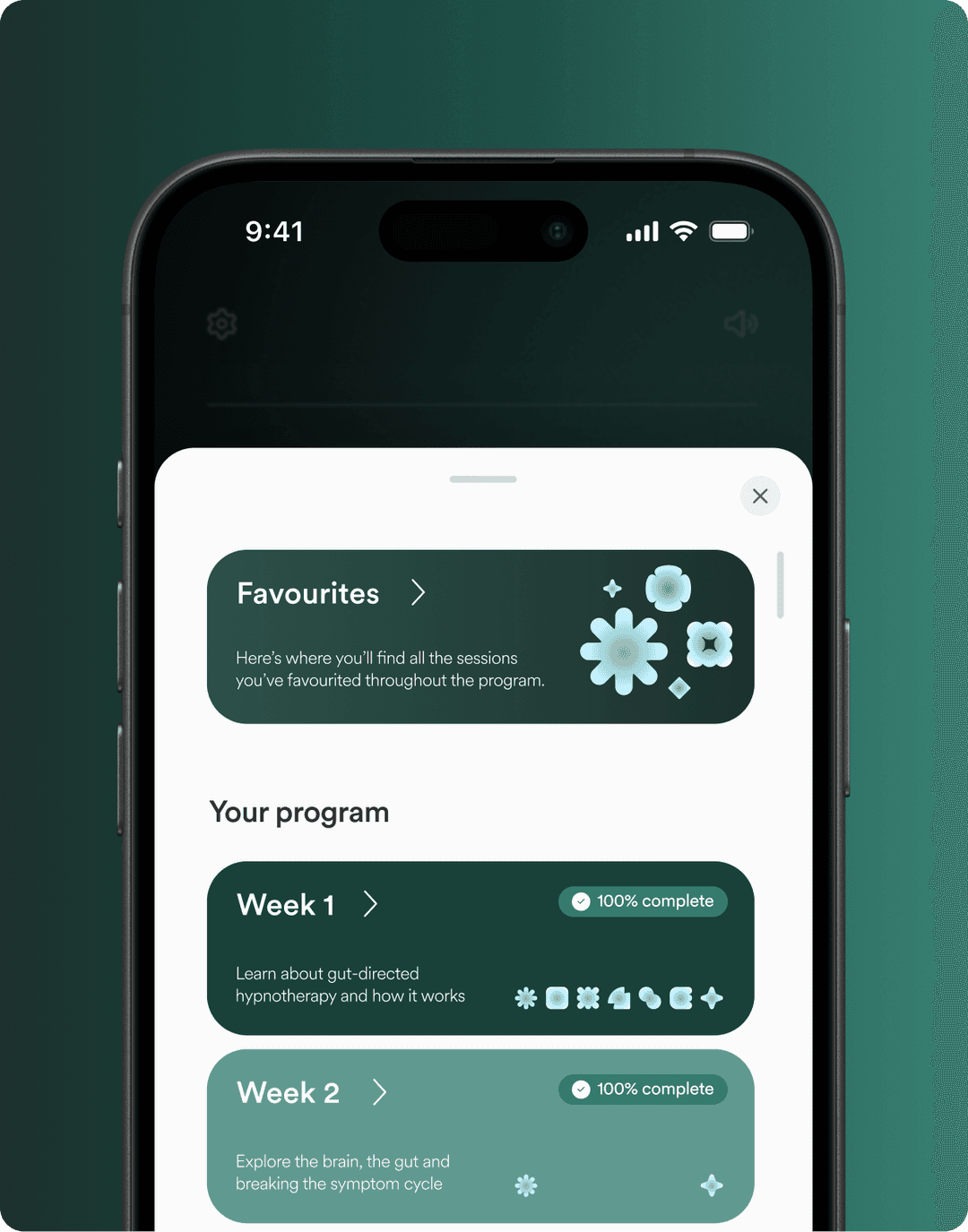
The gut-brain connection can be retrained through gut-brain therapy, which uses techniques like gut-directed hypnotherapy and cognitive behavioural therapy to calm the oversensitive nerve signalling driving symptoms. Nerva is a 6-week gut-brain therapy program co-founded by Dr Simone Peters that delivers these techniques through daily 15-20 minute sessions.
How do I know if my IBS is caused by stress?
Stress doesn't cause IBS directly, but it's one of the most common triggers for flare-ups because the nervous system and digestive system are so closely linked. If your symptoms worsen during anxious or stressful periods – or improve when you're relaxed – the gut-brain connection is likely playing a big role in your symptoms.
References
Drossman DA, Hasler WL. Rome IV – functional GI disorders: disorders of gut-brain interaction. Gastroenterology. 2016;150(6):1257-1261.
Sperber AD, Bangdiwala SI, Drossman DA, et al. Worldwide prevalence and burden of functional gastrointestinal disorders, results of Rome Foundation global study. Gastroenterology. 2021;160(1):99-114.e3.
Lacy BE, Pimentel M, Brenner DM, et al. ACG clinical guideline: management of irritable bowel syndrome. Am J Gastroenterol. 2021;116(1):17-44.
Anderson EJ, Peters SL, Gibson PR, Halmos EP. Comparison of digitally delivered gut-directed hypnotherapy program with an active control for irritable bowel syndrome. Am J Gastroenterol. 2025;120(2):440-448.