Once it has been determined that there are no other, potentially more serious, health conditions in play, the official IBS diagnosis comes from the Rome IV Criteria. The criteria has been modified slightly for the diagnosis in children.
The following criteria must all be met for at least two months before diagnosis: Abdominal pain at least four days per month over at least two months associated with one or more of the following:
Related to defecation
A change in frequency of stool
A change in form (appearance) of stool
In children with abdominal pain and constipation, the pain does not resolve with resolution of the constipation (children in whom the pain resolves have functional constipation, not IBS)
After appropriate evaluation, the symptoms cannot be fully explained by another medical condition
As mentioned previously, the diagnosis of IBS can vary depending on geographical location. The interpretation of the above criteria, cultural factors, and levels of understanding around IBS can result in different diagnosis numbers globally.
Are children likely to 'grow out' of IBS?
There hasn't been significant research done on children 'growing out' of their IBS symptoms. Still, one particular study found that over 24 months, 57.8% of participants (4-16 years) reported symptom resolution. From these numbers, 62.5% had only received reassurance (emotional support) while the others had been prescribed medical treatment.
From this, we can say that some children may age out of IBS and experience symptom resolution.
How is IBS in children normally treated? Are there any issues with certain IBS medications for children?
As the cause of IBS is still being researched to this day, treatment options are somewhat limited. Between adults and children, interventions don't vary significantly.
A standard treatment that will most likely be no surprise to you is the low FODMAP diet. FODMAPS are short-chain carbohydrates (sugars) that can be difficult to digest. This diet requires eliminating all FODMAPS for a certain amount of time and then slowly reintroducing them to see which cause symptoms. The sugars classified as FODMAPs include oligosaccharides, disaccharides, monosaccharides, and polyols.
Although putting a child on a low FODMAP diet is safe under the supervision of a healthcare provider, cutting out food groups from a growing child's diet can do more harm than good if managed incorrectly. It is essential to underline the need for supervision while your child is on this diet, as a growing body needs all the proper nutrients.
If your child is not the right candidate for this diet, don't worry! There are many other avenues that you, your child, and your healthcare provider can explore to manage IBS. Some examples include:
Can hypnotherapy help IBS in children?
Hypnotherapy is an excellent form of treatment for children with IBS. But what exactly is gut-directed hypnotherapy (GDH), you may ask?
GDH involves enhancing and rewiring the connection between the brain and the gut by offering suggestions to the subconscious mind. As mentioned previously, IBS is a functional gut disorder, so there is no evident inflammation or structural damage present within the gut. From this, it makes sense to explore different treatment options that don't require diet change.
Children have great imaginations, so the use of imagery through hypnotherapy can result in faster improvement rates in children, compared to adults, according to Dr. Simone Peters.
A 2009 study, published by Pediatrics Journal, showed that children with IBS or functional abdominal pain (FAP) respond highly to guided imagery. 63% of the children in the guided imagery group reported symptom reduction, compared to 26.7% in the medical-care only group.
Is there an age minimum for children to use gut-directed hypnotherapy?
From previously conducted research, the youngest participant of gut-directed hypnotherapy to be studied was five years old.
It may be difficult for children under five to use GDH, as their language skills aren't fully developed. The more these skills increase, the more likely they are to be receptive to the visuals described during sessions.
Can my child listen to Nerva/can I read the psychoeducation to them?
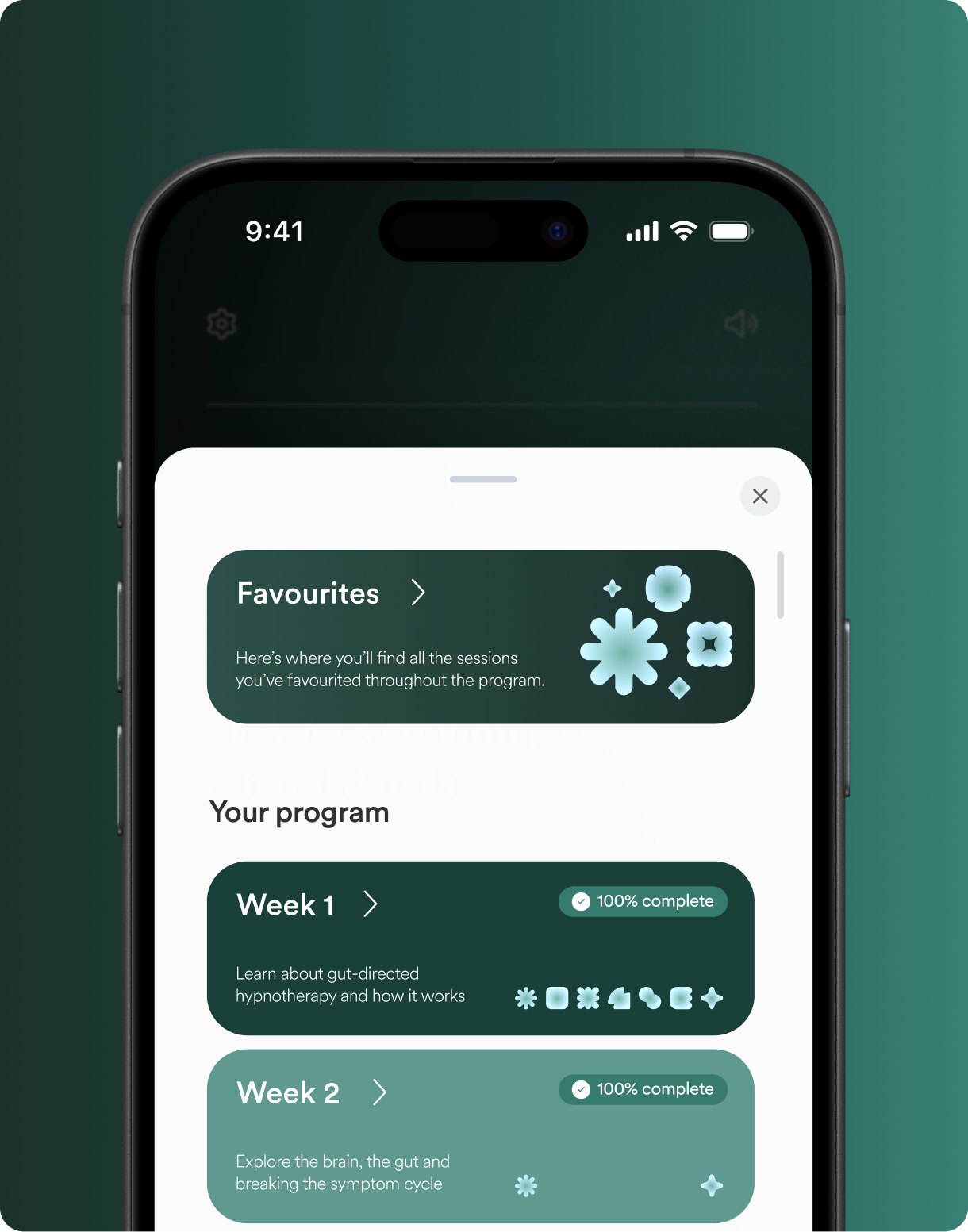
If you are familiar with Nerva, you will know that there is a hypnotherapy component, an educational reading component, and breathing exercises set as daily tasks.
While stating that the Nerva content is appropriate for children, program creator Dr. Peters has said that the educational materials may be too complicated for young readers; "I think it would depend on the age of the child? Generally speaking, I think it would be too complicated for them. Also, children are very visual, so they would probably respond better to pictures, etc., rather than excessive text."
Whether the child could keep up with the program would depend strongly on their age and literacy capabilities.
The educational reading component in the program has been written to an adult reading level, which may cause a sense of confusion and disinterest in children. As mentioned previously, children have far-reaching imaginations, which may respond more favorably to pictures or audio hypnosis than text-heavy research text.
How can you best help your child?
As someone who has close contact with a child with IBS, you would know first hand how difficult and emotionally taxing it can be for them, as well as for their family. From pain and discomfort comes tension and heightened emotions, so it's important to steer your family ship in the right direction.
Here are some tips that can help you through this process:
Self-care: You may be feeling overwhelmed, and at some points, helpless. But in order to keep your child's spirits high and their confidence strong, you need to ensure you are building yourself up in the same way. Try to stay active, eat well, see friends, and do things that you enjoy.
Knowledge is power: Do your research. Ensure that you are reading up on quality articles with scientific backing. Remember, Google Doctor isn't always right!
Educate your child: Teach your child about their condition, and remind them that their feelings and emotions are valid.
Work with professionals: It is important to work with your child's healthcare provider through this time. Necessary guidance is there for a reason, so don't walk alone. If your child is school-aged, inform their teacher about their diagnosis. Talk them through the signs, symptoms, and struggles that your child is dealing with. Educating people in your child's circle may make events like urgent bathroom trips or school absences easier and less embarrassing to deal with.
The Wrap Up
As a parent, it can be painful seeing your child in discomfort due to IBS. To help guide your family through this time, it is essential to do your own research to solidify your understanding of the syndrome. It is also important to follow the guidance of your child's healthcare professional. With the combined knowledge of their medical history and general medical expertise, your doctor is there to help point you in the right direction of treatment. Gut-directed hypnotherapy is an emerging (and powerful) IBS management tool that is proven to provide results. What's more, gut-directed hypnotherapy gives you the choice to manage symptoms without diet changes and medicine.
References
Barrett JS, Gibson PR. Fermentableoligosaccharides, disaccharides, monosaccharides and polyols (FODMAPs) andnonallergic food intolerance: FODMAPs or food chemicals?. Therap Adv Gastroenterol.2012;5(4):261-268. doi:10.1177/1756283X11436241
Devanarayana NM, Rajindrajith S.Irritable bowel syndrome in children: Current knowledge, challenges andopportunities. World J Gastroenterol.2018;24(21):2211-2235. doi:10.3748/wjg.v24.i21.2211
Giannetti E, de'Angelis G, Turco R, etal. Subtypes of irritable bowel syndrome in children: prevalence at diagnosisand at follow-up. J Pediatr.2014;164(5):1099-1103.e1. doi:10.1016/j.jpeds.2013.12.043
Giannetti E, Maglione M, Sciorio E,Coppola V, Miele E, Staiano A. Do Children Just Grow Out of Irritable BowelSyndrome?. J Pediatr.2017;183:122-126.e1. doi:10.1016/j.jpeds.2016.12.036
Irritable Bowel Syndrome (IBS) inChildren | Cedars-Sinai. Cedars-sinai.org.https://www.cedars-sinai.org/health-library/diseases-and-conditions---pediatrics/i/irritable-bowel-syndrome-ibs-in-children.html.Published 2021. Accessed April 26, 2021.
Irritable Bowel Syndrome (IBS). JohnsHopkins Medicine. https://www.hopkinsmedicine.org/health/conditions-and-diseases/irritable-bowel-syndrome-ibs.Published 2021. Accessed April 26, 2021.
Karabulut G, Beşer Ö, Erginöz E, KutluT, Çokuğraş F, Erkan T. The Incidence of Irritable Bowel Syndrome in ChildrenUsing the Rome III Criteria and the Effect of Trimebutine Treatment. J Neurogastroenterol Motil.2013;19(1):90-93. doi:10.5056/jnm.2013.19.1.90
Khayyatzadeh SS, Kazemi-Bajestani SMR,Mirmousavi SJ, et al. Dietary behaviors in relation to prevalence of irritablebowel syndrome in adolescent girls. JGastroenterol Hepatol. 2018;33(2):404-410. doi:10.1111/jgh.13908
Rajindrajith S, Devanarayana NM.Subtypes and Symptomatology of Irritable Bowel Syndrome in Children andAdolescents: A School-based Survey Using Rome III Criteria. J Neurogastroenterol Motil.2012;18(3):298-304. doi:10.5056/jnm.2012.18.3.298
Rome IV Criteria - RomeFoundation. Rome Foundation.https://theromefoundation.org/rome-iv/rome-iv-criteria/. Published 2021.Accessed April 27, 2021.
Saito YA. The role of genetics inIBS. Gastroenterol Clin North Am


.jpeg)

.jpeg)