6. Myth: IBS is caused by a bad diet
Fact: It's not known what causes IBS. Studies suggest that many things might be implicated in the development of IBS, such as:
Altered gastrointestinal motility: changes in the way waste moves through the gut.
Visceral hypersensitivity: increased sensitivity of nerves within the gut.
Post-infectious reactivity: IBS that occurs after a gut infection (like gastroenteritis)
Brain-gut interactions: changes in the way your brain communicates with your gut.
Alteration in fecal microflora/bacterial overgrowth: changes to microorganisms in your body.
Food sensitivities/carbohydrate malabsorption: the inability to eat certain foods
Intestinal inflammation
Stress
While some research suggests that poor dietary habits can increase the risk of IBS, there is also proof that eating fruit and vegetables and drinking tea might induce IBS symptoms too.
If you're worried that your diet caused your condition, remember, you can try and eat all the right things, and you still might end up with an IBS diagnosis.
7. Myth: People with IBS can NEVER eat trigger foods
Fact: There are other ways to manage IBS besides making changes to your diet.
After being diagnosed with IBS, most doctors will instruct people to change their diet and eating habits. This may include minor changes like avoiding specific triggers (such as coffee or carbonated drinks) to more significant changes, like starting a highly restrictive low FODMAP diet.
While these methods have been shown to help improve IBS symptoms, other treatments, like hypnotherapy for IBS (also known as gut-directed hypnotherapy), have been proven to be as effective as a low FODMAP diet, without having to make changes to your diet. Moreover, hypnotherapy is proven to provide lasting results, with some research showing that improvements can be maintained five years after treatment.
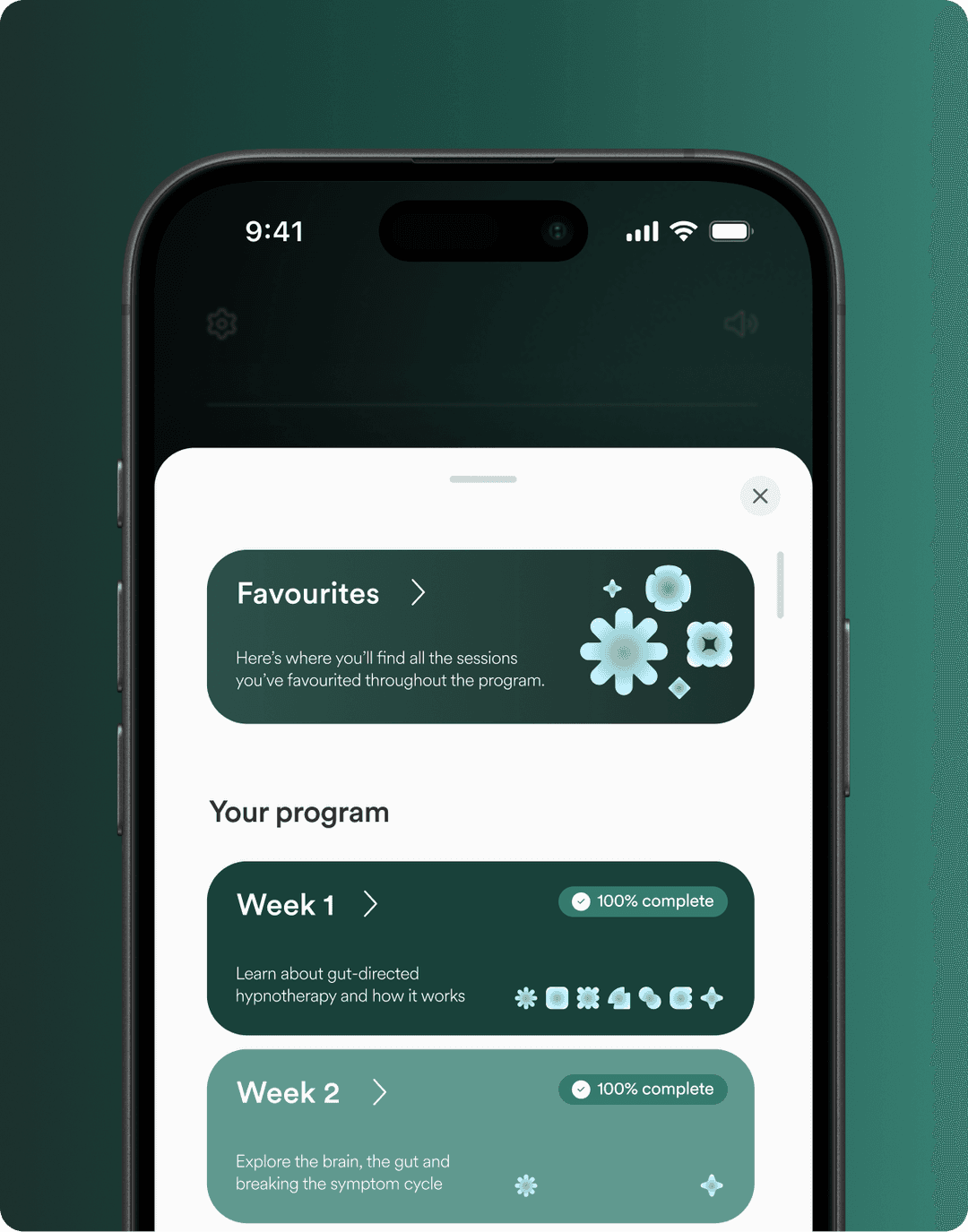
While licensed gut-directed hypnotherapy providers can have long waitlists for new clients, at-home recordings, and app-based programs like Nerva, can provide the same benefit as in-person sessions.
How to get involved in IBS Awareness Month
Just by reading this article, you're already taking steps to improve awareness and break down myths that hold people back from understanding this all-too-common condition. Some other things you can do to support IBS Awareness Month are:
Sharing this article: share this article or other science-backed articles about IBS on social media or with your friends. Help get the word out about the realities of IBS.
Start a conversation: Talk to your friends, family, or coworkers about IBS. Every conversation helps break down the stigma of gut disorders and sheds light on the condition.
Join an IBS support group: Online support groups, like Nerva's Circle of Trust, give people a safe place to express their feelings and share tips.
The Wrap-Up
The Wrap-Up
April is IBS Awareness Month, and April 19 is World IBS Awareness day – so it's a perfect time to break some common myths about IBS and set the record straight on this often misunderstood condition. By getting involved in IBS Awareness, you can help break the stigma of gut disorders, help educate the community about gastrointestinal conditions like IBS, and share tips to help people improve their symptoms.
References
American Physiological Society (APS). "Why gastrointestinal disorders afflict women more often." ScienceDaily. ScienceDaily, 30 March 2015. www.sciencedaily.com/releases/2015/03/150330134409.htm
Center for Drug Evaluation and Research (CDER) U.S. Food and Drug Administration (FDA). The Voice of the Patient. A series of reports from the U.S. Food and Drug Administration’s (FDA) Patient-Focused Drug Development Initiative. Functional Gastrointestinal Disorders. 2016. Available from: https://www.fda.gov/files/about%20fda/published/The-Voice-of-the-Patient--Functional-Gastrointestinal-Disorders.pdf Last accessed April 2021
Drossman DA, Morris CB, Schneck S, et al. International survey of patients with IBS: symptom features and their severity, health status, treatments, and risk-taking to achieve clinical benefit. J Clin Gastroenterol. 2009;43(6):541-550. doi:10.1097/MCG.0b013e318189a7f9
Facts About IBS - About IBS. About IBS. https://aboutibs.org/what-is-ibs/facts-about-ibs/. Published 2021. Accessed April 13, 2021.
Guo YB, Zhuang KM, Kuang L, Zhan Q, Wang XF, Liu SD. Association between Diet and Lifestyle Habits and Irritable Bowel Syndrome: A Case-Control Study. Gut Liver. 2015;9(5):649-656. doi:10.5009/gnl13437
Lacy BE, Patel NK. Rome Criteria and a Diagnostic Approach to Irritable Bowel Syndrome. J Clin Med. 2017;6(11):99. Published 2017 Oct 26. doi:10.3390/jcm6110099
Peters SL, Yao CK, Philpott H, Yelland GW, Muir JG, Gibson PR. Randomised clinical trial: the efficacy of gut-directed hypnotherapy is similar to that of the low FODMAP diet for the treatment of irritable bowel syndrome. Aliment Pharmacol Ther. 2016;44(5):447-459. doi:10.1111/apt.13706
Tan G, Hammond DC, Joseph G. Hypnosis and irritable bowel syndrome: a review of efficacy and mechanism of action. Am J Clin Hypn. 2005;47(3):161-178. doi:10.1080/00029157.2005.10401481