The biopsychosocial model explains how genetics and environmental stress may contribute to the development of both mood disorders and digestive disorders. Trauma, in particular, has been shown to trigger both psychiatric disorders and IBS. Therefore, the model may help to explain the strong association between mental health and the GI tract, by suggesting traumatic events underlie both conditions.(13)
Trauma – the cause of IBS and depression?
Trauma, as explained by the biopsychosocial model, may represent a link between depression and IBS. Rates of physical or emotional trauma are high IBS patients, and up to 50% of patients with IBS have experienced trauma; twice the rate of healthy controls. Some researchers hypothesize that trauma is the source of IBS in most patients.(14)
Forms of trauma include sexual assault, vehicle accidents and death of a loved one, and such events also increase the risk of mood disorders such as depression. Hence, the onset of trauma may lead to a vicious cycle of depression and IBS, as both are thought to arise following trauma.
Treatment options
Mood disorders and IBS are complex, and there is currently no cure for either. However, several therapies treat IBS or symptoms of depression or both. Depression is often treated with antidepressant medication such as SSRIs, therapies such as hypnotherapy or cognitive behavioral therapy or brain stimulation.
The gut-brain connection explains how psychotherapies like cognitive behavioral therapy (CBT) and hypnotherapy are also effective treatments for IBS. In some ways, this role of gastroenterologists resembles that of counselors in trying to soothe the ‘second brain’ that is the nerves of the GI tract. In this way, psychological therapies can treat both depression and IBS together. Below outlines common treatments for IBS and depression.
1. Antidepressants
Although considered an off-label use, antidepressants are frequently prescribed for IBS. These medications relieve abdominal pain and restore bowel movements by altering serotonin levels. Generally, a lower dosage of medication is prescribed for IBS than for psychiatric disorders.
Two most common antidepressants for IBS are:
Selective serotonin reuptake inhibitors (SSRIs), including Prozac (fluoxetine) and Cipramil (citalopram).(15)
Tricyclic antidepressants, such as Desipramine (Norpramin) and Nortriptyline (Pamelor). Tricyclic antidepressants are a second-line treatment for depression after SSRIs.(16)
SSRIs are also usually the first choice since there are fewer side effects than other antidepressants. These medications are particularly effective in reducing constipation in IBS. Tricyclic antidepressants are a second-line treatment for depression useful in diarrhea-predominant IBS.(15,16)
2. Cognitive behavioural therapy
CBT is a common treatment option for depression, and now widely used to treat functional gastrointestinal disorders. This form of therapy teaches patients to recognize negative thoughts and replace them with positive, realistic ones. Several CBT techniques are particularly useful for treating symptoms of IBS:
Relaxation strategies such as diaphragmatic breathing activate the parasympathetic nervous system, which can normalize the function of the GI tract.
Cognitive restructuring can help patients build awareness of distorted thoughts in IBS. This may lessen catastrophizing and stress and reduce symptoms of IBS.(17)
Exposure techniques in which patients face fearful situations can help eliminate fearful responses to gastrointestinal sensations.(17)
CBT is has been found to ease symptoms of IBS in most patients, and this is likely to correlate with fewer symptoms of depression.
3. Low FODMAP diet
Diets that eliminate common trigger foods of IBS have been shown to improve symptoms of functional gastrointestinal disorders. The low FODMAP diet was developed by Monash University for treating IBS and has been shown effective in numerous studies. Broadly, the diet eliminates short-chained carbohydrates, which are found in many fruits, vegetables, and grains. Relieving symptoms of IBS through dietary intervention may reduce symptoms of depression and improve quality of life.(18)
4. Hypnotherapy
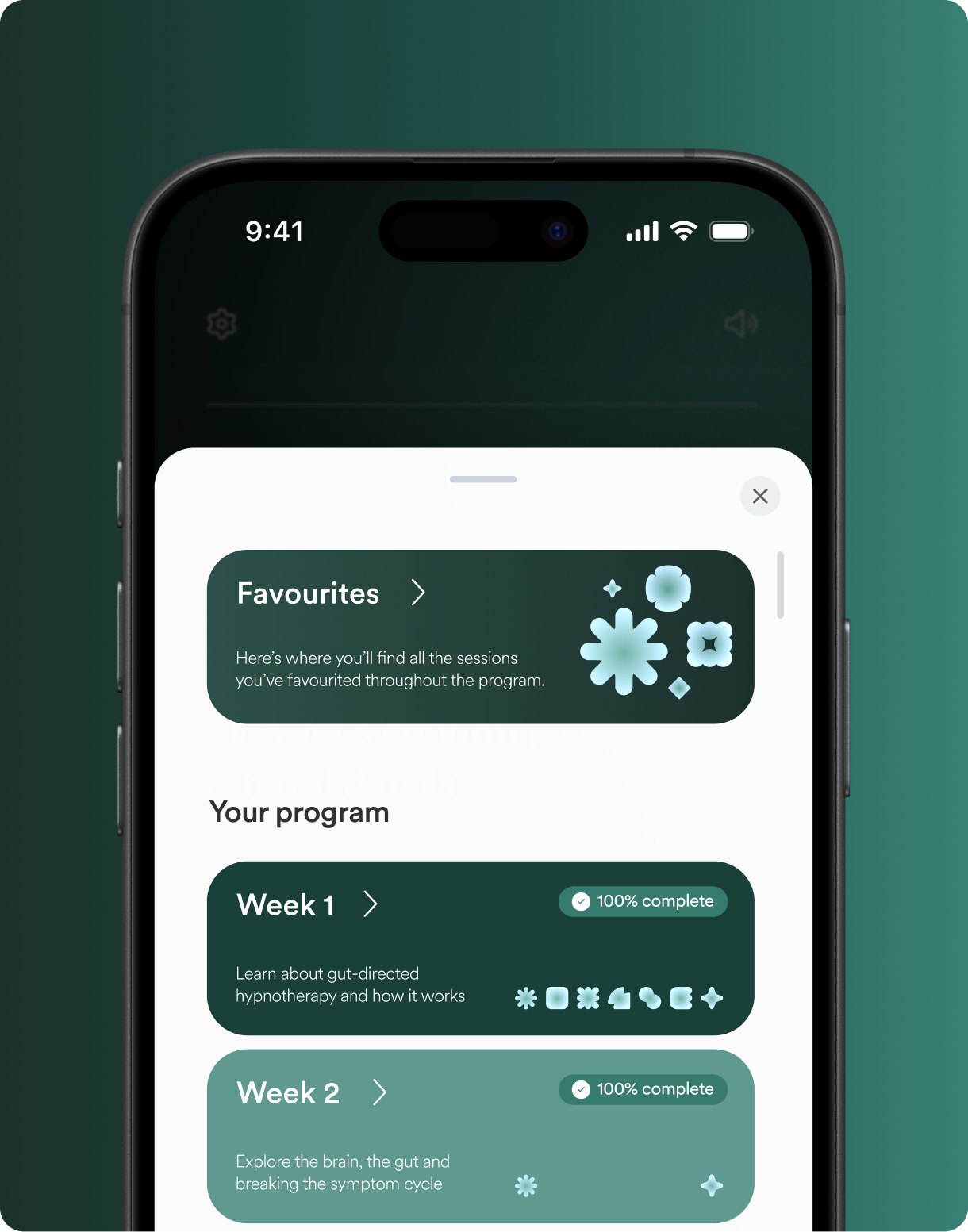
Hypnotherapy has been used to treat numerous health conditions, such as chronic pain and smoking addiction. Hypnotherapy has recently been adapted to treat IBS, and is believed to work by acting on the subconscious mind to improve motility in the GI tract and reduce the sensitivity of the gut. A clinical trial recently showed that six weeks of hypnotherapy reduces IBS symptoms in 70% of patients, while also reducing psychological scores for depression.(19) The mobile app Nerva uses this approach to help people with IBS self-manage their IBS symptoms.
There have been few studies evaluating hypnotherapy in depression. However, improvements to patients with anxiety disorders using hypnotherapy suggest a promise for hypnotherapy in depression.(20)
The Wrap Up
The link between mood disorders and IBS is complex. Both conditions are unpleasant and may interfere with daily activities. What remains clear is the importance of treating the two conditions together, rather than individually, and the value of adding psychological treatments to standard medical care. If you experience symptoms of depression or IBS, it is best to consult your doctor for a diagnosis. You may be referred to a specialist in psychiatric disorders so both conditions may be treated together.
References
1. Bommelaer G, Poynard T, Le Pen C, Gaudin AF, Maurel F,Priol G, Amouretti M, Frexinos J, Ruszniewski P, El Hasnaoui A. Prevalence of irritable bowel syndrome (IBS) and variability of diagnostic criteria. Gastroenterologie clinique et biologique. 2004 Jun 1;28(6-7):554-61. Link
2. American Psychiatric Association. Diagnostic and statistical manual of mental disorders (DSM-5®). American Psychiatric Pub; 2013 May 22. Link
3. Schmidt SL, Tolentino JC. DSM-5 criteria and depression severity: implications for clinical practice. Frontiers in psychiatry.2018;9:450. Link
4. Levy RL, Olden KW, Naliboff BD, Bradley LA, Francisconi C,Drossman DA, Creed F. Psychosocial aspects of the functional gastrointestinal disorders. Gastroenterology. 2006 Apr 1;130(5):1447-58. Link
5. Masand PS, Kaplan DS, Gupta S, Bhandary AN, Nasra GS,Kline MD, Margo KL. Major depression and irritable bowel syndrome: is there a relationship?. The Journal of clinical psychiatry. 1995 Aug. Link
6. Ballou S, McMahon C, Lee HN, Katon J, Shin A, Rangan V,Singh P, Nee J, Camilleri M, Lembo A, Iturrino J. Effects of irritable bowel syndrome on daily activities vary among subtypes based on results from the IBS in America Survey. Clinical Gastroenterology and Hepatology. 2019 Nov1;17(12):2471- Link
7. de Medeiros MT, Carvalho AF, de OliveiraLima JW, dos Santos AA, de Oliveira RB, e Souza MÂ. Impact of depressive symptoms on visceral sensitivity among patients with different subtypes of irritable bowel syndrome. The Journal of nervous and mental disease. 2008 Sep1;196(9):711-4. Link
8. Foster JA, Neufeld KA. Gut–brain axis: how the microbiome influences anxiety and depression. Trends in neurosciences. 2013 May1;36(5):305-12. Link
9. Spiller R. Serotonin, inflammation, and IBS: fitting the jigsaw together?. Journal of pediatric gastroenterology and nutrition. 2007 Dec1;45:S115-9. Link
10. Tack J, Broekaert D, Fischler B, Van Oudenhove L, Gevers AM, Janssens J.A controlled crossover study of the selective serotonin reuptake inhibitor citalopram in irritable bowel syndrome. Gut. 2006 Aug 1;55(8):1095-103. Link
11. Pinto-Sanchez MI, Hall GB, GhajarK, Nardelli A, Bolino C, Lau JT, Martin FP, Cominetti O, Welsh C, Rieder A,Traynor J. Probiotic Bifidobacterium longum NCC3001 reduces depression scores and alters brain activity: a pilot study in patients with irritable bowel syndrome. Gastroenterology. 2017 Aug 1;153(2):448-59. Link
12. George E, Engel L. The clinical application of the biopsychosocial model. American journal of Psychiatry. 1980 May5;137(5):535-44. Link
13. White DL, Savas LS, Daci K, Elserag R, Graham DP,Fitzgerald SJ, Smith SL, Tan G, El‐Serag HB. Trauma history and risk of the irritable bowel syndrome in women veterans. Alimentary pharmacology &therapeutics. 2010 Aug;32(4):551-61. Link
14. Halland M, Almazar A, Lee R, Atkinson E, Larson J, TalleyNJ, Saito YA. A case–control study of childhood trauma in the development of irritable bowel syndrome. Neurogastroenterology & Motility. 2014Jul;26(7):990-8. Link
15. Friedrich M, Grady SE, Wall GC. Effects of antidepressants in patients with irritable bowel syndrome and comorbid depression. Clinical therapeutics. 2010 Jul 1;32(7):1221-33. Link
16. Rahimi R, Nikfar S, Rezaie A,Abdollahi M. Efficacy of tricyclic antidepressants in irritable bowel syndrome:a meta-analysis. World journal of gastroenterology: WJG. 2009 Apr7;15(13):1548. Link
17. Kinsinger SW. Cognitive-behavioral therapy for patients with irritable bowel syndrome: current insights. Psychology research and behavior management. 2017;10:231. Link
18. Halmos EP, Power VA, Shepherd SJ, Gibson PR, Muir JG. A diet low in FODMAPs reduces symptoms of irritable bowel syndrome. Gastroenterology. 2014 Jan 1;146(1):67-75. Link
19. Peters SL, Yao CK, Philpott H,Yelland GW, Muir JG, Gibson PR. Randomised clinical trial: the efficacy of gut‐directed hypnotherapy is similar to that of the low FODMAP diet for the treatment of irritable bowel syndrome. Alimentary pharmacology &therapeutics. 2016 Sep;44(5):447-59. Link
20. Alladin A. Evidence-basedhypnotherapy for depression. Intl. Journal of Clinical and ExperimentalHypnosis. 2010 Mar 3;58(2):165-85. Link

.jpeg)

.jpeg)