.webp)

Key takeaways:
- Persistent bloating is most often caused by excess gas, disrupted gut motility, or visceral hypersensitivity.
- IBS is one of the most common causes of chronic bloating – it is a gut-brain disorder, not a problem with gut structure.
- The gut-brain connection means stress, anxiety, and nervous system sensitization can directly amplify bloating symptoms.
- Gut-brain therapy addresses the underlying nervous system patterns driving chronic bloating, not just the symptoms.
If you feel like you’re always bloated, it usually comes down to three things: too much gas building up in the gut, sluggish movement through the digestive tract, or a sensitized gut nervous system that turns even normal digestion into pressure and pain.
Bloating affects up to 30% of people¹, and most people spend years trialing elimination diets, cycling through medications and natural remedies, and falling down endless Google rabbit holes with no real answers. If that sounds familiar, visceral hypersensitivity is likely the reason.
This guide to bloating explains what that means, what else could be driving your symptoms, and what the evidence says about the most effective treatment options for long-term relief.
What actually causes bloating?
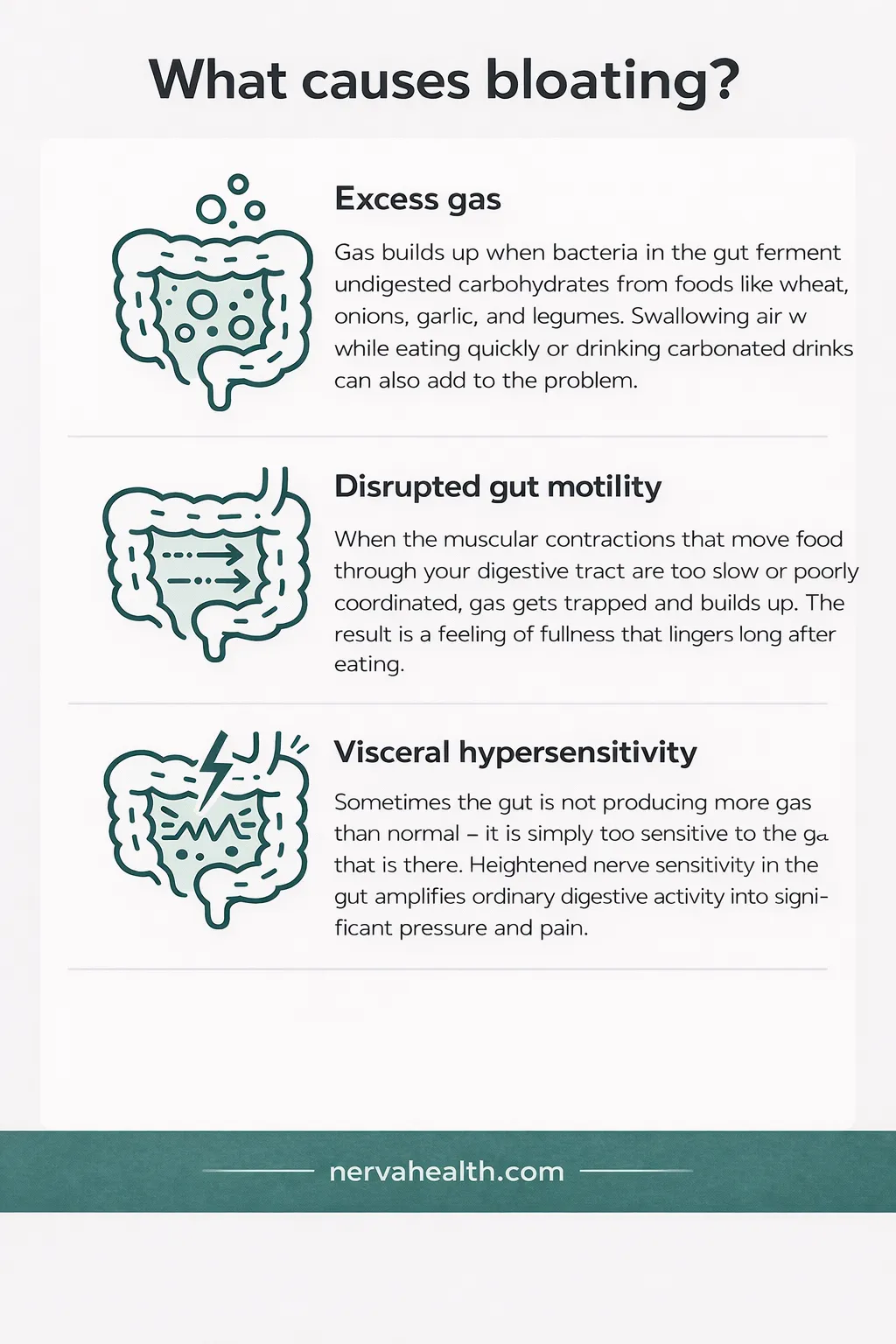
The sensation of bloating – fullness, pressure, or visible distension – comes from three distinct mechanisms, and identifying which is driving your symptoms matters for treatment.
Bloating isn't just one thing, and it has three distinct causes: excess gas, disrupted gut motility, and visceral hypersensitivity. ² ³ Knowing which one is driving yours makes a real difference to what actually helps.
The gut-brain connection: why bloating isn't always about food
Most people assume bloating is about food – and sometimes it is. But for the many people who eat carefully, cut out their triggers, and still feel bloated most of the time, something else is usually going on.
The gut and brain are in constant two-way communication through the vagus nerve and the enteric nervous system – a vast network of around 500 million neurons embedded in the walls of the digestive tract.⁴ This system regulates everything from gut motility to how intensely digestive sensations are felt. When it is working well, normal digestion happens quietly in the background. When it is dysregulated, even ordinary digestive activity – gas moving through the intestine, the gut wall expanding after a meal – gets amplified into bloating pressure and pain.
What throws it off? Often a specific event: a gut infection, a course of antibiotics, a prolonged period of stress, a hormonal shift. After that trigger, the nervous system can shift into a heightened, sensitized state – and stay there long after the original cause has resolved.⁵ This is why so many people trace their chronic bloating back to a particular moment. A bad bout of food poisoning. A period of intense anxiety. A course of antibiotics that seemed to change everything. The gut recovered. The nervous system didn't fully follow.
"If we do a good job managing the disruption between the gut-brain axis, many patients will have mild to no symptoms the majority of the time – and that's really our goal." – Morgan Binder, Physician's Assistant and Registered Dietitian, Arizona Digestive Health
This is also why bloating in gut-brain disorders tends to be so unpredictable. It is not simply a response to what you ate today. The same meal can feel completely fine one day and unbearable the next – because what changes isn't always the food, it's the state of the nervous system. Stress, poor sleep, and anxiety all feed into how sensitized the gut feels on any given day. Reducing dietary triggers helps, but it only goes so far if the nervous system is still operating on high alert.
Why does IBS cause bloating?
If you have been diagnosed with IBS – or you suspect it might be behind your symptoms – bloating is likely one of the most disruptive parts of your day. For many people with IBS, it is not just occasional fullness after eating. It is waking up with a flat stomach and ending the day looking and feeling visibly distended, without any clear explanation for why.
IBS is the most common gut-brain disorder worldwide and the leading cause of chronic bloating,⁶ affecting an estimated 10–15% of people globally.⁷ It is classified under the Rome IV criteria as a condition in which symptoms arise not from structural damage to the gut, but from altered communication between the gut and the brain.⁸ This is the reason so many people with IBS get normal scan results and normal blood tests, yet still feel severely bloated every single day. The gut looks completely fine. The problem is in how the gut and brain are talking to each other.
In IBS, the nerves lining the gut become sensitized – visceral hypersensitivity at its most pronounced. The gut is not producing more gas than average. It is simply far more sensitive to the gas that is there, which is why bloating in IBS can feel completely disproportionate to what you have eaten, and why cutting out foods often only helps so much.
Stress makes IBS bloating significantly worse. When the nervous system is activated by anxiety, a difficult day, or even anticipating a meal, it can slow gut motility and amplify visceral signals further, intensifying bloating even without any dietary trigger.⁴ This is why many people with IBS notice their stomach feels most distended on the hardest days, not necessarily after the biggest meals.
Could my bloating be SIBO, celiac disease, or something else?
IBS is the most common cause of chronic bloating⁴ – but it is not the only one. If you have already been diagnosed with IBS, some of these conditions can overlap with it.
Small intestinal bacterial overgrowth (SIBO)
Small intestinal bacterial overgrowth occurs when bacteria accumulate in the small intestine rather than the large intestine, where fermentation is supposed to happen. When these bacteria ferment carbohydrates in the wrong location, they produce hydrogen and methane gas much earlier in the digestive process – causing significant bloating, often within an hour of eating. SIBO is considerably more common in people with IBS, with some studies suggesting up to one-third of IBS patients have abnormal breath test results consistent with SIBO.⁹
Functional dyspepsia
Functional dyspepsia is a gut-brain disorder affecting the upper digestive tract. It causes bloating, early fullness after eating, and upper abdominal discomfort – often described as feeling uncomfortably full after just a few bites. Like IBS, functional dyspepsia produces real, significant symptoms with no structural cause visible on imaging or endoscopy, and is driven by altered gut-brain signalling in the upper GI tract.
Celiac disease
Celiac disease is an autoimmune condition triggered by gluten in which the immune system attacks the lining of the small intestine. This damage impairs nutrient absorption and causes bloating, diarrhea, fatigue, and abdominal pain. Unlike IBS, celiac disease involves measurable structural damage to the gut lining and is confirmed through blood tests and intestinal biopsy.10
Constipation
Constipation slows gut transit significantly, allowing gas to build up behind stool and producing sustained abdominal pressure and distension. For many people, treating the constipation is enough to resolve the bloating; for others, particularly those with IBS-C, the visceral hypersensitivity driving constipation also amplifies the sensation of bloating independently of gas volume.
Hormonal fluctuations
Hormonal fluctuations around the menstrual cycle affect both gut motility and fluid retention, making bloating particularly common in the week before menstruation. Progesterone slows gut transit in the luteal phase, while prostaglandins released during menstruation can trigger cramping and loose stools – meaning bloating patterns often shift predictably across the cycle.
What is the best diet for bloating?
Dietary changes are one of the most effective first steps for managing bloating – but the right approach depends on what is driving your symptoms, and not every dietary strategy works for every person.
How does the low FODMAP diet help with bloating?
The low FODMAP diet, developed by researchers at Monash University, is the most evidence-backed dietary approach for bloating in IBS.¹¹ It works by temporarily reducing fermentable carbohydrates – foods that bacteria in the large intestine ferment rapidly, producing gas. High FODMAP foods include wheat, onions, garlic, legumes, certain fruits, and lactose-containing dairy. Removing them reduces the gas load in the gut, which can significantly reduce bloating, particularly in the first few weeks.
The low FODMAP diet is not meant to be permanent and should always be done under the supervision of a registered dietitian who specializes in gut health. The restriction phase typically lasts 2–6 weeks, after which foods are reintroduced systematically to identify individual triggers.¹² Without proper guidance, people often restrict far more than necessary and miss the reintroduction phase entirely – ending up on an unnecessarily limited diet long term with no clear understanding of what actually triggers their symptoms.
How to reduce bloating with simple dietary changes
Beyond low FODMAP, several practical changes can reduce bloating without requiring a full elimination protocol.
Eating slowly and chewing thoroughly reduces the amount of air swallowed during meals, which contributes to gas volume. Carbonated drinks introduce gas directly into the digestive tract and are worth reducing if bloating is a consistent problem. Spacing meals evenly through the day – rather than eating large amounts infrequently – gives the gut more manageable volumes to process at a time.
Some people find that reducing specific foods outside of the full FODMAP framework helps – common culprits include cruciferous vegetables like broccoli and cauliflower, onions and garlic, beans and lentils, and sugar alcohols found in some chewing gums and sugar-free products.13 Talk to a dietitian about your options.
Why dietary changes don't always fix chronic bloating
It is worth being clear about the limits of dietary change for bloating. Diet works by reducing gas production – it does not address the nervous system sensitivity that causes the gut to amplify even small amounts of gas into significant pain and distension.
For people with visceral hypersensitivity, particularly those with IBS, dietary changes alone often produce only partial relief. The gut is not producing too much gas – it is simply too sensitive to the gas that is there. That mechanism requires a different kind of treatment.
What is the best medication for bloating and IBS?
Medication can be a useful part of managing bloating – but the right option depends entirely on what is driving your symptoms, and what works for one person may do nothing for another. Always talk to your doctor or gastroenterologist before starting anything new, as the best approach will depend on your specific diagnosis, symptom pattern, and medical history.
Medications for constipation-related bloating
When constipation is the primary driver, treating it directly often resolves the bloating. Laxatives – including osmotic laxatives like polyethylene glycol – help soften stool and restore gut transit.
Motility agents such as prucalopride work by stimulating the muscles of the digestive tract to move contents through more efficiently.
For people with IBS-C specifically, targeted treatments like linaclotide or lubiprostone have clinical evidence for reducing bloating alongside constipation.14
Medications for IBS-related bloating
For IBS more broadly, medication options vary significantly by subtype and symptom pattern.
Antispasmodics such as hyoscine or mebeverine can reduce intestinal cramping and spasm that contribute to bloating and distension.
Low-dose antidepressants – particularly tricyclic antidepressants and SNRIs – are sometimes used for IBS because of their effect on gut-brain signalling and visceral sensitivity, not primarily for their effect on mood.15
These require a prescription and careful monitoring, and are only appropriate in certain presentations.
Medications for SIBO-related bloating
If SIBO has been identified as a driver of bloating through breath testing, rifaximin – a non-absorbable antibiotic that acts locally in the gut – is the most commonly prescribed treatment.16 It reduces the bacterial overgrowth producing excess gas in the small intestine without significantly disrupting the broader gut microbiome.
SIBO-related bloating often requires a confirmed diagnosis before antibiotic treatment is considered, so speak to your doctor if you suspect this may be the cause.
Does gut-brain therapy work for bloating?
For people with chronic bloating driven by visceral hypersensitivity – where the gut is amplifying normal digestive signals into pressure and pain – gut-brain therapy targets the mechanism that diet and medication alone cannot reach. Rather than reducing the amount of gas in the gut or masking symptoms, it works by recalibrating how the gut and brain communicate, gradually reducing the nervous system's sensitivity so that ordinary digestive activity stops being processed as pressure and pain.
Gut-brain therapy is recommended as a first-line treatment for gut-brain disorders by all major gastroenterology guidelines – including the American College of Gastroenterology,17 NICE,18 and the Rome Foundation.19
It is not a last resort. It can be started at any stage, on its own or alongside dietary and medical therapies, depending on what is right for each individual.
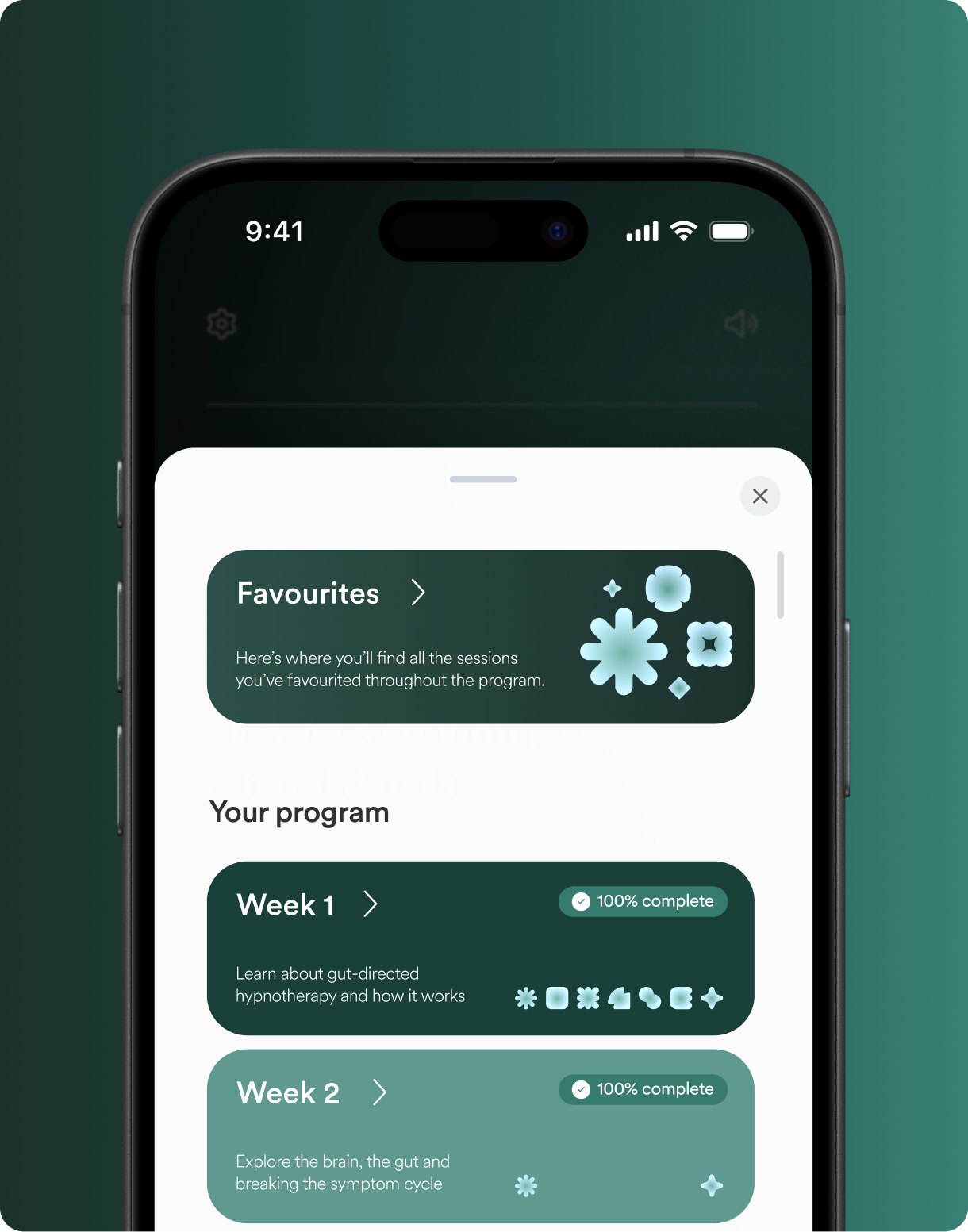
Nerva is a gut-brain therapy program that delivers a structured six-week protocol of gut-directed hypnotherapy, cognitive-behavioral-based education, and breathing techniques designed specifically to calm the gut-brain connection and reduce the visceral sensitivity driving bloating.
In a randomized controlled trial published in the American Journal of Gastroenterology in 2025, 81% of Nerva participants achieved a clinically significant improvement on the IBS Symptom Severity Scale – a validated measure that includes abdominal distension and bloating as core components – compared to 63% in the control group.20
In a separate real-world cohort of over 85,000 Nerva users who reported bloating, abdominal pain, and gas as primary symptoms, the average improvement in those specific symptoms following the program was 48%.21
Each daily session takes around 15–20 minutes and combines gut-directed hypnotherapy, CBT-based education about the gut-brain connection, and breathing techniques that help regulate the nervous system during flare-ups.
Because Nerva targets the underlying nervous system sensitivity rather than symptom management alone, improvements in bloating tend to build progressively over the six weeks and are maintained after the program ends.
Frequently asked questions
Why am I always bloated?
Chronic daily bloating is most commonly caused by visceral hypersensitivity – a sensitized gut nervous system that amplifies normal digestive activity into ongoing pressure and discomfort. Unlike occasional food-triggered bloating, it often has no clear dietary cause and does not resolve between meals.
How do I know if my bloating is IBS, celiac disease, or something else?
IBS bloating is typically accompanied by changes in bowel habits and worsens with stress, whereas bloating from celiac disease is triggered specifically by gluten and accompanied by fatigue and weight loss. A gastroenterologist can confirm a diagnosis through symptom history and targeted testing.
When should I see a doctor about bloating?
Bloating accompanied by unintentional weight loss, blood in the stool, persistent vomiting, or a new abdominal lump requires prompt medical evaluation. Bloating that begins suddenly after age 50 with no prior history also warrants investigation to rule out structural causes.
How long does bloating take to improve with treatment?
Dietary changes like the low FODMAP diet typically reduce bloating within 2–4 weeks,12 while gut-brain therapy like Nerva produces improvements that build progressively as nervous system sensitivity recalibrates. Improvements from gut-brain therapy are maintained after the program ends, making it one of the most durable treatment options for chronic bloating.
Is bloating worse before your period?
Bloating is consistently worse in the week before menstruation because progesterone slows gut transit during the luteal phase, while prostaglandins released during menstruation can trigger cramping and loose stools. Women with IBS often experience a predictable worsening of all gut symptoms in the premenstrual phase.22
What is the difference between bloating and distension?
Bloating is how your stomach feels – tight, full, or under pressure – while distension is when it actually expands and looks bigger. For many people with IBS, the bloating can feel extreme even when nothing is visibly wrong, which is one of the most frustrating and least understood parts of the condition.
References
Jiang X, Locke GR 3rd, Choung RS, et al. Prevalence and risk factors for abdominal bloating and visible distension: a population-based study. Gut. 2008;57(6):756-763.
Gibson PR, Shepherd SJ. Evidence-based dietary management of functional gastrointestinal symptoms: the FODMAP approach. J Gastroenterol Hepatol. 2010;25(2):252-258.
Aziz Q, Quigley EMM. Gut sensing and visceral hypersensitivity. Best Pract Res Clin Gastroenterol. 2010;24(4):545-552.
Mayer EA. Gut feelings: the emerging biology of gut–brain communication. Nat Rev Neurosci. 2011;12(8):453-466.
Fichna J, Storr MA. Brain-gut interactions in irritable bowel syndrome. Front Pharmacol. 2012;3:127.
Ford AC, Sperber AD, Corsetti M, Camilleri M. Irritable bowel syndrome. Lancet. 2020;396(10263):1675-1688.
Lacy BE, Mearin F, Chang L, et al. Bowel disorders. Gastroenterology. 2016;150(6):1393-1407.
Drossman DA. Functional gastrointestinal disorders: history, pathophysiology, clinical features, and Rome IV. Gastroenterology. 2016;150(6):1262-1279.
Ghoshal UC, Shukla R, Ghoshal U. Small intestinal bacterial overgrowth and irritable bowel syndrome: a bridge between functional organic dichotomy. J Neurogastroenterol Motil. 2017;23(4):474-485.
Rubio-Tapia A, Hill ID, Kelly CP, et al. ACG clinical guidelines: diagnosis and management of celiac disease. Am J Gastroenterol. 2013;108(5):656-676.
Halmos EP, Power VA, Shepherd SJ, Gibson PR, Muir JG. A diet low in FODMAPs reduces symptoms of irritable bowel syndrome. Gastroenterology. 2014;146(1):67-75.
Vincenzi M, Del Ciondolo I, Pasquini E, Gennai K, Paolini B. Effects of a low FODMAP diet and specific carbohydrate diet on symptoms and nutritional adequacy of patients with irritable bowel syndrome. J Clin Gastroenterol. 2017;51(10):853-858.
Staudacher HM, Whelan K. The low FODMAP diet: recent advances in understanding its mechanisms and efficacy in irritable bowel syndrome. Gut. 2017;66(8):1517-1527.
Chang L, Sultan S, Lembo A, et al. AGA clinical practice guideline on the pharmacological management of irritable bowel syndrome with constipation. Gastroenterology. 2022;163(1):118-136.
Chey WD, Kurlander J, Eswaran S. Irritable bowel syndrome: a clinical review. JAMA. 2015;313(9):949-958.
Pimentel M, Lembo A. Microbiome and its role in irritable bowel syndrome. Dig Dis Sci. 2020;65(3):829-839.
Ford AC, Lacy BE, Harris LA, Quigley EMM, Moayyedi P. Effect of antidepressants and psychological therapies in irritable bowel syndrome: an updated systematic review and meta-analysis. Am J Gastroenterol. 2019;114(1):21-39.
National Institute for Health and Care Excellence. Irritable bowel syndrome in adults: diagnosis and management. NICE guideline NG212. London: NICE; 2022.
Kinsinger SW. Cognitive-behavioral therapy for patients with irritable bowel syndrome: current insights. Clin Exp Gastroenterol. 2017;10:33-43.
Anderson E, Peters SL, Halmos EP, Gibson PR. Comparison of digitally delivered gut-directed hypnotherapy program with an active control for irritable bowel syndrome. Am J Gastroenterol. 2025;120(2).
Mindset Health. Real-world outcomes data: bloating, abdominal pain and gas symptom improvement. Internal cohort analysis of approximately 85,000 Nerva users. Mindset Health; 2024.
Heitkemper MM, Jarrett M. Irritable bowel syndrome and gender. Gastroenterol Clin North Am. 2003;32(3):885-899.
.jpeg)

.jpeg)