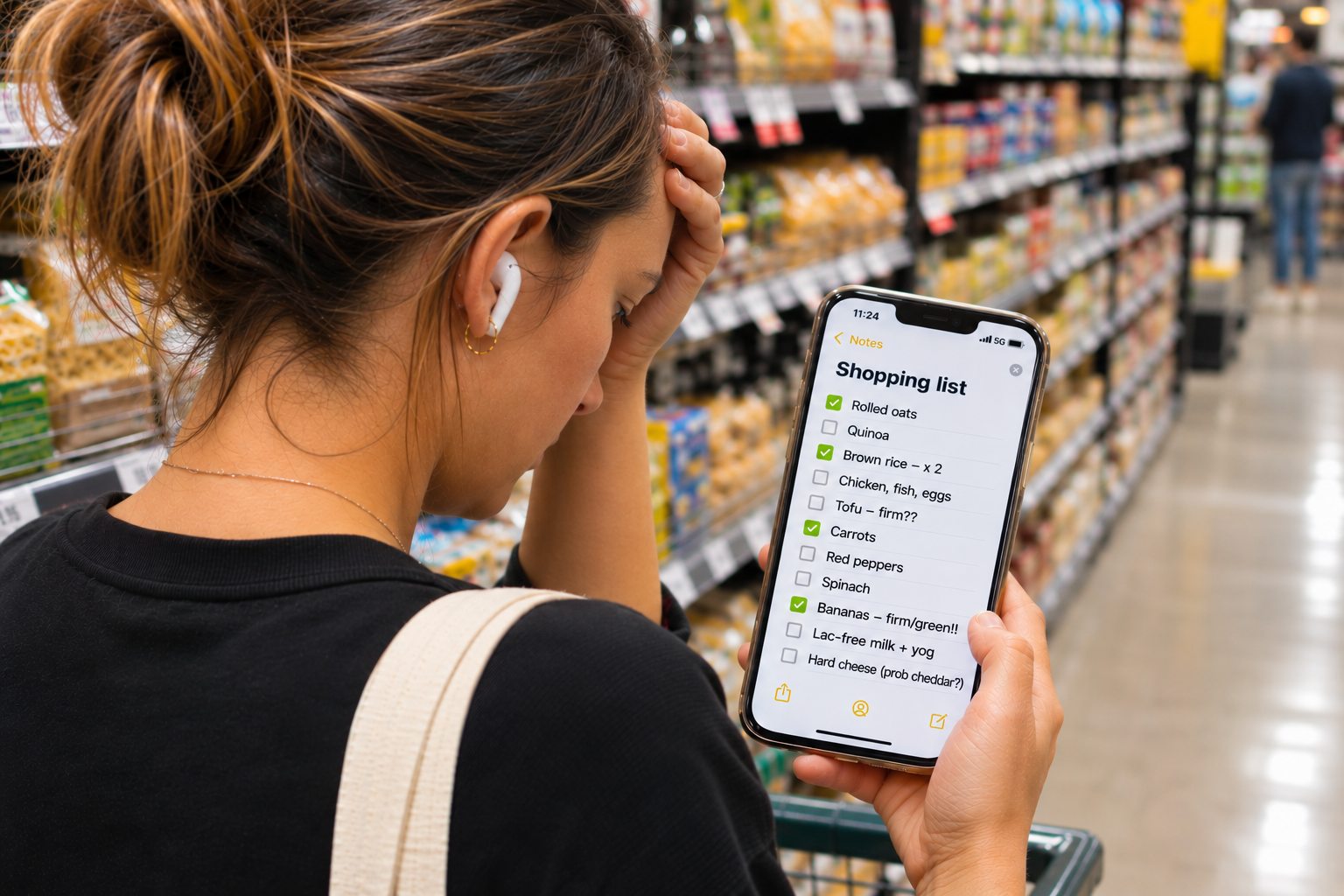
When you contact a provider, ask about cost, how long the waitlist is, and whether they offer telehealth. If the wait is long, put your name down anyway, and start other gut-brain care in the meantime.
What if you can't, or would rather not, see a GI psychology specialist?
If specialist care is hard to reach, or in-person therapy just isn't for you, you can still start gut-brain therapy from home. Digital gut-directed hypnotherapy programs were developed for exactly this situation, and research shows they can help people manage IBS symptoms.⁴ ⁸
Dr. Riehl has described digital therapeutics as a way to improve access for some patients, especially those who would otherwise be on a long waitlist or receive nothing at all.² And in a study by Monash University researchers, people with IBS who completed an app-delivered gut-directed hypnotherapy program saw notable improvements in their symptoms.⁸
A digital program doesn't have to replace in-person care. You can use one while you wait for an appointment, alongside sessions once you're in, or on its own if in-person care just isn't practical for you.
If you're also living with significant anxiety, depression, trauma, or disordered eating, a clinician trained in GI-focused psychological care, or another mental health professional, is the better place to start. Your healthcare provider can help you work out the right fit.
How Nerva can help you manage IBS
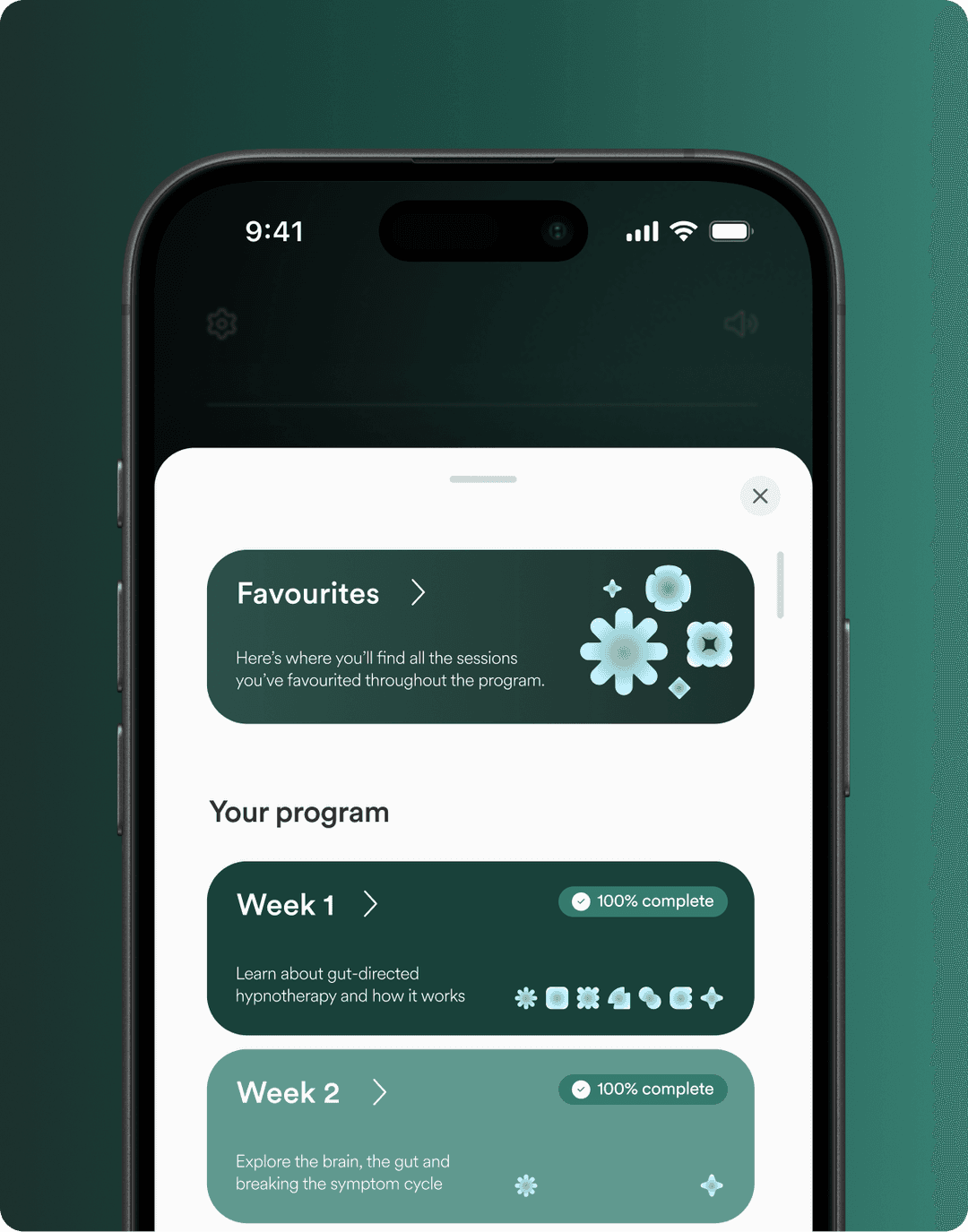
If in-person care isn't an option right now or you'd simply prefer a different approach, Nerva is one way to start gut-brain therapy from home. It's a gut-brain therapy program delivered via an app, developed with gut-directed hypnotherapy researchers from Monash University, including Dr. Simone Peters, a co-creator of Nerva.
You start with a 6-week core program of 15–20 minutes a day, then will have access to the maintenance plan for ongoing support and flare-up management. There's no waitlist, no commute.
In a clinical trial, 81% of people using Nerva saw a meaningful improvement in their IBS symptoms, compared with 63% on a comparison program.⁴ Gut-brain therapy is recommended in major gastroenterology guidelines,⁵ and Nerva is designed to complement your medical care, not replace it. And if you finish the program and it hasn't helped, you can request a refund.
Frequently asked questions
Do you need a referral to see a GI psychology specialist?
Whether you need a referral depends on the clinic, and many private practices let you book directly. Hospital-based GI behavioral health programs are more likely to ask for a referral from a gastroenterologist.
Is GI psychology care covered by insurance?
Coverage for GI psychology care depends on where you live and your plan, and in the US, some specialists bill it under medical benefits rather than mental health benefits. If you'd like to start with a digital program, many people in the US can pay for Nerva with HSA or FSA funds using a letter from their healthcare provider.
Can GI psychology care help with IBS-D or IBS-C?
GI-focused psychological care can help with every type of IBS, including IBS with diarrhea (IBS-D), IBS with constipation (IBS-C), and mixed IBS, because brain-gut therapies target the gut-brain communication behind all of them. The core approaches stay the same whatever your main bowel symptoms are.
Can a GI psychology specialist help if I don't have anxiety or depression?
Specialists in GI-focused psychology help people with gut symptoms whether or not they also live with anxiety or depression, because brain-gut therapies target the communication between your gut and brain. Many people see one purely to get their IBS symptoms under control.
About this analysis: Mindset Health, which makes Nerva, mapped access to in-person GI psychology care using The Rome Foundation's GastroPsych Directory and US academic medical center data in November 2026.
References
Mindset Health. GI psychology access map: distance from US adults to listed in-person GI psychology specialists. Rome Foundation GastroPsych Directory and US academic medical center data, November 2026. Unpublished analysis.
Riehl ME. Limited access to integral care: digital therapeutics show promise of scalable solutions to behavioral interventions. Clin Transl Gastroenterol. 2022;13(1):e00444. doi:10.14309/ctg.0000000000000444
Keefer L, Ballou SK, Drossman DA, Ringstrom G, Elsenbruch S, Ljótsson B. A Rome Working Team report on brain-gut behavior therapies for disorders of gut-brain interaction. Gastroenterology. 2022;162(1):300-315. doi:10.1053/j.gastro.2021.09.015
Anderson EJ, Peters SL, Gibson PR, Halmos EP. Comparison of digitally delivered gut-directed hypnotherapy program with an active control for irritable bowel syndrome. Am J Gastroenterol. 2025;120(2):440-448. doi:10.14309/ajg.0000000000002921
Lacy BE, Pimentel M, Brenner DM, et al. ACG clinical guideline: management of irritable bowel syndrome. Am J Gastroenterol. 2021;116(1):17-44.
The Rome Foundation. GastroPsych Directory. Accessed November 18, 2026. https://romegipsych.org
Peters SL, Yao CK, Philpott H, Yelland GW, Muir JG, Gibson PR. Randomised clinical trial: the efficacy of gut-directed hypnotherapy is similar to that of the low FODMAP diet for the treatment of irritable bowel syndrome. Aliment Pharmacol Ther. 2016;44(5):447-459. doi:10.1111/apt.13706
Peters SL, Gibson PR, Halmos EP. Smartphone app-delivered gut-directed hypnotherapy improves symptoms of self-reported irritable bowel syndrome: a retrospective evaluation. Neurogastroenterol Motil. 2023;35(4):e14533. doi:10.1111/nmo.14533