Key takeaways:
- IBS is a disorder of gut-brain interaction (DGBI) that doesn’t damage the intestines but can significantly impact daily life.
- Symptoms vary by IBS subtype and are often triggered by stress, gut–brain miscommunication, and certain foods.
- Treatment focuses on symptom management, including dietary strategies, medication, and gut-directed hypnotherapy.
IBS is a separate condition from inflammatory bowel diseases (IBD) that may damage to the intestines. IBS rarely will cause intestinal damage and the condition does not increase risk of gastrointestinal cancers. However, IBS may severely affect quality of life and may be treated by drug, dietary and psychological treatments.
What are the symptoms?
IBS, sometimes called 'spastic colon', is a ‘syndrome’ meaning a collection of symptoms. These symptoms may come in various combinations and lengths of time. Some people may experience persistent symptoms, whereas for others they may come and go:
Abdominal pain that improves after pooing
Constipation/diarrhea that may come in alternating patterns
Bloating (1)
Other symptoms that often accompany IBS include:
Tiredness and lack of energy
Farting (flatulence)
Nausea
Backache
Being unable to control when you poo (incontinence) (2)
Types of IBS
Irritable bowel syndrome may be divided into three types, based on whether diarrhea or constipation is predominant:
Diarrhea-predominant IBS (IBS-D). This comes with frequent bowel movements, an urgent need to defecate and stools that are loose and watery. It is the most common subtype of IBS.
Constipation-predominant IBS (IBS-C). This comes with stomach pain, bloating and delayed or infrequent bowel motions. Stools are harder than usual and lumpy.
IBS with mixed habits (IBS-M). This comes with alternating periods of diarrhea and constipation.
Treatments vary between types, so a specific diagnosis from your GP is important. (3)
How common is IBS?
Irritable bowel syndrome is the most common gastrointestinal (GI) disorder and up to 20% of the population will experience IBS in their lifetime. (4) IBS occurs in higher rates among people:
Below the age of 45
With an existing psychological illness
Who are female (5)
Living in a Western country or South America (6)
How is IBS Diagnosed?
There is no diagnostic test for IBS because IBS is a ‘functional’ disorder and presents no physical damage to the bowels. So the diagnosis is made based on the ROME criteria for IBS and used worldwide. These are symptoms of abdominal pain for at least 1 day per week for 3 months and 2 or more of:
Change to abdominal pain with pooing (defecation)
Change in pooing (defecation) frequency
Change in appearance of poo (stools) (7)
What happens at your GP appointment?
A GP will be able to diagnose IBS based on the above criteria. You may be asked about:
What symptoms you have experienced
How often they come
How long symptoms have gone for
When you get them (e.g. after eating)
If you suffer unusual symptoms such as bloody stools or develop IBS later in life, after 50 years old, further testing may be recommended to rule out more serious conditions. (8)
What else could it be?
Several diseases present similar gastrointestinal symptoms to IBS. Your GP may ask for further testing if there are signs of a more serious condition such as:
Celiac disease, an autoimmune disease affecting digestion
Gastroenteritis, gut infection.
Lactose intolerance or other malabsorption syndromes.
Carcinoma of the intestines.
Hormonal disorders such as hypothyroidism or hyperthyroidism.
Inflammatory bowel disease such as Crohn’s disease or ulcerative colitis. (9)
What further tests are available?
If your GP recommends further testing, the following are most common to rule out more serious conditions:
Laboratory tests: Blood or stool samples can be taken to check for evidence of bacteria and intestinal bleeding. This can check for coeliac disease or inflammatory bowel disease.
Upper endoscopy: A cable containing a camera is inserted into the mouth and passed down the oesophagus to view the stomach and upper small intestine to visualize signs of ulcers, bleeding and inflammation.
Imaging tests: Such as X-rays of the abdomen, computerized tomography (CT), magnetic resonance imaging (MRI) to identify more serious gastrointestinal conditions.
Colonoscopy and sigmoidoscopy: A thin and flexible cable with a camera is used to examine parts of the digestive system such as the small and large intestine to find evidence of ulcers or bleeding. (10)
Is IBS the same as IBD?
Irritable bowel syndrome (IBS) shares similar symptoms to inflammatory bowel disease (IBD) - abdominal pain, diarrhea, nausea, and cramping. But IBD is a more serious condition and is associated with physical disease of the bowels including ulcers, rectum or anus, abdominal bleeding, and anemia. The treatments for IBD include anti-inflammatory drugs such as corticosteroids and immune system suppressors which differs from dietary change and psychotherapies used in IBS. It is therefore important to consult a GP if you experience gastrointestinal symptoms. (11)
Where do symptoms of IBS come from?
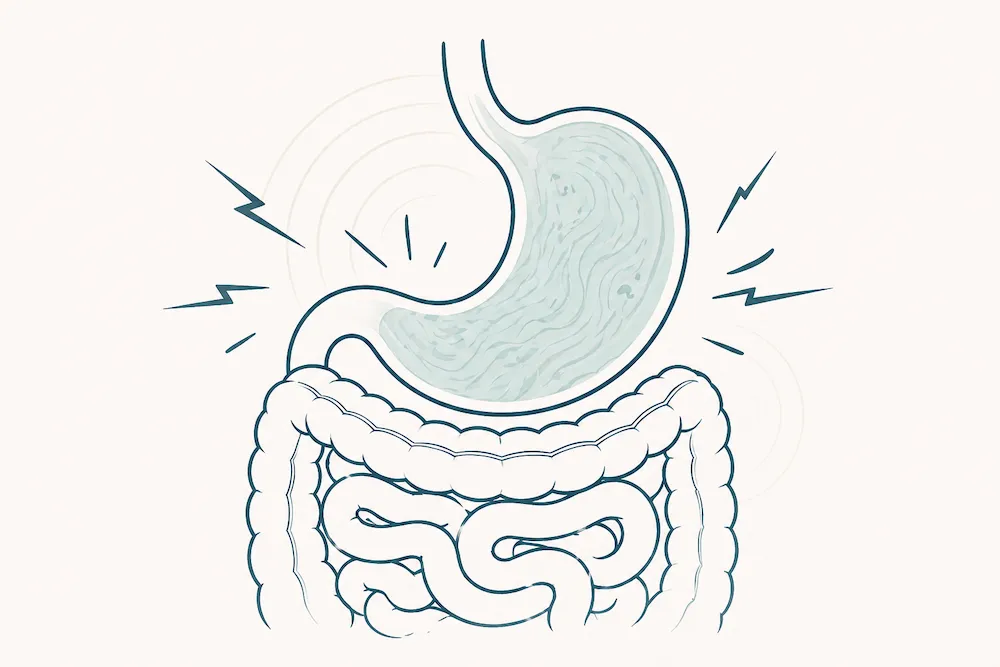
Symptoms of IBS come from miscommunication between the brain and the gut. During digestion, the intestines contract and relax to move contents towards the anus – a process that is usually painless and happens without our awareness. If the intestines become sensitive people may feel more aware of their intestines. This might be painful and lead to physical symptoms of IBS such as cramping and abdominal pain. The altered signals from the brain to the gut may also affect the speed of transit of food through the intestine (motility), leading to constipation or diarrhea. (12)

What Causes IBS?
The exact cause of IBS is not known, as no damage or physical abnormalities of the intestines can be detected in IBS. However, it is believed the gut-brain axis is involved. Factors that appear to play a role include:
Infection. The risk of IBS increases 6-fold following a severe infection of the digestive tract, gastroenteritis, or bacterial overgrowth in the intestines.
Trauma. Childhood psychological and physical abuse is often associated with IBS. Some form of psychological illness occurs prior to IBS in over 60% of patients.
Oversensitivity to pain. Those with IBS feel pain when the intestinal wall is expanded than those without IBS and the threshold of pain is lower in those with IBS.
Nervous system. Poor coordination between the brain and nerves of the digestive tract may cause an overreaction to normal sensations of digestion, and bloating, pain and constipation.
Immune system. People with IBS have more immune cells and inflammation in their intestines, causing pain and diarrhea. This may be linked to the onset of IBS.
Changes to gut bacteria. Millions of bacteria live in the intestines and are important for health. Overgrowth of these ‘good’ bacteria in the small intestine has been linked to diarrhea-predominant IBS.
Antibiotics. Have been shown to increase the risk of developing IBS. (13, 14, 15)
What Triggers IBS?
Once a person has IBS, certain factors may lead to a ‘flare-up’ of symptoms. These include:
Food. Although the connection between food allergy and IBS is not known, certain foods may worsen symptoms of IBS. Foods containing sugars called FODMAPs – fructans, oligosaccharides, disaccharides, monosaccharides and polyols – may exacerbate symptoms by increasing gas production in the intestines.
Stress. Stressful life events or long-term stress may worsen the symptoms of IBS. Stress alters the nerves and hormones that signal the ‘second brain’ in the gut, the enteric nervous system, and affects digestive processes.
Hormones. Hormones such as those involved in the menstrual cycle may trigger symptoms of IBS. This is why women have higher rates of IBS than men and may experience worse symptoms during menstruation. (16, 17, 18)
How is IBS treated?
There is no cure for IBS. Many people with mild IBS do not require treatment. For more severe IBS, many treatments available and involve changes in diet, psychological treatment, or drug treatment. These aim to relieve symptoms of IBS and are listed below:
Medications for IBS
A wide range of medications may improve symptoms of IBS. These include over-the-counter medications such as:
Fiber supplements: such as psyllium (Metamucil) to decrease constipation in constipation-predominant IBS.
Antispasmodic medication: Such as alverine citrate to reduce spasming of the colon and abdominal pain.
Probiotics: These change the bacteria in the gut to alter the speed of contents through the bowel and decrease inflammation. This may improve constipation or diarrhea.
Laxatives: These may be used in constipation-predominant IBS to improve the movement of contents through the intestines.
Stronger medications for IBS may be prescribed by your GP, including:
Antidepressants. Such as tricyclic antidepressants and selective serotonin reuptake inhibitors (SSRIs) in small doses to relieve abdominal pain in IBS. These medications may also improve symptoms of anxiety and depression.
IBS-specific medications. Such as lubiprostone and linaclotide for constipation-predominant IBS and eluxadoline for diarrhea-predominant IBS.
Antidiarrhea medications. Such as loperamide to reduce diarrhea in diarrhea-predominant IBS.
Pain medication. Such as opiates like codeine may relieve abdominal pain, and reduce symptoms of diarrhea. (19, 20)
Dietary therapy for IBS
Making changes to diet can improve symptoms since most people with IBS (90%) report symptoms worsen after eating certain foods. The low FODMAP diet eliminates foods that are not easily broken down by the gut, relieving symptoms. A dietitian will guide you to avoid high FODMAP foods such as:
Vegetables: onion, garlic, leek, broccoli, cauliflower, cabbage, peas, shallots
Fruits: apples, canned fruits, watermelon, peaches, dates, figs, pears
Dairy products: milk, ice-cream, cheeses, whey protein powder
Wheat products: bread, wheat-based breakfast cereals, biscuits, pasta
Legumes: baked beans, chickpeas, kidney beans, lentils, soy
In general, the low FODMAP diet involves 2 phases:
Elimination phase. Removing high FODMAP foods listed above from the diet.
Reintroduction phase. Slowly bringing foods back into the diet, one by one, to see if symptoms reappear. If a food does not trigger symptoms it may be kept in the diet. (21)
Psychological therapies for IBS
A GP may recommend psychological treatments if you have had IBS for a long time, or if other therapies are not working. The mind-body connection has been proposed for IBS and is gaining scientific attention. Stress often worsens IBS symptoms, and these therapies may help relieve symptoms by reducing stress and anxiety:
Gut-directed hypnotherapy. This psychological approach alters how the brain responds to signals from the gut. After hypnotic induction, the person with IBS is prompted to visualize their gut as a series of tubes with free-flowing contents, which helps restore bowel activity. Hypnotherapy has been shown equally effective to the low FODMAP diet for IBS in a 2016 trial, without requiring diet change (22), as is the gold-standard therapy for IBS. You can access gut-directed hypnotherapy at home using our program, Nerva.
Cognitive-behavioral therapy. People with IBS are taught how to challenge negative thoughts about their symptoms and adopt a more positive outlook. This helps to reduce rumination about IBS which has been shown to worsen symptoms. A range of techniques are used in this therapy such as graded exposure towards fearful stimuli, and activity scheduling. (23)
Relaxation techniques. Eastern practices such as yoga and meditation have been shown effective in reducing symptoms of IBS. These treatments are thought to act through the gut-brain connection to relieve tension and pain in the abdomen. Exercises such as diaphragmatic breathing, progressive muscle relaxation, and visualizing positive imagery, may also relieve symptoms. (24, 25)
What is the outlook for IBS?
IBS can be a very distressing condition and since the exact cause is not known there is no cure. As a chronic condition, patients often suffer from IBS for many years. However, understanding IBS and seeking appropriate treatment for your subtype can reduce the severity of symptoms.
What is science investigating?
Modern science is delving into the gut-brain connection to identify the cause of, and discover new treatments for IBS. In 2016 researchers showed hypnotherapy is comparable to the low FODMAP diet in relieving symptoms of IBS. A study from 2019 showed that hypnotherapy delivered online via Skype was almost as effective as face-to-face treatment. These represent the cutting edge in IBS research, and it is likely more psychological based therapies will be available on digital formats in the future. (22, 26)
A Word from Mindset Health
IBS is a chronic condition, and common symptoms are abdominal pain, cramping, bloating and flatulence. Diagnosis of irritable bowel syndrome is made based on abdominal pain and a change of bowel habits, either constipation or diarrhea. Risk factors are being female, young and living in a western country, being post-infectious and family history may also play a role. IBS treatment may involve medications such as anti-diarrheal, peppermint oil, antispasmodics such as dicyclomine, lubiprostone, tricyclic antidepressants. However, due to the side effects of medication, psychological therapies such as gut-directed hypnotherapy and lifestyle changes such as adopting a low FODMAP diet and keeping a food diary may be preferred. If a person experiences rapid weight loss, bloody stools or other severe symptoms, the cause may not be a functional gastrointestinal disorder but a more serious condition. In this case, blood tests, colonoscopy and further testing may diagnose Crohn's disease or ulcerative colitis. Additional treatment options may be presented to provide the best health care for these inflammatory bowel diseases (IBD) by a gastroenterologist.
References
1. Bommelaer, G., Poynard, T., Le Pen, C., Gaudin, A.F., Maurel, F., Priol, G., Amouretti, M., Frexinos, J., Ruszniewski, P. and El Hasnaoui, A., 2004. Prevalence of irritable bowel syndrome (IBS) and variability of diagnostic criteria. Gastroenterologie clinique et biologique, 28(6-7), pp.554-561. Link
2. Azpiroz, F., Dapoigny, M., Pace, F., Müller-Lissner, S., Coremans, G., Whorwell, P., Stockbrügger, R.W. and Smout, A., 2000. Nongastrointestinal disorders in the irritable bowel syndrome. Digestion, 62(1), pp.66-72. Link
3. Kibune-Nagasako, C., García-Montes, C., Silva-Lorena, S.L. and Aparecida-Mesquita, M., 2016. Irritable bowel syndrome subtypes: Clinical and psychological features, body mass index and comorbidities. Revista Española de Enfermedades Digestivas, 108(2), pp.59-64. Link
4. Canavan, C., West, J. and Card, T., 2014. The epidemiology of irritable bowel syndrome. Clinical epidemiology, 6, p.71. Link
5. Nam, S.Y., Kim, B.C., Ryu, K.H. and Park, B.J., 2010. Prevalence and risk factors of irritable bowel syndrome in healthy screenee undergoing colonoscopy and laboratory tests. Journal of neurogastroenterology and motility, 16(1), p.47. Link
6. Chey, W.D., Kurlander, J. and Eswaran, S., 2015. Irritable bowel syndrome: a clinical review. Jama, 313(9), pp.949-958. Link
7. Drossman, D.A. and Dumitrascu, D.L., 2006. Rome III: New standard for functional gastrointestinal disorders. Journal of Gastrointestinal and Liver Diseases, 15(3), p.237. Link
8. Bernstein, C.N., Fried, M., Krabshuis, J.H., Cohen, H., Eliakim, R., Fedail, S., Gearry, R., Goh, K.L., Hamid, S., Khan, A.G. and LeMair, A.W., 2010. World Gastroenterology Organization Practice Guidelines for the diagnosis and management of IBD in 2010. Inflammatory bowel diseases, 16(1), pp.112-124. Link
9. Schmulson, M.W. and Chang, L., 1999. Diagnostic approach to the patient with irritable bowel syndrome. The American journal of medicine, 107(5), pp.20-26. Link
10. Kim, Y.G. and Jang, B.I., 2013. The role of colonoscopy in inflammatory bowel disease. Clinical endoscopy, 46(4), p.317. Link
11. Lennard-Jones, J.E., 1989. Classification of inflammatory bowel disease. Scandinavian Journal of Gastroenterology, 24(sup170), pp.2-6. Link
12. Zhou, Q. and Verne, G.N., 2011. New insights into visceral hypersensitivity—clinical implications in IBS. Nature Reviews Gastroenterology & Hepatology, 8(6), p.349. Link
13. Thabane, M., Kottachchi, D.T. and Marshall, J.K., 2007. Systematic review and meta‐analysis: the incidence and prognosis of post‐infectious irritable bowel syndrome. Alimentary pharmacology & therapeutics, 26(4), pp.535-544. Link
14. Öhman, L. and Simrén, M., 2013. Intestinal microbiota and its role in irritable bowel syndrome (IBS). Current gastroenterology reports, 15(5), p.323. Link
15. Spiller, R., Aziz, Q., Creed, F., Emmanuel, A., Houghton, L., Hungin, P., Jones, R., Kumar, D., Rubin, G., Trudgill, N. and Whorwell, P., 2007. Guidelines on the irritable bowel syndrome: mechanisms and practical management. Gut, 56(12), pp.1770-1798. Link
16. Lackner, J.M., Brasel, A.M., Quigley, B.M., Keefer, L., Krasner, S.S., Powell, C., Katz, L.A. and Sitrin, M.D., 2010. The ties that bind: perceived social support, stress, and IBS in severely affected patients. Neurogastroenterology & Motility, 22(8), pp.893-900. Link
17. Fukudo, S. and SUZUKI, J., 1987. Colonic motility, autonomic function, and gastrointestinal hormones under psychological stress on irritable bowel syndrome. The Tohoku journal of experimental medicine, 151(4), pp.373-385. Link
18. Halmos, E.P., Power, V.A., Shepherd, S.J., Gibson, P.R. and Muir, J.G., 2014. A diet low in FODMAPs reduces symptoms of irritable bowel syndrome. Gastroenterology, 146(1), pp.67-75. Link
19. Rahimi, R., Nikfar, S., Rezaie, A. and Abdollahi, M., 2009. Efficacy of tricyclic antidepressants in irritable bowel syndrome: a meta-analysis. World journal of gastroenterology: WJG, 15(13), p.1548. Link
20. Johnston, J.M., Kurtz, C.B., MacDougall, J.E., Lavins, B.J., Currie, M.G., Fitch, D.A., O'Dea, C., Baird, M. and Lembo, A.J., 2010. Linaclotide improves abdominal pain and bowel habits in a phase IIb study of patients with irritable bowel syndrome with constipation. Gastroenterology, 139(6), pp.1877-1886. Link
21. Shepherd, S.J., Halmos, E. and Glance, S., 2014. The role of FODMAPs in irritable bowel syndrome. Current Opinion in Clinical Nutrition & Metabolic Care, 17(6), pp.605-609. Link
22. Peters, S.L., Yao, C.K., Philpott, H., Yelland, G.W., Muir, J.G. and Gibson, P.R., 2016. Randomised clinical trial: the efficacy of gut‐directed hypnotherapy is similar to that of the low FODMAP diet for the treatment of irritable bowel syndrome. Alimentary pharmacology & therapeutics, 44(5), pp.447-459. Link
23. Chilcot, J. and Moss-Morris, R., 2013. Changes in illness-related cognitions rather than distress mediate improvements in irritable bowel syndrome (IBS) symptoms and disability following a brief cognitive behavioural therapy intervention. Behaviour research and therapy, 51(10), pp.690-695. Link
24. Keefer, L. and Blanchard, E.B., 2002. A one year follow-up of relaxation response meditation as a treatment for irritable bowel syndrome. Behaviour research and therapy, 40(5), pp.541-546. Link
25. Kuttner, L., Chambers, C.T., Hardial, J., Israel, D.M., Jacobson, K. and Evans, K., 2006. A randomized trial of yoga for adolescents with irritable bowel syndrome. Pain Research and Management, 11(4), pp.217-224. Link
26. Hasan, S.S., Pearson, J.S., Morris, J. and Whorwell, P.J., 2019. Skype hypnotherapy for irritable bowel syndrome: effectiveness and comparison with face-to-face treatment. International Journal of Clinical and Experimental Hypnosis, 67(1), pp.69-80. Link