Once you have been diagnosed with IBS, your doctor will begin to discuss IBS-specific treatment options with you. While some doctors are up-to-date with research on natural IBS treatments, such as hypnotherapy, some are not. Many doctors may initially suggest diet changes, such as a low FODMAP diet, or drugs to manage your IBS.
Some common IBS medications include:
Laxatives
Anti-diarrheal medicines
Anticholinergic medications: to prevent muscle spasms.
SSRI/Tricyclic antidepressants: antidepressants that can help with IBS and depression.
Pain medications
IBS specific medications: such as Eluxadoline (Viberzi) and Alosetron (Lotronex)
These medications can help relieve IBS symptoms. However, like any medication, there can be unwanted side effects. For example, while some antidepressants reduce IBS pain by inhibiting neurons that control the intestines, they can also cause drowsiness, blurred vision, dizziness, and dry mouth.
When talking to your doctor about treatment options, make sure you're prepared to ask the right questions, and take notes. Bring a pen and notepad with you (or use an app on your phone) to write down their advice.
Some things you might want to ask include:
How will this medication help with my symptoms?
What are the side effects?
How long/how often will I have to take this medication?
What are the alternatives? Are they as effective?
Engage your doctor in a conversation and ensure your questions are answered satisfactorily.
How should I talk to my doctor about gut-directed hypnotherapy?
If you are interested in trying out gut-directed hypnotherapy, make sure you ask them about it, as your doctor might assume you only want to try IBS drugs or diets.
There’s no need to feel uncomfortable bringing up hypnotherapy for IBS in your appointment. Firstly, it’s important that you have an active interest in your health, no one knows your condition better than you! Second, hypnotherapy is a widely accepted and respected practice in the medical community.
Modern use of therapeutic hypnosis dates back hundreds of years, with the First International Congress for Experimental and Therapeutic Hypnotism taking part as early as 1889. Many modern studies have supported hypnotherapy as a safe and effective complementary treatment for various health conditions. What's more, a recent study even proved gut-directed hypnotherapy was as effective as a low FODMAP diet.
Start the conversation by asking your doctor the following questions:
What do you know about gut-directed hypnotherapy?
Have you recommended it in the past? Why/why not?
Can you help me find a gut-directed hypnotherapist?
Can you recommend an at-home gut-directed hypnotherapy option, such as an app or a recording?
If your doctor is familiar with hypnotherapy, they will be able to:
Explain what hypnotherapy is and how it works
Suggest where to find a professionally trained hypnotherapist
Tell you what type of hypnotherapy might be best for you, e.g., group therapy vs. individual session
Assess if you might not be suitable for hypnotherapy treatment. Some people shouldn't use hypnosis, for instance, if they have psychosis or certain types of personality disorders.
Suggest some self-hypnosis apps or recordings that you could use at home
If you are already using hypnotherapy for IBS, tell your doctor about your experience so that they can make a note of any improvements or concerns. In contrast, if your doctor doesn't know much about hypnotherapy, you can still inform them about your decision to try IBS hypnotherapy and report back to them about your results.
Will my doctor give me a hypnotherapy prescription?
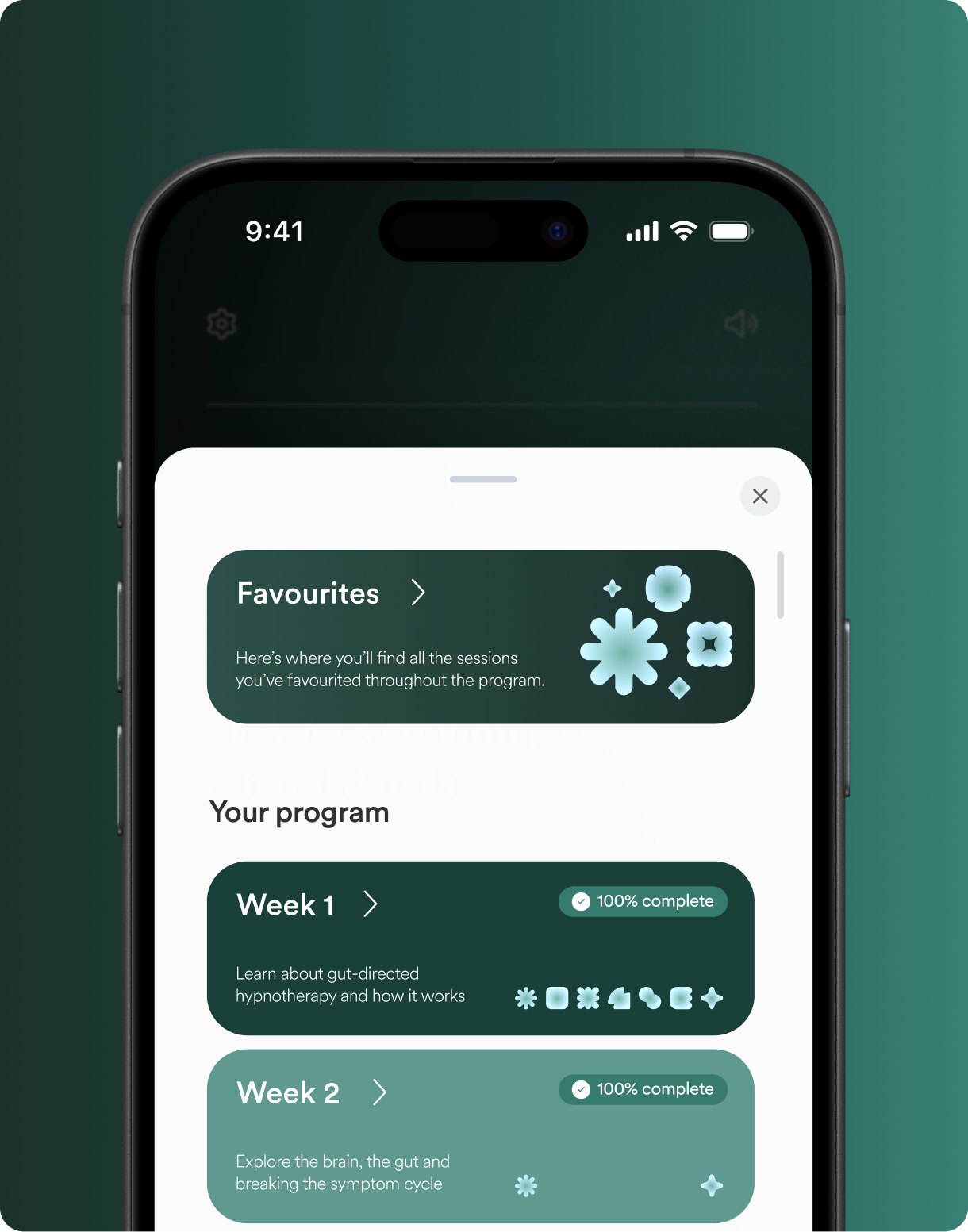
Not as such, no. However, they might provide a referral to a psychologist, specialist, or counselor practicing hypnotherapy. They may also refer you to a specific app, such as Nerva, which works with doctors to help their patients find cost-effective at-home hypnotherapy for IBS.
Can I also take medication or diet while using hypnotherapy for IBS?
Yes, you can. One great thing about hypnotherapy is that it has been proven to work as a stand-alone treatment or as a complementary management option for IBS. Your doctor will be able to help you decide which is the right option for you.
Sometimes after completing a hypnotherapy program, some people are able to come off medications they previously used to manage their IBS or eat foods that used to trigger their symptoms. However, it’s important to note that any changes in your diet or medical regimen should always be approved by your doctor first.
The Wrap Up
Talking to your doctor about your IBS and treatment options is a positive step towards taking control of your IBS. While getting an accurate IBS diagnosis can be difficult, it’s easy to talk to your doctor about trying gut-directed hypnotherapy. You can ask them for a referral to an in-person hypnotherapist or for a recommendation for an at-home gut-directed hypnotherapy app. Remember that you deserve to have your symptoms taken seriously and that advocating for your gut-health is one of the best things you can do on your journey to feeling better.
References
Chertok L. Theory of hypnosis since the first International Congress, 1889. Am J Psychother. 1967;21(1):62-73. doi:10.1176/appi.psychotherapy.1967.21.1.62
IBS Global Impact Report 2018. Badgut.org. https://badgut.org/wp-content/uploads/IBS-Global-Impact-Report.pdf. Published 2018. Accessed December 15, 2020.
Irritable bowel syndrome - Diagnosis and treatment - Mayo Clinic. Mayoclinic.org. https://www.mayoclinic.org/diseases-conditions/irritable-bowel-syndrome/diagnosis-treatment/drc-20360064. Published 2020. Accessed December 15, 2020.
Häuser W, Hagl M, Schmierer A, Hansen E. The Efficacy, Safety and Applications of Medical Hypnosis. Dtsch Arztebl Int. 2016;113(17):289-296. doi:10.3238/arztebl.2016.0289
Hypnotherapy. nhs.uk. https://www.nhs.uk/conditions/hypnotherapy/. Published 2020. Accessed December 15, 2020.
Saha L. Irritable bowel syndrome: pathogenesis, diagnosis, treatment, and evidence-based medicine. World J Gastroenterol. 2014;20(22):6759-6773. doi:10.3748/wjg.v20.i22.6759
Peters SL, Yao CK, Philpott H, Yelland GW, Muir JG, Gibson PR. Randomised clinical trial: the efficacy of gut-directed hypnotherapy is similar to that of the low FODMAP diet for the treatment of irritable bowel syndrome. Aliment Pharmacol Ther. 2016;44(5):447-459. doi:10.1111/apt.13706
Irritable bowel syndrome - Diagnosis and treatment - Mayo Clinic. Mayoclinic.org. https://www.mayoclinic.org/diseases-conditions/irritable-bowel-syndrome/diagnosis-treatment/drc-20360064. Published 2020. Accessed December 15, 2020.