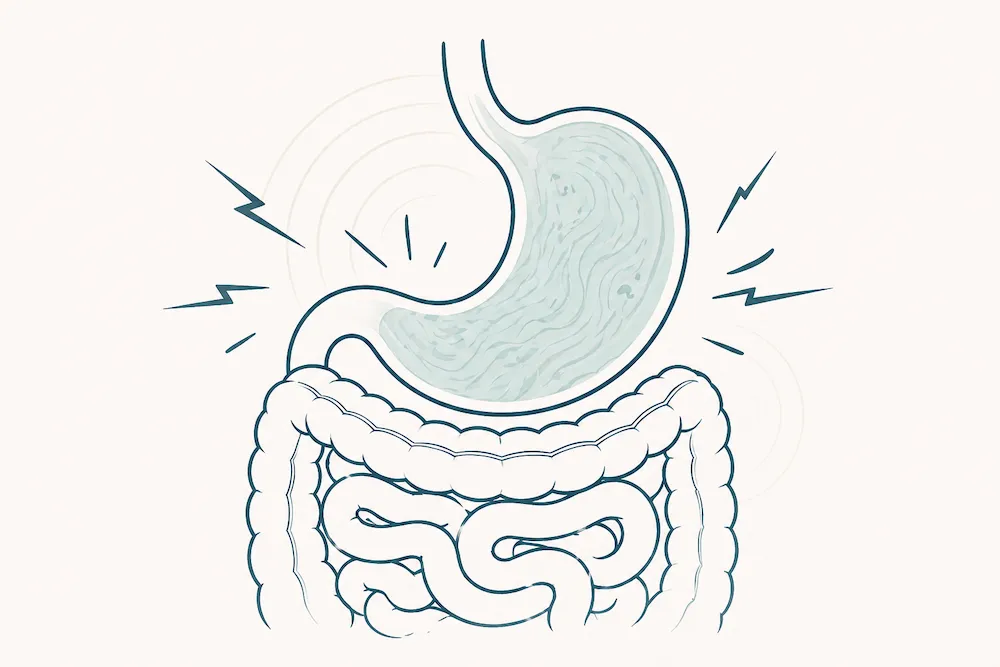
Learning to live with IBS wasn’t easy for Libby. Each solution she tried often brought nothing more than temporary relief. She continued to struggle with the day-to-day issues that IBS can bring on.
“Oh my gosh, it was always the urgency, the urgency to have a bowel movement was always there. And then there was the bloating, and I had heartburn on and off.”
Libby also experienced gastroesophageal reflux disease (GERD), which meant her muscles at the bottom of her esophagus were not working correctly, leading to acid reflux.
“Honestly, once food entered my mouth, everything felt like it never went the way it should. That’s really how I would describe my whole situation.
“Though early on it wasn’t painful, but it was annoying. It was embarrassing and uncomfortable, and I felt a lot of uncertainty.
“Because I was untreated for so many years, I ended up with SIBO as well, and that was painful.”
Small intestinal bacterial overgrowth (SIBO) is an under-recognized problem for people like Libby. It often leads to painful abdominal bloating, gas, distension, and diarrhea. Usually, SIBO is treated with antibiotics that work to wipe out bacteria in the small intestine, which can provide relief from painful symptoms.
“With the SIBO, often within 10 minutes of eating, I’d look like I was three months pregnant. And other changes started happening too, like instead of having diarrhea, I’d have chronic constipation. I was always back and forth with those symptoms.
“So, with the bloating, the gas, the pain, it was just total discomfort. And the SIBO was reoccurring for six years. It felt like all of these different gut issues were just circling around my IBS.”
Libby continued on a path of trial and error with her naturopath and tried things like magnesium and an elemental diet, which involves replacing solid foods with liquid nutrients.
“I tried all kinds of things to calm everything down and have what I’d call a normal schedule.”
Perhaps the most challenging part of her experience was Libby said her IBS held her back from living her life.
“I missed out on social things all the time because of my gut. I just didn’t feel like I could do things; I was always feeling uncomfortable or unwell. It was so challenging.
“If I had to rate the quality of my life out of 10 at this time, I’d say I was around a three. I remember telling my husband, ‘I can’t live like this forever’. It was just a constant struggle and it wore me down.”
Discovering Nerva
“I did lots of research on my own throughout my journey,” Libby said. “I read about hypnotherapy and talked to my naturopath about it, who thought it was a great idea. At this point, she didn’t really have anywhere else to steer me.
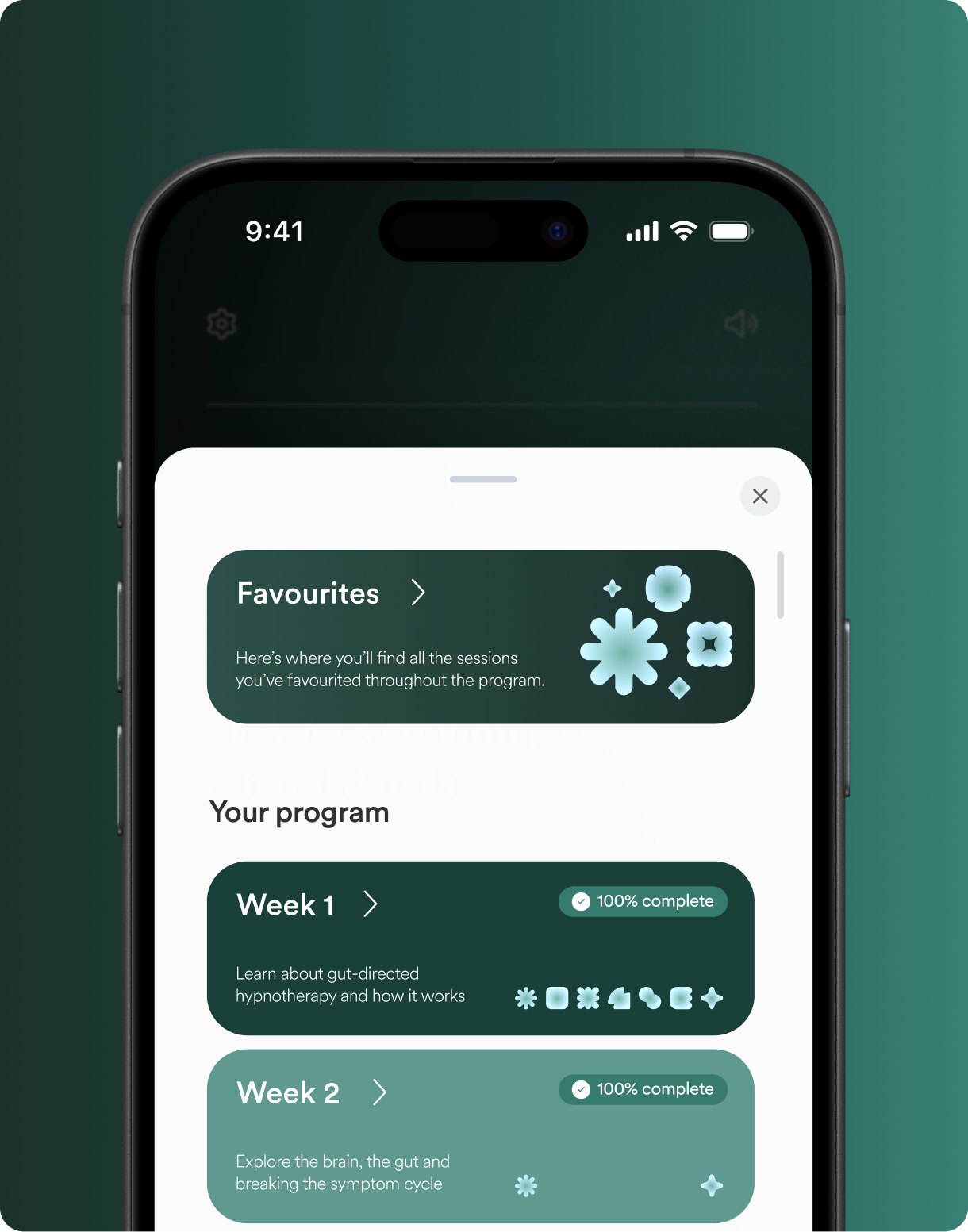
“I saw an ad on Facebook for the Nerva program. I started to learn more about it and I read through all of the reviews. I like reading about other people who are experiencing IBS and on the same journey.
“Nerva sounded intriguing and I thought I’d give it a try. I’d wanted to do something similar and I just hadn’t found a program till now.”
The benefits of gut-directed hypnotherapy
Libby said there have been so many benefits to working her way through the Nerva program.
“I like how easy it is to do and it’s really relaxing. But my favorite thing is how I gradually saw a change in myself.
“I thought, ‘Wow, I’m not feeling anxious about leaving the house’. This almost felt like a weird discovery as it was a subtle change. I didn’t even realize it at first. And then I was feeling the best I’ve felt in 26 years.
“Nerva really helped with my stress overall, and it helps me sleep. It helped me calm my mind.
“Even my husband has commented that I’m much better.
“Plus, I haven’t really had a flare-up for several months, my SIBO hasn’t returned, and I don’t have any pain.”
Moving forward with IBS
“I wish more health care providers knew about hypnotherapy. It’s inexpensive, it’s easy to do, and it works. I cannot tell you the amount of time and money that I’ve spent on my pursuit to feel better. It’s been nothing but diet and pills and supplements and more diets, it’s been agonizing. Finding hypnotherapy earlier in this journey could save everyone a lot of heartache.
“And for Nerva to just fall into my lap, so to speak, is incredible. It’s so fascinating to me how it works. Though I still think there’s so much more to explore with the whole mind-gut relationship.”
*Name changed
References
Borghi C, Dell'Atti L. Pelvic congestion syndrome: the current state of the literature. Arch Gynecol Obstet. 2016;293(2):291-301. doi:10.1007/s00404-015-3895-7
Rao SSC, Bhagatwala J. Small Intestinal Bacterial Overgrowth: Clinical Features and Therapeutic Management. Clin Transl Gastroenterol. 2019;10(10):e00078. doi:10.14309/ctg.0000000000000078
Rezaie A, Pimentel M, Rao SS. How to Test and Treat Small Intestinal Bacterial Overgrowth: an Evidence-Based Approach. Curr Gastroenterol Rep. 2016;18(2):8. doi:10.1007/s11894-015-0482-9
.webp)


.jpeg)