.webp)

Key takeaways:
- Gut-brain disorders are real, medically recognized conditions, clear test results are a clue, not evidence that nothing is wrong.
- Symptoms are caused by how the gut-brain system is functioning, not by structural damage or disease.
- When gut nerves become hypersensitive, normal digestive activity is felt more strongly, a process called visceral hypersensitivity.
- Food and stress act as triggers because they pass through a system already on high alert, not because they are the underlying cause.
A gut-brain disorder (also known clinically as a disorder of gut-brain interaction, or DGBI) is a condition where the communication system between the gut and the brain becomes more reactive – causing real symptoms like pain, bloating, diarrhea, and constipation, even when tests come back normal.
The most confusing part of experiencing these symptoms is being told everything looks healthy while still feeling unwell. But in gut-brain disorders, a clear test result is actually an important clue – it tells us the problem isn't damage or disease. It's how the system is functioning.
The simplest way to understand gut-brain disorders
The short animation below maps out exactly how this works. If you've just been diagnosed or are still trying to make sense of your symptoms, it's a good place to start.
Full video transcript available below
What is a gut-brain disorder?
The most confusing part of experiencing gut symptoms is being told everything looks healthy while still feeling unwell.
In gut-brain disorders – also known clinically as disorders of gut-brain interaction, or DGBI – clear test results are often an important clue.
They tell us that the problem isn't damage or disease. It's how your system is functioning.
That's why the most important thing to know first is this: what you're feeling is real. Your symptoms aren't imagined or exaggerated.
So let's map this out.
Your gut and your brain are connected through a two-way communication superhighway called the gut-brain axis. It normally runs quietly in the background, regulating your digestion, sensation, and how your body responds to stress.
In gut-brain disorders, this system is still working. It's just become more reactive.
The nerves in and around the gut become hypersensitive. So normal digestive signals are felt more strongly, even when nothing harmful is happening. This is known as visceral hypersensitivity.
The brain may then pay more attention to these signals and respond by sending stronger signals back to the gut – which can further amplify gut responses.
Over time, this can drive symptoms like pain, bloating, diarrhea, or constipation.
Food and stress can act as triggers – not because they're the underlying problem, but because they move through a system that's already on high alert.
Here's the good news: systems like this can be regulated.
Your gut issues were never all in your head. And understanding that is a powerful step forward.
What causes gut-brain disorder symptoms?
Your gut and brain are connected through a two-way communication system called the gut-brain axis. Under normal conditions, it runs quietly in the background – regulating digestion, sensation, and how your body responds to stress.¹ In gut-brain disorders, this system is still working. It has just become more reactive.
The nerves in and around the gut become hypersensitive, so normal digestive signals – stretching, gas, movement – are felt more strongly than they should be. This is called visceral hypersensitivity.² When the brain registers these amplified signals, it sends stronger signals back to the gut, which further amplifies symptoms. Over time, this feedback loop drives pain, bloating, diarrhea, and constipation.
Do food and stress cause gut-brain disorders?
Food and stress are common triggers – not the underlying cause. They create movement, gas, and pressure in the gut that most people never notice. In a hypersensitive system, those same ordinary processes are felt far more intensely. This is why managing diet alone rarely resolves symptoms long term.³
How is a gut-brain disorder treated?
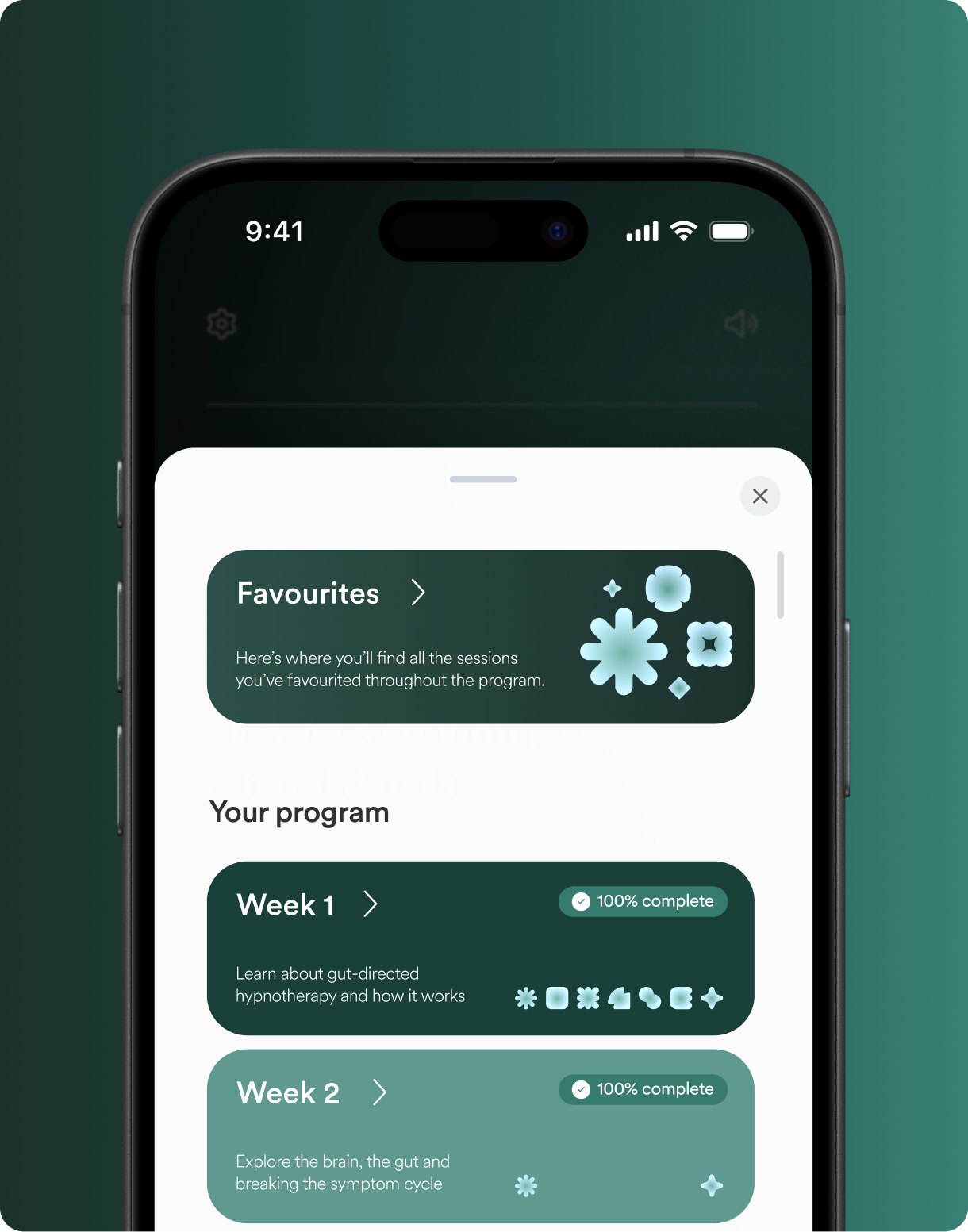
Nerva is a gut-brain therapy program designed to target the hypersensitivity driving symptoms – not just the triggers. Through daily gut-directed hypnotherapy sessions over six weeks, it works to calm the gut-brain signaling system and restore more balanced communication. In a randomized controlled trial at Monash University, 81% of participants achieved clinically significant improvement in IBS symptoms, and 71% had a clinically significant reduction in abdominal pain.⁴ Major gastroenterology guidelines – including those from the American College of Gastroenterology and the American Gastroenterological Association – now recommend gut-brain therapy as a first-line treatment, alongside diet and medication.
Frequently asked questions
What are the symptoms of a gut-brain disorder?
Gut-brain disorder symptoms include abdominal pain, bloating, diarrhea, constipation, nausea, and urgency – driven by heightened nerve sensitivity in the gut rather than any structural damage. This is why symptoms can be severe even when scans and tests show nothing wrong.
Why do my test results keep coming back normal?
Normal test results in gut-brain disorders confirm there's no structural disease present – not that nothing is wrong. The issue is how the gut-brain system is functioning, which standard imaging and bloodwork aren't designed to detect.
Is a gut-brain disorder the same as IBS?
IBS is the most common gut-brain disorder, but the category also includes functional dyspepsia, functional constipation, and reflux hypersensitivity. All are defined by altered gut-brain signaling rather than visible disease.
Can a gut-brain disorder be cured?
Gut-brain disorders are not currently curable, but many people achieve significant and lasting improvement – particularly with treatments that target the nervous system directly rather than just managing triggers.
References
Rome Foundation. What is a disorder of gut-brain interaction (DGBI)? Accessed April 2026. https://theromefoundation.org/what-is-a-disorder-of-gut-brain-interaction-dgbi/
Tian S, Zhang H, Chen S, Wu P, Chen M. Global research progress of visceral hypersensitivity and irritable bowel syndrome: bibliometrics and visualized analysis. Front Pharmacol. 2023;14:1175057. doi:10.3389/fphar.2023.1175057
Bellini M, Tonarelli S, Nagy AG, et al. Low FODMAP diet: evidence, doubts, and hopes. Nutrients. 2020;12(1):148. doi:10.3390/nu12010148
Anderson EJ, Peters SL, Gibson PR, Halmos EP. Comparison of digitally delivered gut-directed hypnotherapy program with an active control for irritable bowel syndrome. Am J Gastroenterol. 2025;120(2):440–448. doi:10.14309/ajg.0000000000002921
.jpeg)

.jpeg)