.webp)
.webp)
Key takeaways:
- Finding the right IBS treatment can take some trial and error, with options spanning over-the-counter remedies, antidepressants, dietary changes, and mind-body interventions.
- Over-the-counter options like psyllium fiber, probiotics, laxatives, and anti-diarrheal medications are affordable, accessible, and backed by research, though not all suit long-term use.
- Numerous studies report the low FODMAP diet reduced IBS symptoms in 70% of people, though the diet is very restrictive and best navigated with a dietitian.
- Scientists found gut-directed hypnotherapy effective for between 70-80% of people with IBS, with six weeks of sessions comparable to following a low FODMAP diet.
Determining which IBS treatment is right for you can take a bit of trial and error. Treatments to investigate include accessible over-the-counter options, antidepressants to target your depression, implementing dietary changes, and a range of mind-body interventions.
Over-the-counter IBS treatments
Over-the-counter treatments are easy to access and affordable. They are also backed by science, with researchers confirming these options can all play a significant role in your IBS treatment plan.
Fiber: Fiber such as psyllium husk powder is an effective go-to for those of you trying to manage constipation. It’s been proven to help with blockages and has other potential benefits like minimizing your cardiovascular disease risk and lowering your cholesterol. Try Metamucil or Fybogel, or sprinkling psyllium husk powder on your cereal or in a smoothie.

Probiotics: These live microorganisms can bring relief by altering your gut’s flora, which helps regulate the function and speed at which contents move through your bowel. The research reports that probiotics may also reduce depression and anxiety by preventing your body from releasing inflammatory signals. Try probiotic capsules or look for yogurts that are high in probiotics. However, not all probiotics are created equal, so speak to your healthcare provider for recommendations.
Laxatives: Consider trying these if you have constipation-predominant IBS. The fiber in bulk-forming laxatives like Dulcolax helps draw water to your intestines, making your stool easier to pass. However, Harvard Medical School advises you don’t “bomb your bowel” with laxatives. Their advice is to chat to your doctor if you have chronic constipation as laxatives aren’t meant to be used in the long term due to serious side effects.
Anti-diarrheal medications: With up to 4% of the general population experiencing IBS with diarrhea, these are a good treatment option to consider. Research has found that those of you with IBS-D (diarrhea) may have higher levels of inflammatories that interfere with the way your digestive tract absorbs water in your stool. Medication like Imodium will help slow down the speed of contents through your bowel, firming up your stool by helping you absorb more water. However, keep in mind research has found anti-diarrhea medication might not help with your abdominal pain, and it isn’t a cure-all for everyone.
Treat your IBS with antidepressants
The rate of lifetime depression for people with IBS is 60%, which is three times higher than for those not living with IBS. Unfortunately, this means that for many, depression and IBS go hand in hand.
For people suffering from major depression, their rate of IBS is 27%, which is almost double the normal rate, illustrating further the deeply rooted connection between mood disorders and your digestive system.
Chat to your doctor about whether antidepressants are right for you. The two types commonly prescribed are tricyclic antidepressants and selective serotonin reuptake inhibitors (SSRIs).

Tricyclic antidepressants: If diarrhea is a particular issue for you, as well as abdominal pain, tricyclics such as Desipramine (Norpramin) or Nortriptyline (Pamelor) can be used to treat your IBS symptoms. However, keep an eye out for side effects, including difficulty sleeping and urinating, dry mouth, dizziness, and sexual difficulties.
SSRIs: Speak to your doctor about SSRIs if you have constipation-predominant IBS. SSRIs can treat your depression and come with fewer side effects compared to other antidepressants.
Tame IBS by changing your diet
Since researchers at Monash University first devised the low FODMAP diet, it’s become a reliable science-backed treatment recommendation for managing IBS symptoms.
Fermentable Oligosaccharides, Disaccharides, Monosaccharides, and Polyols (FODMAPs) are the hard-to-pronounce carbohydrates that may be making your IBS worse. Eating foods high in FODMAPs can increase gas in your intestines as these foods ferment more quickly in your gut. When these combine with oversensitive gut nerves common in IBS, it leads to symptoms like abdominal pain and bloating.
FODMAPs are found in many foods that are probably in your kitchen right now: think onions, garlic, milk, yogurt, mangoes, lentils, mushrooms, honey, chickpeas, apples.
The diet starts by eliminating FODMAP foods and then slowly reintroducing them back into your diet about three to eight weeks later, helping determine which foods have been causing issues.
The good news is the research is strong with this treatment: numerous studies have reported the low FODMAP diet reduced IBS symptoms in 70% of people.
One study showed that significantly more people with IBS on the low FODMAP diet experienced improvements in frustrating and painful symptoms like bloating, flatulence, and abdominal pain.
However, a drawback to keep in mind is that a low FODMAP diet is very restrictive. Eating out or consuming processed foods where you’re not always sure about precisely what’s on your plate can be limiting.
Speak to a dietitian about the low FODMAP diet for advice on how you can make it work for you.

Mind-body interventions
It’s long been established that the brain and gut ‘talk’ to each other, with communication flowing in both directions. Typically, things like your appetite or emotions are transmitted back and forth between your head and down to your gut via hormonal and nerve signals. But when there’s a miscommunication with those signals, IBS symptoms can make themselves known.
Enter mind-body interventions.
These three research-backed options could become a key component of your IBS management plan.
Cognitive behavioral therapy (CBT)
CBT will teach you how to challenge negative thoughts about your IBS. The research has shown that symptoms actually become worse when you allow your thoughts to loop around your mind in an endless circle of negativity.
CBT can help you reduce these thoughts and end your catastrophizing by teaching you to focus on coping strategies and giving you tools to manage your symptoms better.
There’s also encouraging evidence from more than 40 clinical trials that one-third of people with IBS benefitted from CBT.
Hypnotherapy
Gut-directed hypnotherapy has entered the mainstream, with more and more people turning to their minds to treat their guts.
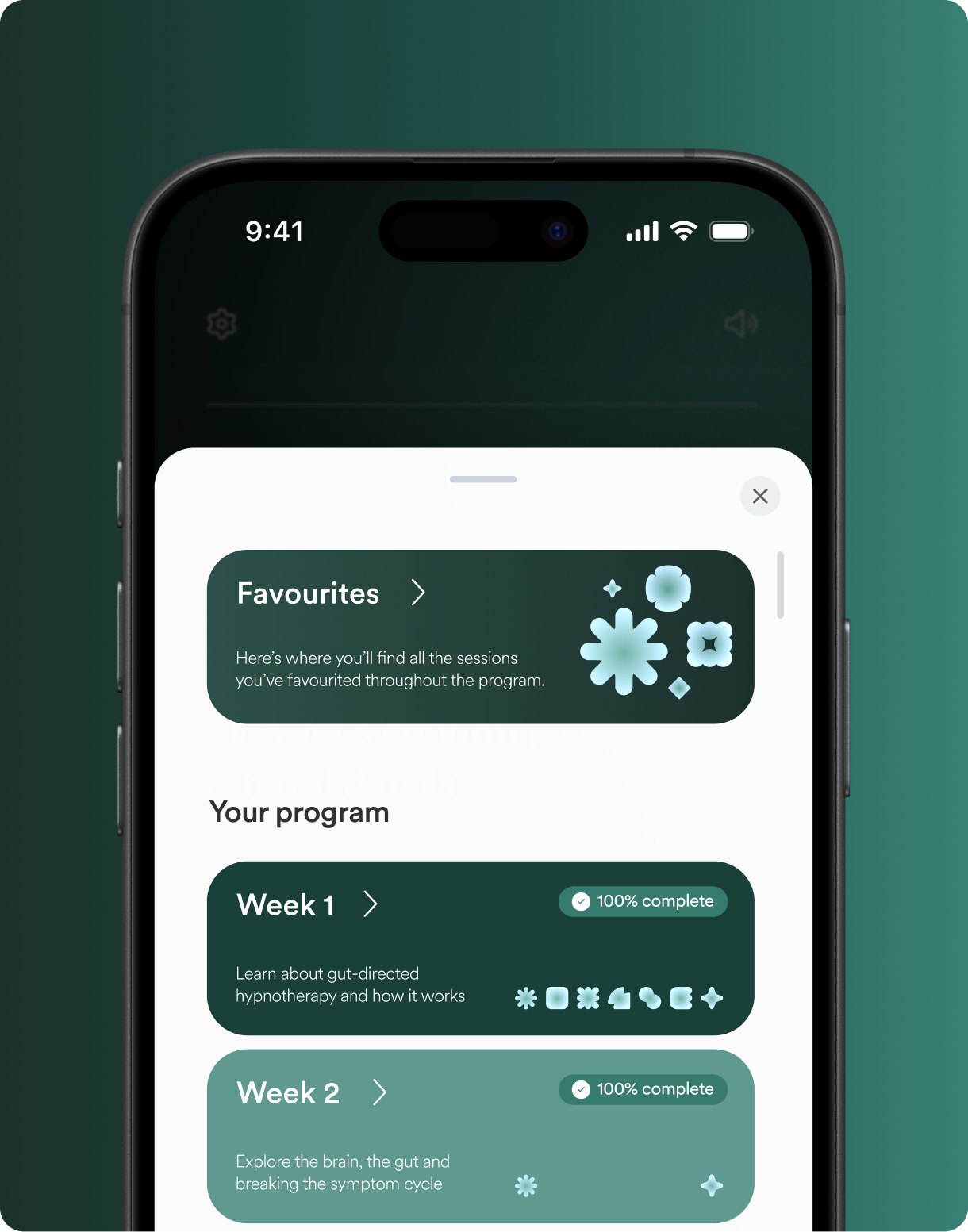
Hypnotherapy for IBS works by guiding you into a hypnotic state, which is when you feel a sense of deep relaxation but still have a heightened state of focus, a pocket watch won’t be dangled in front of you, and no one will seize control of your mind like you might have seen on YouTube. Instead, when you’re participating in a program like Nerva, you will be in complete control while being led through visualizations designed to heal and treat your gut.
Scientists found that gut-directed hypnotherapy is effective for between 70-80% of people with IBS. Their study also demonstrated how just six weeks of hypnotherapy could lessen IBS symptoms in 70% of patients, which is comparable to the effectiveness of following a low FODMAP diet.
https://www.npr.org/2022/10/10/1127795077/a-surprising-treatment-is-helping-people-with-gastrointestinal-or-stomach-issues
Mindfulness-based stress reduction (MBRS)
Mindfulness-based stress reduction (MBSR) therapy could be a valuable addition to your treatment toolbox if you’re plagued by anxiety and stress about your IBS symptoms.
The therapy will help you reduce symptoms by developing mindfulness skills, such as knowledge of your breathing process and conscious eating. The idea behind MBSR is you will learn to withhold judgment about yourself as you observe and experience your pain, thoughts, and feelings.
Scientists say it improves your mind-body connection by regulating your autonomic arousal by enhancing parasympathetic tone. So, what does this actually mean? Harvard Medical School explains it simply: we all have a sympathetic and parasympathetic nervous system. Your sympathetic functions like a car’s gas pedal, triggering the fight or flight response. While your parasympathetic system acts as the brake, calming your body down after the danger has passed. MBRS helps tap into that calming process, lessening your IBS-induced anxiety.
Research examining 18 different studies concluded that MBSR helped people with chronic illnesses improve their condition. Another small study demonstrated how MBSR led to meaningful positive changes and improved quality of life for people with gastrointestinal concerns.
The Wrap Up
While there’s no cure for IBS, there are many science-backed treatment options that can help you lessen your symptoms and improve your quality of life. Over-the-counter solutions like psyllium, probiotics, anti-diarrheal medication, and laxatives are affordable and accessible. Each is proven by research to improve your symptoms, though not all are suitable as long-term solutions. As anxiety and IBS often go hand in hand, prescription antidepressants can help treat IBS. Tricyclic antidepressants and SSRIs are both effective IBS treatment options. Switching to a low FODMAP diet has been proven to reduce symptoms in 70% of people. The diet begins by eliminating foods high in FODMAPs, before reintroducing them to determine which are causing you the most concern. Mind-body interventions like CBT, gut-directed hypnotherapy and MBSR focus on changing the thoughts ruminating in your mind to treat your gut. Scientists have long established this mind-gut connection, and these options could all help treat your symptoms.
References
Our Sources
Aragon G, Graham DB, Borum M, Doman DB. Probiotic therapy for irritable bowel syndrome. Gastroenterol Hepatol (N Y). 2010;6(1):39-44.
Ballou S, Bedell A, Keefer L. Psychosocial impact of irritable bowel syndrome: A brief review. World J Gastrointest Pathophysiol. 2015;6(4):120-123. doi:10.4291/wjgp.v6.i4.120
Black CJ, Thakur ER, Houghton LA, Quigley EMM, Moayyedi P, Ford AC. Efficacy of psychological therapies for irritable bowel syndrome: systematic review and network meta-analysis. Gut. 2020;69(8):1441-1451. doi:10.1136/gutjnl-2020-321191
Bove A, Pucciani F, Bellini M, et al. Consensus statement AIGO/SICCR: diagnosis and treatment of chronic constipation and obstructed defecation (part I: diagnosis). World J Gastroenterol. 2012;18(14):1555-1564. doi:10.3748/wjg.v18.i14.1555
Dalton C, Drossman D. The Use Of Antidepressants In The Treatment Of Irritable Bowel Syndrome And Other Functional GI Disorders. Chapel Hill: University North Carolina (UNC) https://www.med.unc.edu/ibs/wp-content/uploads/sites/450/2017/10/IBS-and-Antidepressants.pdf. Accessed February 16, 2022.
Don't bomb the bowel with laxatives. Harvard Health Publishing. https://www.health.harvard.edu/diseases-and-conditions/dont-bomb-the-bowel-with-laxatives. Published September 25, 2019. Accessed February 23, 2022.
Friedrich M, Grady SE, Wall GC. Effects of antidepressants in patients with irritable bowel syndrome and comorbid depression. Clin Ther. 2010;32(7):1221-1233. doi:10.1016/j.clinthera.2010.07.002
Gao J. Correlation between anxiety-depression status and cytokines in diarrhea-predominant irritable bowel syndrome. Exp Ther Med. 2013;6(1):93-96. doi:10.3892/etm.2013.1101
Ghandi F, Sadeghi A, Bakhtyari M, Imani S, Abdi S, Banihashem SS. Comparing the Efficacy of Mindfulness-Based Stress Reduction Therapy with Emotion Regulation Treatment on Quality of Life and Symptoms of Irritable Bowel Syndrome. Iran J Psychiatry. 2018;13(3):175-183.
Gunn D, Fried R, Lalani R et al. Treatment of irritable bowel syndrome with diarrhoea using titrated ondansetron (TRITON): study protocol for a randomised controlled trial. Trials. 2019;20(1). doi:10.1186/s13063-019-3562-6
Halmos EP, Power VA, Shepherd SJ, Gibson PR, Muir JG. A diet low in FODMAPs reduces symptoms of irritable bowel syndrome. Gastroenterology. 2014;146(1):67-75.e5. doi:10.1053/j.gastro.2013.09.046
Harvie RM, Chisholm AW, Bisanz JE, et al. Long-term irritable bowel syndrome symptom control with reintroduction of selected FODMAPs. World J Gastroenterol. 2017;23(25):4632-4643. doi:10.3748/wjg.v23.i25.4632
Iskandar H, Cassell B, Ciorba M, Sayuk G. Tricyclic Antidepressants in the Management of IBD Patients with Functional GI Symptoms. American Journal of Gastroenterology. 2012;107:S717. doi:10.14309/00000434-201210001-01763
Levy RL, Olden KW, Naliboff BD, et al. Psychosocial aspects of the functional gastrointestinal disorders. Gastroenterology. 2006;130(5):1447-1458. doi:10.1053/j.gastro.2005.11.057
Lindfors P, Unge P, Arvidsson P, et al. Effects of gut-directed hypnotherapy on IBS in different clinical settings-results from two randomized, controlled trials. Am J Gastroenterol. 2012;107(2):276-285. doi:10.1038/ajg.2011.340
Masand PS, Kaplan DS, Gupta S, et al. Major depression and irritable bowel syndrome: is there a relationship?. J Clin Psychiatry. 1995;56(8):363-367.
Naliboff BD, Smith SR, Serpa JG, et al. Mindfulness-based stress reduction improves irritable bowel syndrome (IBS) symptoms via specific aspects of mindfulness. Neurogastroenterol Motil. 2020;32(9):e13828. doi:10.1111/nmo.13828
Niazi AK, Niazi SK. Mindfulness-based stress reduction: a non-pharmacological approach for chronic illnesses. N Am J Med Sci. 2011;3(1):20-23. doi:10.4297/najms.2011.320
Peters SL, Yao CK, Philpott H, Yelland GW, Muir JG, Gibson PR. Randomised clinical trial: the efficacy of gut-directed hypnotherapy is similar to that of the low FODMAP diet for the treatment of irritable bowel syndrome. Aliment Pharmacol Ther. 2016;44(5):447-459. doi:10.1111/apt.13706
Peyton L, Greene J. Irritable bowel syndrome: current and emerging treatment options. P T. 2014;39(8):567-578.
Quigley EMM. The Gut-Brain Axis and the Microbiome: Clues to Pathophysiology and Opportunities for Novel Management Strategies in Irritable Bowel Syndrome (IBS). Journal of Clinical Medicine. 2018; 7(1):6. https://doi.org/10.3390/jcm7010006
Rahimi R, Nikfar S, Rezaie A, Abdollahi M. Efficacy of tricyclic antidepressants in irritable bowel syndrome: a meta-analysis. World J Gastroenterol. 2009;15(13):1548-1553. doi:10.3748/wjg.15.1548
Rodes, L., Khan, A., Paul, A., Coussa-Charley, M., Marinescu, D., Tomaro-Duchesneau, C., Shao, W., Kahouli, I. and Prakash, S., 2013. Effect of probiotics Lactobacillus and Bifidobacterium on gut-derived lipopolysaccharides and inflammatory cytokines: an in vitro study using a human colonic microbiota model. J Microbiol Biotechnol, 23(4), pp.518-526
Sood R, Law GR, Ford AC. Diagnosis of IBS: symptoms, symptom-based criteria, biomarkers or 'psychomarkers'?. Nat Rev Gastroenterol Hepatol. 2014;11(11):683-691. doi:10.1038/nrgastro.2014.127
Staudacher HM, Whelan K, Irving PM, Lomer MC. Comparison of symptom response following advice for a diet low in fermentable carbohydrates (FODMAPs) versus standard dietary advice in patients with irritable bowel syndrome. J Hum Nutr Diet. 2011;24(5):487-495. doi:10.1111/j.1365-277X.2011.01162.x
Understanding the stress response. Harvard Health Publishing. https://www.health.harvard.edu/staying-healthy/understanding-the-stress-response#:~:text=The%20autonomic%20nervous%20system%20has,can%20respond%20to%20perceived%20dangers. Published July 6, 2020. Accessed February 25, 2022.
Wilkins T, Agabin E, Blake L. Effectiveness of Selective Serotonin Reuptake Inhibitors for Irritable Bowel Syndrome. Am Fam Physician. 2015;92(1). https://www.aafp.org/afp/2015/1101/od1.html. Accessed February 16, 2022.

.jpeg)

.avif)