.webp)

Key takeaways:
- Visceral hypersensitivity means your gut nerves are overly sensitive, so normal digestion can feel painful, urgent, or uncomfortable.
- Gut-brain signaling plays a major role in symptoms – the gut-brain connection can become overreactive and amplify discomfort and pain.
- Stress and anxiety can amplify gut sensitivity, but symptoms are still physiological and can occur even without anxiety triggers.
- Food can trigger symptoms through normal processes like gas and fermentation, but the underlying issue is often the gut’s heightened sensitivity, not the food itself.
In gut-brain disorders like IBS, abdominal pain is usually caused by visceral hypersensitivity – a condition where the gut’s nerves overreact to normal digestion, making everyday sensations feel painful even when tests are normal.
If you’re living with ongoing symptoms, this may explain why you’ve found yourself asking:
Why does my stomach hurt so much when scans and blood tests are normal?
Why does a little gas feel unbearable?
Why do food and stress make everything worse?
These are not unreasonable questions. Gut pain can be disruptive and confusing – especially when you’re told everything “looks fine.” That experience can feel deeply invalidating.
But your symptoms have a physiological basis.
In gut-brain disorders, the issue is not structural damage – it is how strongly the gut’s nerves respond to normal sensations like stretching, gas, and bowel movement. When this response becomes amplified, ordinary digestion can feel intense or even painful.
This is what clinicians call visceral hypersensitivity. It is not imagined, and it is not a weakness – it reflects a measurable shift in how the gut processes sensation.
Here’s what’s happening.
What is visceral hypersensitivity?
Understanding your symptom triggers all starts with the gut-brain connection1.
Watch Monash University researcher Dr. Simone Peters explain what's going on inside your gut that is causing so much pain in this short overview:
As Dr. Peters' explained above, your gut and brain are constantly communicating along a built-in superhighway of nerves, sending signals back and forth to regulate your digestion automatically.
During digestion, your gut constantly sends your brain information about fullness, movement, and gas. Your brain responds by adjusting how the gut moves, contracts, and how strongly you feel those sensations.
In most people, this system works quietly in the background, without you even noticing.
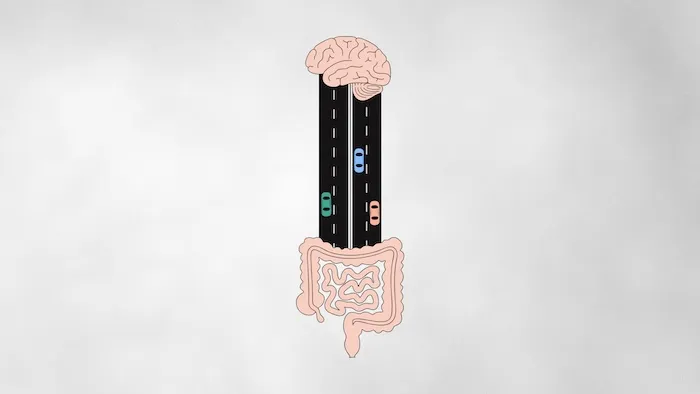
With gut-brain disorders, however, this communication system becomes more reactive.
The nerves involved in gut-brain signaling respond more strongly to normal stimulation. Everyday digestive events – like mild gas, normal stretching after a meal, or routine bowel contractions – can feel amplified.
This increased gut sensitivity is called visceral hypersensitivity.
When your volume is turned all the way up: Why normal gut sensations feel painful
Think of it this way: visceral hypersensitivity is like a volume dial turned up too high.
Your digestive process might be completely normal: food moves through you, gas forms, your bowel stretches. But the signals traveling along the gut-brain superhighway are louder than they should be. What should feel like a quiet background sensation comes through as sharp or urgent.

When those amplified signals reach the brain, they are interpreted as pain, bloating, pressure, or urgency.
The louder the signal, the stronger the sensation feels.
That is why gut symptoms can be intense even when there is no visible damage or disease. The nervous system is simply amplifying normal digestive signals.
This is not imagined. It is a real, measurable change in how the body processes digestive signals.
If you’d prefer a visual explanation of how gut-brain disorders affect digestion and pain signaling, watch the short breakdown below.
Is IBS caused by anxiety and stress?
Stress and anxiety are closely linked to gut-brain disorders, but it doesn’t mean your symptoms are “all in your head.”
When your nervous system is under pressure, stress hormones and brain-gut signaling can turn the volume dial up, making pain, urgency, or bowel changes feel stronger.
So if anxiety triggers your symptoms, that reflects real biological changes in how your nervous system processes sensation.
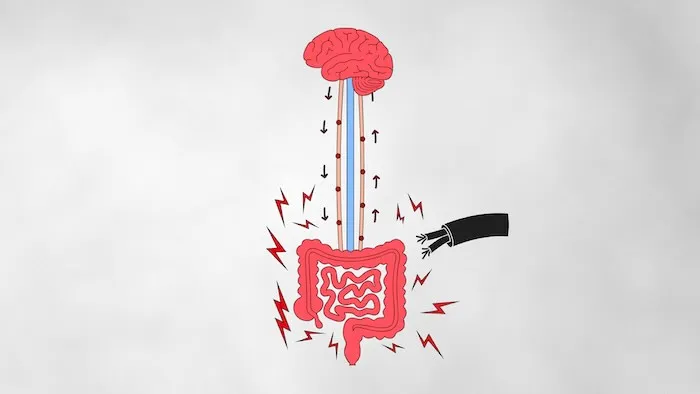
At the same time, many people with visceral hypersensitivity do not experience anxiety as their main trigger. Their heightened gut sensitivity may have developed after a gut infection, inflammation, or gradual changes in nerve signaling.
What connects these experiences is not stress itself, but sensitivity.
This means visceral hypersensitivity is the underlying mechanism – anxiety can amplify it, but it’s not required for it to exist.
And the loop can work in reverse: ongoing gut pain increases stress and vigilance, which keeps the nervous system on high alert.
This two-way cycle helps explain why a gut-brain disorder like IBS and anxiety often occur together.
Is food really the trigger?
Food can absolutely trigger gut symptoms, but the food itself usually isn’t the root problem.
Here’s why.
Certain foods – especially those high in FODMAPs, like apples, onions, or wheat – ferment in the gut and produce gas2. That fermentation is normal. It happens in everyone.
The difference, if you have a gut-brain disorder like IBS, is how the nerves respond.
When gas forms, it creates pressure inside the bowel. In someone without gut sensitivity, that pressure might go unnoticed or feel mildly uncomfortable. But when the nerves around the gut are overly sensitive, that same pressure can feel painful or urgent.
Those hypersensitive nerves can send strong signals to the brain – almost like a false alarm saying, “Something is wrong.”
The result can be bloating, cramping, urgency, or changes in bowel movements.
In other words, the issue isn’t simply the food. It’s the gut’s heightened reaction to normal digestive processes – a pattern driven by visceral hypersensitivity.
Why do IBS symptoms persist?
Once visceral hypersensitivity develops, the nervous system can stay on high alert.
Over time, repeated discomfort can reinforce the gut-brain signaling pattern, making the digestive system more reactive to sensations that would normally be ignored.
That’s why IBS symptoms can continue even after structural disease has been ruled out. The issue isn’t ongoing damage – it’s that normal digestive signals are being amplified.
This helps explain why IBS happens for so many people, and why IBS physical symptoms can feel intense even when tests show no visible abnormalities.
How do you calm an overreactive gut?
If the volume dial is turned up, treatment focuses on turning it back down.
This heightened sensitivity is measurable and well recognized in gastroenterology as a manageable condition. As gastroenterology nurse practitioner Amy Stewart from Capital Digestive Care tells her patients, “IBS is a real thing that we can do real things about.”
This may include dietary approaches that reduce physical triggers, medications that calm nerve signaling, and gut-brain therapies that lower nervous system reactivity.
These management strategies target real biological pathways. They are not about dismissing symptoms – they are about helping regulate a hypersensitive communication system.
Whether your gut symptoms are triggered by anxiety, certain foods, past illness, or seem unpredictable, visceral hypersensitivity helps make sense of it.
Frequently asked questions
What is visceral hypersensitivity?
Visceral hypersensitivity is increased sensitivity of the nerves in the digestive tract. It means normal digestive activity – stretching, gas, and bowel contractions – is processed as painful or urgent, even when there is no structural damage. It is a core feature of gut-brain disorders like IBS.
Why does my stomach hurt when tests are normal?
Because gut-brain disorders don't cause structural damage – they cause a change in how the nervous system processes sensation. Your tests are normal because nothing is structurally wrong. Your pain is real because the gut's nerves are amplifying signals that most people barely notice.
Is visceral hypersensitivity caused by anxiety?
Anxiety can amplify visceral hypersensitivity, but it isn't required for it to exist. The underlying sensitivity can develop after a gut infection, inflammation, or gradual changes in nerve signaling. Stress makes symptoms worse, but it doesn't mean the symptoms are psychological.
Can visceral hypersensitivity improve?
Yes. The sensitivity is measurable and recognized in gastroenterology as a manageable condition. Approaches that target the gut-brain system – including dietary strategies, gut-directed therapies, and nervous system regulation – can reduce how intensely the gut responds to normal digestive signals over time.
Why do symptoms persist even when I eat carefully?
Because food is often a trigger, not the root cause. Visceral hypersensitivity means the nervous system stays on high alert, amplifying normal digestive signals regardless of diet. Managing the underlying gut-brain sensitivity, not just food triggers, is what produces lasting improvement.
References
Dong TS, Mayer EA. Advances in brain-gut-microbiome interactions: a comprehensive update on signaling mechanisms, disorders, and therapeutic implications. Cell Mol Gastroenterol Hepatol. 2024;18(1):1-13. doi:10.1016/j.jcmgh.2024.01.024
Algera JP, Demir D, Törnblom H, Nybacka S, Simrén M, Störsrud S. Low FODMAP diet reduces gastrointestinal symptoms in irritable bowel syndrome and clinical response could be predicted by symptom severity: a randomized crossover trial. Clin Nutr. 2022;41(12):2792-2800. doi:10.1016/j.clnu.2022.11.001
Peters SL, Yao CK, Philpott H, Yelland GW, Muir JG, Gibson PR. Randomised clinical trial: the efficacy of gut-directed hypnotherapy is similar to that of the low FODMAP diet for the treatment of irritable bowel syndrome. Aliment Pharmacol Ther. 2016;44(5):447-459. doi:10.1111/apt.13706
Farzaei MH, Bahramsoltani R, Abdollahi M, Rahimi R. The role of visceral hypersensitivity in irritable bowel syndrome: pharmacological targets and novel treatments. J Neurogastroenterol Motil. 2016;22(4):558-574. doi:10.5056/jnm16001
Johns Hopkins Medicine. The brain-gut connection. Johns Hopkins Medicine. Accessed February 23, 2026. https://www.hopkinsmedicine.org/health/wellness-and-prevention/the-brain-gut-connection