Key takeaways:
- Period poops are temporary bowel changes caused by hormonal shifts during menstruation, particularly prostaglandins and progesterone.
- Stress and anxiety around your period can worsen digestive symptoms through the gut-brain connection.
- Eating whole foods, moving gently, staying hydrated, and managing stress can reduce period poop symptoms.
- Digestive symptoms that occur throughout your cycle – not just during your period – may indicate IBS or another gut-brain disorder.
Why your digestion changes during your period
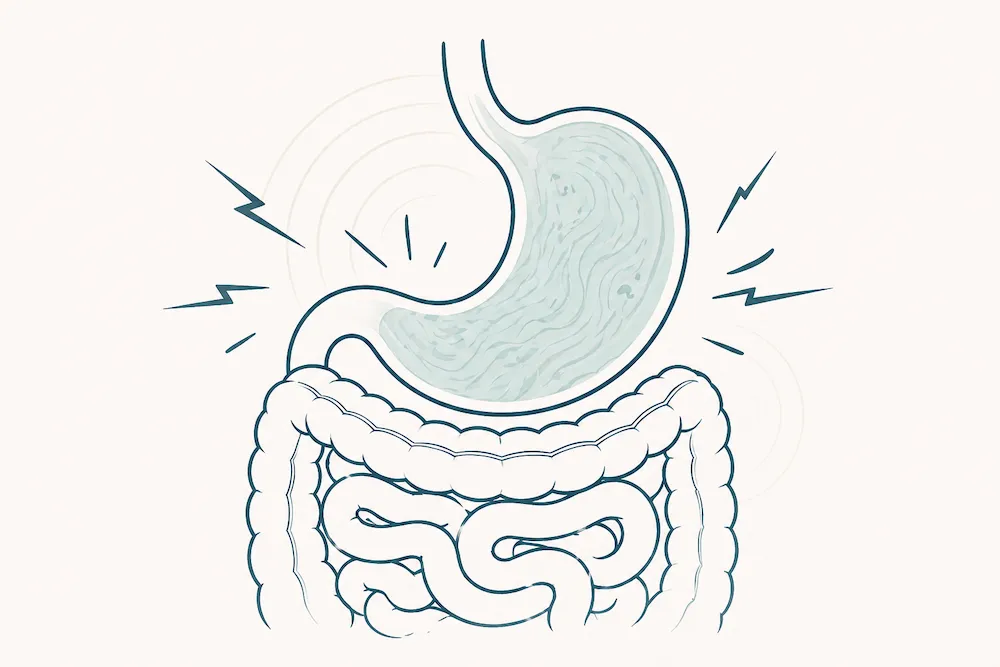
Period poops are temporary digestive changes – including diarrhea, constipation, and cramping – caused by hormonal shifts during menstruation, particularly rises in prostaglandins and progesterone.
So, what exactly are “period poops”? While it’s not a medical term, it’s a common way to describe bowel changes that happen around the time of your period. Many people notice that their digestion feels off during menstruation – you might experience bloating, cramps, diarrhea, or constipation that seem to appear right on schedule each month.
A study found that gastrointestinal symptoms similar to those seen in IBS are actually very common during menstruation. These “period poops” are thought to be linked to hormonal shifts, particularly prostaglandins, which help the uterus contract but can also affect the intestines.
Common digestive symptoms during your period include:
• Abdominal pain or cramping related to hormonal changes
• Diarrhea or loose stools during menstruation
• Nausea or an upset stomach before or during your period
• Constipation in the days leading up to menstruation
• Bloating or excess gas caused by water retention and gut sensitivity
The same study also found that digestive symptoms during your period are more likely to occur if you’re also experiencing emotional changes such as low mood, irritability, or anxiety – reinforcing the powerful connection between hormones, the brain, and the gut.
What causes period poops?
So, who’s the culprit behind those uncomfortable digestive changes during your period? In most cases, it comes down to hormones, specifically prostaglandins and progesterone. These natural chemical messengers help regulate your menstrual cycle but can also affect how your gut behaves. Add stress, anxiety, or changes in your diet to the mix, and it’s easy to see why your digestion might feel a little unpredictable each month.
1. Higher levels of prostaglandins
Just before your period begins, your uterine cells begin to release prostaglandins to trigger the contractions that shed the uterine lining. Some of these prostaglandins can enter your bloodstream and affect other muscles in your body, including those in your intestines.
This can lead to digestive symptoms such as:
• Abdominal cramps
• Nausea or upset stomach
• Diarrhea or loose stools
Prostaglandins can also cause the body to retain less water, which softens stools and increases bowel activity. Caffeine can make this worse, since it has a natural laxative effect, so if you’re already dealing with diarrhea during your period, that extra cup of coffee might not help.
2. Higher levels of progesterone
Progesterone is another hormone that fluctuates throughout your cycle. It rises after ovulation to prepare your body for a possible pregnancy, then drops if no egg is fertilized. High levels of progesterone can slow digestion, leading to constipation or bloating.
For some people, though, it can have the opposite effect and loose and watery stools. Those with existing gut conditions, such as IBS or Crohn’s disease, often find their symptoms intensify during this time, with added abdominal pain, headaches, or changes in bowel habits.
3. Changes in diet
If you crave more chocolate, chips, or sugary snacks during your period, you’re not imagining it. Hormonal shifts during the luteal phase can increase appetite and drive cravings for high-fat or high-sugar foods.
These sudden changes in diet can also affect digestion. Eating more processed or fatty foods may alter the consistency, regularity, and even the smell of your stool. To support more balanced digestion, try to limit refined sugars, processed snacks, and excessive fats while focusing on whole foods and hydration.
4. Stress and anxiety
It’s common to feel more emotional or stressed around your period, and your gut feels it too. Stress hormones can speed up or slow down digestion, leading to either diarrhea or constipation. This is due to the gut-brain connection – the two-way communication system linking your digestive tract and nervous system.
When stress levels rise, your gut may become more reactive. The good news is that you can help retrain this connection. Research from Monash University has shown that gut-directed hypnotherapy – a key component of gut-brain therapy programs like Nerva – can effectively reduce IBS symptoms by calming the gut-brain connection, and many people find it helps ease stress-related digestive flare-ups during their cycle as well.
Why do period poops hurt?
If passing a bowel movement feels more painful during your period, you’re not alone. Hormonal changes, cramping, and heightened pain sensitivity can all make digestion feel uncomfortable at this time of the month.
Common reasons period poops can hurt include:
• Constipation – Hormones such as prostaglandins and progesterone, which rise around your period, can slow digestion. If stools become hard or dry, they may be painful to pass.
• Menstrual cramps – Straining during a bowel movement can trigger or worsen uterine cramps, causing sharp or radiating pain in the lower abdomen.
• Increased pain sensitivity – Hormonal fluctuations during menstruation can make you more sensitive to pain, so even mild discomfort may feel more intense.
How to deal with period poops
If you struggle with digestive issues during your period, a few small changes can make a big difference. While there’s no single cure for “period poops,” the following strategies can help reduce symptoms and calm your gut.
1. Eat clean and stay mindful of triggers
Try to eat as cleanly as possible during your period to ease digestion and reduce inflammation. It’s normal to crave comfort foods, but aim to limit gastrointestinal upset with hard-to-digest or gut-stimulating options.
Foods and drinks to avoid during your period:
• Fried or greasy foods
• Stimulants like coffee, tea, and energy drinks
• Sugary foods such as chocolate, cake, or sweets
• Excess water intake if you tend to have diarrhea
Instead, focus on balanced meals that include whole grains, cooked vegetables, lean proteins, and plenty of hydration without overdoing caffeine or sugar.
2. Get moving
Various types of exercise can support digestion and relieve cramps by improving blood flow and reducing stress hormones. If you’re not up for an intense workout, try gentle, restorative movement.
Exercises that may help include:
• Yoga – Yoga combines movement, breathing, and mindfulness. Research shows it can reduce IBS symptoms, calm anxiety, and ease menstrual discomfort.
• Tai Chi – This slow, mindful practice has been shown to improve gut symptoms and overall well-being when done regularly and proven more effective than medication in some cases.
• Walking or swimming – Gentle activities that help regulate the digestive system without overexertion.
3. Take ibuprofen (if suitable for you)
Ibuprofen is a non-steroidal anti-inflammatory drug (NSAID) that can reduce pain, control inflammation, and lower prostaglandin levels when taken around 24 hours before your period starts. It may help ease cramps and bowel discomfort.
Possible side effects include:
• Heartburn
• Nausea
• Vomiting
If you have a sensitive stomach or other medical conditions, check with your doctor before using ibuprofen regularly.
4. Ask your doctor about hormonal birth control
If your digestive symptoms are severe or interfere with daily life, talk to your doctor about whether hormonal contraception might help. The contraceptive pill can prevent ovulation and lower prostaglandin levels – reducing cramps, nausea, and painful bowel movements.
However, hormonal treatment isn’t right for everyone. Discuss potential benefits and side effects with your healthcare provider before starting any new medication.
How can I stop my tampon from coming out when pooping?
Straining hard to pass a bowel movement may also dislodge your tampon during period poops. The orientation of pelvic muscles in your body may make some people more likely to push out their tampon during a bowel movement.
There are a few simple things you can do to keep your tampon in place:
Eat a high-fiber diet to reduce constipation.
Try not to strain when passing a bowel movement.
Consider alternatives to tampons, such as a menstrual cup (or even a pad).
Is it period poop or IBS?
Period poop refers to temporary digestive changes that happen just before or during menstruation. Hormonal shifts – especially in prostaglandins and progesterone – can speed up or slow down digestion, leading to diarrhea, constipation, bloating, or cramps.
IBS is a gut-brain disorder – meaning symptoms are driven by an oversensitive nervous system rather than structural damage – which is why hormonal fluctuations during your cycle can significantly amplify digestive symptoms in people who have it.
If you’re experiencing these bowel problems frequently or outside your menstrual cycle, it could be a sign of IBS. IBS affects about 14% of the population and causes recurring digestive issues such as:
Abdominal pain or more likely to have cramping related to bowel movements
Constipation, diarrhea, or alternating bowel habits
Bloating, gas, and digestive discomfort
Mucous or residue in stools
If your symptoms appear at different times in your cycle or persist long term, it’s worth speaking with a healthcare provider for an IBS assessment.
How your period affects digestion
The digestive and reproductive systems are closely linked through hormonal and nervous system pathways. During menstruation, rising prostaglandins can stimulate intestinal muscles, leading to looser or more frequent bowel movements – commonly called “period poops.” However, this relationship goes both ways. People living with IBS often experience more severe menstrual cramps and are more likely to have premenstrual dysphoric disorder (PMDD). Research also shows a strong connection between IBS, endometriosis, and menstrual pain, highlighting how the gut and reproductive systems influence one another.
Conditions that can mimic period poop
Not all cycle-related bowel changes are simple hormone shifts. Some gastrointestinal and gynecological conditions share similar symptoms and can flare during your period. These include:
Irritable bowel syndrome (IBS)
Inflammatory bowel disease (IBD)
Hemorrhoids
Endometriosis
Uterine fibroids
Ovarian cysts
Hormonal changes during perimenopause or menopause can also affect bowel regularity and stool consistency. If your digestive symptoms are severe or persistent, professional evaluation is important.
When to see a doctor
While mild changes in bowel habits around your period are normal, you should consult a healthcare professional if you experience:
Severe abdominal or pelvic pain
Heavy or irregular periods
Blood or mucous in your stool
Rectal or anal pain
Unexplained bloating or fatigue
A doctor can help rule out serious causes, identify overlapping conditions like IBS or endometriosis, and recommend treatment to regulate both digestive and menstrual symptoms.
Are the digestive and reproductive systems linked?
Period poops show us how the reproductive system can influence the digestive tract. But did you know, it can work the other way as well?
People with irritable bowel syndrome (IBS) are more likely to have severe period cramps and be diagnosed with premenstrual dysphoric disorder (PMDD) than those who do not. In addition, research has identified a link between IBS, period pain, and endometriosis.
Frequently asked questions
Is it normal to poop more when on my period?
Increased bowel movements during menstruation are very common. Prostaglandins released during your period stimulate the uterus to contract but also speed up the intestines, causing more frequent or looser stools.
Why can't I poop on my period?
Constipation before or during your period is caused by high progesterone levels, which slow digestion and relax the smooth muscles of the intestines. Eating more fiber, staying hydrated, and gentle movement can help ease constipation during your cycle.
Is it normal to have diarrhea before my period?
Hormonal changes in the days before your period can speed up digestion, causing diarrhea or loose stools. If this happens throughout the month rather than just around your period, it may be worth getting checked for IBS.
Why does period poop hurt?
Period poop can hurt due to a combination of menstrual cramps, hormonal changes that increase pain sensitivity, and harder or softer stools that are more difficult to pass. Taking ibuprofen before your period starts can help by lowering prostaglandin levels and easing both cramps and bowel discomfort.
Can period poop smell worse?
Hormonal fluctuations can affect gut bacteria and how food is digested, which can temporarily make stools smell stronger during menstruation. Dietary changes and cravings around your period can also contribute to changes in smell.
How can I tell if it's IBS or just period-related changes?
Period-related bowel changes follow your cycle and ease after menstruation ends. If bloating, pain, or bowel changes occur at other times in your cycle or persist long term, IBS or another gut-brain disorder may be involved – speak with a healthcare provider.
The wrap up
If you’re dealing with what’s often called “period poops,” you’re noticing changes such as diarrhea, constipation, or stronger-smelling stools around your period. This is a common experience linked to hormonal fluctuations – especially in prostaglandins and progesterone – that affect how your intestines contract. For some people, stools become loose and watery, while for others, they may be firmer and harder to pass. Maintaining a balanced diet rich in fiber, staying hydrated, and exercising regularly can help ease these digestive shifts. If your symptoms are more severe, over-the-counter anti-inflammatories like ibuprofen or a hormonal contraceptive may help regulate prostaglandin levels and reduce discomfort.
References
Bernstein, M., Graff, L., Avery, L., Palatnick, C., Parnerowski, K. and Targownik, L., 2014. Gastrointestinal symptoms before and during menses in healthy women. BMC Women's Health, 14(1).
//www.ncbi.nlm.nih.gov/pmc/articles/PMC3901893/https:Ricciotti, E. and FitzGerald, G.A., 2011. Prostaglandins and inflammation. Arteriosclerosis, thrombosis, and vascular biology, 31(5), pp.986-1000. http://ahajournals.org/doi/abs/10.1161/atvbaha.110.207449
Labtestsonline.org. 2020. Progesterone. [online] Available at: <https://labtestsonline.org/tests/progesterone> [Accessed 20 August 2020].
https://labtestsonline.org/tests/progesteroneHeitkemper, M.M. and Chang, L., 2009. Do fluctuations in ovarian hormones affect gastrointestinal symptoms in women with irritable bowel syndrome?. Gender medicine, 6, pp.152-167. https://www.sciencedirect.com/science/article/pii/S1550857909000230?casa_token=yDLdiAopEt8AAAAA:0P7-hurKxdgFFFGgaZ8shC29izRrHFCBzlTEBTTnWhbc64Y4RtPLBVtH8B3JtGbhnuBYYjAX
Rachmilewitz, D., 1980. Prostaglandins and diarrhea. https://link.springer.com/content/pdf/10.1007/BF01308037.pdf
Xiao, Z.L., Pricolo, V., Biancani, P. and Behar, J., 2005. Role of progesterone signaling in the regulation of G-protein levels in female chronic constipation. Gastroenterology, 128(3), pp.667-675. https://www.sciencedirect.com/science/article/pii/S0016508504021894?casa_token=M-2Ynf5anFoAAAAA:IhKBcOmHNNmiGVXGHH89c97e_ey_mVDclZoCQLZ6C4I4h54ec_4rJylMRqGpLqhAGr0RNkYh
Heitkemper, M. and Jarrett, M., 2008. Irritable bowel syndrome: does gender matter?. Journal of psychosomatic research, 64(6), pp.583-587. https://www.sciencedirect.com/science/article/pii/S0022399908000627?casa_token=qaWM_VM4mocAAAAA:mcXMTRbh6up3lVCVzulYBcE89hir2CxNhnb3bfZg3g330liL7AZnXdPqhrAmkdUYPb5fW2oy
Michener, W., Rozin, P., Freeman, E. and Gale, L., 1999. The role of low progesterone and tension as triggers of perimenstrual chocolate and sweets craving: some negative experimental evidence. Physiology & behavior, 67(3), pp.417-420. https://www.sciencedirect.com/science/article/pii/S0031938499000943?casa_token=8toE54jmRFQAAAAA:MtsgUIDH1v3QDTy2NBx6geZC4gN1Ue7LK1LD6DqRpkXd72MLUFkp0L6bc-4GBy1cpQNBua0t
Liu, Q., Wang, Y., van Heck, C. and Qiao, W., 2017. Stress reactivity and emotion in premenstrual syndrome. Neuropsychiatric Disease and Treatment, Volume 13, pp.1597-1602.
https://www.ncbi.nlm.nih.gov/pmc/articles/PMC5481285/#:~:text=Moreover%2C%20some%20studies%20showed%20that,PMS%20are%20related%20to%20stress.&text=The%20variations%20in%20hormone%20levels,regulation%20and%20sensitivity%20to%20stress.Blanchard, E.B., Lackner, J.M., Jaccard, J., Rowell, D., Carosella, A.M., Powell, C., Sanders, K., Krasner, S. and Kuhn, E., 2008. The role of stress in symptom exacerbation among IBS patients. Journal of Psychosomatic research, 64(2), pp.119-128.
Carabotti, M., Scirocco, A., Maselli, M.A. and Severi, C., 2015. The gut-brain axis: interactions between enteric microbiota, central and enteric nervous systems. Annals of gastroenterology: quarterly publication of the Hellenic Society of Gastroenterology, 28(2), p.203. ncbi.nlm.nih.gov/pmc/articles/pmc4367209/
Iacovides, S., Avidon, I. and Baker, F.C., 2015. Does pain vary across the menstrual cycle? A review. European Journal of Pain, 19(10), pp.1389-1405. https://onlinelibrary.wiley.com/doi/full/10.1002/ejp.714?casa_token=p6xympb9drQAAAAA%3APBwlAgzDiHzUzYCnIuRdLAoj8A1qahZR-Dpx_U9dogU2jLiL7xrjxFH5DSK21zPddBVc_wlFanuPug
Simrén, M., Månsson, A., Langkilde, A.M., Svedlund, J., Abrahamsson, H., Bengtsson, U. and Björnsson, E.S., 2001. Food-related gastrointestinal symptoms in the irritable bowel syndrome. Digestion, 63(2), pp.108-115. https://www.karger.com/Article/Abstract/51878
Daley, A.J., Grimmett, C., Roberts, L., Wilson, S., Fatek, M., Roalfe, A. and Singh, S., 2008. The effects of exercise upon symptoms and quality of life in patients diagnosed with irritable bowel syndrome: a randomised controlled trial. International journal of sports medicine, 29(9), p.778. https://www.researchgate.net/profile/Chloe_Grimmett/publication/51393313_The_Effects_of_Exercise_upon_Symptoms_and_Quality_of_Life_in_Patients_Diagnosed_with_Irritable_Bowel_Syndrome_A_Randomised_Controlled_Trial/links/5447626b0cf22b3c14e0cb0d/The-Effects-of-Exercise-upon-Symptoms-and-Quality-of-Life-in-Patients-Diagnosed-with-Irritable-Bowel-Syndrome-A-Randomised-Controlled-Trial.pdf
Kuttner, L., Chambers, C.T., Hardial, J., Israel, D.M., Jacobson, K. and Evans, K., 2006. A randomized trial of yoga for adolescents with irritable bowel syndrome. Pain Research and Management, 11. https://www.hindawi.com/journals/prm/2006/731628/abs/
Kirkwood, G., Rampes, H., Tuffrey, V., Richardson, J. and Pilkington, K., 2005. Yoga for anxiety: a systematic review of the research evidence. British journal of sports medicine, 39(12), pp.884-891. https://bjsm.bmj.com/content/39/12/884.short
Zhou, C., Zhao, E., Li, Y., Jia, Y. and Li, F., 2019. Exercise therapy of patients with irritable bowel syndrome: A systematic review of randomized controlled trials. Neurogastroenterology & Motility, 31(2), p.e13461. https://onlinelibrary.wiley.com/doi/abs/10.1111/nmo.13461?casa_token=dw4wklQKZ8UAAAAA:kBw4YZ_xxLb_XHae74Zyr5OKGmL32-GtmIyC2ogYDDgZbqHbQTn87Rrxl08JUecpgN9QaopP2vG9DA
Ali, T.T. and Waite, I.M., 1993. The effect of systemic ibuprofen on gingival inflammation in humans. Journal of Clinical Periodontology, 20(10), pp.723-728. https://onlinelibrary.wiley.com/doi/abs/10.1111/j.1600-051X.1993.tb00697.x?casa_token=PMv3H55aWQkAAAAA:xaEmvfutFywt3FLvB7GS0iovrjU4FHYE0f4pzMbx7jNFpEsjdhmSJSwHx7JdzDXFSRFi0kVYJHYKdA
Furey, S.A., Waksman, J.A. and Dash, B.H., 1992. Nonprescription ibuprofen: side effect profile. Pharmacotherapy: The Journal of Human Pharmacology and Drug Therapy, 12(5), pp.403-407. https://accpjournals.onlinelibrary.wiley.com/doi/abs/10.1002/j.1875-9114.1992.tb04479.x
Dawood, M.Y., 1981. Dysmenorrhoea and prostaglandins: pharmacological and therapeutic considerations. Drugs, 22(1), pp.42-56. https://link.springer.com/article/10.2165/00003495-198122010-00003
Lovell, R.M. and Ford, A.C., 2012. Global prevalence of and risk factors for irritable bowel syndrome: a meta-analysis. Clinical gastroenterology and hepatology, 10(7), pp.712-721. https://www.sciencedirect.com/science/article/pii/S1542356512003084?casa_token=6v2Z9ylEkRcAAAAA:iKcsh1B2Kg5jH0Zj3hpuVStpJz8dGa3P4kDKtaqq-IFksP9s3IjdTuILA03I-_ZdSghoOseL
Altman, G., Cain, K.C., Motzer, S., Jarrett, M., Burr, R. and Heitkemper, M., 2006. Increased symptoms in female IBS patients with dysmenorrhea and PMS. Gastroenterology Nursing, 29(1), pp.4-11. https://journals.lww.com/gastroenterologynursing/Fulltext/2006/01000/Increased_Symptoms_in_Female_IBS_Patients_With.00002.aspx?casa_token=sGg3xj7R2VAAAAAA:KAKsF0P5stPHqnrxZUg37Nlkm_ti7wXVvEj6XmyRlk8JptYTg4kG6tO1m3X7tQtL5Y7nrbsdSC2XbhV6AB3-Gg
Seaman, H.E., Ballard, K.D., Wright, J.T. and De Vries, C.S., 2008. Endometriosis and its coexistence with irritable bowel syndrome and pelvic inflammatory disease: findings from a national case–control study—Part 2. BJOG: An International Journal of Obstetrics & Gynaecology, 115(11), pp.1392-1396. https://obgyn.onlinelibrary.wiley.com/doi/abs/10.1111/j.1471-0528.2008.01879.x
Rodiño-Janeiro, B.K., Vicario, M., Alonso-Cotoner, C., Pascua-García, R. and Santos, J., 2018. A review of microbiota and irritable bowel syndrome: future in therapies. Advances in therapy, 35(3), pp.289-310. https://link.springer.com/article/10.1007/s12325-018-0673-5
Tagliaferri, V., Romualdi, D., Scarinci, E., Cicco, S.D., Florio, C.D., Immediata, V., Tropea, A., Santarsiero, C.M., Lanzone, A. and Apa, R., 2018. Melatonin treatment may be able to restore menstrual cyclicity in women with PCOS: a pilot study. Reproductive Sciences, 25(2), pp.269-275. https://journals.sagepub.com/doi/abs/10.1177/1933719117711262