Key takeaways:
- 9 in 10 US adults with bowel gut-brain disorders have never been offered cognitive behavioral therapy.¹
- 44% said a CBT recommendation would make them feel their symptoms weren't seen as real.¹
- 69% of US counties have no practicing gastroenterologist.²
- An ACG task force cites a 25% severe GI physician shortage in non-metropolitan US counties.³
Finding a GI psychologist for IBS patients in the US is often difficult, with specialists scarce, waitlists long, and some patients worried a psychology referral means their symptoms aren't being taken seriously.¹ ⁴ In a 2026 survey, 9 in 10 adults with bowel gut-brain disorders had never been offered cognitive behavioral therapy.¹
For clinicians, this creates a gap between recommended IBS care and what patients can actually access. The American College of Gastroenterology (ACG) includes gut-directed psychotherapy alongside diet and medication, while a Rome Foundation working team advises that gut-brain therapies don't need to wait until other approaches have failed.⁵ ⁶ Yet while diet and medication can often begin at the first visit, psychological care usually requires a separate referral.
The challenge extends beyond GI psychology: 69% of US counties have no practicing gastroenterologist, reflecting wider gaps in access to GI care.² ³ When a GI psychologist isn't within reach, telehealth or self-guided gut-brain therapy may offer an accessible alternative for some patients, depending on their clinical needs and preferences.
Check GI psychology access in your patients’ area
Our GI psychology access map shows how far adults in every US state and county live from a listed in-person GI psychology specialist.
Click the map below to search your patients’ state or county before you refer, and see whether in-person care is realistic, or whether telehealth or self-guided gut-brain therapy is the better next step.

Why GI psychology referrals stall: the barriers IBS patients face
GI psychology referrals often stall on supply, cost, and time. Among adults with bowel gut-brain disorders in the 2026 survey, 38% cited a lack of available professionals and 42% cited cost as barriers to cognitive behavioral therapy.¹
Supply is the hardest to fix. GI psychologist Dr. Megan Riehl said there are “even fewer GI psychologists available for the number of patients who could benefit from behavioral treatments,” with services “typically limited to large health systems.”⁴ For patients outside those systems, that can mean several weeks' wait for behavioral care, or no local specialist at all.⁴
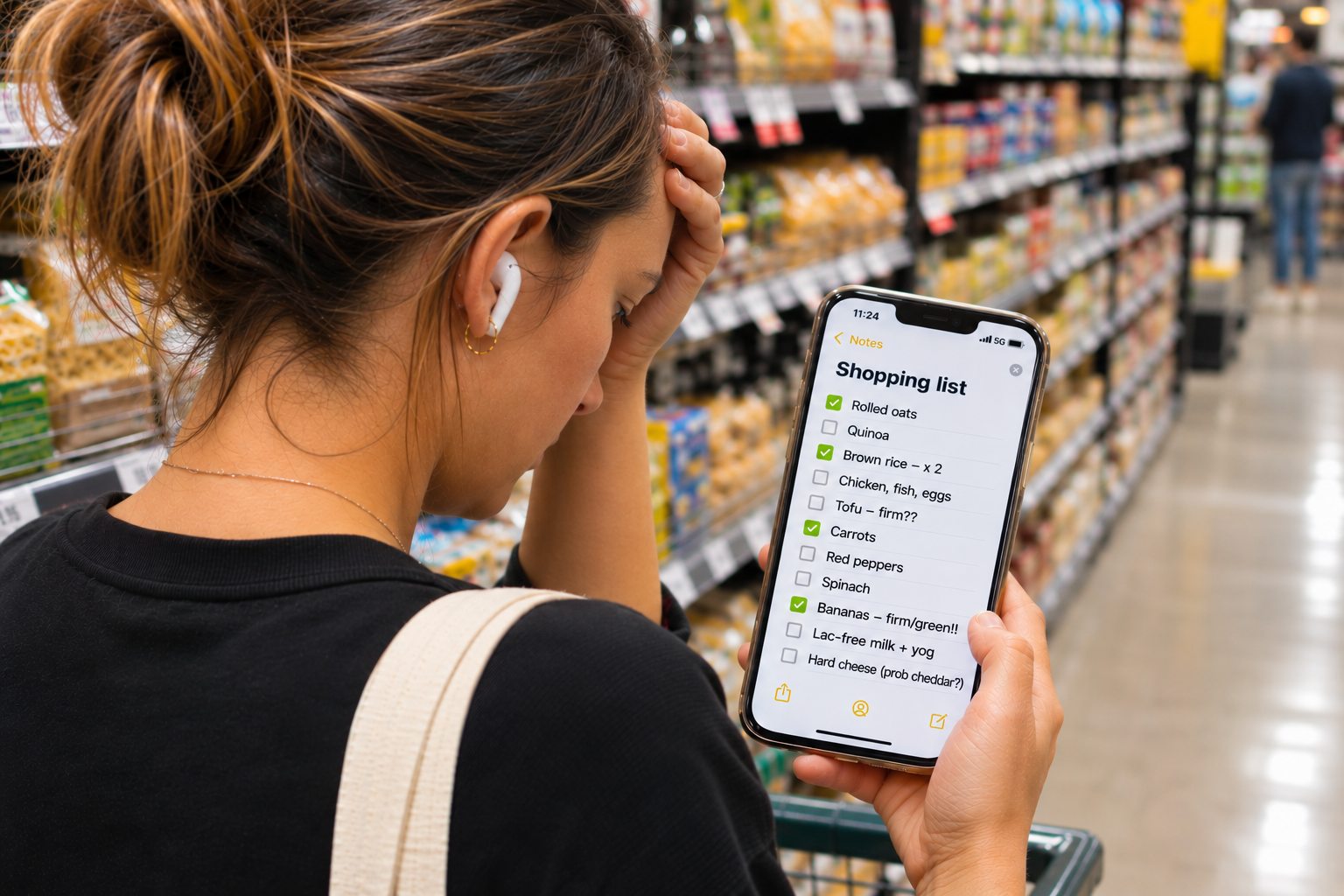
Time is a barrier too. About a quarter of survey respondents said CBT felt too time-consuming or effortful, and some patients hesitate before a referral is even made.¹
Applying this in practice
Frame a GI psychology referral as treatment for the gut-brain pathway driving your patient's symptoms, not a sign their symptoms are “in their head.” Gut-brain therapies target visceral hypersensitivity and altered gut-brain signaling, the same mechanisms behind pain, bloating, and urgency.⁶
Ask about cost, time, and travel at the same visit you raise the referral, so you know early whether specialist care is realistic or whether another route will work better.
What the ACG workforce report means for access to GI psychology
The GI workforce gap is about distribution, not overall numbers, according to a 2026 ACG task force report. National GI physician supply sits at 98% of need, but non-metropolitan counties face a 25% severe shortage.³
The task force, led by past ACG President Dr. Amy Oxentenko of Mayo Clinic, says training more gastroenterologists won't close that gap alone. It points to hub-and-spoke models, telehealth coverage, loan repayment for clinicians in underserved areas, and the Specialty Providers Advancing Rural Care (SPARC) Act.⁷
If gastroenterologists are this unevenly spread, the specialists who work alongside them are even harder to reach:
“Almost 70% of US counties do not have a gastroenterologist, and that represents over 50 million people… I think this is a sign that there's more limited access for other gastroenterology providers… like GI psychologists, trained GI dietitians or pelvic floor physical therapists… These are all providers that are challenging to find, especially in some of these more rural settings.”
– Dr. Wendi LeBrett, Gastroenterologist
That gap also pushes patients toward online advice, which we cover in how to address IBS social media misinformation with patients.
Why the GI psychology gap hits APPs managing gut-brain disorders hardest
Advanced practice providers (APPs) often care for the patients most likely to need gut-brain therapy, with the fewest places to refer them. The ACG report notes that APPs frequently manage complex established patients with limited GI-specific training, and it calls for structured education and mentoring.³ ⁷
Hub-and-spoke models are one fix the report highlights. In RADIUS (Rural APPs Delivering IBD Care in the United States), developed by Dr. Corey Siegel at Dartmouth, rural APPs care for patients locally with support from a specialist hub, and the model has since expanded to hepatology.⁷ The same logic can work for GI psychology. Many academic hospitals employ GI psychologists who accept referrals from community gastroenterologists, and telehealth is widening their reach.⁸ For an APP without a local GI psychologist, a link to one of those teams can turn a stalled referral into a realistic one.
Applying this in practice
Plan your behavioral therapy options at diagnosis, not after first-line management stalls. Gut-brain therapy can come first line, alongside diet and medication, or later.⁶ The new Rome consensus on IBS-like symptoms in IBD remission makes the same point for patients with IBD.
If you're an APP in a community or rural practice, find out now which GI psychology services, academic or telehealth, accept referrals in your state, so the pathway is ready when a patient needs it.
APPs can also keep patients on track once gut-brain therapy starts. In our ACG 2026 research, patients with complex IBS who attended all three nurse practitioner or physician assistant follow-up visits completed gut-directed hypnotherapy at 67.6%, compared with 22.6% for those who attended one or two.
In-person GI psychologist or self-guided gut-brain therapy: how to choose
The right choice between an in-person GI psychologist and a self-guided gut-brain therapy program is whichever route will actually get your patient into gut-brain therapy, based on their clinical needs, preferences, and access.⁶
Access is where most referrals stall. Nearly half of US adults, about 120 million people, live more than 25 miles from a listed in-person GI psychology specialist, according to our GI psychology access map.⁹ That doesn't mean your patient goes without behavioral therapy. It means choosing the route that fits:
In-person GI psychologist: best when a specialist is within reach and your patient has significant psychological distress or needs individualized support.
Telehealth GI psychologist: widens the options when no one is local, as long as your patient is comfortable with video sessions and the psychologist is licensed in their state.
Self-guided gut-brain therapy program: starts straight away, with no travel or waitlist, for patients clinically suited to self-guided care.
Start by searching your patient's county or state on the map, then use the criteria below to match the route to the patient.
When to refer IBS patients to a GI psychologist
A specialist is within reasonable travel distance, with a manageable waitlist
Your patient has significant psychological distress or comorbid mental health needs
Your patient would benefit from individualized therapeutic support
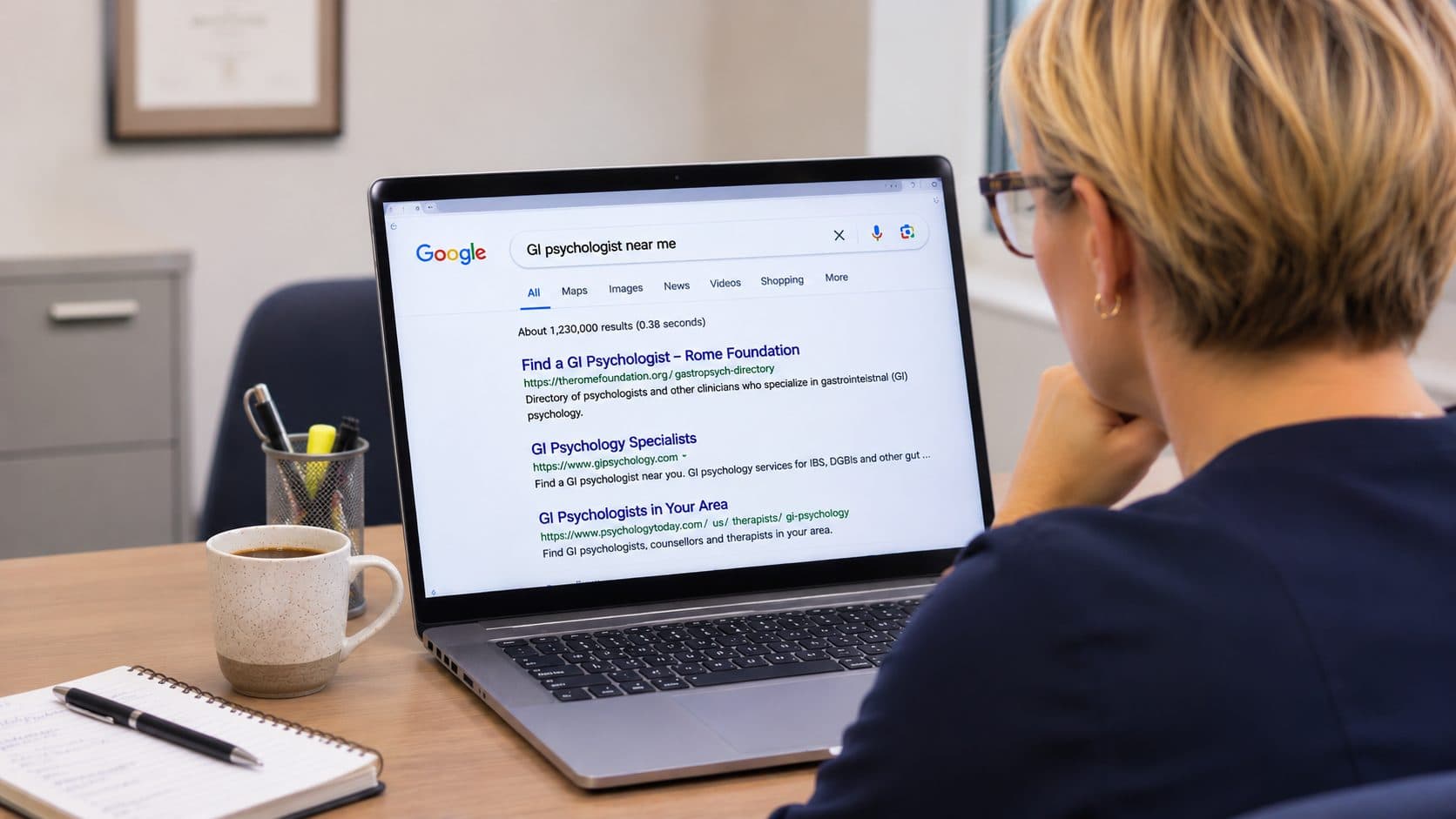
To find one near your patient, search the Rome Foundation's GastroPsych Directory or Nerva's GI psychologist directory. Raise the referral as active care, not a fallback:
“[GI psychologists] are not a last ditch effort! We actually have interventions that are very helpful for people who have failed other medical treatments.”
– Dr. Megan Riehl, GI Psychologist, University of Michigan
When to refer IBS patients to a self-guided gut-brain therapy program
Distance or long waitlists make specialist care hard to access
Your patient prefers a flexible, independent approach
Your patient is clinically suited to self-guided care
When to consider self-guided gut-brain therapy for IBS
Self-guided gut-brain therapy can be an option for patients who are clinically suited to this approach, particularly those who:
can’t realistically access a GI psychologist
feel uncomfortable with in-person therapy
prefer the flexibility of an on-demand program they can use at home
It can be integrated alongside diet and medication as part of comprehensive IBS care.⁵ For some patients, it may also feel like a more approachable way to begin gut-brain therapy, as gastroenterologist Dr. Jeffrey Nathanson from Comprehensive Gastrointestinal Health explains: “…for some people that also may not be quite ready to commit to talking to a therapist, Nerva is perfectly suited for those individuals.”
Nerva is a digital, on-demand gut-brain therapy program developed with Monash University researchers and supported by 17+ published studies. It includes six weeks of structured sessions, with ongoing access to maintenance and flare-up tools for long-term symptom management.
In a randomized controlled trial of 244 adults with IBS, 81% of Nerva participants achieved a clinically meaningful improvement on the IBS Symptom Severity Scale, compared with 63% on an active control.¹⁰ An earlier Monash University trial found gut-directed hypnotherapy improved symptoms in 72% of patients, matching the low FODMAP diet at 71%.¹¹
You can refer patients through the online referral form or simply recommend Nerva.
Frequently asked questions
What evidence supports gut-brain therapy for IBS?
The ACG guideline gives a conditional recommendation for gut-directed psychotherapy for global IBS symptoms, and a Rome Foundation working team identifies GI-focused cognitive behavioral therapy (CBT) and gut-directed hypnotherapy among the best-studied gut-brain therapies.⁵ ⁶ These therapies target visceral hypersensitivity and altered gut-brain signaling, rather than treating IBS as a psychiatric condition.⁶
How do you refer an IBS patient to a GI psychologist via telehealth?
Telehealth referrals work when the GI psychologist is licensed in your patient's state, or practices under PSYPACT, an interstate compact that lets participating psychologists offer telepsychology across member states. Confirm your patient is comfortable with video sessions before you refer.
How much does GI psychology cost?
GI psychology costs vary with the provider, the number of sessions, and whether a patient's behavioral health benefits cover an in-network specialist, so check coverage before you refer. For a self-guided option, many patients can use HSA or FSA funds to pay for Nerva with a Letter of Medical Necessity.
Which IBS patients aren’t suited to a self-guided digital program?
Self-guided digital programs may not be appropriate for patients with certain mental health conditions, including severe anxiety or depression, obsessive-compulsive disorder (OCD), post-traumatic stress disorder (PTSD), eating disorders, or substance misuse.⁸ Suitability should be assessed individually, taking into account each patient’s clinical needs and circumstances.
How do you refer a patient to a digital gut-brain therapy program?
A referral to Nerva can be made through the online referral form or by recommending the program in a consult. Referrals don't expire, so patients can start when they feel ready.
About this analysis: Mindset Health, which makes Nerva, produced the GI psychology access map from the Rome Foundation's GastroPsych Directory and US academic medical center data in November 2026. The distance figures are independent of Nerva, and the full method is published alongside the map.
References
Izquierdo Veraza DI, Waseem MR, Venezia J, et al. Perceived utility of cognitive behavioral therapy in people with bowel disorders of gut–brain interaction. Neurogastroenterol Motil. 2026;38(3):e70283. doi:10.1111/nmo.70283
Ying X, Yao L, Mathis WS, Congly SE, Jesudian AB. Geographic disparities in access to gastroenterologists in the United States. Gastroenterology. Published online February 1, 2025. doi:10.1053/j.gastro.2025.01.232
ACG News Team. ACG Task Force publishes report on strengthening the GI workforce. American College of Gastroenterology. Published September 22, 2026. Accessed November 13, 2026. https://gi.org/journals-publications/acg-blog/acg-task-force-publishes-report-on-strengthening-the-gi-workforce/
Riehl ME. Limited access to integral care: digital therapeutics show promise of scalable solutions to behavioral interventions. Clin Transl Gastroenterol. 2022;13:e00444. doi:10.14309/ctg.0000000000000444
Lacy BE, Pimentel M, Brenner DM, et al. ACG clinical guideline: management of irritable bowel syndrome. Am J Gastroenterol. 2021;116(1):17-44. doi:10.14309/ajg.0000000000001036
Keefer L, Ballou SK, Drossman DA, et al. A Rome Working Team report on brain-gut behavior therapies for disorders of gut-brain interaction. Gastroenterology. 2022;162(1):300-315. doi:10.1053/j.gastro.2021.09.015
Feliciano O, Oxentenko AS. ACG: anesthesia support, strategic integration of APPs needed to bolster GI workforce. Healio Gastroenterology. November 11, 2026. Accessed November 13, 2026. https://www.healio.com/news/gastroenterology/20261111/acg-anesthesia-support-strategic-integration-of-apps-needed-to-bolster-gi-workforce
Penumalee LS, Kia L. Bridging the behavioral health gap: disorders of gut-brain interaction. GI & Hepatology News. August 2026. Accessed November 13, 2026. https://news.gastro.org/issues/2026/august-2026/bridging-the-behavioral-health-gap-in-disorders-of-gutbrain-interaction/
Mindset Health. GI psychology access map: distance from US adults to listed in-person GI psychology specialists. Rome Foundation GastroPsych Directory and US academic medical center data, November 2026. Unpublished analysis.
Anderson EJ, Peters SL, Gibson PR, Halmos EP. Comparison of digitally delivered gut-directed hypnotherapy program with an active control for irritable bowel syndrome. Am J Gastroenterol. 2025;120(2):440-448. doi:10.14309/ajg.0000000000002921
Peters SL, Yao CK, Philpott H, Yelland GW, Muir JG, Gibson PR. Randomised clinical trial: the efficacy of gut-directed hypnotherapy is similar to that of the low FODMAP diet for the treatment of irritable bowel syndrome. Aliment Pharmacol Ther. 2016;44(5):447-459.