.webp)
Key takeaways:
- Nerva patients record gastrointestinal and psychological symptoms at baseline, weekly, and at program completion using validated measures like the IBS-VAS and PHQ-4.
- Among users who complete the program, 85% see physical symptom improvement above the clinically significant 20-point threshold on the VAS-IBS scale.
- Eighty-two per cent of users improve on the PHQ-4 psychological scale, unlike the low FODMAP diet, which does not address psychological state as well as GI symptoms.
- Because only program completers report symptoms, selection bias is a caveat, and more comprehensive peer-reviewed studies of symptom improvement are underway.
During the course of the program, patients are asked to record their symptoms at various time points to produce a detailed picture of their improvement in gastrointestinal and psychological symptoms.
Patients consent to the collection of data, which is used to inform their personal IBS journey. Patients are also asked to consent to data usage for ongoing research into IBS and gut-directed hypnotherapy.
What information do our users provide?
Baseline and program completion
In the app onboarding process, which is completed at a baseline time point (prior to any hypnotherapy intervention), Nerva program participants are asked basic demographic questions and questions regarding their quality of life.
Gastrointestinal symptoms are assessed using the Visual Analog Scale for IBS (IBS-VAS), a validated subset of the longer Symptom Severity scale for IBS (IBS-SSS).
Psychological symptoms are assessed using the Patient Health Questionnaire-4 (PHQ4), a validated subset of the PHQ-9 which is used to assess symptoms of depression, and the GAD-7, which is used to assess symptoms of anxiety.
These questions are asked at baseline, and again upon program completion.


Weekly throughout program
During the Nerva program, patients are asked to complete a short version of the baseline questions each week.
Patients are asked to report on overall GI symptoms at each weekly checkpoint using a visual analog scale. Patients are also asked to complete a PHQ-4 questionnaire.
Some results
The IBS-VAS scale is a 100mm scale, and a clinically significant change on the VAS scale is a 20mm change. Looking at the aggregate patient data from the VAS question on “overall gastrointestinal symptoms,” this is what we see:
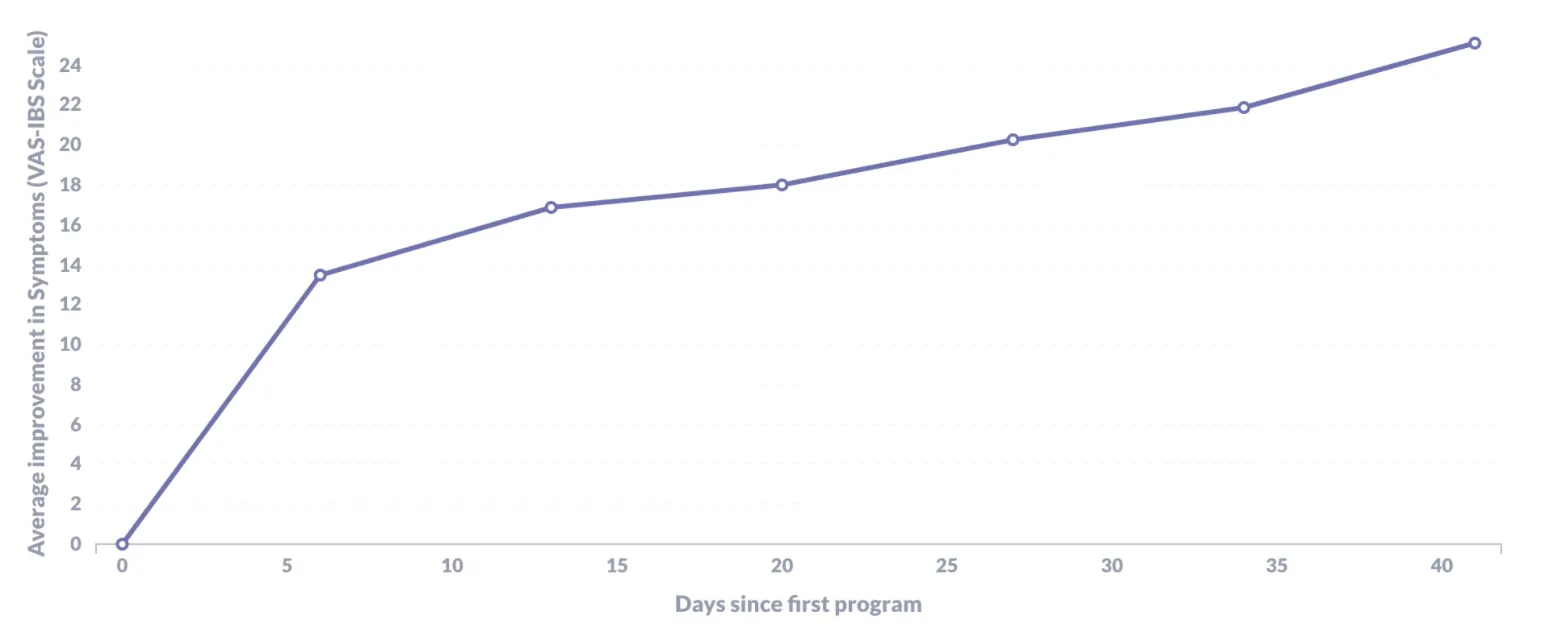
The caveat to this way of looking at the data is that it relies on selection bias, only people who complete the program have recorded their symptoms. This introduces a selection bias to this data as only users committed enough to complete the program report symptoms. More comprehensive studies on symptom improvement are underway.
Despite this, we can report that 85% of users see physical symptom improvement above a 20-point improvement on the VAS-IBS scale. This result is in line with previous studies on hypnotherapy and noteworthy in the comparison with patient outcomes with the FODMAP diet.
Improvement in gastrointestinal symptoms
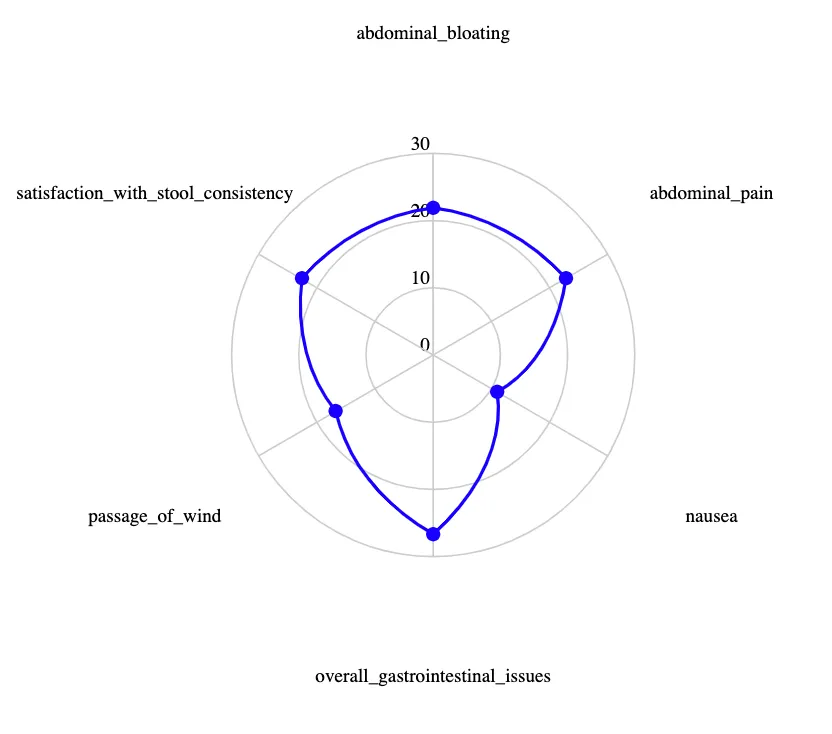
Nerva users, on average, achieve a greater than 20mm improvement across four of the five observed categories on the VAS-IBS scale, including overall GI symptoms, satisfaction with stool consistency, bloating, and abdominal pain.
Improvements in psychological symptoms
Eighty-two per cent of Nerva users see an improvement on the PHQ-4 scale. This is noteworthy because it differs from other IBS management modalities, including the low FODMAP diet, which does not address psychological state as well as GI symptoms.

Conclusion
These are just some of the exciting results we have seen in the Nerva data and they do not begin to scratch the surface of the complexity of IBS management or each patient's unique experience.
These results are exciting but reaffirm how much work still needs to be done. There are peer-reviewed studies underway to dive deeper into symptom improvement data.
Additional reporting: Rafael Mello
Refer your patients to Nerva using our HIPAA-compliant form.

.webp)
.jpeg)